Explosion Network may receive a commission when you purchase something via a link on our site
Call of Duty: Black Ops 7 is releasing this week, and ahead of the game’s release, Activision put on an event in Sydney last week that saw content creators taking on the role of the Replacers, and it also saw Miles Leslie, Associate Creative Director at Treyarch, returning to Australia for the launch.
Hearing from Miles Leslie in a media briefing ahead of a chance to talk to him, I gained an understanding of what’s exciting to him and the team about Call of Duty: Black Ops 7. There’s a real sense of this being both a huge success in all three core pillars of the game, with a campaign that ties back to Black Ops 2, one of the most popular entries, a multiplayer mode launch with nineteen maps at launch, and a Zombies mode that’s got the right mix of skill-caps for new and returning players. But what I was wondering about most was how long Miles has been playing Call of Duty and what keeps it interesting for him, so I had to ask about that first, before diving into a couple of questions more directed towards Black Ops 7 itself.
You’ve got a really long history working across Call of Duty — the franchise for so long. In an industry where people change so often, what creative freedoms or exciting opportunities have kept you there all this time?
Miles Leslie:
I think for me, it’s a combination of things. We’ve landed Call of Duty as best in class when it comes to combat, flow, and that feeling — reloading, movement, that sense of discovery. We have a responsibility to maintain that.
The fun challenge every game is: when we go to a new era or start a new story, how do we maintain that core experience but add new ingredients? Every Black Ops entry tries something new — from branching storylines to exploring different eras — and Black Ops 7 is no exception.
We’re going to 2035, a near-future setting. What does that mean? Adding wall jumping is just one new ingredient. That’s what keeps it exciting game to game.
Do you think things like wall jumping are the most game-changing additions, or is that just recency bias? What do you think was the most defining Call of Duty moment?
Miles Leslie:
That’s a hard one — every player would probably give you a different answer. Even among developers, we debate it. Some say wall jumping, others say movement systems, or the ability to share builds.
The strength of the team is that everyone’s passionate about something that speaks to how they play. Innovation isn’t just one thing — it’s the collection of changes that make the game feel fresh and personal for players. It’s that sense of, “Oh, they heard me. I get to do the thing I wanted in the game.”
There’s often this perception from people who don’t play Call of Duty — or shooters in general — that every game’s the same and there’s no innovation. Do you ever talk about how to win those players over?
Miles Leslie:
You’re right — intimidation plays a big role. Some players may have had bad experiences years ago, or just find first-person shooters overwhelming.
Our goal is to make the game accessible. Black Ops 7 might be the best entry point yet — intuitive controls, a smooth learning curve. We want it to be easy to pick up and play, but with depth for mastery. That’s the trick: hook players with fun, then keep them with depth.
You mentioned [in the press briefing prior] how big this entry is, especially tying back to Black Ops 2. Was there ever talk about ditching the “7” in the name?
Miles Leslie:
The name’s decided by people above my pay grade, to be honest. But the Black Ops 2 connection is deliberate. We’re returning to a time after Black Ops 2 — an opportunity to take what players loved from that game and reimagine it.
For example, the ‘Peacekeeper‘ gun — fans loved it. We’ve brought it back, made it look and sound better, and fit seamlessly into Black Ops 7. The fun is finding the right elements from Black Ops 2 to adapt while keeping things fresh.
Looking forward — what do you think the next significant change for the franchise might be? Do you think it’ll come from new design ideas or technological leaps?
Miles Leslie:
I think Black Ops 7 already represents a big step because it’s the first time everything’s connected. We’ve wanted to do that for years, but never had the time or right setup.
Global progression — that “you should always be rewarded for playing anywhere“ mindset — feels like a natural evolution. It’s one of those ideas where you go, “Why didn’t we always do this?”
It also encourages players to explore more. If you’re usually a multiplayer guy, go try Zombies — you’ll have a blast. Or dive into the story mode; you’ll still be progressing globally. That’s a big shift for us.
“Black Ops 7 might be the best entry point yet — intuitive controls, a smooth learning curve.”
I’ve cut it out here for clarity reasons in the interview, but I had a bit of a laugh with Miles about this point, because the unified progression is one of the simplest, yes, most ‘a-dur,’ moments in recent Call of Duty changes. It’s the type of thing players need to feel safer exploring other modes without jumping back into multiplayer and feeling severely underleveled compared to their friend who took a week off work and didn’t stop to try out any other modes at all.
When developing the Black Ops stories — which always go a bit wild — what kind of research or creative process goes into building them? Especially compared to the more realistic tone of Modern Warfare?
Miles Leslie:
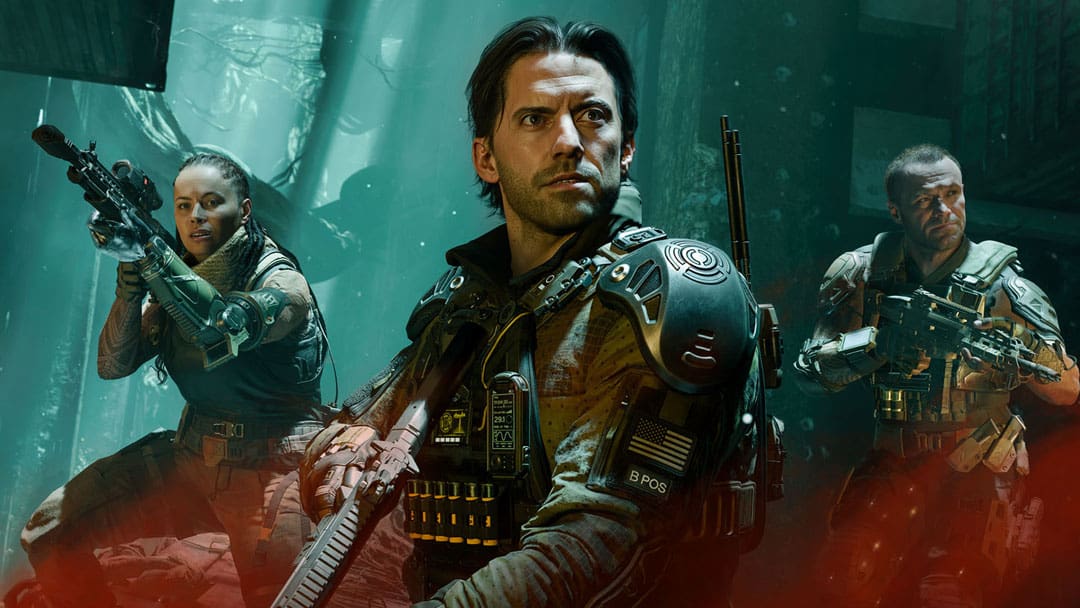
For us, it starts with the kind of story we want to tell. This one focuses on David — his fears, regrets, and humanity. It’s a grounded, emotional story set in a near-future world.
That contrast is what makes it work — plausible but still pushing the limits. People see surreal moments in our trailers and go, “Yeah, that’s Black Ops,“ not “That doesn’t make sense.”
We take lore and continuity really seriously, too. It’s like fitting puzzle pieces together — making sure every game connects and nothing feels alienating to long-time fans.
In [Call of Duty: Black Ops 6], there was a survival-horror-style level — Emergence. Is there anything similarly outside the box in this one?
Miles Leslie:
Oh yeah, there are definitely a few levels where you’ll go, “They did what?“ But it’ll make sense once you play. We really challenged ourselves to include more of those big, surprising moments — the kind that are fun and bombastic but still serve the story.
The thing I love most about the ‘Black Ops’ games in the COD banner is how wild they’re often willing to go and with the ‘Emergence’ level, it was a sign of how experimentation, and changing the pacing of the game; ripping away that none-stop military shooter style for just an hour, can be such a surprising and well-love change of pace for players. And hearing Miles say more stuff like that is undoubtedly exciting.
If you’d like to know more about the campaign and how you can prepare yourself for the upcoming release of Call of Duty: Black Ops 7. In that case, I’d suggest checking out the ‘previously on’ type video they’ve released, which does a good job of boiling down all the important stuff before heading into the new game.
Thanks to Miles Leslie for speaking to me, despite his busy schedule, in the lead-up to the launch of Call of Duty: Black Ops 7, which will launch on November 14 on PlayStation, Xbox and PC.

![Dap Is A Psychedelic Horror Game With Studio Ghibli & The Legend of Zelda Inspirations [PAX Online 2020 Preview]](https://explosionnetwork.com/wp-content/uploads/2020/09/Daps-Thumbnail.jpg)