
At PAX Australia 2024, we talked to Allard Laban, the Chief Creative Officer at Jackbox Games, about the recently released Jackbox Survey Scramble and The Naughty Pack. We also discussed the plans Jackbox Games has for the future, which includes releasing a board game.
After some discussion on how lozenges are better in Australia than in the US —and we’ll take the win for that one, Aussies—we dove right into talking about Jackbox Survey Scramble, which was, at the time, a few days away from releasing.
Allard Laban: We’ve done a couple of different kinds of survey games. Originally, there was Guesspionage. I don’t know if you remember that from [Jackbox] Party Pack 3. That was sort of a pre-canned survey; it was static, in the sense that it would not change over time and whatnot. Then, we did The Poll Mine, which was a local player survey.
“It’s a game that is focused on an ever-evolving survey that’s changing, as people are playing.”
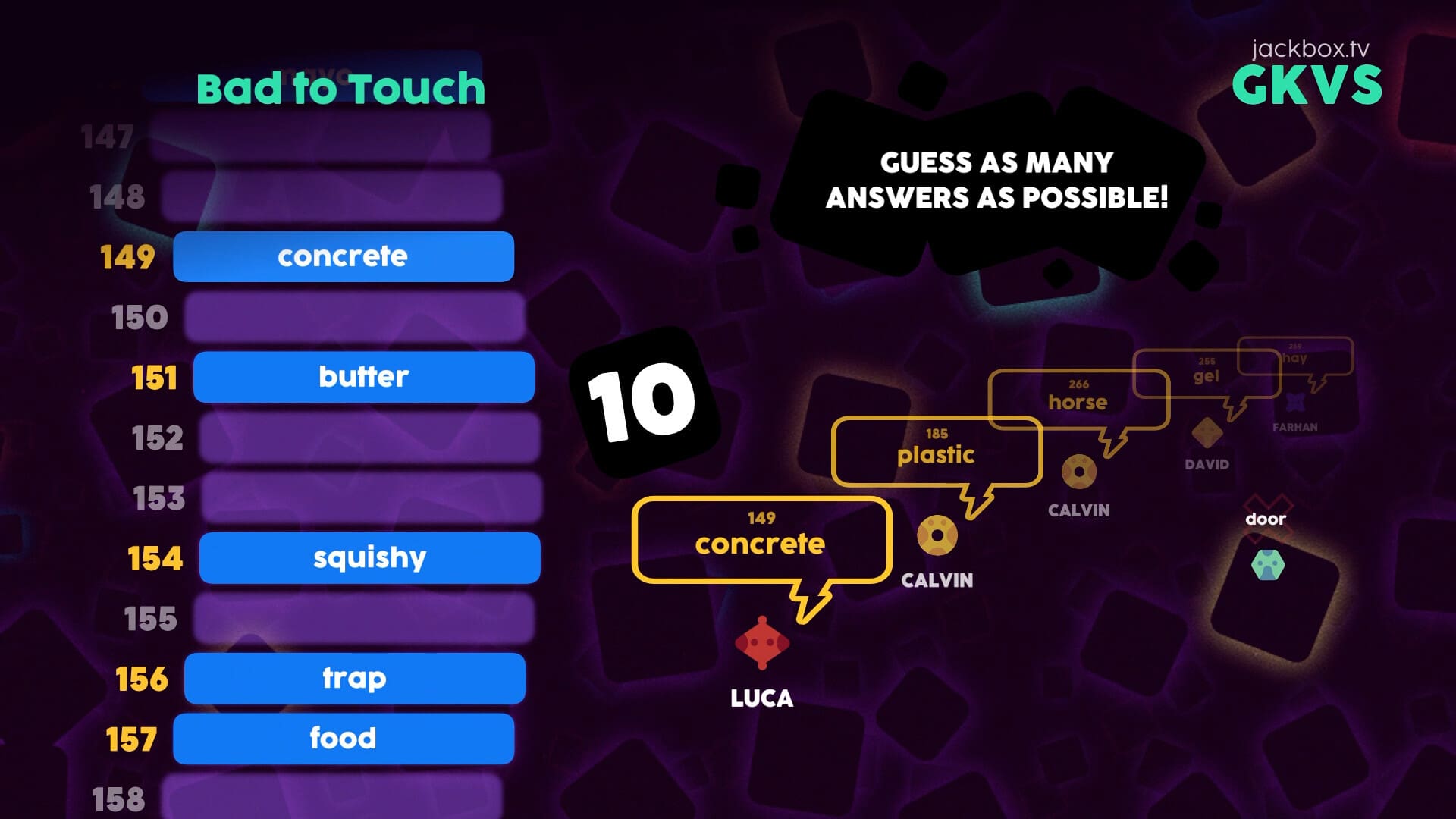
You’re surveying the local audience, or if you’re streaming, you could survey those folks in real-time, which is cool. With The Survey Scramble, it’s a game that is focused on an ever-evolving survey that’s changing, as people are playing. We’ve seeded it with a big questionnaire that we sent out to different regions around the world. As it releases, that survey will get updated. All that data gets changed, and also curated. It’s not just [that] we’re throwing in everything that gets pulled in from the people typing crazy stuff. It actually does get screened for hateful stuff or awful things. That gets screened out, but we keep all the funny stuff, because there is a lot of funny things that people have been putting in there. That’s fun about it. It is region-specific. Your lists here are going to be different than the lists in North America, which is entirely appropriate, because you want to have the local hive minds at work.
There’s a lot of funny content, a lot of funny surveys that we’ve done. We distil all of that down into these fun little games, the most basic of which is high and low, which, of course, you’re trying to guess what’s in the highest part of the survey. There’s also what is at the bottom, which is almost as interesting as what’s at the top. Then, there’s everything in between. That’s where you make all the points if you’re playing.
Dylan: On the localization stuff. That’s so hard to do. What system is that going through to make sure that it works?
Allard Laban: We partner with different production teams around the world. We’ve been lucky enough to find people who are like-minded and work with good writers and good VO talent, and when it comes to the actual explicit, like translating and the VO, and the different languages, and finding that right tone. Editorially, we’ve been really lucky to find people that stay on the same page with us as well, literally.
Dylan: Do you have to build a slang dictionary so it knows it’s not just gibberish when it comes through, like a joke that’s helpful to you?
Allard Laban: Oh, yes. We know that– We are screening on some basic stuff. We have filters for that stuff. We also know how people try to slip in dirty things, or hateful things into that, so we had some built-in filters for that. Then, there’s actual human eyes that we’ll help curate it too, and judge whether something is worthy of being in the list or not. It’s pretty loose in terms of keeping it, with the intent of keeping it weird, and funny as well.
Dylan: How do you even test within yourselves for something that’s going to change? How do you plan to make that work in the long term?
Allard Laban: That’s interesting. Well, we’re keeping that human element as a part of it. We can steer it when we see things changing in a way that’s maybe negative towards how the gameplay is working. You would be surprised. A lot of people who have been entering content have been pretty upfront and honest about it. It’s not really a huge concern about it changing that much. There are a lot of entries. A list is going to be 200 to 300 entries for a specific prompt. If it’s like, “What’s the best superpower?” It’s going to be obvious that, as you read through the list, they’re all pretty valid ideas.
Dylan: It was reminding me how people get really into, when they play Telltale games and stuff, in the end, everyone gets really interested into, “Oh, the 57% did this,” blah, blah, blah. Even when I was playing those games, it would be like, “Oh, I wonder– It would be cool if I could do something with this information.”
Allard Laban: Yes, I think we’re keeping any of those analytics in our pocket. Obviously, all this data is not tracked in any way. We at Jackbox we’ve always tried to keep– stay really stupid about the data that we pull in. We don’t know who is giving us data. We’re not tracking anybody’s IP addresses or anything like that. We only know by region where people are. We’re not looking at any personal identifiers. Now, I’m lost. What was the question again?
Dylan: I think I was just saying how interesting it is — with the analytics and stuff.
Allard Laban: With the analytics, yes. There are some analytics that we’re looking at for possible other future game types. That’s another thing about Survey Scramble. We’ve kind of opened it up as a game that we can keep on dropping in new ways of looking at the data and looking at the lists. We’re going to be developing more game types that fall into that.
We’re releasing four different games initially, but there’s new ones coming up. There’s going to be sort of a dare component to one of the upcoming games, like I feel actually I can get something higher on the list, or lower on the list than you. Simple game mechanics, but with rich data, essentially.
Ciaran: Jackbox has had such longevity to it now, in terms of the volumes you’ve released, and I’ve always found it fascinating how you as developers choose, which games you continue to pursue, which ones you give a break for a couple of volumes. How do you decide when you’re in your development process, what angle you’re taking with your next volume or game?
Allard Laban: I think, in a lot of ways, games are driven by what is the anchor title, or what’s the returning title, so we can base things on that. There’s a cocktail to the whole pack, in terms of a recipe that usually works, which is like a little bit of drawing, a little bit of this. We also look at what the trends are in terms of analytics: people really like this type of game, and people really like trivia or people really like head-to-head, what we call joke machine types of games, which that would be like Quiplash is sort of the archetypical, joke machine game.
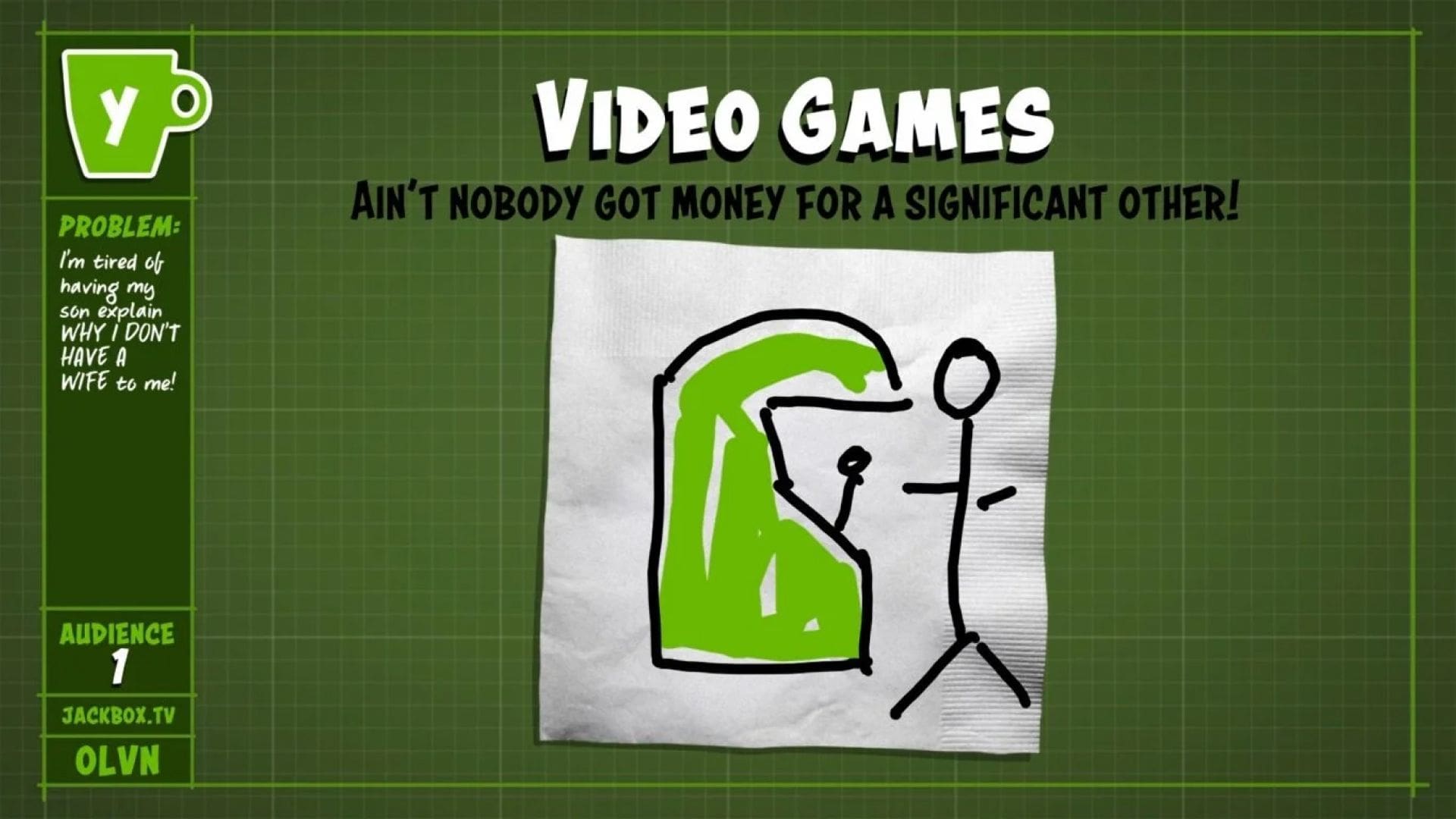
Those trends tend to change over time in terms of what people like to do. We look at that, but we’re always looking for something relatively new as well. We’re trying to scratch different itches every time we release a pack, so I think if you go back in time, the idea of a presentation game was foreign to us, and then we had Patently Stupid, and that was really popular. All of a sudden, people were happy to draw something and talk about it as if it were something interesting, and that trend turned to Talking Points, which was really explicitly a presentation game. Now, not all presentation games are popular. Some people don’t like to talk, and some people don’t like to get up, and do anything in front of anybody. They’d rather just type something on their phone and send it, so we try to accommodate how people play in different ways, so that’s like the magic of the makeup of a pack.
“We’re trying to scratch different itches every time we release a pack”
When we’re starting off a new pack, we don’t know what we’re going to make, so we do have an ideation process, a pitching time process where everybody in the company has the opportunity to come up with an idea, prototype it, do a paper test, and play it with us, and sometimes it takes three months, sometimes it takes five months to get the game pack completed, at least we know what we’re going to do, but it’s serendipitous in a weird way every year. We don’t know exactly where we’re going to end up, because it’s really about what games get pitched, and which are the most fun. As long as people are laughing or making noise in the room while we’re playing, that’s the box that we try and tick every time, so.
Ciaran: [At PAX AUS] for a number of years now, we have had a Jackbox section where, with the beanbags, especially in this area in the Exhibition Center we’re in, where people come up, and get to sit down and chill out, and maybe you’re not directly interacting with anybody else in the hall at the same time, but you are through Jackbox.
Allard Laban: Right.
Ciaran: I guess does that play into your decision to be here this year to reveal and to bring forward your latest project here to PAX Australia?
Allard Laban: Well, part of it is serendipity again. It was the right timing, and we really appreciate the fandom in Australia. That’s why we keep on coming back. I feel like we had such a great time, and we connected with the audience here. There are some things we really learned a lot about from this audience, and from PAX itself was, I think, one of the first years we played Trivia Murder Party, and that was Trivia Murder Party 1.
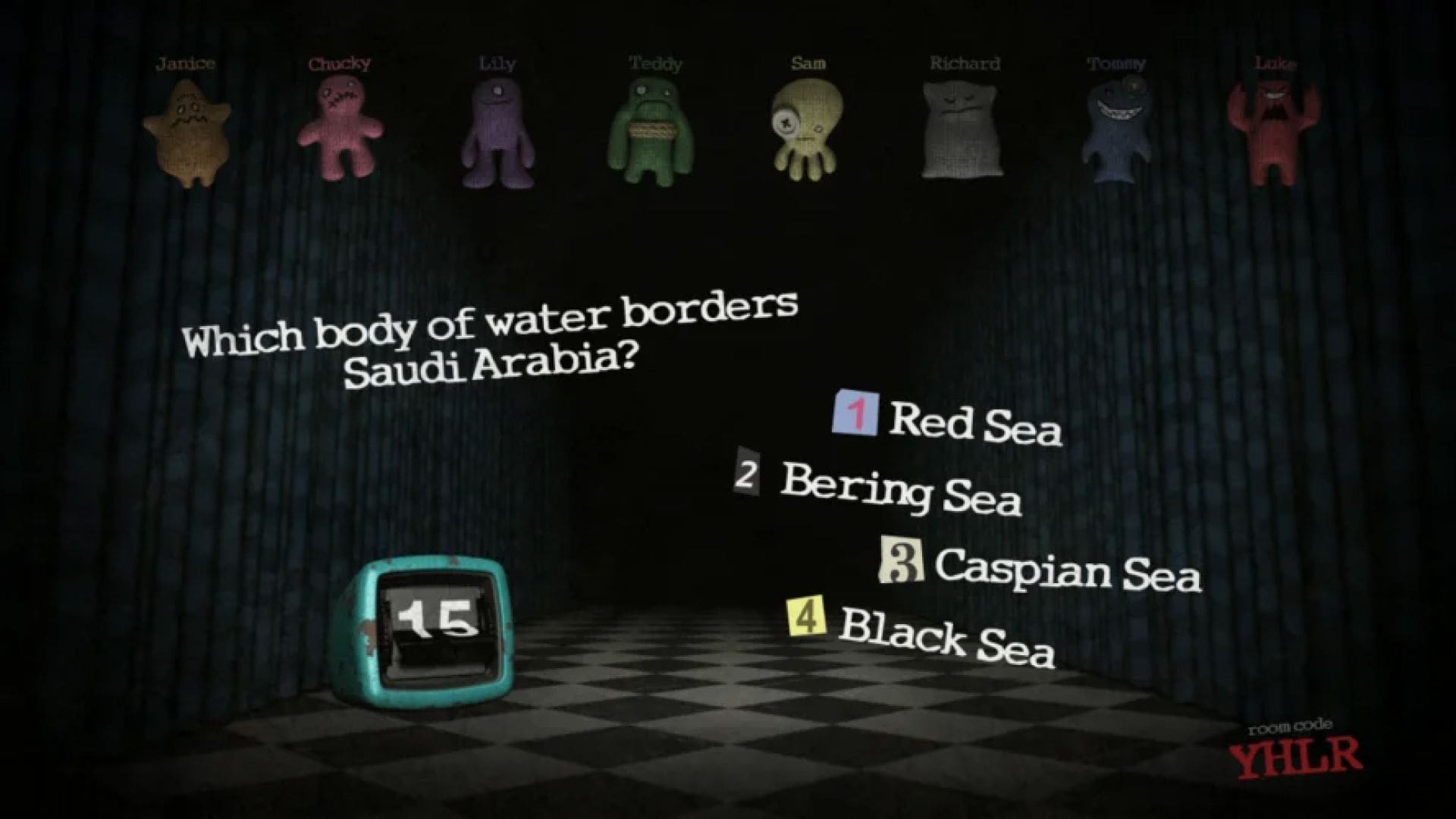
We got direct feedback being like, “How am I supposed to know this question? It’s an American football team,” blah, blah, blah. It was that feedback that led directly to our filtering US content, and then our settings. There’s a lot to learn from this community, and I think people are really open, and really have great insights in terms of how to play our games, and how to make our games better. It’s really a two-way conversation.
Dylan: The latest pack, After Dark? No. Was it?
Allard Laban: Oh, yes, the Naughty Pack.
Dylan: The Naughty Pack, right, yes. Because I guess, when you say “sense of humour” and stuff like that, I’ve always wondered […] When you jump into streams, obviously, something like [waves around a public place], this is your family-friendly audience. How do you feel about when people take the Jackbox games and make them super–
Allard Laban: Yes, they went over the line?
Dylan: Yes. [laughs]
“We really appreciate the fandom in Australia”
Allard Laban: It was actually a big decision for us to do it, and how we would do it because we wanted to– Because we’ve had a lot of requests for that kind of pack because people really want to– I don’t know why they aren’t already free enough to do what they want to do, but people have asked for us to be explicitly, even over the line that we could be. We were very thoughtful about the comedy that was going to go into it. We didn’t want to be just a Cards Against Humanity […] They already got that covered, to be absolutely outrageous in that way. We wanted to be sex-positive, not be more– Essentially, just more open, more openly funny, and feeling good about all of this stuff, as opposed to feeling really dirty and nasty.
We wanted to make it more fun and funny, because we wanted to find the comedy in that kind of sexy stuff. That’s why it was like, even the title of it, we didn’t want it to be Super After Dark, or something that’s forbidden. We wanted to be naughty, and cheeky, and a little bit more fun about it.
Dylan: Not like “Adults only Jackbox” or something?
Allard Laban: Adults only, exactly. It’s okay… We’re famous for people drawing penises, and Drawful, and TKO. We wanted to lean into that, and people have really embraced it. [chuckles] I think it was a good experiment for us because we’ve learned a lot about where we can take the brand and where we don’t take the brand in the future, too.
Dylan: Have you had a chance to watch many people play that one on Twitch streams or anything?
Allard Laban: Oh, yes, we’ve seen a lot on Twitch streams. Also, even at the last PAX in Seattle, we did an amazing panel, and that was super hilarious. The entire audience just lost their shit. It was fantastic.
Dylan: Because I find that you’re in the realm of doing comedy games. For the most, I guess, people may not view them as that, but I think they are. There are not many games that are comedy. Comedy is hard to do in video games.
Allard Laban: Right.
Dylan: We are in a realm where, especially when it comes to comedians and stuff like that, people do say that stuff about, like, “Oh, you can’t make edgy jokes because you’ve got to push the lines up.” Even we, we’re not hardcore streamers, but when we’ve even streamed it, and you’ll be– There’s always that one person who goes–
Allard Laban: […]Yes, across the line, or.
Dylan: Yes, cross the line. I get what you’re saying with that. You want to make it sex-positive and all that sort of stuff. I guess, how many meetings and stuff do you have? How do you go about it? Because it’s a hard subject, I think, to–
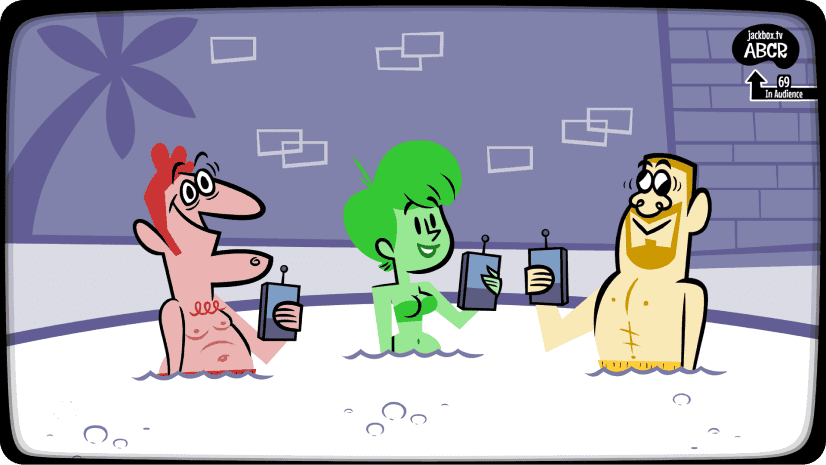
Allard Laban: It was, that was the job number one, in terms of how to write this, because at the end of the day, Jackbox Games are about, and not to dismiss the amazing art and programming, and the production processes that get our games over the line, it starts with the writing. I think, being in Chicago, we’ve got connection and physical ties. Everybody who’s in the writing department has come from the improv community of Chicago, which is rich and diverse. It’s fed a lot of American culture, in a way, from SNL to anything. A lot of writers in LA started in Chicago. I feel like we feel connected to the comedy fabric of America, and we felt it was a responsibility, especially with that game, to do it right and give it the respect it needed to be given.
“I feel like we feel connected to the comedy fabric of America.”
Dylan: […] if we were to walk through the offices at any point, […] Would you find people watching a lot of, particular shows, or stand-up or anything for inspiration?
Allard Laban: I mean, we’re– While we do have offices in Chicago, I would say we are hybrid or remote-first at this point. We have writers in LA, we have writers in Chicago, and most of our conversations happen in Slack and Discord. If you jump on a Discord call with our people, there are people who are watching shows together, there are people who are chatting about cultural events, and everything from Housewives to watching game shows like Traders, we’re totally tied into all that stuff too. It’s hard not to be.
Dylan: If you could pick your favourite comedian, alive or dead, to promote or do a crossover with Jackbox, who would that be, and what do you reckon it would look like?
Allard Laban: Wow. I don’t know, it’s funny. I think comedy is a moving target in terms of what generations think is funny. One thing that we found through this process is the difference between Millennials and Gen Z, which is a very different comedy sensibility. It’s hard to be like, who would I want? Because I think we’re talking about different audiences entirely. I think TikTok is also a completely different ballgame in terms of who to watch and how to– [crosstalk]
Dylan: If it’s not funny in 10 seconds, then– [laughs]
Allard Laban: Exactly, so it’s very weird. That’s something that we’re addressing with how we’re hiring our writers and whatnot. There’s now a focus to be like, “what do the kids think is funny?” [chuckles] Because the Gen X-ers and the older Millennials, and the Millennials, they’re all on the same page in terms of what they think is funny. We want to respect that, and keep supporting that. We need to also think about who’s the next generation of funny and what they think is funny. It’s hard for me to be like, “Let’s have them do it.”

“Every generation, hopefully, feels like they can get into a Jackbox game, make a funny joke that’s funny to their friends. If that works, awesome.”
I like watching old SNL shows. Also, everything has become very fragmented, not just with TikTok, but everything from how humour is displayed in other– In video games, even if you look at like how people have embraced JRPGs, and that whole culture, that’s a very different sensibility, in terms of what’s funny in that kind of game. We have to try and synthesize all of that and have our own brand statement that everyone can relate to. At the end of the day, the good thing about Jackbox Games is that it’s a vehicle for people to express themselves. Every generation, hopefully, feels like they can get into a Jackbox game, make a funny joke that’s funny to their friends. If that works, awesome. They’ll keep playing our games, hopefully.
Dylan: If you’ve got, I guess, Jackbox, it is for all ages. It can be for all ages, and you’ve got the After Dark. Have you ever kicked around a– “for younger audiences?”
Allard Laban: Oh, well, I did work for Disney in another lifetime. Doing educational or anything that’s targeted at younger ages is tricky […] Every age is so different. A seven-year-old is so much different than a nine-year-old, and a 9-year-old is so much different than a 12-year-old, and it’s only a few years of change between those. We try to have games that will appeal to everybody, and people give Zeeple Dome— They always rank it as like, “Why did they even do that game?” Blah, blah, blah. It is the one game that all kids love, especially the 7-9 or 7-10 age group. After around 9 or 10, they’re all into the Quiplash, and they want to write funny things or swear [chuckles].
If I were to do, or if we were to do, any kind of game that would appeal more to kids, I would possibly do a game pack that is more action-based versus language-based in that way because I think that immediately gets kids playing together if it’s something overcooked, or something that’s a little bit more twitchy in a way.
Dylan: I feel like Jackbox inspired a bunch of, or at least a few games trying to do the same thing. Have you ever seen or looked at any of those and just, I guess, looked into what they’ve been doing?
Allard Laban: There are always people who are going to be like, “Hey, we should do a Jackbox-style game.” I think its great. Early on, there’s a rush of them. I think PlayStation had a few contenders, and they had an app that you’d have to download. There is always something fundamentally not Jackbox about those things […] it was harder to get an app, and there’s more friction.
Dylan: You could literally not [play it like Jackbox]. We tried to play it…
Allard Laban: Right. For me, I think the most successful Jackbox games, or even the ones that are clones, are the ones that really make it as easy as possible to play because that is other than focusing on the players, it should be focusing on an experience that is accessible to everybody who picks up the phone. They should not have to worry about what the rule set is. They should just be able to jump in right away. It’s deceivingly simple because we put a lot of thought into the UX of how that all comes together. It is one of the things that I see as a big difference in how people have tried to interpret our games and they always miss that. Keep it stupid, keep it simple. People don’t want to think when they’re at a party, like, “How do I do this? What am I supposed to be doing now?” It should all be self-evident.
“Keep it stupid, keep it simple. People don’t want to think when they’re at a party.”
Dylan: One more loaded question: do you have one idea that you’ve liked or something you’ve been trying to get to work, and you just can’t?
Allard Laban: We have what I call the motorcycles out on the front lawn. [chuckles]. We have a lot of motorcycles out in the front lawn that we steal parts from to make new games. There are a couple of big ideas that have been just blocked because of legal reasons, like, “We’d have to license so many songs,” or let’s say, we may or may not have a really cool karaoke concept that would be hilarious. To make that really great, we would have to– it would be fiscally not make sense anymore, because it would just be like all the licensing that we’d have to do, but make it hard. There’s probably ways around that with public domain stuff and whatnot. Would it be as fun? I don’t know.
Dylan: I would say that of interest is Beat Saber. They have all these licensed tracks now for that game; it’s what it’s known for. When they started, they just paid a band and paid a couple of people to make the first three or four songs. It’s the whole idea; people just picture playing famous tracks now, but everyone did it because the gameplay was so good. I guess they were like, “Yes, it works. We don’t really care.”
Allard Laban: No, absolutely. I feel like within the context of a pack, we have– There’s rights issues, and it gets a little complicated, and we’re like, “Okay, well, we have one game, and the pack that requires licensing. How do the pack sales affect that? What are the royalties on each of those songs?” If it’s just one riff of– It just gets really messy.
Dylan: You have to double the price of the game. [laughs]
Allard Laban: Exactly. Right. We don’t want to do that. I think it’s not a dead concept. Like I said, there’s no game idea that is ever dead. In fact, we’ve got games that we brought back, like Trivia Murder Party. It was originally pitched and was red-lit a couple of times before there was something about the design that we changed that made it actually playable. I think in the beginning, the original pitch [for] Trivia Murder Party, when you died, you died. That meant that people would be just sitting out of the game. When the designers changed that feature and added that final round of running towards the door, the game worked. There’s always something that can change the dynamic of whether a game lives or dies. That could happen with the licensing of the music, or it can happen with some change in the design or the way that we execute that makes something possible. I would never say we can’t ever do anything because everything in some way is always possible. That’s what keeps the dream alive.
Ciaran: We live in a world now, especially in the video game sphere, where collaborations are everywhere. You’ve got Master Chief running around in Fortnite.
Allard Laban: Right.
Ciaran: With your games and your future, is there a collaboration that just makes sense for you? […] I can always imagine certain characters being the narrators for it. Is there anything for you that jumps out immediately as “That just makes sense for us.”
Allard Laban: I have always loved how LEGO has run its brand. They’ve never had an ego in terms of how they share their brand and their ideas. I feel like their partnerships are legendary. They’ve always been able to partner with something and make it better. It’s always the more, it was greater than the sum of the parts, as they say. I think there are a lot of relationships that Jackbox could have with classic games, classic board games, perhaps, and we could bring to life like nobody else could with our writing with our pacing, so name any board game that you love, whether it’s Monopoly, or Balderdash, or any of those types of games. I feel like we could have a great partnership or relationship with somebody at that point.
“We could bring to life like nobody else could with our writing with our pacing, so name any board game that you love, whether it’s Monopoly or Balderdash.”
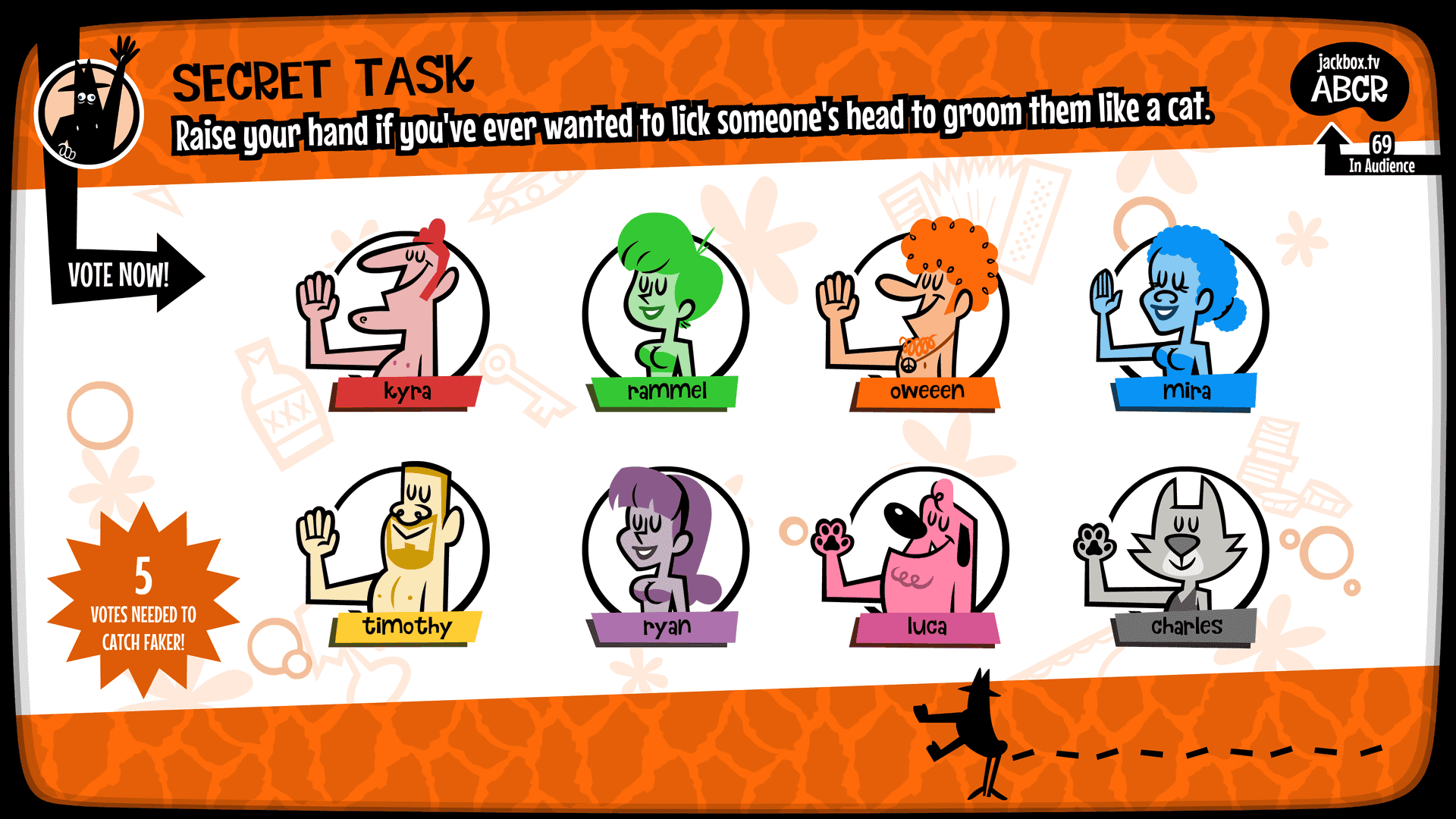
It’s more than just being like, “We’ll do this game for you as work for hire.” I feel like we are– My hope is that our part of the– Our interpretation of something is the thing that reinvents a brand. That’s what I’d like to see. Also, I’d like to see us moving into a different space. I’ll come, I’ll show you, but on November 1st in America on Amazon, we’re going to release our first board game, and it’s going to be Fakin’ It! We’ve actually taken Fakin’ It as it is and reinterpreted that as an actual, real-life board game. I’m pretty excited about that.
Ciaran: I’m excited to hear more!
Allard Laban: Yes, this all happened because every time I go into a board game store, and I love playing board games, and if I’m wearing a Jackbox shirt, they’re always like, “Oh, cool. Jackbox, man. Why don’t you guys have any board games? Why is there not a Jackbox section?” I have no answer because I know we should, so that’s another part of the Jackbox brand I’d like to see expand.
Thank you, Allard, for taking the time to speak to us while at PAX AUS 2024!