
ÆRTHLINGS is a new blind-box-based collectable digital game where you can scan in the creatures you unbox and play with them in the digital game. The game also encourages playing and trading with other players in a unique way that I haven’t seen done. There will be players who spend less time in the game than others, focusing on collecting all the square critters that exponge into different shapes and sizes. However, the digital game itself offers a safe, easy-to-pick-up-and-play resource-gathering and building experience, free of any nasty pop-ups or messages asking you to spend it on anything in the game. So far, the money you’ll pay in ÆRTHLINGS is entirely spent on blind box purchases ($12 seems to be the RRP across stores like EB Games, Target, and Big W), and hopefully nothing changes there.
I was sent four ÆRTHLINGS mystery figs to help my review of the game and product, and I opened them all before starting the digital game. The product comes housed in this rectangular plastic box, with the actual ‘mystery box’ being presented as if it’s floating above the ground at the top of the product. Initial impressions weren’t great; getting the product open was overly tedious, and I needed to use scissors to get through all the plastic. Also, why are we still using unnecessary plastic packaging? Nonetheless, inside is the square mystery box, along with a piece of paper explaining the different characters you could open and their rarity.
After opening my four boxes, I did end up with one super-rare creature, but there was no sense of excitement in opening it to differentiate it from the others. I know this is a mixed-subject on mystery box products, but as someone who dabbles in a lot of TCG games, you know you’re getting something super-rare before you fully see it based on multiple factors, and at minimum, there’s some form of rarity on it. Something subtle about the different creatures might have been nice. As square blocks, there’s not a lot of room to hide something, but on top, there are two holes to run the included strap through (I’m assuming so to stop younger kids from throwing them), so you could put something here.
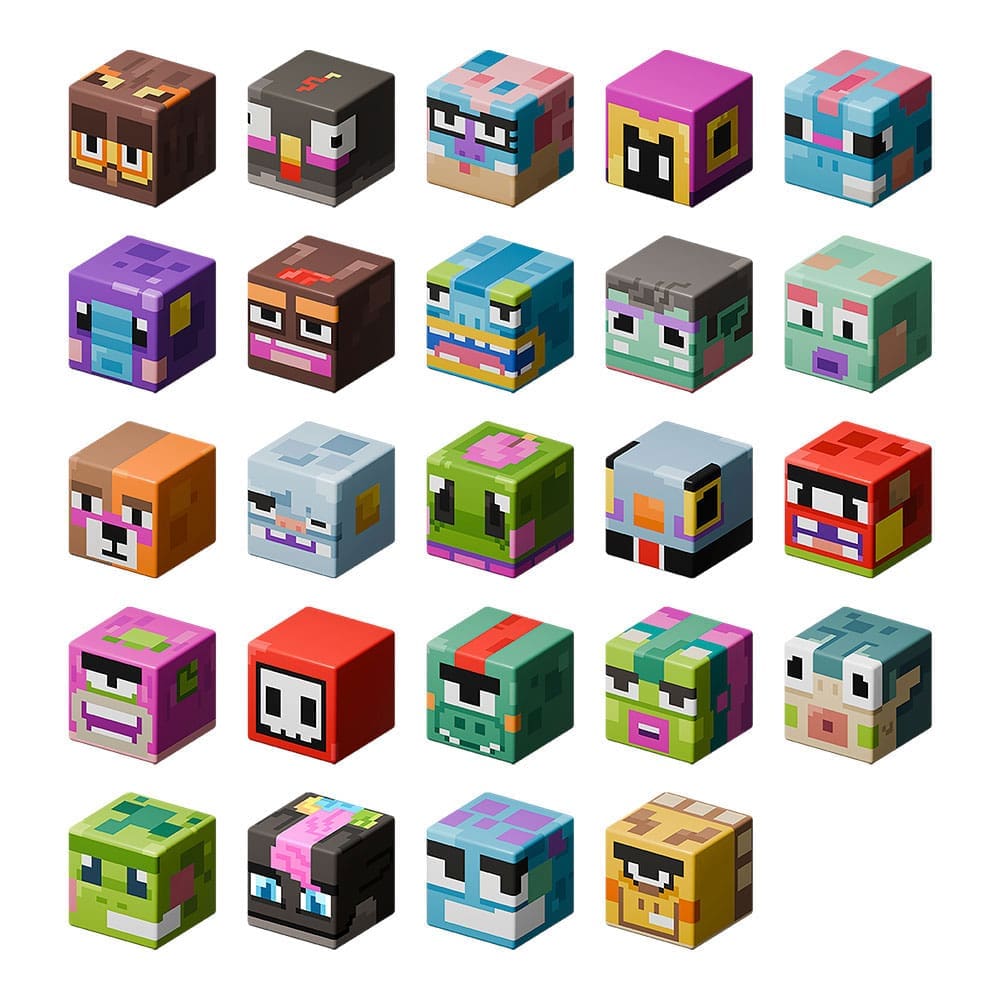
Some of the ÆRTHLINGS you can open are definitely more exciting than others. There’s a skull and a sly-looking dinosaur thing that are the first set’s ‘Legendary’ ÆRTHLINGS, but a few of the commons are preety boring to look at, so I do wonder if opening one of those could be a turn-off for players.
I found out you can start the game, and you’ll be given one character to play with; you don’t need to buy a box straight away.
When you start playing the game itself, you’re very quickly introduced to ÆRTHLINGS’ core gameplay loop, which involves collecting resources from wood, rocks, bushes and more and then using those to heal AETH spots, which gives you hearts. You can use those to expand the world and unlock a new section. As you grow the world, you’ll come across enemies, challenges, different types of resources and possibly some other characters. You eventually unlock the ability to begin building things, and from here you’ll start placing down chairs, tables, fences, and the typical array of items you’d expect to build out and make a world feel like your own.
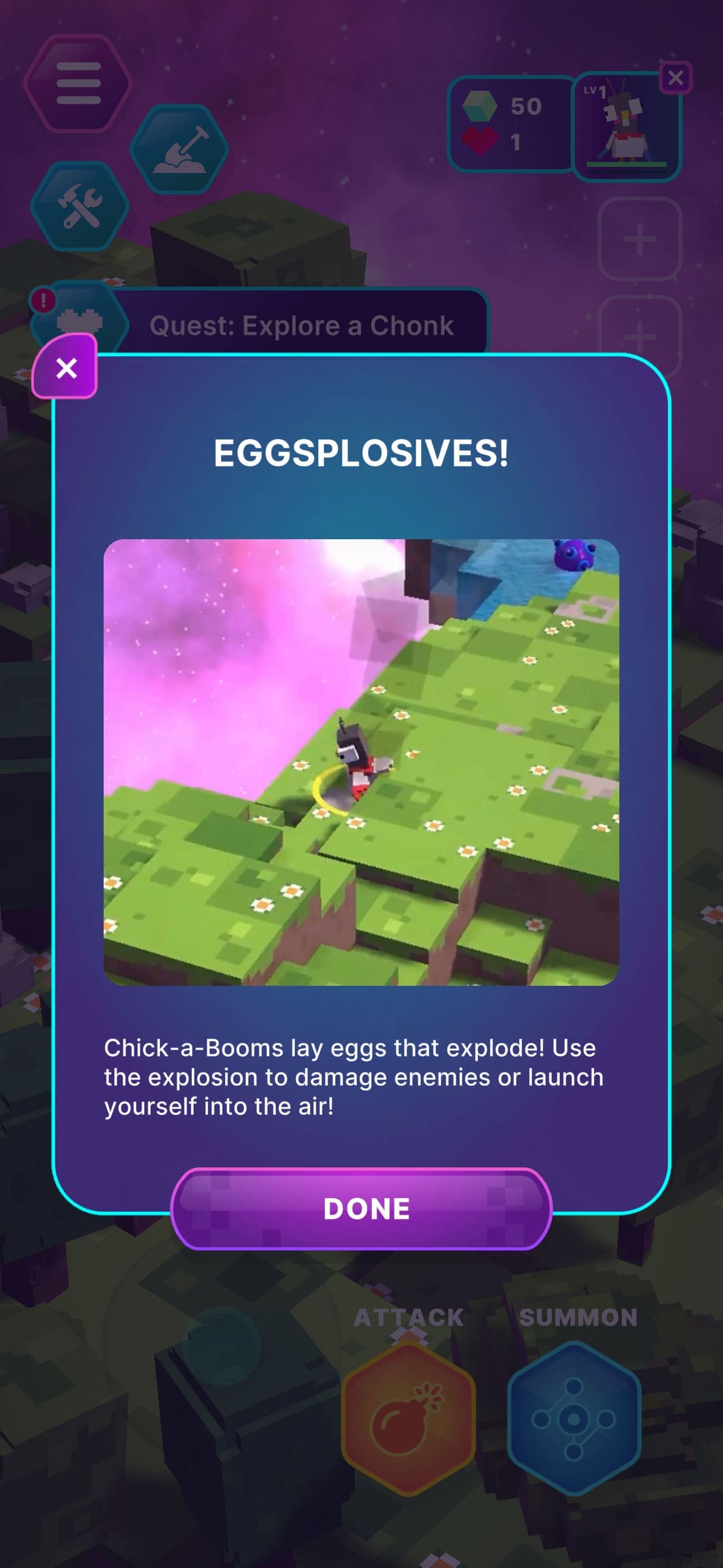
Adding any ÆRTHLINGS you’ve unboxed is easy: the figures have an NFC chip on the bottom, so open the right menu in the game and tap them on your phone. With the four different ÆRTHLINGS I added to my collection, I discovered they each had different attacks, and also moved slightly differently. They each level up differently, too, and I fell into enjoying playing as the ones with heavy attacks that seem to take out enemies better than the ones with fast attacks but less damage, which involved me having to kite the enemies backwards as they attacked me constantly.

When you ‘die’ in the game, your creature will return to a stone base, and if you’ve got another ÆRTHLING, you can just swap to them to play as instead. However, if you haven’t bought any, you can use food you’ve found in the game to speed up the healing of your creature. Food is also the only current resource that you can buy with the in-game currency you get. I haven’t really had to bother, however, since I had four ÆRTHLINGS from the get-go. You can also decide that if you need to wait, that’s the time for a break from the game.
I would be a lot more invested in making my world look preety if I had more control over terraforming it. The game gives you a tool to move the world’s square platforms up or down, so you can attempt to even out the terrain; however, it is very tedious as you have to go square by square. There’s no option for a 2×2 or 4×4 setting that allows moving several squares in a single move. And you can also get blocked by tree stumps or other obstacles, and you may want to clear them. My current theory is that the game doesn’t allow you to clear resources because it doesn’t want you to run out. Still, if it lets you clear even a small percentage per area, I could clear a nice little area around my home base and feel a lot more relaxed in the game alongside my new friends.
The trading and how it levels the ÆRTHLINGS up are the standout features of this game to me, as they encourage a community aspect and don’t punish someone for trading their figure away. If you trade your physical figure to someone else, and they give you theirs, you can also initiate the trade in the game. You’ll keep your version of the ÆRTHLING, but they’ll get their own that should be more powerful. And the more times a ÆRTHLING is traded, the more powerful it’ll become, and you can track its lineage in the game as well as unlock new abilities.
What’s here is a solid starter packaged in the ‘Genesis Series,’ the first ÆRTHLINGS blind box collection alongside the digital game. I would love to see some of the changes I mentioned about terraforming built upon to help keep players like me, who are looking to build out a bit more of a home area, engaged, and to help overcome updates and new releases. I can only assume different types of biomes and creatures could be introduced to keep the game feeling fresh.
(A review unit was supplied for the purposes of this article.)