Synopsis:
Hell’s armies have invaded Earth. Become the Slayer in an epic single-player campaign to conquer demons across dimensions and stop the final destruction of humanity. The only thing they fear… is you.
Publisher: Bethesda Softworks
Reviewed on: PC
Also available for: PS4, Xbox One, Nintendo Switch (TBA), Stadia
Cast: Darin De Paul, Kevin Schon, Jason Spisak, Keith Silverstein, Matthew Waterson, Elle Newlands
Developer: id Software
Game Director: Hugo Martin
Lead Gameplay Designer: Peter Sokal
Art Director: Tony Garza
Composer: Mick Gordon
In 2016, id Software rebooted DOOM by taking the franchise back to its roots of fast-paced, in-your-face shooting. It was more intense and graphic than ever thanks to the glory-kill system pushing players to stay in the action. DOOM Eternal takes everything that made DOOM one of the generation’s best FPS games and cranks it from 11 to 22. It’s faster, bloodier, louder, and more kick-ass than before.
Other than one pretty cool story moment about halfway through, I understood the plot of DOOM Eternal about as much as I did DOOM (2016)—that is to say, not very much. Demons, angels, hell on Earth… just give me the guns. To be fair, the first game trained me to think like this when the Doom Slayer literally smashed the plot. id knows only the hardcore care for the lore and hides nearly all of it in codex entries. While this entry treats the story a bit more seriously than the first, you don’t have to—because I certainly didn’t.
Boot up the game and you get one of the best openings in a while, with Mick Gordon’s phenomenal soundtrack kicking you straight into the mood to kick ass, and then you’re thrown into the action. It’s hell on Earth, the invasion is underway, and the Doom Slayer is here to stop it. How’d he get the Fortress of Doom hub? Where’s Dr. Samuel Hayden from the end of last game? Only the codex knows. Before you think too hard, there are demons to delete.
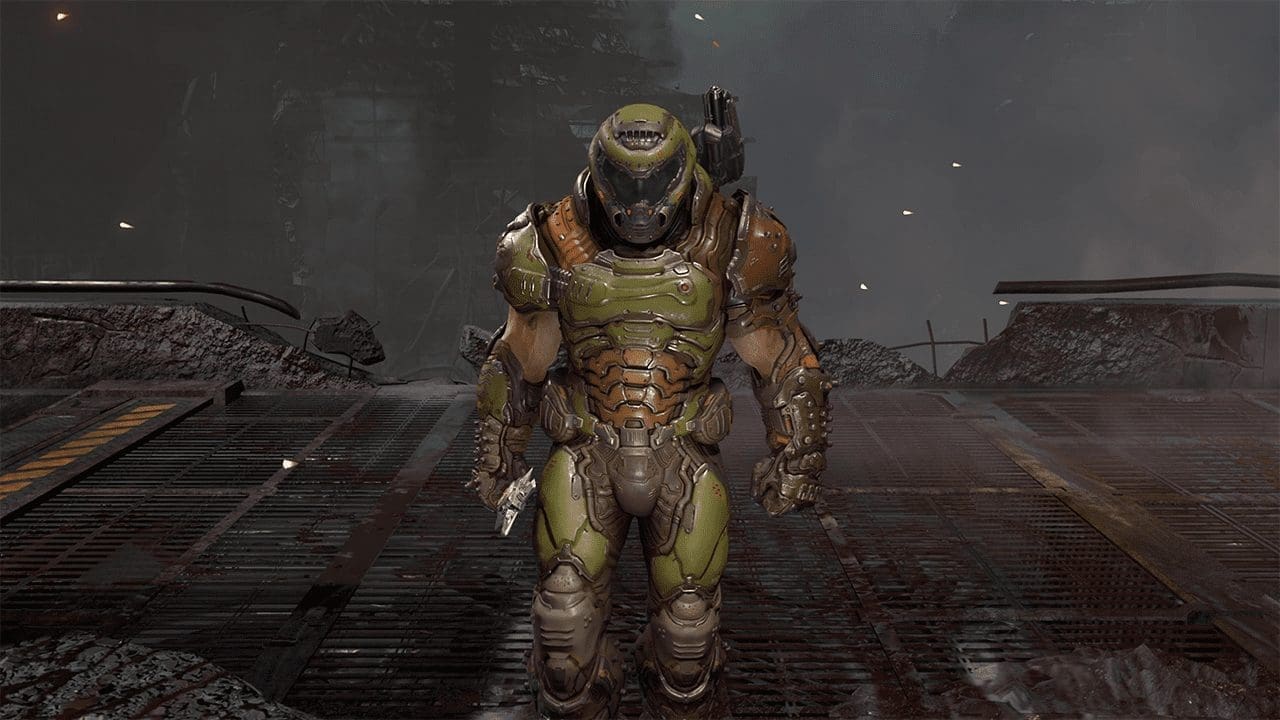
Unlike the first game’s “activate the egg to spawn waves” rhythm, DOOM Eternal paces levels better. The music builds as you chew through small skirmishes before you enter arenas where enemies are already brawling. Where DOOM (2016) had sprawling areas with spawns all over the place, Eternal embraces its arena-shooter DNA and often feels like Quake.
In DOOM (2016) you’d grab the super shotgun and default to it. Stuck in a corner? Spam melee, hope for the best, snag a few glory kills for quick health. That won’t fly in DOOM Eternal. The Slayer’s melee is nerfed to do negligible damage, and most enemies demand specific weapons or tactics. The super shotgun still rules—oh, it super does—but it won’t solo the game anymore.
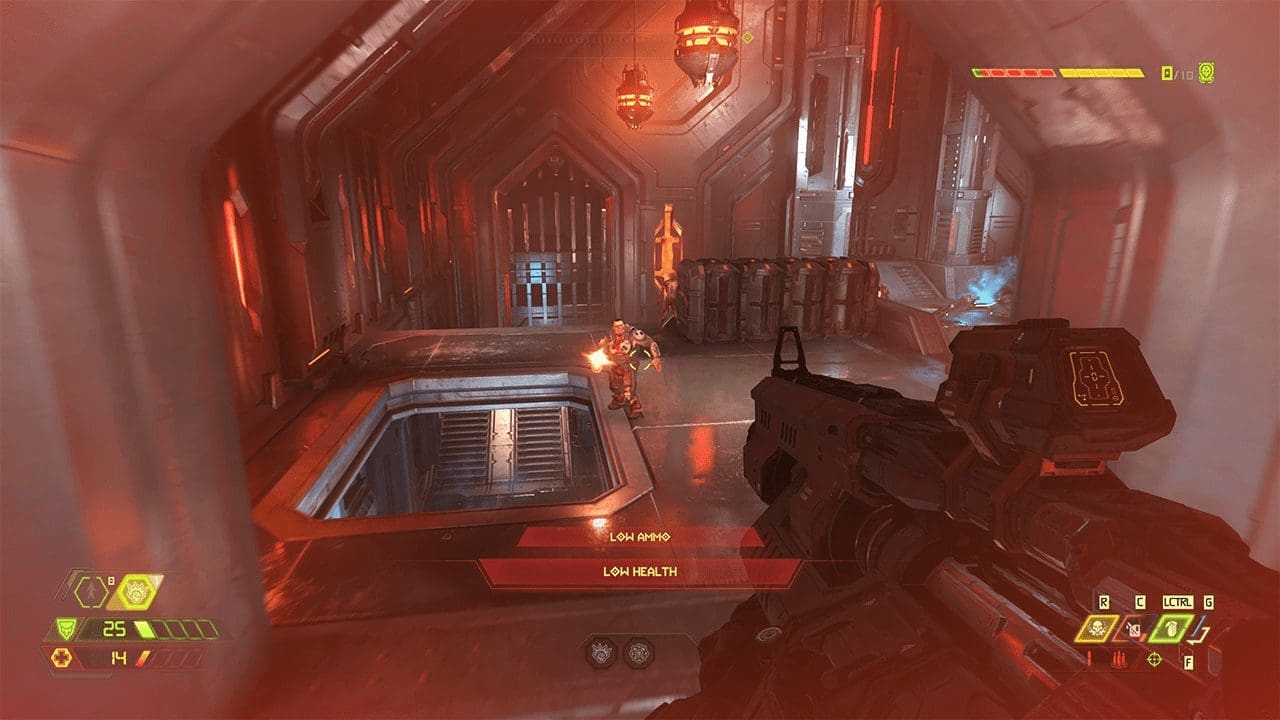
The first two levels dump a lot on you, especially if you skipped 2016. Staggering an enemy sets up a glory kill (drops health). Using your shoulder flamethrower and then damaging enemies drops armour. Chainsawing enemies drops ammo. Learning to rotate these tools is essential to keep resources flowing. Your chainsaw always recharges to one pip, which means you can’t truly run dry—find a fodder zombie, flame them, then saw them to get two resources at once. Resource management is as core to Eternal as pulling the trigger.
Beyond fodder like zombies and imps, everything will wreck you if you don’t target weaknesses. The Arachnotron’s back cannon will rain hell from afar—pop it with the combat shotgun’s sticky bomb to swing the fight. Nearly every demon has a weapon to destroy or a weak point to exploit. The Mancubus is a menace, but a well-timed grenade in the mouth will stagger it for a glory kill. Think of your weapon wheel as a rock-paper-scissors chart.
Movement dials up too. You now have a double dash (with a short cooldown), can swing from bars for quick escapes, and the super shotgun gets a meat hook that yanks you into targets. Levels lean into this with added verticality, setting up delicious mid-air double-dash, meat-hook, boom-stick finishers.
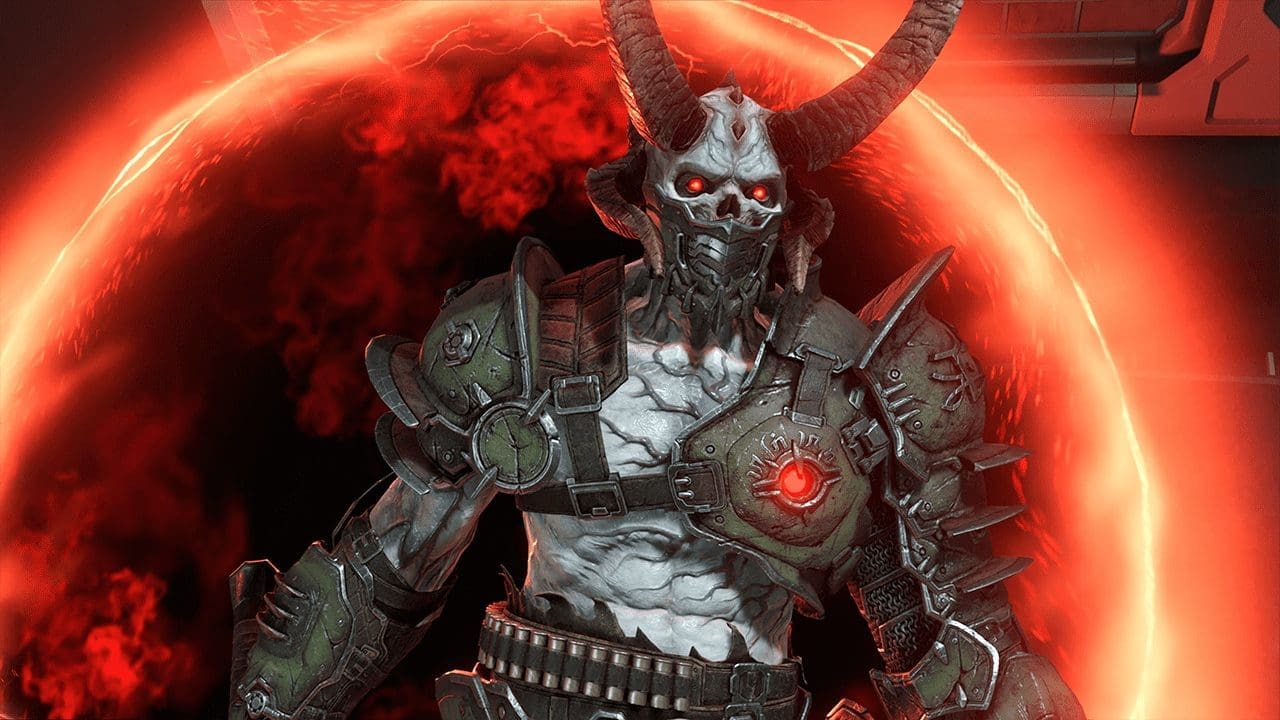
DOOM Eternal isn’t easy, and it tells you so. Beat the first boss and two more spawn—it’s an “are you kidding me?!” moment. Early bosses aren’t unique enemies so much as introductions to nastier future encounters. The second boss, the Marauder, is an axe-wielding demon with a shield who forces a timing-based counter—very Soulsborne. I nearly lowered the difficulty before finally beating him and feeling pure relief. Two levels later, he’s a standard add in the chaos.
The game trains you without you realising it. By the end, you’re juggling multiple demons you once struggled to 1v1—and it’s intense, exhilarating stuff.
Puzzles break up fights (mostly quick key-card hunts), but between arenas you’ll do platforming with dash and wall-grabs. I expected to hate FPS platforming; I ended up enjoying it. Segments are short and give welcome breathers.
Underwater sections, though? The bane of this game. Clunky, frustrating, and mercifully rare.
The platforming also lets you soak in DOOM Eternal’s variety. Gone is the red-tinted Mars and corridors of UAC bases from the first game. Here you visit wildly different planets and biomes—some with blue skies and stunning vistas. (Earth’s wreckage has its own hellish beauty.)
It took me ~14 hours on Normal, finding a decent number of secrets and dying plenty. On higher difficulties, expect 20+ hours unless you’re a god.
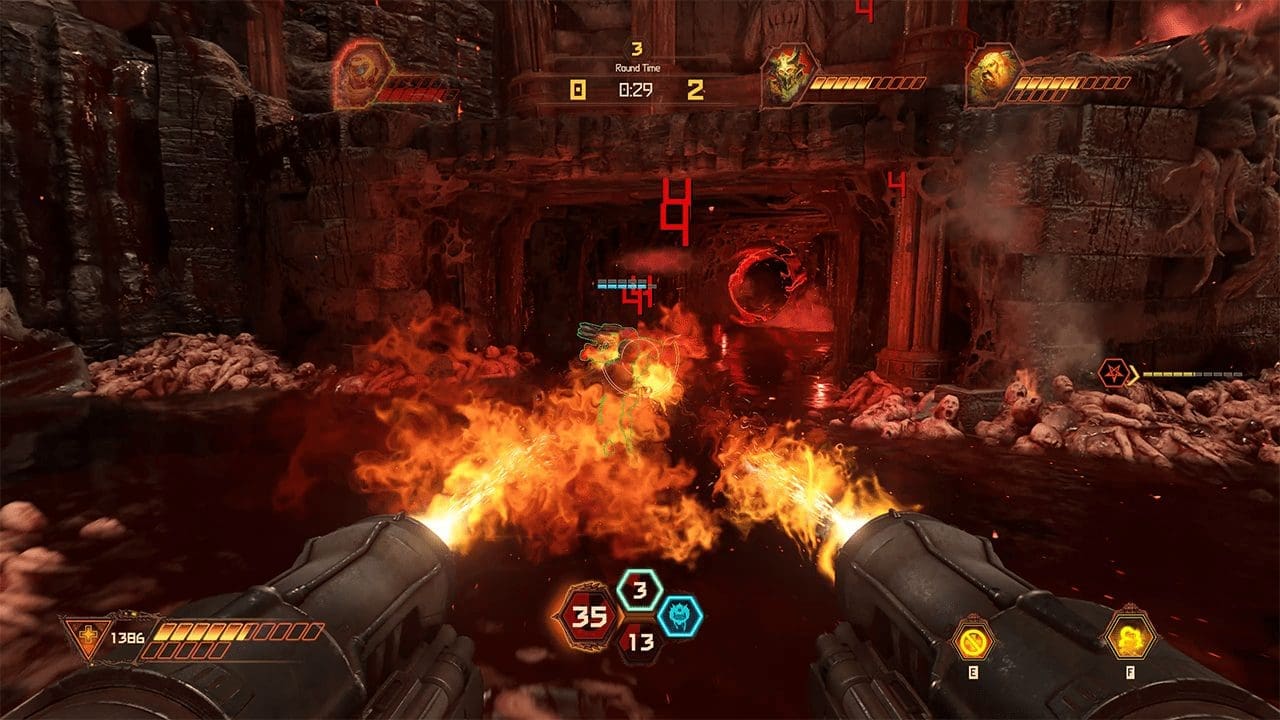
Multiplayer’s Battlemode tries something different but will likely land for a core group of superfans. It’s 1v2: one Slayer versus two player-controlled demons, best-of-five rounds. Demons equip four abilities (including summons); Slayer builds a standard loadout. Queue times felt long and rounds can end fast. I sampled each demon and the Slayer for a couple of hours, but I don’t see myself sticking with it.
Post-credits, there’s still plenty: secrets (including vinyls for your Fortress of Doom hub), a training space, and rotating Master Levels—remixed, “git-gud” versions that throw nastier enemy comps at you.
Unfortunately, Mick Gordon’s DOOM Eternal soundtrack wasn’t online as of writing, or I’d have it on repeat. The prog-rock/metal riffs are as essential to feeling like a badass as they were in 2016.
When credits rolled, I was exhausted—and my hands hurt from the late-game mouse-and-keyboard intensity. After a short break, I jumped into Master Levels because the combat is that rewarding (and the soundtrack rips). DOOM Eternal is easily one of this generation’s best FPS games, ripping and tearing its way past the first in nearly every regard.

(DOOM Eternal code provided for review)