
Synopsis:
A former soldier joins an eco-terrorist group in a mission against the electric power company he used to work for in order to protect the planet and the environment.
Publisher: Square Enix
Reviewed on: PS4 (Pro unit)
Also available for: N/A
Cast: Cody Christian, Tyler Hoechlin, Britt Baron, Matt Jones, John DiMaggio, Gideon Emery, Erica Lindbeck, Fred Tatasciore, Briana White, Max Mittelman, John Eric Bentley, James Horan, Arnie Pantoja, William Christopher Stephens
Developer: Square Enix
Directors: Tetsuya Nomura, Naoki Hamaguchi
Writers: Kazushige Nojima (screenplay), Yoshinori Kitase (original story), Tetsuya Nomura (original story), Hironobu Sakaguchi (original story), Kazushige Nojima (original story)
Scenario Design: Motomu Toriyama
(Note: This review is spoiler-free and I’m doing my best not to spoil anything from the original 1997 game or any of its sequel/prequels for new players. I’m also not spoiling any of the new content for returning players. That said, if knowing there is NEW content is a spoiler to you, maybe click off this review for now.)
Adored by fans as one of the greatest games of all time, Final Fantasy VII has held cult status since its release on the original PlayStation in 1997. It contains one of the most memorable moments in video game history and went on to spawn an entire compilation of spin-offs including the animated film Final Fantasy VII: Advent Children. When a remake was announced, fans like me were excited to see their beloved game leave behind the PS1 polygons and inject modern sensibilities. However, if you’re looking for a one-to-one creation of the original game, you’ll be shocked to find what’s within Midgar’s walls on this journey.
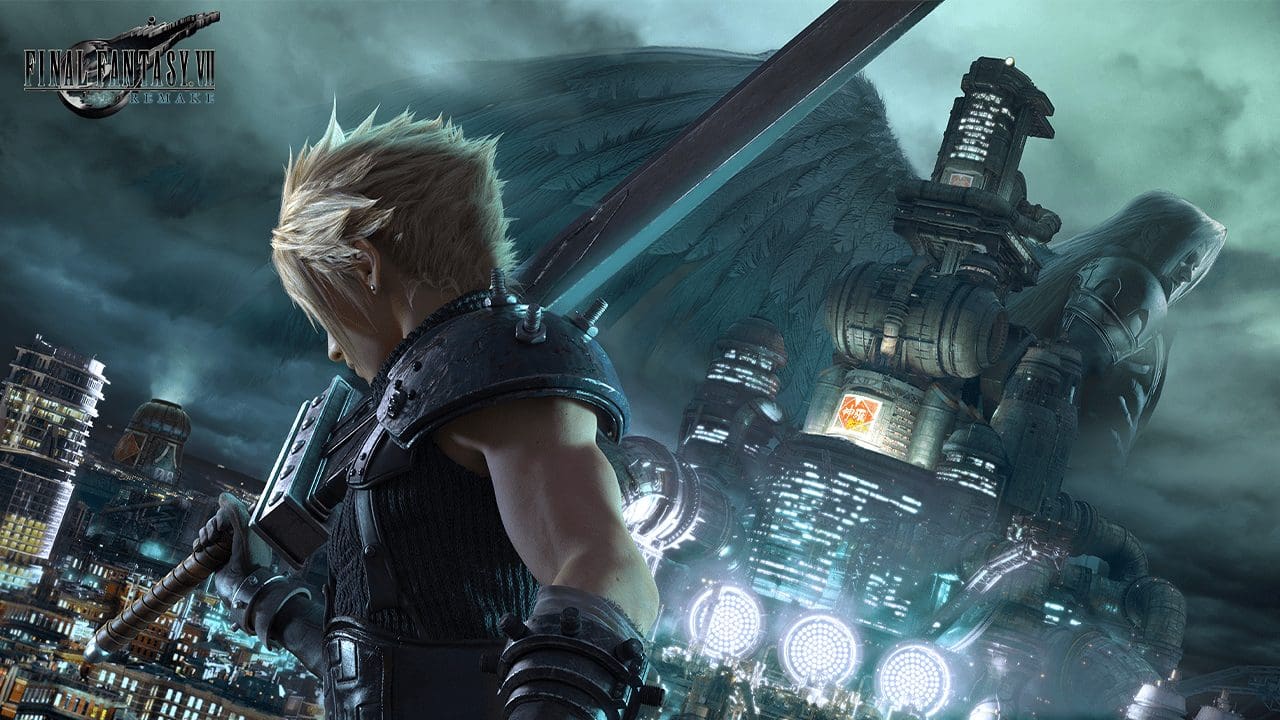
Our adventure begins as it always has with Cloud Strife, an Ex-SOLDIER now mercenary-for-hire, riding along with the eco-terrorist group Avalanche headed up by Barret Wallace on a mission to destroy a Mako Reactor — a contraption literally sucking the lifeforce from the planet to fuel all manner of life in the city of Midgar. Cloud, initially just there for a paycheck, quickly gets whirled up in more than he signed up for as he meets and forms relationships along the way and sees more of the atrocious actions the Shinra Corporation is making, aside from just sucking the planet dry.
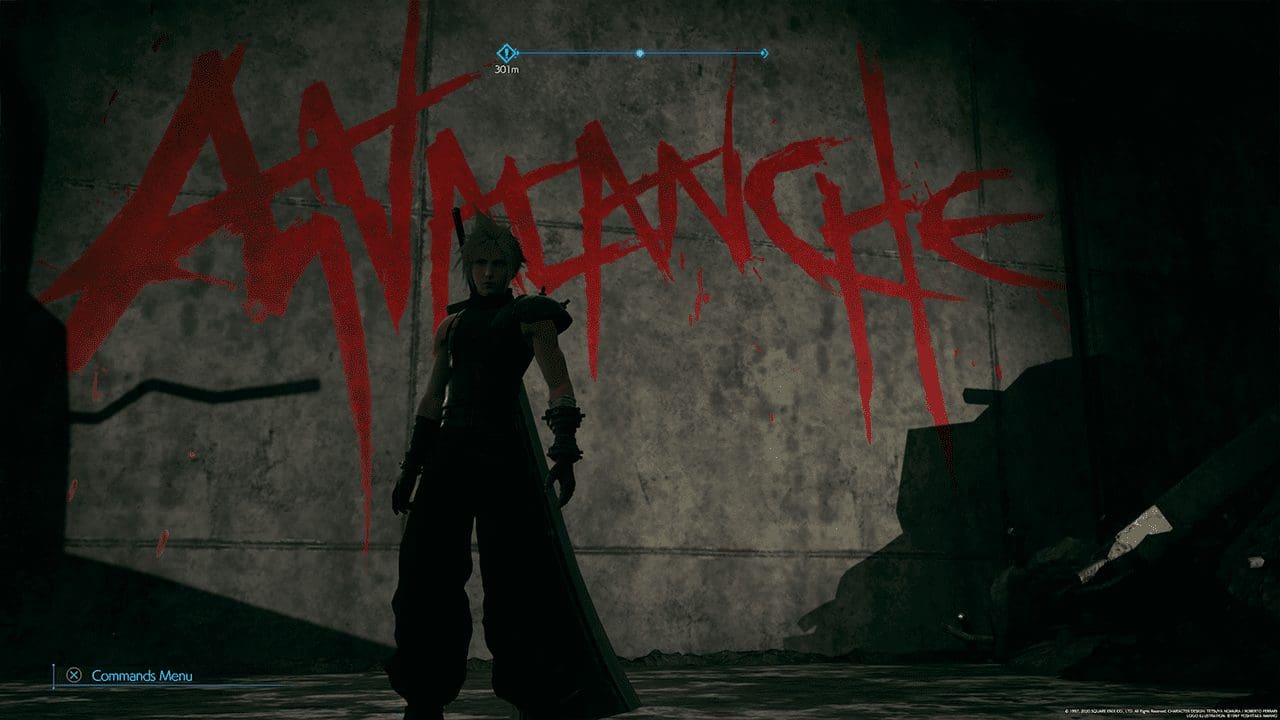
Where the original game spent roughly four hours inside the walls of Midgar before sending you into the open world on a quest to avert imminent destruction, Final Fantasy VII Remake took me 38 hours to reach that point — and then asks you to wait patiently for more. This will be super annoying to new players, as the game opens many plot threads but closes barely any by the time the credits roll.
As a fan of the original, Final Fantasy VII Remake does a wonderful job of recreating its major set pieces and character moments in gorgeous 4K with highly detailed character models. Everything is stretched and expanded now, allowing more time to build relationships, get a better understanding of Shinra, and tease what’s to come.
The original game was dense with complicated themes about protecting the planet, corporate overlords, the afterlife, and the meaning of death. Twists and reveals were plentiful and could give you whiplash at a moment’s notice. Having more time to explain several key pieces of information will help lead new players into future sequels, but there are still plenty of confusing elements here — one of which is sure to be the most controversial and debated part of the game until more information on the sequel arrives.
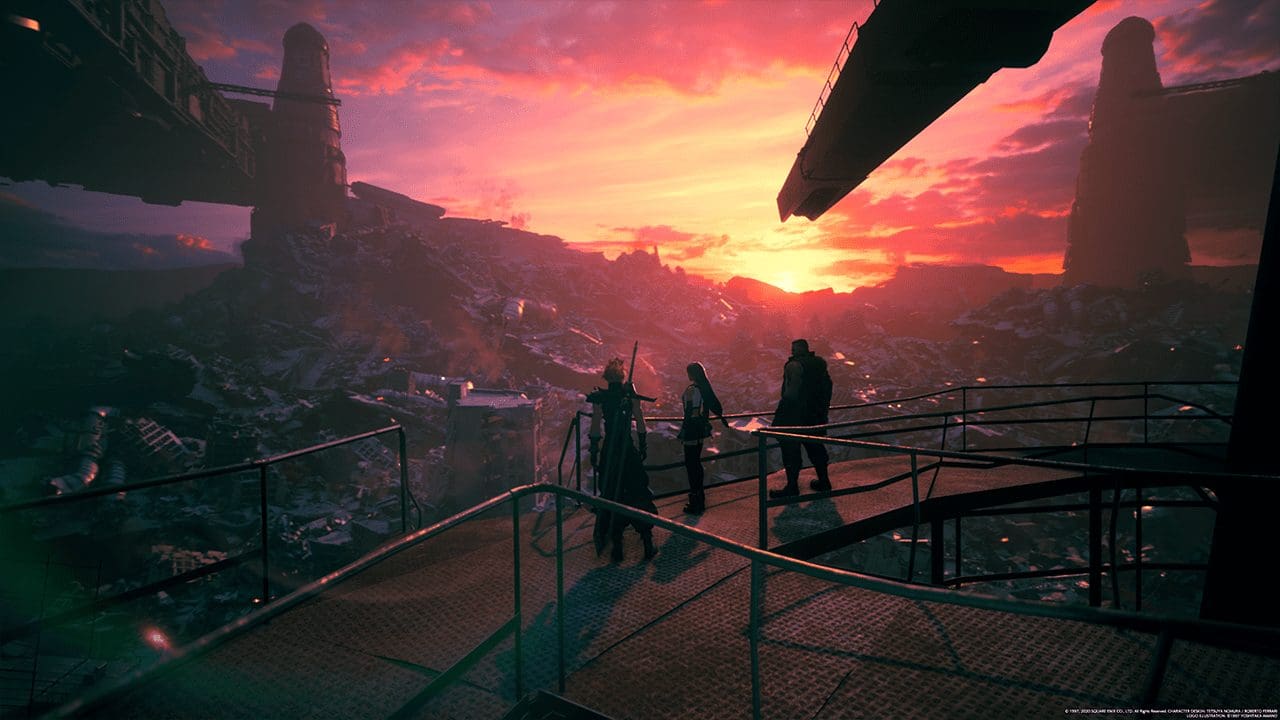
I’m obviously not going to get into that here as it’s a major spoiler, but the conversation around this game will rest largely on the final couple of hours and some controversial choices in setting up future entries in the Final Fantasy VII Remake series. This is FF7 reimagined, not remade, and knowing that might help prepare you for both small and large changes.
For players coming to this as their first FF7 experience, it’s equally the best and worst way to meet the story and characters. For the first three-quarters of the game, it’s a great extended version of Midgar from the original. However, in the final act it feels like having played the original is almost imperative to understand what’s being teased; I can’t help but feel new players may be lost in this section.
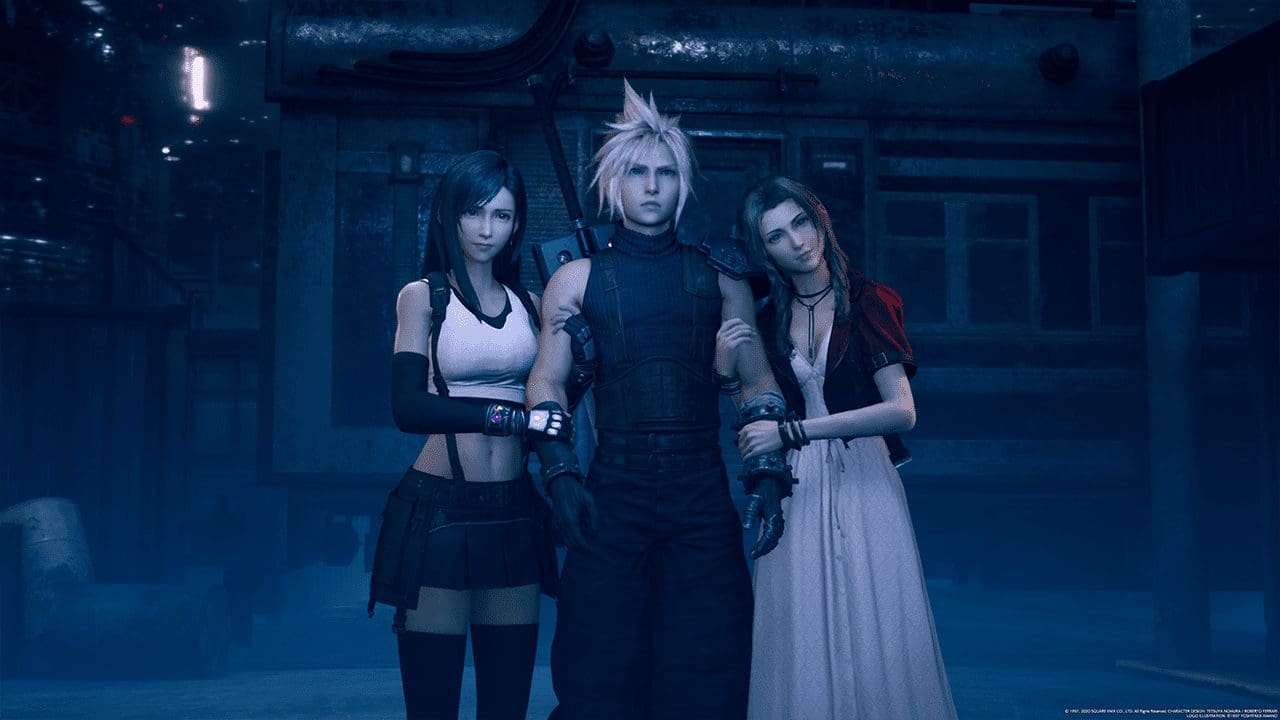
The time spent expanding Cloud’s relationships with Tifa, Aerith and even Avalanche members Biggs, Wedge and Jessie is very welcome. The somewhat canonical answer to “which girl Cloud ends up with” according to Advent Children is waived here and left more open-ended. The extra time with Aerith in Midgar is welcome — she’s easily lovable with a heart of gold; Tifa Lockhart surprisingly doesn’t get much of her backstory revealed here, even though a lot is teased. Barret is frustratingly as stereotyped as the gruff Mr. T caricature he was in the original; if there’s one character I wish they had tweaked, it’s him.
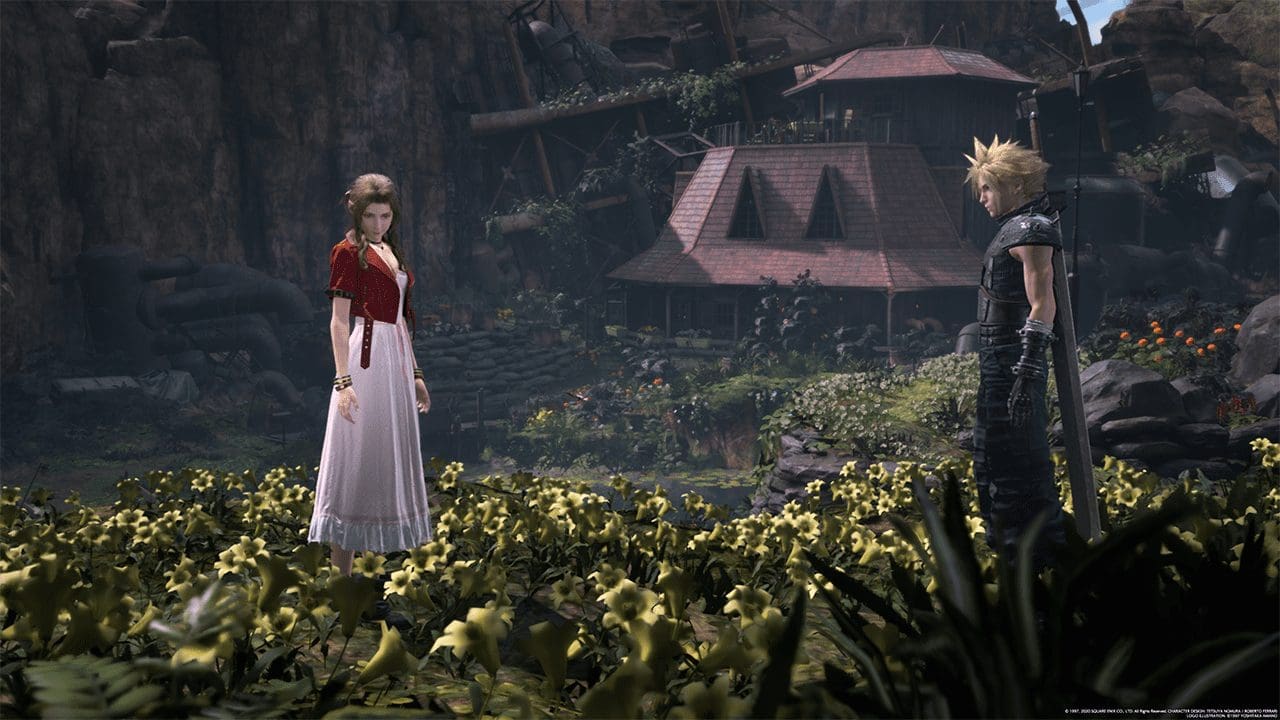
Cloud is somewhat more likable here than in the original. He’s supposed to be an abrasive loner type, but his too-cool-for-school attitude can be grating; the game peels that back faster this time, which is welcome. The nature of leaving so many questions about Cloud unanswered will undoubtedly annoy new players — especially as the finale constantly hints at things but never goes there.
Several of the more outrageous, silly elements remain mostly unchanged. In fact, one particular fight I assumed they’d remove because it’s so ridiculous is here — and hey, it is ridiculous — but it’s part of the charm. Sephiroth is in the game — that’s no secret — although it may come as a shock because in the original he was only teased during the Midgar section. I enjoyed how Sephiroth was used, but I can’t say more here.
The original was classic JRPG turn-based combat; Remake does a great job re-imagining those systems in a more action-focused game. You have attack, dodge and block. Early battles seem easy and very hack-and-slash, but as encounters get busier you’ll need more tactics. Your ATB (Active Time Battle) bar charges over time (faster as you attack). You need a charge of ATB to do anything beyond basic actions — spells, abilities and items. Entering Tactical Mode slows time to a crawl and lets you queue actions for Cloud or any party member. It’s similar to a setting you can enable in Kingdom Hearts III to ease that game’s hectic pace.

You can switch between the other two characters in your party with a tap of the d-pad. It’s fast and fluid — and becomes annoyingly necessary, because your party’s ability to use the right spells/abilities without you is poor. If an enemy is weak to thunder, for example, you’d think if Tifa is the only one with that spell she’d use it; instead she’ll mostly auto-attack or block. It’s not so bad early, but in boss fights it becomes frustrating to feel like you must play three characters at once.
It’s a huge disappointment because I really like the combat system, but hate how dumb party AI is unless you jump into the driver’s seat. Thankfully the game isn’t too difficult on Normal. Beating the game unlocks Hard, which I tried for an hour; it disables items and you only heal HP at rest spots. That’s when party members’ lack of smart decision-making becomes most obvious.
The materia system has also been changed. In Remake you can max out materia to unlock higher levels of a spell, but you still need it equipped to use those spells or abilities. With limited materia slots in weapons and armour, it doesn’t encourage experimentation — especially when you need fire, blizzard and thunder on hand to deal with specific enemy types. The “Assess” ability that scans an enemy for weaknesses also takes a materia slot, and I wasn’t willing to go without it.
There isn’t much variety in weapons either, although there’s enough armour and accessories to mix and match protections for certain foes or boss fights. Each character has only a handful of weapons, and at least one per character felt useless. However, every weapon contains a unique ability you can learn after using it enough — then, for instance, switch Cloud back to the Buster Sword.
Each weapon has its own upgrade tree (a simpler, sphere-grid-like system). You earn points as you level, then unlock materia slots, defence/attack bonuses, and more. None of the weapons featured unique enough perks to force build changes for different enemies, so I’d usually learn a new weapon’s ability and then switch back to Cloud’s iconic Buster Sword.
Final Fantasy VII Remake is gorgeous. The character models are stunning for the most part (blemishes aside). Moment-to-moment, in-engine, it often looks better than the 2005 animated film. Midgar is a stunning, hand-crafted creation made with love for the original. The game takes two discs to install — reportedly for the sheer number of unique assets — and I’d believe it. Every area features unique buildings and characters; I never spotted a copy-pasted NPC. Distant background plates when you climb a tall building stand out as lower quality, but you only see them a couple of times.
The music mixes updated classics with new tracks, and it’s all fantastic — though some choices are odd. There are ~30 collectible music discs you can buy from vending machines/shops; some aren’t used in the game at all and are songs from further points in the original (e.g., the Golden Saucer theme — spoilers: you don’t visit the Golden Saucer here — but you can still find the song).
The big question: was it worth the wait? For me, yes. I teared up several times; I enjoyed the combat (mostly); and exploring Midgar with these fantastic characters in such a lavish update was amazing. However, the game makes some questionable choices that may turn off fans of the original and leaves new fans on an odd cliff-hanger. Maybe if we had a rough plan and release cadence for the sequels it would hurt less, but I feel for those who may have to wait years for the next entry.