
Explosion Network may receive a commission when you purchase something via a link on our site
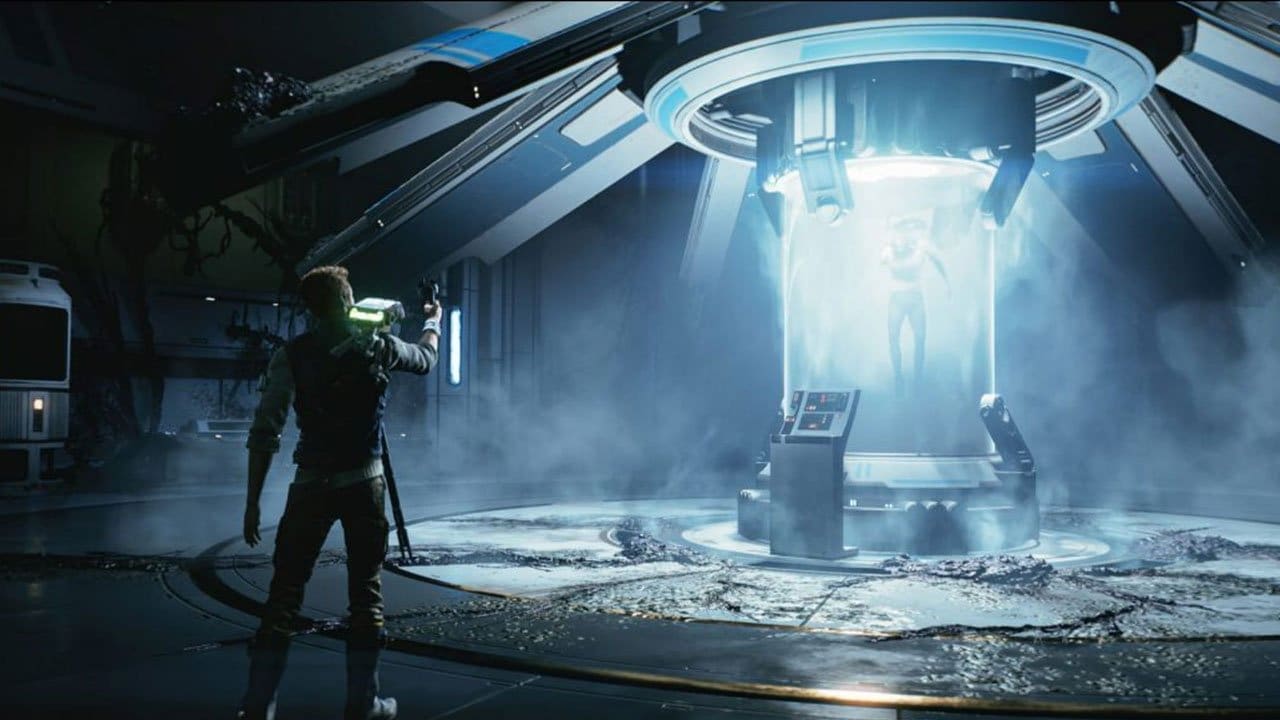
Synopsis: This narratively driven, single-player title picks up 5 years after the events of Star Wars Jedi: Fallen Order™ and follows Cal’s increasingly desperate fight as the galaxy descends further into darkness. Pushed to the edges of the galaxy by the Empire, Cal will find himself surrounded by threats new and familiar. As one of the last surviving Jedi Knights, Cal is driven to make a stand during the galaxy’s darkest times — but how far is he willing to go to protect himself, his crew, and the legacy of the Jedi Order?
Publisher: EA Games
Reviewed on: PlayStation 5
Also available for: PlayStation 4, Xbox Series X|S, PC
Cast: Cameron Monaghan, Debra Wilson, Tina Ivlev, Daniel Roebuck, Cody Fern, Noshir Dalal, Tracy Ifechor, D.C Douglas, Kendal Rae
Developer: Respawn Entertainment
Game Director: Stig Asmussen
Technical Director: Jon Carr
Narrative Director: Aaron Contreras
Lead Writer: Danny Homan
Cal Kestis’ journey in Star Wars Jedi: Fallen Order was mostly forgettable. The supporting characters and antagonist were all interesting new additions to a galaxy far, far away; however, Cal felt only partially invested in and understood why he was doing what he was doing in that game. All of that changes in Star Wars Jedi: Survivor. This sequel builds upon the combat and world design of the first game by giving Cal a narrative I could care about, fleshing out each supporting character and pulling from some of Star Wars’ most exciting and under-utilized toolboxes.
Five years after the events of Star Wars Jedi: Fallen Order, Cal has gone his separate ways from the Jedi Cere, Captain Greez and Dathmir Nightsister Merrin as he continues a fruitless fight against the Empire. For every successful mission he performs to put a kink in their pipeline, it seems to grow back stronger. And after his latest mission sees his ship, The Mantis, in desperate need of repairs, Cal heads off with new friend Bode Akuna to track down Greez on the planet Koboh. While here, Cal hears whispers about a safe haven out of the Empire’s reach; he begins to think about reevaluating what he’s fighting for, instead focusing on who he can save.

It’s impossible to divulge in detail why the narrative threads in Star Wars Jedi: Survivor worked for me so much better than the rather paint-by-numbers events seen in Star Wars Jedi: Fallen Order. That story felt like one I’d seen down several times over between animated, book and comic stories in pre and post-Disney extended universe material. In contrast, the focus here is on the core of all Star Wars themes: hope. A safe haven for those persecuted by the Empire and others on the run like himself drives Cal to chase an idea across the galaxy making new friends and meeting up with old ones at the same time. Even more exciting is that this blip of hope is rooted in some of the most interesting Star Wars lore in recent memory, making the over-inundated period of the Empire at its height of power feel as fresh as it ever has.

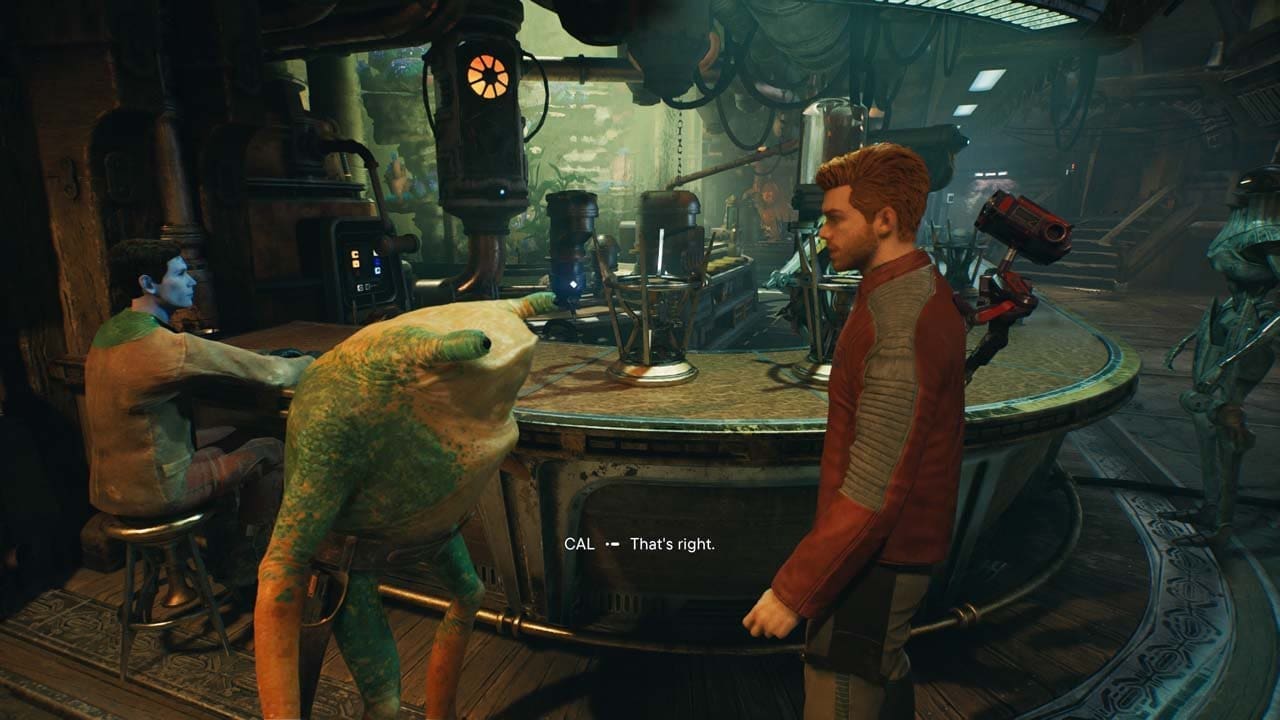
Unlike Fallen Order, there are two core planets you’ll be exploring for most of your time playing Survivor, with the largest of the two being the new planet Koboh. Rugged cliff faces are friends here, as are mines where the many prospectors who have taken up residents on Koboh spend their time searching for riches from the planet’s natural resources. Here Greez has opened a Cantina, which becomes your home away from home between missions and exploration of the planet. A run-down drinking hole, it’s in a bit of trouble when Cal shows up. Still, as the game continues, you’ll be able to invite more friends to come to join the others in the Cantina, some of whom will open shops for you to trade collectables too, play mini-games and even help re-build a fish tank and grow a garden using seeds Cal gathers from other planets. Dropping into the Catina to chat with the characters between missions reminded me of catching up with my crew in the Mass Effect games. Getting to know the random minor characters you can meet across Koboh made the planet feel alive. Be that the DJ robot and friend you’ll liven the place up with music, or the fisherman Skooba Stev who can collect new fish for your aquarium.
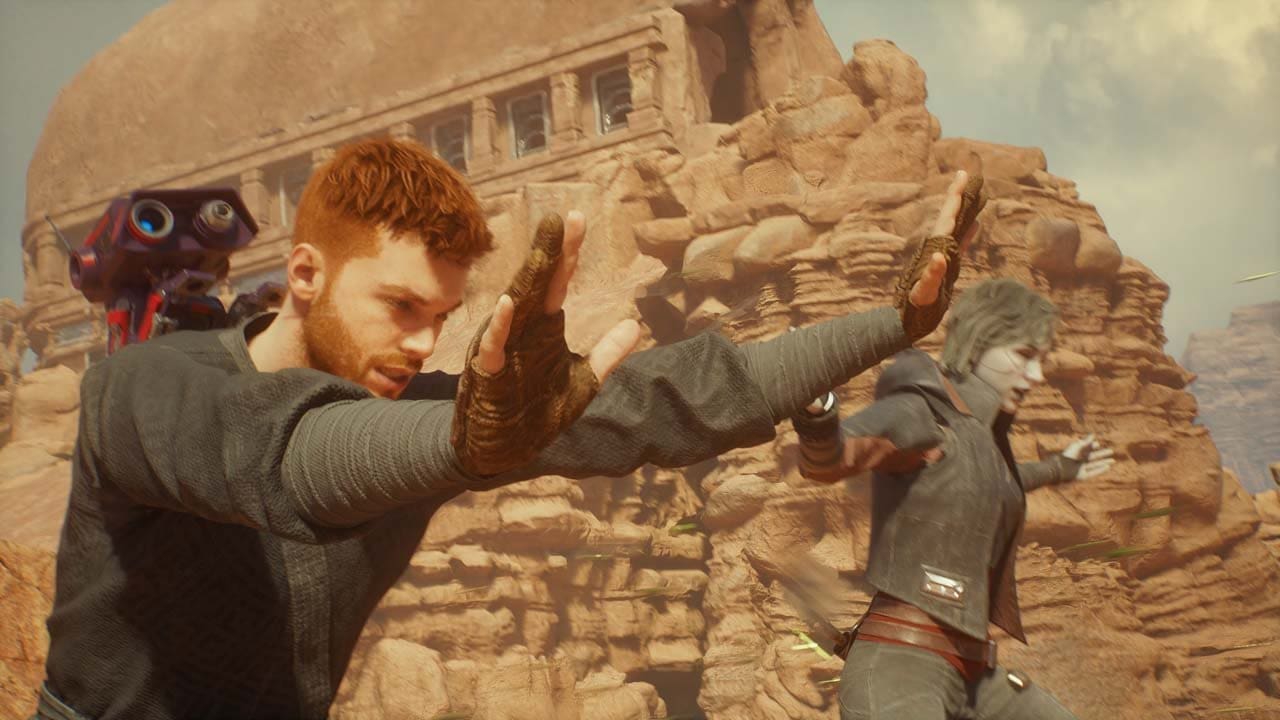
Koboh and the other main planet you’ll explore in Star Wars Jedi: Survivor are both open for exploration, with side quests, collectables and random events to come across. Secret treasures, optional boss fights and tombs are all discoverable. Outside of these two planets, Cal’s quests in this game will also take him to a couple of other minor locations that are more linear and align with the first game’s level design. On each of these planets, you’ll find meditation spots where you can rest, use skill points and fast travel between other meditation points. One vocal complaint about the first game was the lack of proper fast-travel, which this game doesn’t entirely fix, but there does seem to be more meditation points than in the first game, which will allow you to both respawn closer to where you died and travel around a planet closer to the location you want to head.
Combat in Star Wars Jedi: Survivor has mostly stayed the same from the previous game, which was a relatively straightforward action game focused on parrying with light and heavy attacks. Thankfully Respawn chose not to follow video game tradition and wipe Cal of all the abilities he learnt in the first game. He will start the game with force pull/push and the ability to slow down time. And as someone who hated that I had to unlock the force-pull power in a Star Wars game in Fallen Order, I was elated.
You’ll once again unlock new abilities and passive upgrades to Cal’s stats by using skill points you earn by levelling up upon defeating enemies or completing special conditions. The ‘Survival’ tree will let Cal upgrade his overall health and other things relating to how long he can last in a fight, while the ‘Lightsaber’ tree will let you upgrade each of the five different lightsaber stances in the game (more on them in a moment). The ‘Force’ tree lets Cal unlock the ability to force pull enemies together and use the slow ability for longer and more. How you want to upgrade Cal is entirely up to your playstyle, and while I put the least amount of skill points into the force abilities, you may focus on them instead. You can reset your skill points at any point, with the first reset being free.
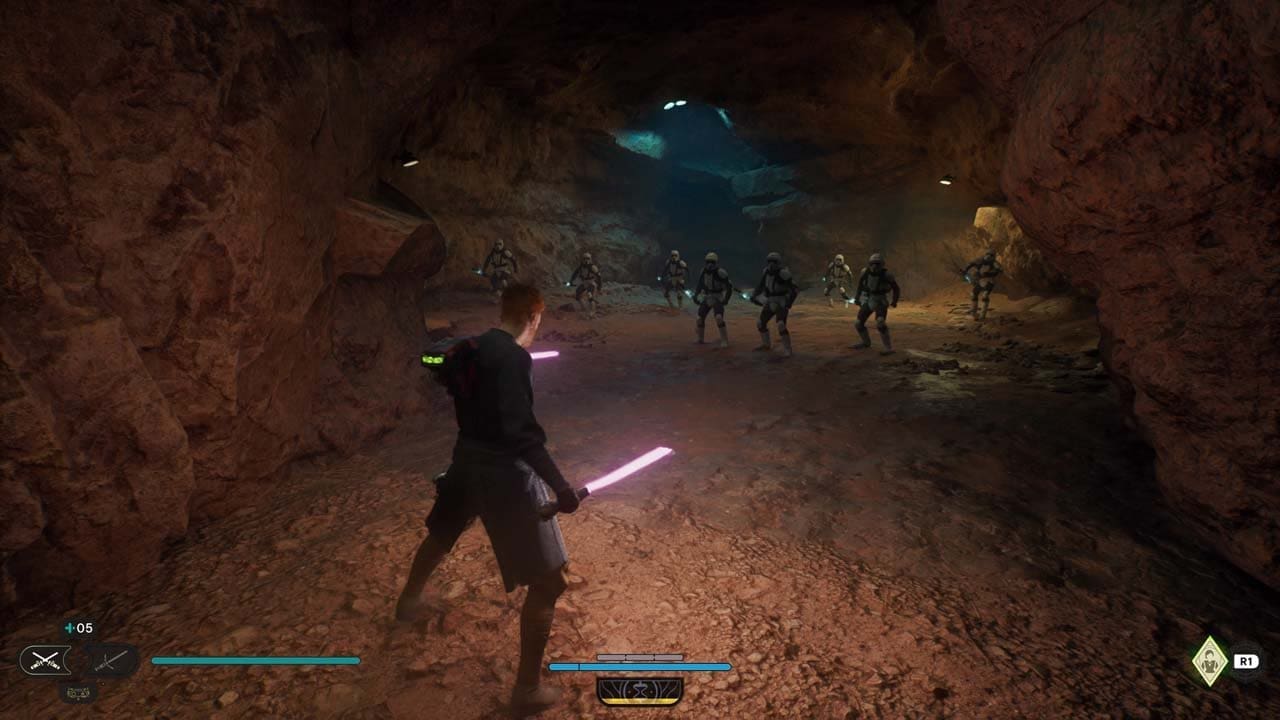
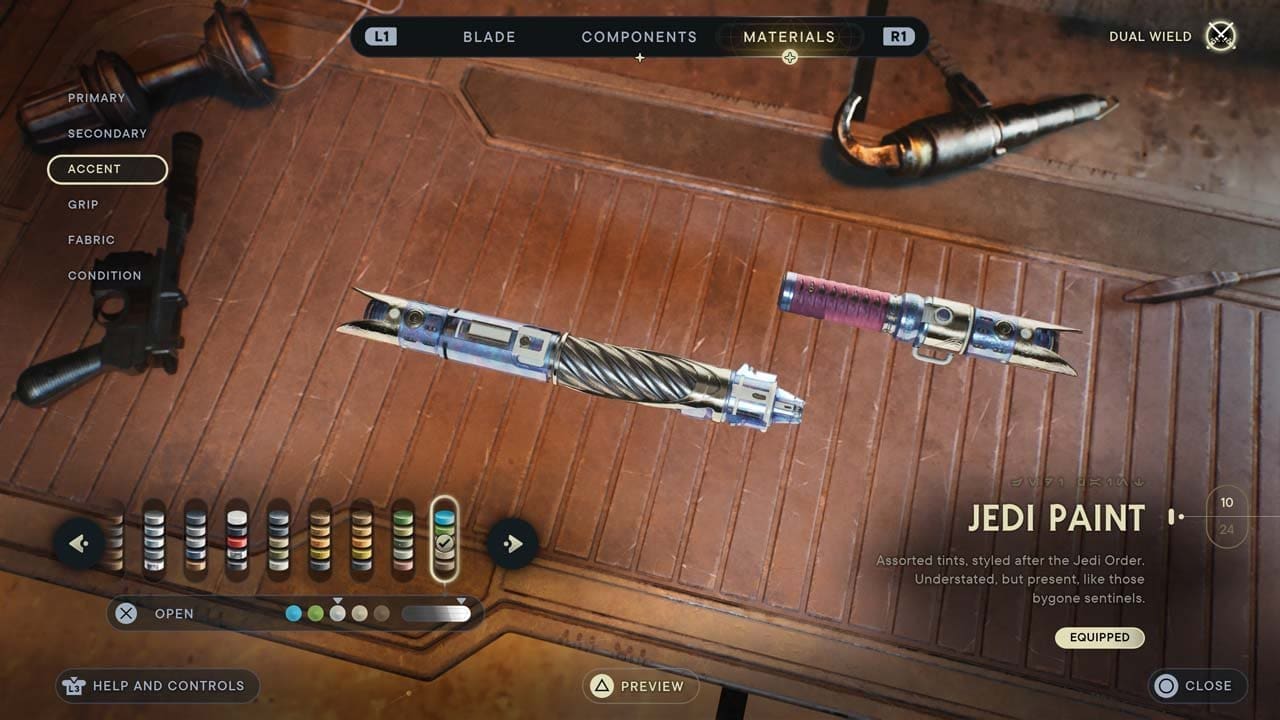
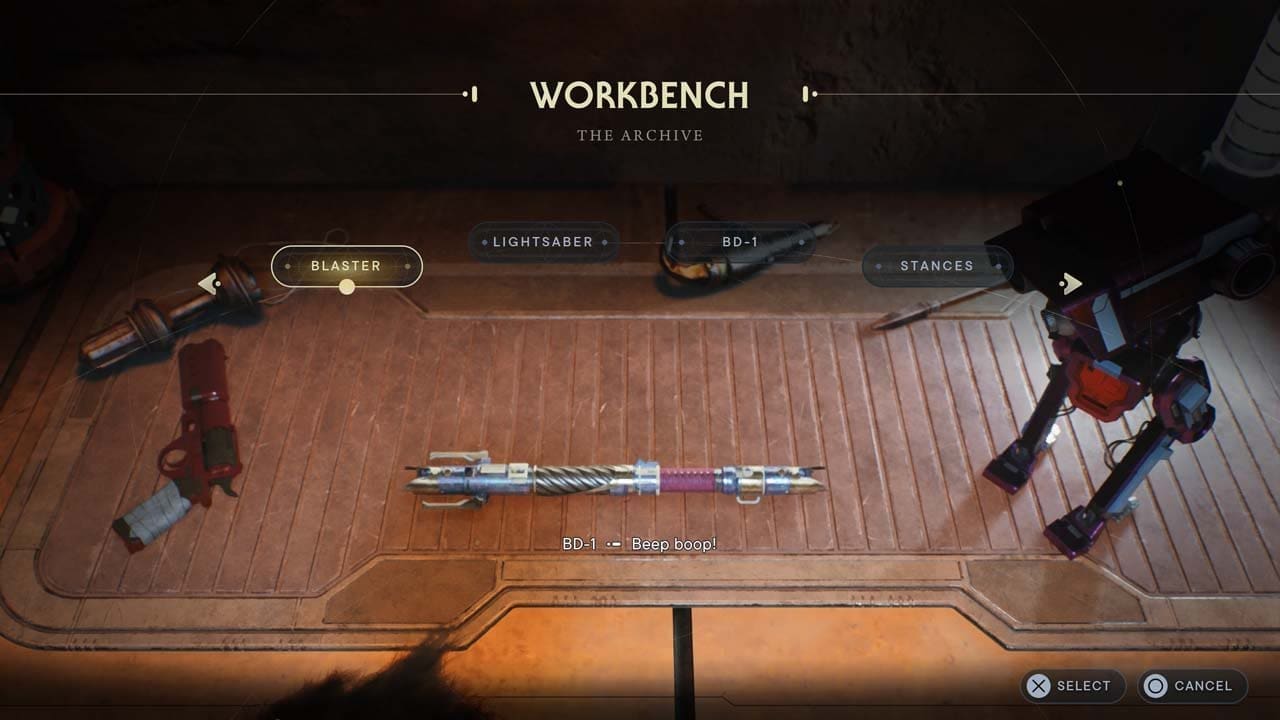
Lightsaber stances are the game-changer regarding how you’ll play Star Wars Jedi: Survivor and how the team at Respawn can build different enemies to have strengths and weaknesses. The game has both the ‘Single’ blade stance and the ‘Double-Bladed’, which you unlock near the end of Star Wars Jedi: Fallen Order. And here, they’re balanced similarly, with the Single blade being the most balanced stance and the Double-Blade being best used for clearing out a room of many enemies. Survivor introduces three new stances, however, in the form of ‘Dual Blades,’ ‘Cross Guard,’ and ‘Blaster.’ The first has Cal holding two lightsabers like you’ll see Ahsoka in the upcoming Disney+ series doing, and able to slash quickly at foes with less overall attack power than the other stances. The Cross Guard stance is the most powerful in the game unleashing devastating attacks, but this Kylo Ren-inspired stance is also the slowest and will be the hardest to master. And finally, the Blaster stance sees Cal embrace the fall of the Jedi order and pick up the un-civilized blaster and dual-wield it alongside his lightsaber.
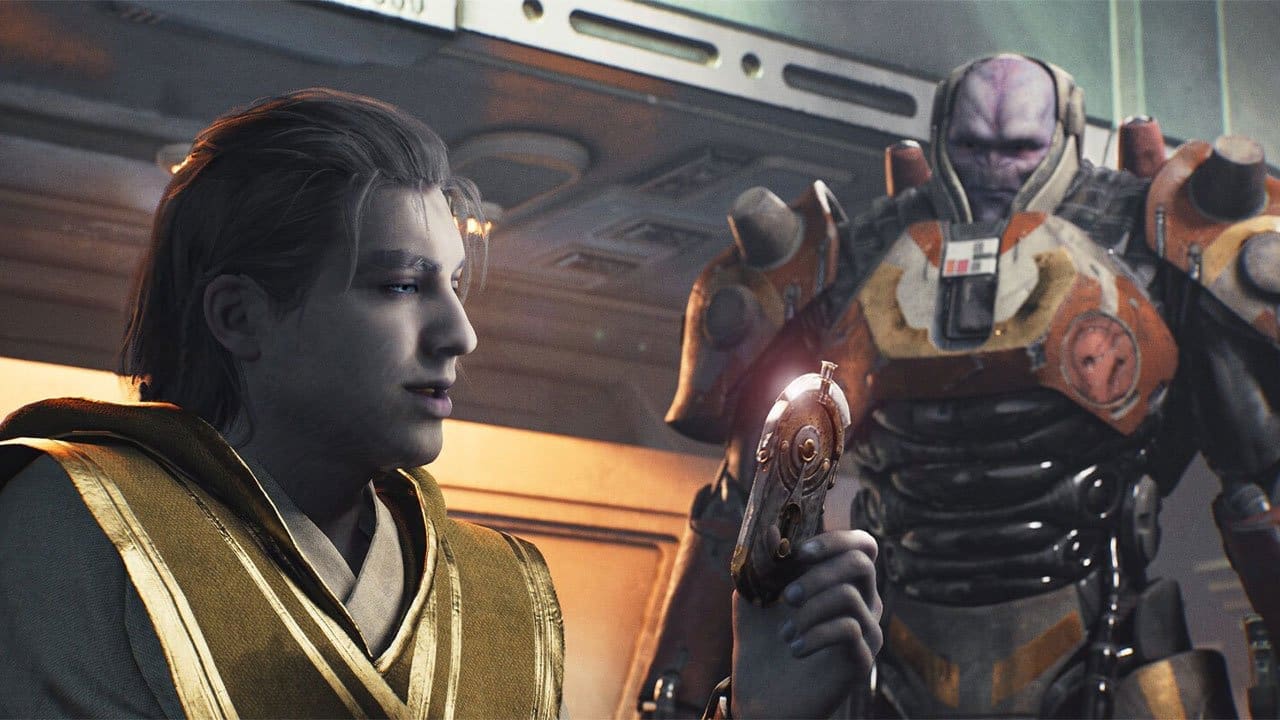
You can quickly switch between two stances assigned to the d-pad on the fly, and some abilities are associated with extra damage upon switching between stances. You’ll unlock all of the stances within the first few hours of the game, and then you’ll need to figure out which ones work best for you and which combination will help you best deal with enemies. As in the first game, the single-blade stance when facing more than two enemies can quickly get out of hand, but here you have the Double-Bladed option to bring with you at all times if you’d like. On a similar path, annoying probe droids and jetpack enemies can be a pest to deal with, and having the blaster option to take them down is always super helpful. With all that said, it does feel like you’re putting yourself at a disadvantage choosing to not head out into the wild without a stance good at taking on more than two foes at once.

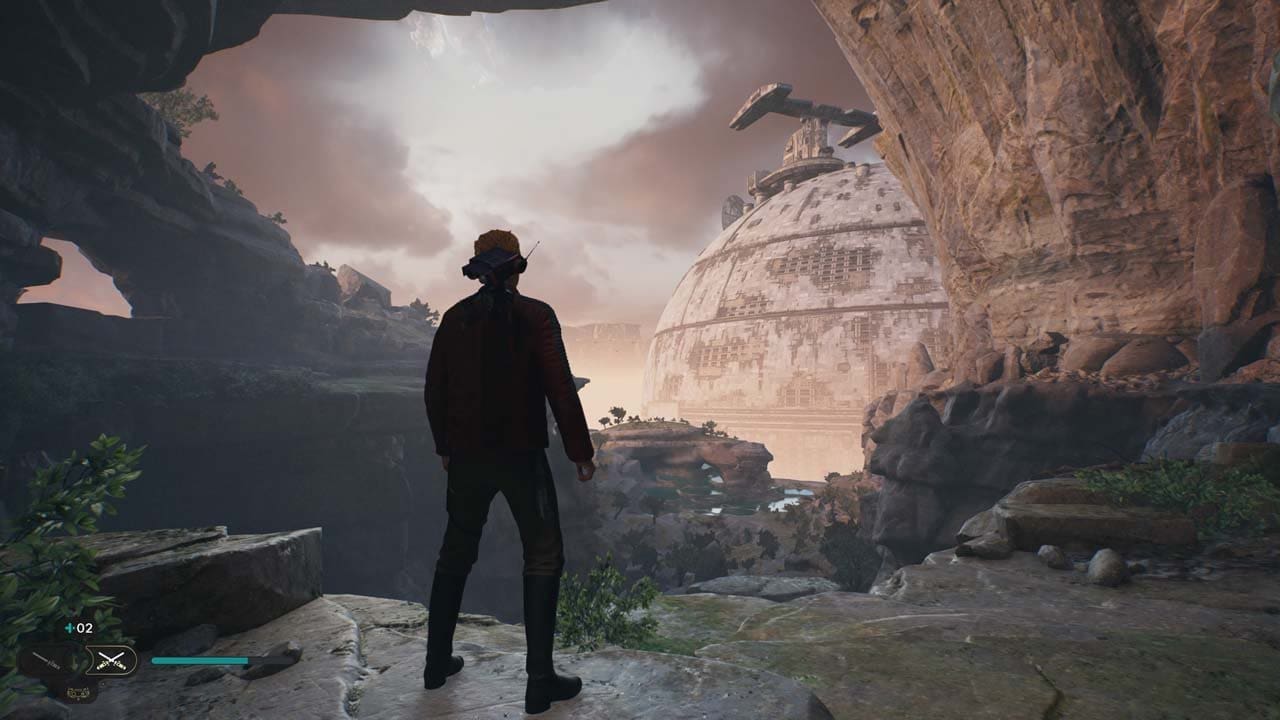




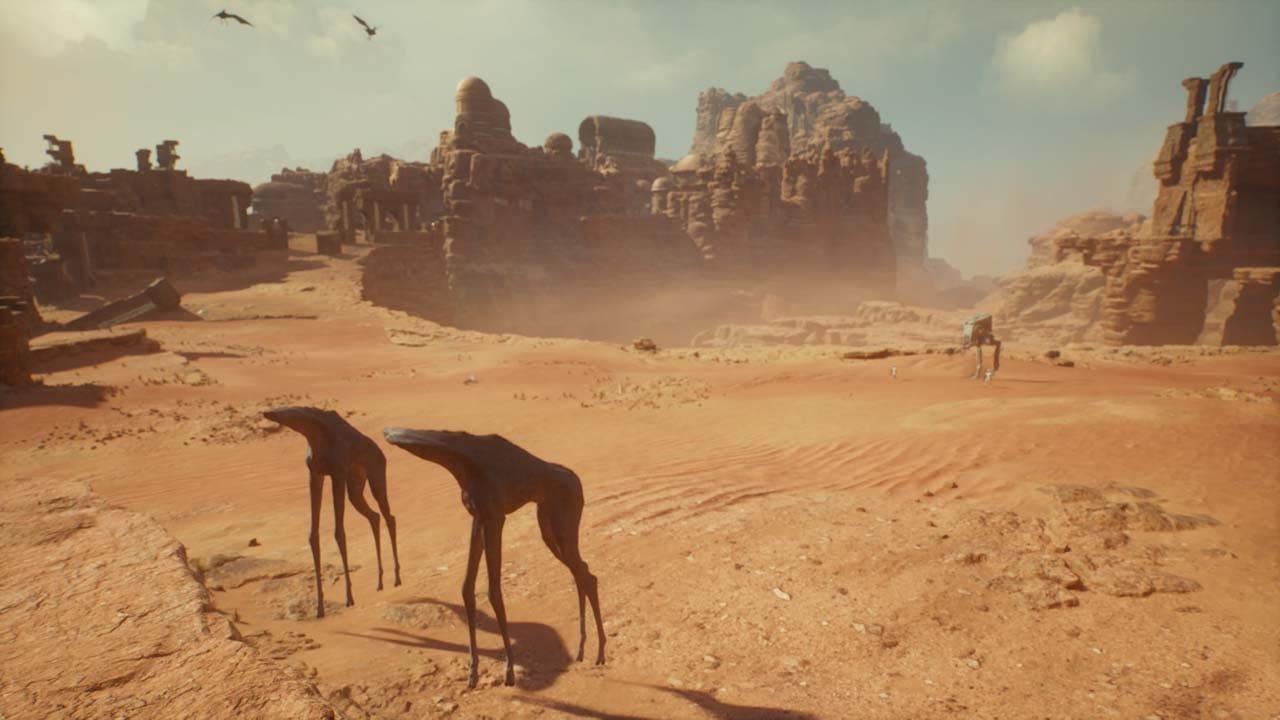
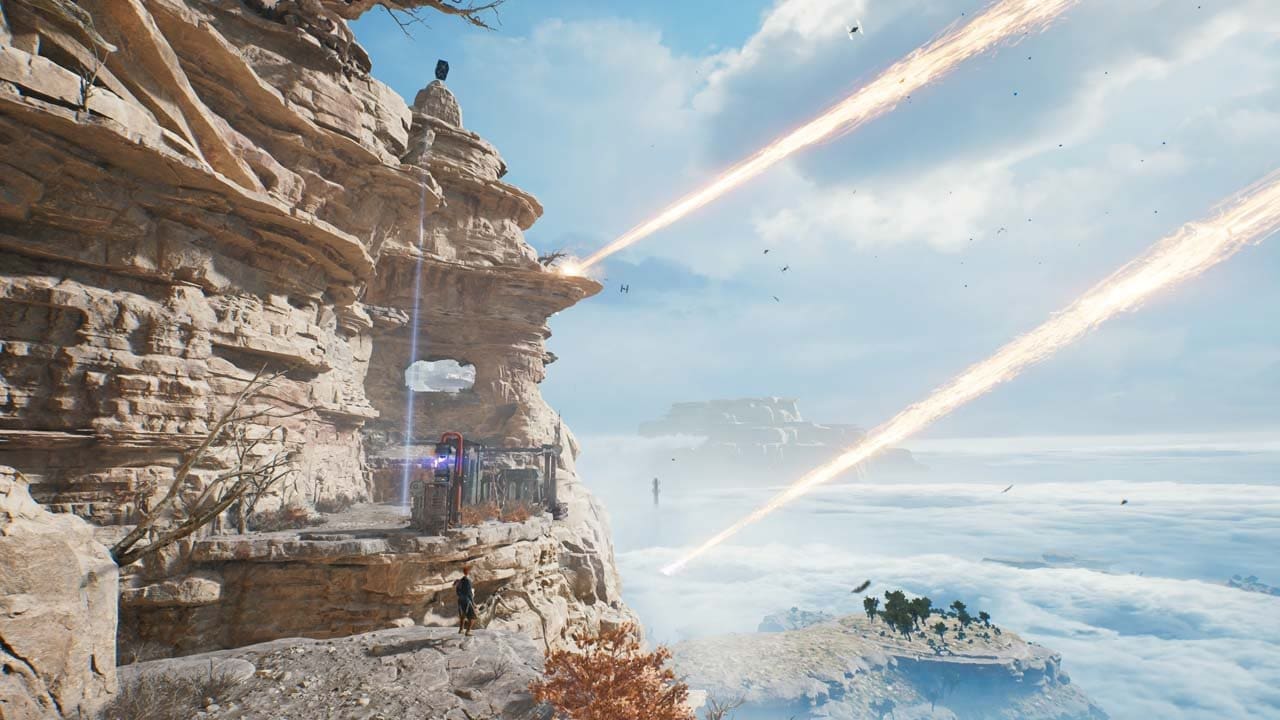
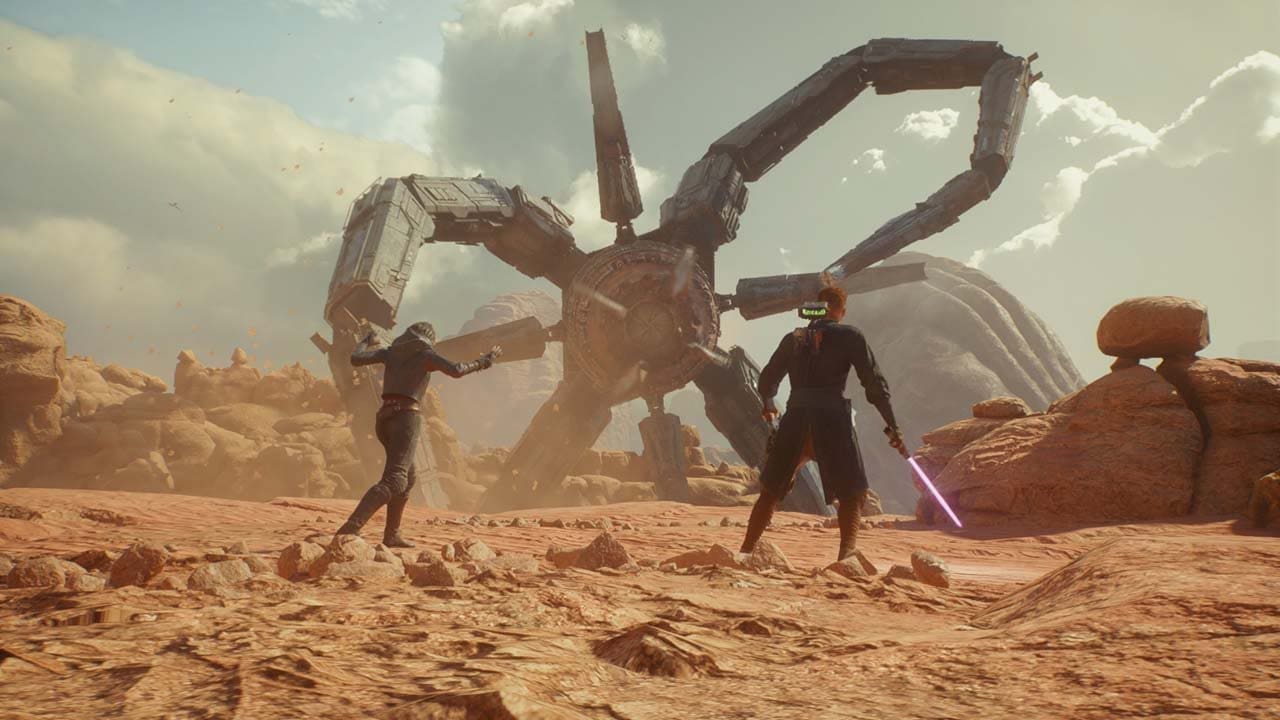
The variety of enemies in Star Wars Jedi: Surivor feels similar to Fallen Order’s. Small creatures can pose just as significant a threat to your health as bigger ones if you’re not careful. Stormtroopers range from easily deflectable standard blaster troopers up to returning Purge Troopers. The addition of classic B1 prequel-era droids makes for lightsaber fodder but funny lines of dialogue. At the same time, the raiders bring the most significant challenge this time with new battle droids under their control and plenty of enemies with vibro-blades and other weapons that can fight back against Cal’s lightsaber.
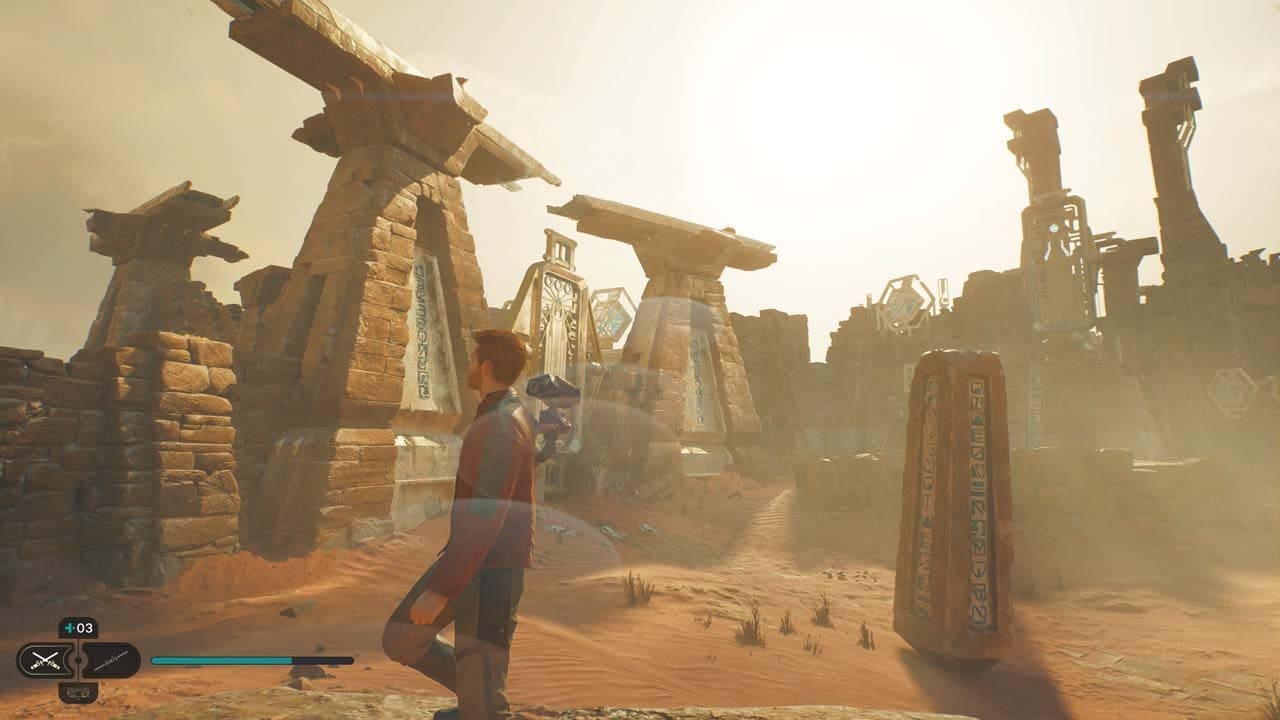
Without diving into the specifics of particular locations, there’s some stunning art direction here, paired with the typical love and attention to sound like Star Wars that all of EA’s Star Wars games have had. The lightsaber sound effect slicing through an enemy, or the sound of it vibrating by Cal’s side as I move through a cave, never failed to bring a smile to my face, and the game smartly uses only a couple of notable Star Wars themes in rightfully deserving moments. Otherwise, the original score by returning Fallen Order composer Stephen Barton hits the thematics of sounds of Star Wars perfectly once again with playful and dark compositions.
If you hated the UI and map design in Jedi: Fallen Order, I don’t have much good news regarding that part of the game. Trying to find your way to a collectable mark on the in-game map is still a headache, and I wish that amongst the many fantastic accessibility options in the game, there had just been one to add a way-point to save my frustrations.
After being so excited about Jedi: Fallen Order, I was disappointed with the final experience of that game. Here nearly all of my complaints have been remedied. Combat feels more lively from the get-go, with Cal already able to use plenty of force abilities and feeling like a Jedi; the narrative is much more exciting thanks to a clear focus in the opposite direction of the upcoming events of the films, and instead into the secret untapped potential at the feet of all Star Wars storytelling. Even Cal, who I found utterly bland in the first game, feels like a real character here, not just a conduit for the rest of the story, with an understandable backing to his decision-making this time — he’s leading and not following. I can’t wait to dive into spoiler-filled discussions with those playing the game, as there are so many significant moments and exciting things that Respawn have tapped into here. Respawn has turned me around a complete 180 from not caring whether we had more Cal Kestis stories to wanting to meditate on the spot until the next chapter is released, and I can’t wait to see what’s next in store for the crew of The Mantis.