Explosion Network may receive a commission when you purchase something via a link on our site
Synopsis:
To The Rescue! is a charming dog shelter simulator. Take care of unique dogs and find the right homes for as many of them as you can. Upgrade your shelter, control disease outbreaks, learn each dog’s preferences, and make tough decisions, all while helping support real-world animal shelters!
Publisher: Freedom Games
Reviewed on: PC (5800X, 32GB RAM, Nvidia RTX 3070)
Also available for: Nintendo Switch, Mac
Developer: Little Rock Games
Team Credit: Olivia C Dunlap (Programming, Writing, Design), Tanner Marshall (Programming, Design), Byron Buslig (Concept art, UI, UX), Joe Williams (Music, Programming), Kat Higgins (Animation)
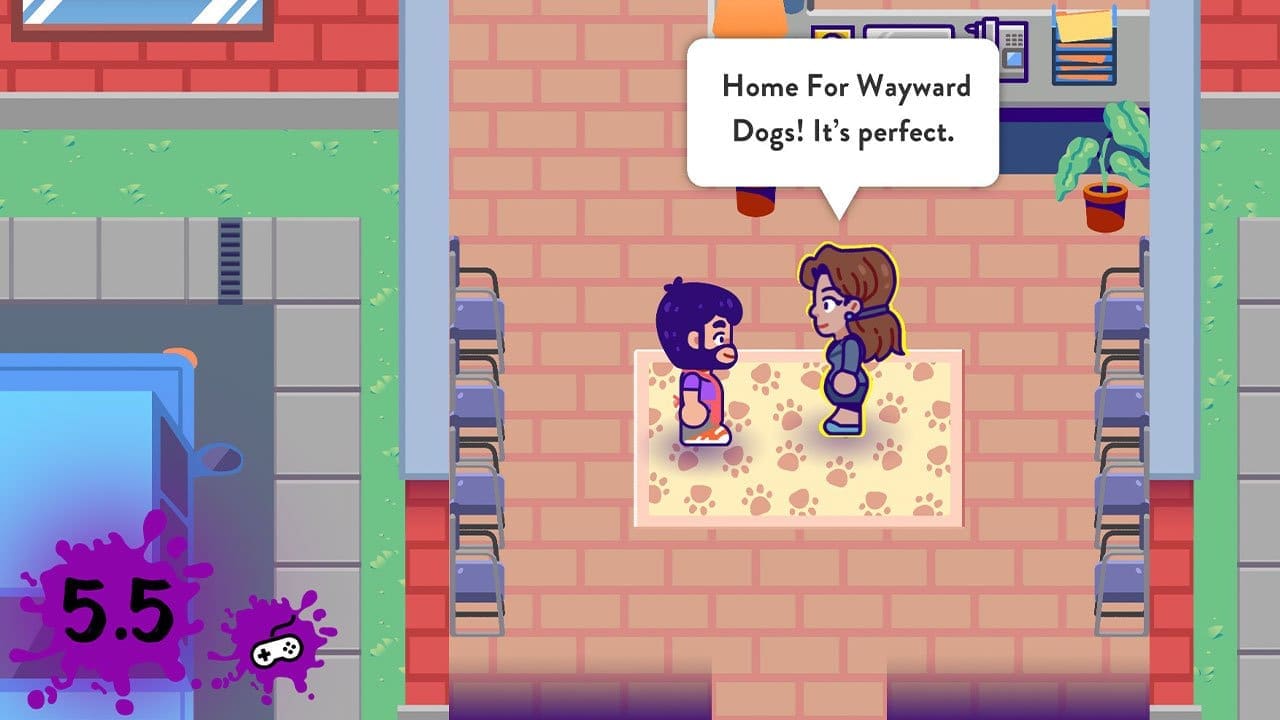
To the Rescue! begins with your character and their dog moving to the small town of Yawning Falls. Upon your arrival, you are startled to hear barking coming from outside; following the noise, you find a lost dog, and after catching it, you decide to take it to the local shelter. Arriving at the shelter, you meet your friend Quinn; he runs the shelter and informs you that, unfortunately, they’re at capacity. Quinn offers you the chance to foster the dog until the owners can be found. You agree and put up flyers. Quinn then helps you set up at home, and this sequence is the start of the tutorial for the game. Getting home, Quinn helps set up a small pen for the dog and shows you how to feed and water the dog. The dog’s owners are found the next day, and Quinn, seeing how positive the experience is for you, invites you to come to assist at his shelter.
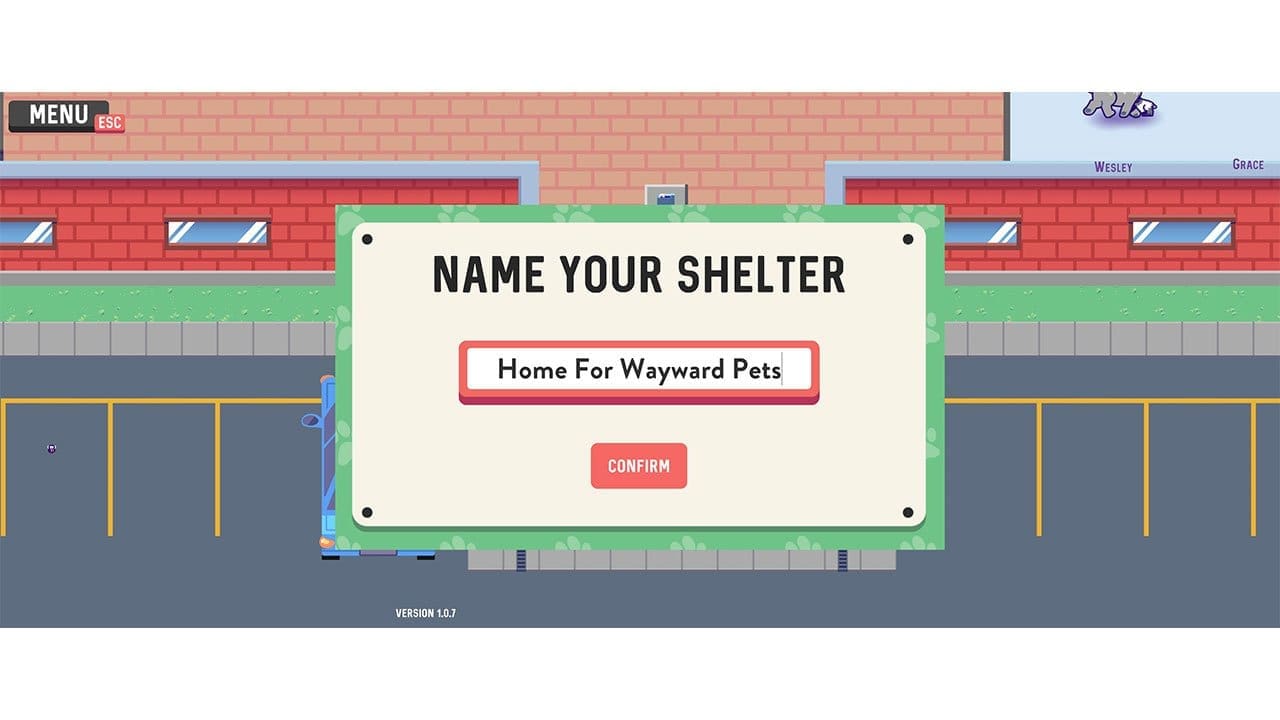
Assisting at the shelter is the next step in the tutorial, giving the player an in-depth look at the systems in the game. The next course of action was making sure all the dogs were fed, watered, bathed, exercised, ready to be adopted. The game then introduces buying products, checking dog stats, and building additional parts of the shelter. The story progresses quickly as days pass, and the Mayor of Yawning Falls decides to give you your dog shelter to run. Each day in this new shelter brings different challenges, from expanding your shelter, having a disease outbreak, an overabundance of dogs, and a lack of room. There were many obstacles to overcome when designing and maintaining a shelter, and a steep learning curve follows as these new systems are introduced.

Managing a shelter takes on many of the tasks previously mentioned, but now with added systems of expansion, foster homes, events, vaccinations, disease management, and the development of a skill tree. In my playthrough of the game, these systems became second nature: checking on the dogs, seeing what feed we needed, ordering, preparing a new dog on arrival to ensure it wasn’t sick, and making sure it was bathed before being treated to a meal and water. Monitoring running costs to keep the shelter going was constant stress, with the real possibility of having your funding taken if you delve too deep into debt. Ensuring all the dogs’ welfare was looked after and that the shelter wasn’t run to ruin was a real balancing act. The skill tree helps your character better find adopters and look after the dogs — simple things like carrying more water, better use of the pooper scooper, and more automated dog washing. The skills are earned each day by completing tasks, keeping the dogs’ welfare to a decent standard, and keeping the shelter’s reputation in high regard.
The task of adoptions has a varying degree of difficulty and relies on a multitude of things. These include, but are not limited to, type of dog, breed, size, nature, and more. Each customer is unique, and their choices will need to be considered when moving dogs to the display kennel. You have room for five dogs to be placed on display, and once on display, the dogs have adoption stars from one to five; the higher the rating, the more likely the customer will overcome their hesitancy and pick one of the five dogs. Once chosen, it’s as simple as selecting the dog with the leash then handing it off to their new owner. The process of adoption does become more complicated over time as the game progresses. You might have to change tactics or even stop the adoption process if you think the owner’s description will not allow them to care for the animal. The skill tree will help with this throughout the game.

There are multiple tools used throughout the game, and these include various vaccinations, medical kits, and euthanasia drugs designed to only work in the medical bay. I undertook daily tasks with a bucket for water, four types of food, a scoop for poop, a leash to lead the dogs, and a brush to scrub and bathe the dogs. Once established, the outdoor play balls are added for the dogs to fetch. The ball and other interactions in the outside play area open mini-games for interacting with the dogs on another level; the games and interactions improve the dog’s adoptability and give them bonuses for a short period. Another brilliant tool is the portal badge, which allows dogs to be teleported to and from the display kennels — great for quickly setting up when showing dogs for adoption.

The music in the game is nothing to write home about; relatively few songs change with each day, and they are easy-to-listen-to melodies that repeat in the background. There isn’t depth to it, but as background music, it fits well with the game’s design. The art in the game is a beautiful isometric view with 2D rendered avatars, with lots of thought put into quality over quantity. The sheer amount of individual dog designs is positively amazing, with over thirty different breeds and even more traits to work with between each of them.
A topic of conversation that comes to light is the dilemma of euthanasia. While many don’t want to talk about it, even the game gives you the option of having dogs “sent away” rather than put to sleep. The choice is left to you if or when you might need to put a dog to sleep. The game gives credence to why one might adopt a dog over buying a puppy, and when you have a shelter full of dogs that you can’t find a home for, it becomes a topic very close to the heart. As a pet owner of three dogs and two cats, their lives could have been very different if we hadn’t chosen to add them to our family.
Unfortunately, my time with the game was not all roses. Some technical stumbles put a dampener on the game for me — dog sprites behaving oddly, my dog changing breed, the game unexpectedly becoming chuggy, and progression-halting bugs ruined one of my saves. It made me frustrated at the loss of progress. I am hoping these can be fixed with some patches, and I hold out hope.
Overall, I had a fun time with To The Rescue!, and the story and the development around the game cut close to home as an animal lover. It’s also worth mentioning the developers are donating 20% of all of the profit to real-world animal shelters. The game also opened my eyes to the difficulties in running and maintaining a shelter. The joy felt seeing a dog move on to their forever home filled me with glee. The messaging in the game surrounding adoption and consequences of choices meant much to me. I really enjoyed the interactions with the dogs; seeing the small animations surrounding their feelings were some of the best moments I can think of while playing the game. It, unfortunately, couldn’t outweigh the frustrations from the bugs, glitches, and subpar quality of the game in other areas.