
The first game I put the most hours into on the Nintendo Switch 2 was the controversial Nintendo Switch 2 Welcome Tour. When it was announced, it was clear that it was a tech tour of sorts for the device. However, when it was revealed to be a paid title, not one packaged with the console, there was considerable confusion.
The price point isn’t usually something I’d touch on in a review for anything other than tech items, but Welcome Tour does feel less like it was designed to be a video game and more an interactive lesson on the device and, in some ways, modern video game terms and tech terminology in general. In that regard, Welcome Tour would have been much more appreciated as an included title on the Nintendo Switch 2’s home screen when you first boot it up. Especially since what’s here’s a surprisingly thorough display of the Nintendo Switch 2 and all its new features, which would be very helpful for younger and new gamers to play through as they learn about modern technology terms like ‘4K,’ ‘VRR,’ ‘Ray-Tracing,’ and more.
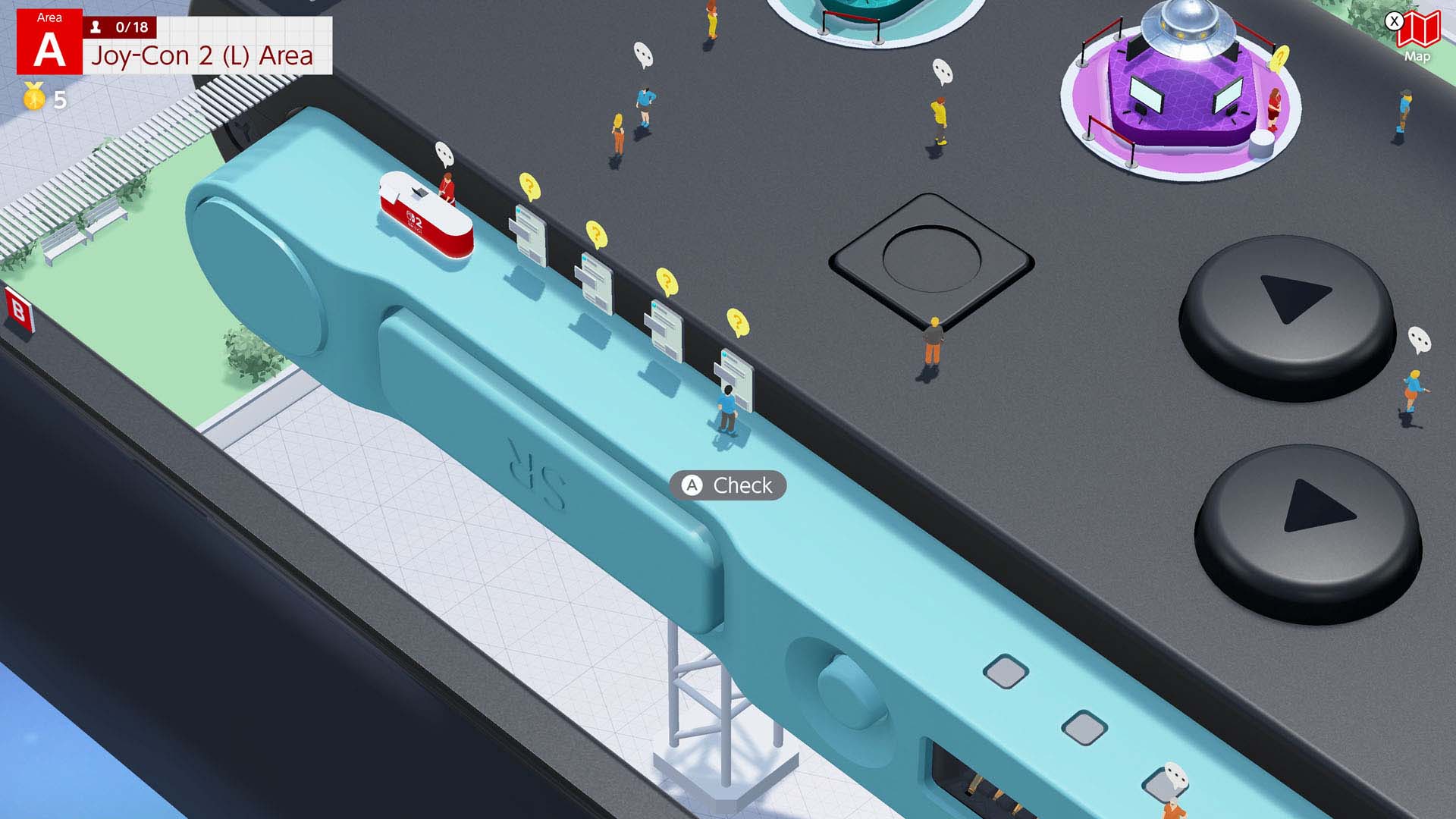
Welcome Tour is broken up into three different types of activities you’ll experience as you explore the Nintendo Switch 2 console, along with its accessories, including the Joy-Con straps, the Nintendo Switch 2 Pro Controller, and even the Nintendo Switch 2 Camera. In these highly detailed and well-thought-out recreations of the hardware, both on top and inside, you’ll first need to look for ‘stamps,’ which only appear when you’re near them. Finding all of these in one area unlocks the next and allows you to progress. Technically, this is how you’ll move forward and look to reach the end of Welcome Tour, but you’ll be missing all the good stuff within Welcome Tour if you do this. Collecting the stamps isn’t fun; it’s just bumping around until you find what you need, and sometimes rather frustrating as you’re missing just one to move on to the next area. However, the mini-games that highlight different parts of the Nintendo Switch 2, the tech demos themselves, as well as, surprisingly to me, the information areas and subsequent quizzes, all made me want to keep exploring.
The mini-games are the most interactive element of the Welcome Tour and will highlight every aspect of the console, both in docked and handheld mode. They’re basic but can become short-term as you chase to get the gold medal on each of them. Some games highlight the new mouse functions of the Joy-Con controllers, allowing you to either dodge or quickly move objects around on the screen and showcase the surprisingly innovative technology that makes the mouse functions work. Other games will have you trying to guess by picking up the console to place your fingers on the screen and playing a take on Twister, moving the console’s kickstand into different positions, and even playing a game that’s about guessing whether an image was moving at 30, 60, or 120 FPS.

Some of the tech demo stuff is generally preety fun and would be a great way to showcase basic tech terms to friends, family, or young kids using the console. One of these features has you playing the first level of the original Super Mario Bros. game, with the screen expanding and building up to 3840 pixels, demonstrating what a 4K resolution is.
What I was surprised to enjoy the most was the informational booths, which had you read through a couple of different cards with facts about the Nintendo Switch 2 console, Nintendo’s history in various areas, and the console’s accessories, and then take a quiz on what you had read. I didn’t find any of these particularly hard. However, I did learn some interesting facts about the development of the console and why certain small details were changed to improve the original Nintendo Switch. What I think is most exciting about these learning booths, if you will, is that they genuinely aim to teach younger gamers, as well as older ones with limited technical knowledge, about how certain things work within the console and gaming on consoles in general. This should hopefully give a better appreciation and understanding of how they’re built, and also help them understand things that’re going to be more prominent to hear about now on Nintendo consoles, such as higher refresh rates, resolution, Ray-Tracing, and more.
(Review code provided to Explosion Network.
Read about our review and ethics policy here.)