
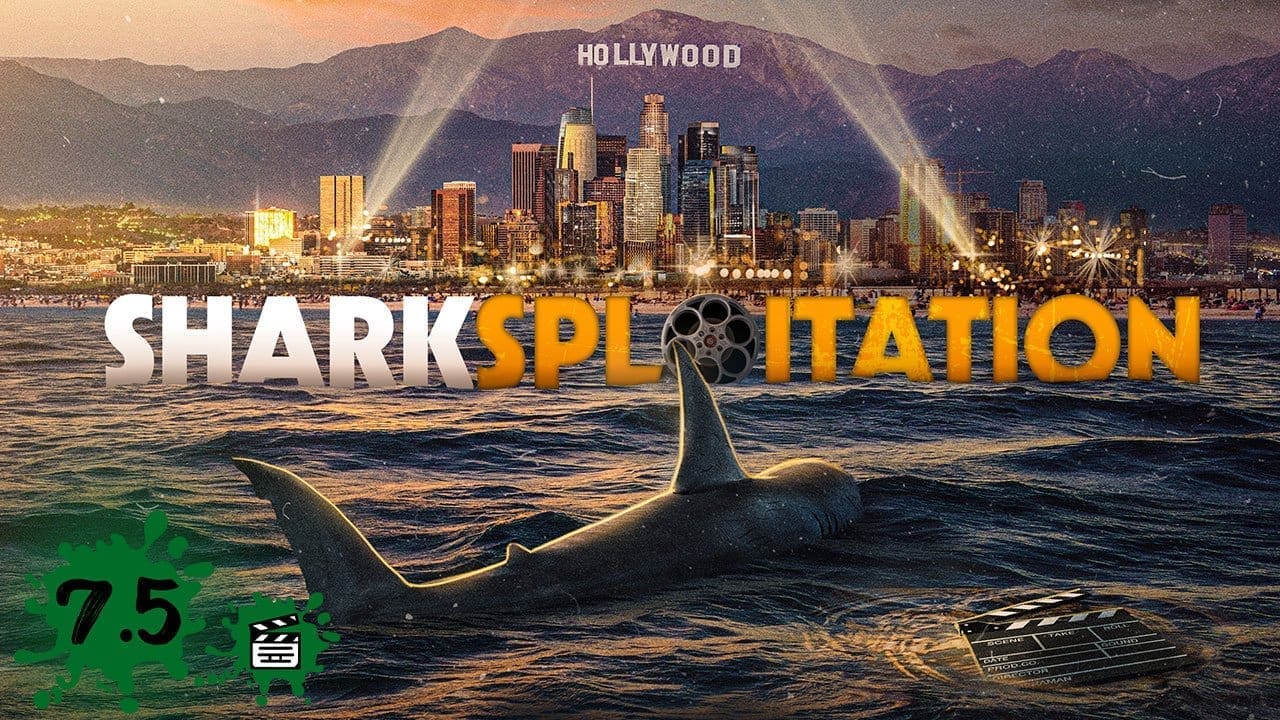

Sharksploitation — Review
Synopsis: This feature-length documentary dives into the sub-genre of sharksploitation films, from Corman’s 1958 She Gods of Shark Reef to the release of Jaws and the subsequent knock-offs.
Credits & Crew
Director: Stephen Scarlata
Writer: Stephen Scarlata
Cinematography: Jim Kunz • Editing: Patrick Huber • Music: Ceiri Torjussen
Cast: Joe Alves, Mark Atkins, Paul Bales, Wendy Benchley, Jim Bertges, Christian Bogh, Glenn Campbell, Tom Chapin, Roger Corman, Joe Dante, Scott Devine, Anthony C. Ferrante, Michael Gingold, Carol Gottlieb, Vanessa Morgan, James Nunn, Rob Schrab, Misty Talley, Andrew Traucki, Mario Van Peebles, Scott Wheeler, David Worth, Dr. Emily Zarka
Review
Sharks existed before Steven Spielberg’s cinema-changing Jaws in 1975, but as the new documentary Sharksploitation by director Stephen Scarlata points out, they were never the same afterwards. From the movies about sharks to how the public viewed these sea creatures, sharks’ lives were forever changed, and a sub-genre of cinema was created: sharksploitation.
Through many different talking heads — directors, actors, marine biologists and more — Sharksploitation explores the shark-movie genre from its inception at Jaws, the many would-be clones through Mako: The Jaws of Death, and even the animal-switches to Piranha, Razorback, and more. The genre plateaued in the ’80s, but was revived with Deep Blue Sea and saw a mix of success through the mid-2000s before the rise of the “mockbuster” sharksploitation in the Sharknado and Mega Shark franchises.

If there’s one agreement from all involved, it’s that Jaws is the top shark and cannot be touched. But more than just exploring the many films inspired by Jaws, Sharksploitation delves into how that blockbuster affected public opinion on sharks — and how shark deaths have only risen since the mid-’70s. The film isn’t framing Spielberg or shark-attack films as inherently bad; it’s pointing out that cinema can affect the world in ways you may not be aware of.
Many of the shark experts in the film profess love for different sharksploitation titles while also noting that the wild things sharks are shown doing on screen are often less interesting than what they do in real life. Sharksploitation also nods to the history of sharks in religion, other cultures, and early cinema as spiritual and majestic beings. There’s even a brief run-down of the indigenous legend of Kamohoaliʻi and his son Nanaue — familiar to anyone who’s watched Disney’s Moana.
Considerable time is given to the recent popularity of Sci-Fi Channel and The Asylum low-budget titles, and that stretch does drag. It’s almost as if the film morphs into a behind-the-scenes dive on those franchises — interesting for a while, but a more even split would have allowed deeper context on other key moments like Deep Blue Sea and The Shallows. There’s only a brief mention of The Meg, which is notable given its big-budget sequel.
The chronology can be frustrating, with the documentary jumping back and forth between decades while repeatedly cutting to a rolling timeline of releases. Just when you think you’ve reached the ’90s, it snaps to the early ’80s again; it can be distracting.
As a fan of most shark-attack films (the mockbusters, less so), there’s a lot to like in Sharksploitation. The time spent on Jaws author Peter Benchley’s later years of shark conservation is appreciated, as are the nods to niche and even Australian shark movies. Even with pacing issues and the jumpy timeline, this is a must-watch doco for shark-film devotees.
Sharksploitation releases July 21, exclusively on Shudder.
Score