
On Friday morning, Dylan and Ciaran didn’t head straight to the Melbourne Convention Centre for the first day of PAX; instead, they met up with the team at Obsidian and Eidos-Montreal to talk about all things Grounded 2.
In their chat with Justin Vazquez, Creative Director on Grounded 2 at Eidos-Montréal, and Miles Winzeler, Producer on Grounded 2, they discuss the reception so far, with the game having released in Early Access just over two months ago, and the most recent update, ‘Hairy and Scary’, releasing just a couple of weeks ago.
They also discuss why they returned to Early Access, what the team at Obsidian learned from the first game, and what this partnership between the two studios has enabled them to build and continue building as development on Grounded 2 progresses.


It’s been about two months since the Early Access launch. How do you feel it’s been going since Grounded 2 kicked off?
Justin Vazquez:
I think it’s safe to say everyone at Eidos Montreal is very happy with how Grounded 2 has been going so far. The community and general reaction to both the announcement and the launch — especially coming so close together — were met with so much enthusiasm, so much love for the franchise, and so much excitement for a new instalment.
For us, we’re happy to see so many new and returning players jumping into the world of Grounded and getting into the spirit of why we wanted to go into early access in the first place — getting their hands on the game, telling us what they love, what they want to see, and where they’d like to see the franchise expand, so we can grow it together. And for us, that’s been incredibly rewarding — not only seeing people resonate with the game but also joining us on this journey to make the best Grounded 2 possible together.
Has there been any feedback you’ve received that the team’s immediately acted on — maybe something unexpected or that came organically from the community?
Miles Winzeler:
Yeah, I think one thing we knew would be an area for feedback was the buggies — the new mounts. Internally, we talked a lot about that feature. We all had our own hopes and dreams for it, but it was this big, nebulous idea that could go in a lot of different directions.
So getting it into the community’s hands and hearing how they feel about it, where they want to see it go — that’s really helped us narrow our focus and make it more collaborative. That was the big one we expected. We did this by design, we wanted players to have enough access to form strong opinions.
Beyond that, we’ve had a lot of great thoughts on lore and different areas of the park. We know our fans love digging into lore details, but I’m still impressed by just how deep that goes.
Justin Vazquez:
Just to add to the buggies’ feedback — what’s been really exciting for us is seeing players’ reaction to the feature in general and receiving it with so much enthusiasm they’ve had for it. But in hearing their feedback, it makes us feel confident we’re in line with our community.
Like Miles said, we had our own hopes and dreams for the feature, and it’s been amazing to see how much the community’s hopes and dreams align with ours! It feels like we know what this community wants after years of early access with Grounded 1, and now moving into Grounded 2.
They still surprise us, of course — coming up with ideas that make us go, “Oh, that’s really interesting.” But feeling like we’re in lockstep with the community gives us confidence that we’re delivering the version of this game they want to see.
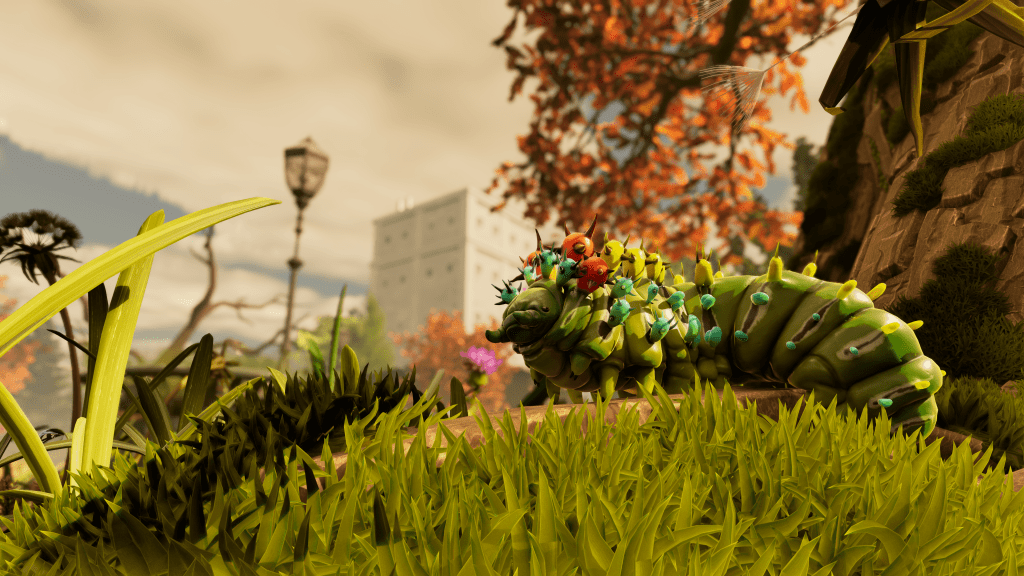
I saw someone say that the whole reason Grounded 2 happened was because players just wanted to be able to ride something. So, if you’ve knocked that out of the park, that’s kind of the game’s success, right?
Justin Vazquez:
Yeah, absolutely — “knocked it out of the park” fits perfectly.
It was the number one requested feature from Grounded 1. The challenge, though, was that if the world isn’t built from the ground up with buggies and mounts in mind, you’d never be able to execute on the feature in a way that would satisfy the players. It would always feel tacked on and never reach its full potential.
So we knew from the beginning — if we wanted to do this feature right, we had to go somewhere new, and we had to build a new world designed for it. That’s why we often say: We couldn’t do the buggies without the park, and we couldn’t do the park without the buggies.
The park’s sheer size and scope would feel too overwhelming without alternate transportation. It would take away from the experience; it would feel too overwhelming. So that synergy between what we wanted and what the players wanted was a big creative and experiential reason to make the leap into a full-blown sequel.
We couldn’t do the buggies without the park, and we couldn’t do the park without the buggies.
Miles Winzeler:
Right, because with Grounded 1, a lot of community feedback came as the game took shape. There’s always that fun challenge of, “How do we fit this in?” even when it wasn’t part of the original plan. So I think with the buggies in the park and Grounded 2, it’s sort of like we didn’t feel cornered into making this, it’s like: if we have the park, we could do this, we do a time jump, we could do a new narrative.
We had all these ideas of how to accommodate top fan requests, and it turned into a snowball of excitement that led to “hey, Grounded 2 is its own new thing.
Justin Vazquez:
Yeah, exactly. It all came together naturally. We’re excited that the community’s resonating with it and already seeing its potential through their feedback. That’s been great to witness, and we’re just excited to keep building on that.
What was the planning process like? Were there lessons learned from Early Access the first time around?
Miles Winzeler:
I think early access was always the intention for Grounded 2, because it worked so well for Grounded 1. A lot of what we did was look at the Grounded 1 blueprint and follow along with it, but the biggest divergence from day one was that Grounded 1 found its identity — its characters, story, and mechanics — during early access.
With Grounded 2, we came into it with all that already fully realised in players’ minds. So, being a sequel necessitates a totally different approach.
One of the big takeaways from Grounded 1 was that the update cadence was pretty quick — maybe too quick. It was tough on the team to constantly get content out on a regular basis. So, part of our focus this time was making sure each update is fully fleshed out enough to give players something meaningful to react to — something that’s maybe 65% there so they can give thoughtful feedback to help steer it.
A big part of that has been knowing when to release new content so that players are excited and empowered by it, rather than giving them a piece that is very much like it’s being drawn in real-time.
Justin Vazquez:
I’ll double down on what you’re saying about cadence — that was one of the big lessons the Grounded team passed on when we started.
The key was: make sure your updates are meaningful, well thought-out, and bring something special to the game — rather than just pushing out content quickly for the sake of it. This isn’t a live-service game; we’re building toward something clear and concrete. And building meaningful experiences along the way for the player is something that we want to be conscious of as we’re bringing new updates.
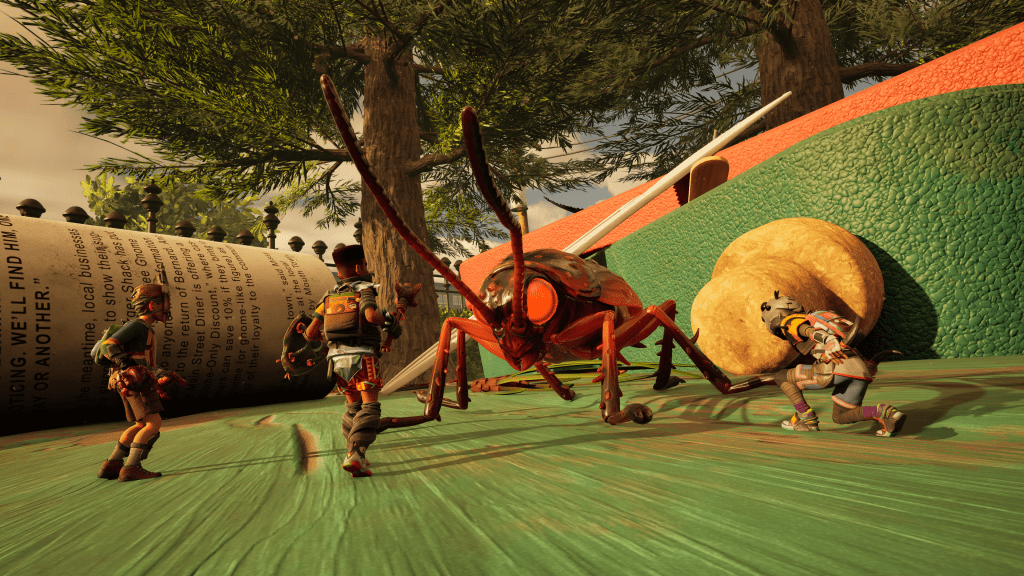
We just released our first big update, Hairy and Scary. And for us, it was very clear that we wanted to bring this new experience — the park boss, Axl, the Tarantula. It’s massive, and it needed to feel that way. Because now, players have buggies. So a big boss has to feel even bigger and more threatening than in the first game, where you were on foot. So when creating an update around that experience, it’s something we are a lot more conscious of, and it’s something that we hope our players will see as more updates come out, that they’ll see the shape of what we’re trying to do overall with Early Access as we lead up to our 1.0 release.
Have you found there’s a sweet spot for Early Access? If you don’t update often enough, players can drop off because they want more content. However, if you update too frequently, it begins to feel like playtesting. Is there a middle ground?
Justin Vazquez:
Yeah, absolutely. Even for us, it’s about making sure what we release is meaningful for players — from the big-picture updates down to the little quality-of-life details. A lot of feedback comes down to small, moment-to-moment improvements, and little ways for us to improve on what we’ve put out. So, if we don’t bake enough time into our production cycles to properly address feedback, we’re doing both the game and the community a disservice.
So, you’re right — it’s a tightrope act. How long do we need to make something meaningful, relevant and different for the players? But how can we also turn certain things around quickly so that the community knows we’re listening to them and we’re always trying to make the game better? Finding that balance between these big updates that are going to bring something meaningful to the game, but also patches and small updates that show “Hey, that bug? Fixed it. That issue? Balanced. That feature? Polished.” We want players to feel like they’re part of the process, with regular reasons to check in — and then big moments that bring everyone back. It’s a balancing act we’re still refining.
Miles Winzeler:
Yeah, and it’s also about recognising the different types of Early Access players.
You’ve got people who check in when there’s a big update — they grab their friends, jump in, and see what’s new. Then you’ve got players who are really in the weeds, talking about builds, trying to refine everything. Both groups are great sources of feedback.
To tie it back to your first question: one thing I was thrilled we managed to add this time is a public test branch — letting players access new content two weeks early, and make the most of those real, ‘in the weeds,’ players that want to talk about the finer details. It’s like having different groups of friends to get opinions from.
That kind of collaboration is rare. We’re very fortunate, and hopefully the fans feel that love in the game when they’re playing it
As part of the announcement for Grounded 2 came the news of the partnership between Obsidian and Eidos Montreal. How have you found the dynamic of the teams working together?
Miles Winzeler:
We always talk about Obsidian and Eidos sharing values — in RPG design, narrative, and presentation — but as we’ve worked together, it’s become clear we sort of have different strengths. Anything that one team understands and does really well is complemented by the other.
For example, I keep hearing feedback about how people are excited about the reworked combat — the dodging, the blocking, the fact that some creatures can now block you. That’s 100% thanks to Eidos’ expertise and their driven design team with a set vision for that. Finding those new perspectives and letting them take over has been a huge factor we’ve seen play out in real-time.
And that also comes from Grounded’s original culture — if you had a design thought, it didn’t matter what discipline you were from, let’s hear it. Which also, then, opens things up for being receptive to community feedback. Bringing in a whole new group of folks from Eidos, with their own varied genre experience and having learned their own lessons across their careers, it’s been super cool just getting more of the flavour that way.
Justin Vazquez:
For us at Eidos Montreal, we’re absolutely thrilled to be working on Grounded as a franchise — and with Obsidian.
The studio has such a rich history and amazing backlog. As fans ourselves, getting the opportunity to contribute felt like a dream come true. And this ties back to what we were saying earlier about building the game with the community, because the Eidos team was already part of that community before we started collaborating. We were fans of Grounded coming in, with our own ideas about where we wanted to take it. From the start, it felt like Obsidian understood that we were on the same wavelength. We all just wanted to make the best game possible and grow the franchise in the right direction.
The faith from Obsidian in us, to shepherd this very important franchise for them, and our trust in Obsidian in their expertise, their vision, their understanding of this franchise. That kind of collaboration is rare. We’re very fortunate and hopefully the fans feel that love in the game when they’re playing it
Eidos Montreal is known for its strong focus on narrative. Coming into this project, was that something you leaned into?
Justin Vazquez:
That’s part of the shared DNA Miles mentioned earlier. Both studios have a deep love of RPGs and RPG mechanics — and that’s what sets Grounded apart from other survival games. We both love choice and consequence. You can see that in the systemic design. But yes, a big overlap in our creative ‘Venn diagram’ is our love of narrative. Obsidian already raised the bar for storytelling in survival games with Grounded 1, and that was a major reason so many of us at Eidos were fans of it.
When we first started collaborating, our early discussions focused heavily on narrative direction — where the story could go next. A lot of the ideas that made it into the game, like the two-year time jump and showing how the world evolves over time, something we don’t usually see in survival games, came from those conversations. And these interesting new cast of characters, like The Mysterious Stranger and Sloane and all of that, came from those initial discussions, because of our shared love of narrative, and because of our love for the narrative in this franchise.
We’re constantly watching what fans say, too. We read theories, watch YouTube videos dissecting the lore, and take notes like, “Oh, that’s interesting.” There’s real excitement on both sides about where this franchise can go narratively. It can go somewhere that not many other franchises could go in the survival genre. And we wanna deliver on that promise.
Have you mapped it out in a three-act structure? Are you filling in gaps as you go, maybe adjusting based on fan theories?
Justin Vazquez:
If you look at what we released in early access — our MVP — we think of that as Act One. We knew that expectations for what counts as a “complete” early access experience have changed and grown since 2020. It’s 2025 now, and we’ve seen a lot of great games come out in Early Access swinging, and we knew we’d have to deliver on a much higher level across the board, but especially on narrative.
When we made the decision of ‘what’s enough content’ that players will feel satisfied and feel like it’s a complete experience in and of itself, but not so much that it’s all already thought out, there’s no room for feedback, and we’ve painted ourselves into a corner. That’s how we landed on telling the first act. That will give our players this nice chunk of the story, it’s like the first season of a TV show — and it has a great beginning, middle and end.
We do have a map of where we want to go. It’s colored in enough that we’re all headed towards the same island, but we are leaving enough wriggle room so that we can still listen to what the fans are saying. And without getting into specifics, there are already fan theories that made us say, “Oh, that’s actually really good — how can we make that work?”
We’re really excited not just to tell the story we, as creators, want to tell, but to show the fans that, no, we listened to you, and we’ve woven that in and made that a part of where we’re going.
Miles Winzeler:
Exactly. And they always say that Early Access is really a conversation.
The initial release in July — with the narrative content included — was us introducing the world to players again. But it was also about realising how attached players are to these characters. They want to know what’s been happening with them. It was essential for us to lay that foundation — to show players what direction we’re going in — but also, to Justin’s point, leave room for them to theorise, give their notes, and discuss the lore.
Narrative might not be a game of “numbers and systems,” but it’s still very much a piece of that community feedback equation in terms of what players are excited about, what players are intrigued by, and what players want to see more of.
We couldn’t do the buggies without the park, and we couldn’t do the park without the buggies.
Many Australians right now at PAX are getting their hands on the ROG Xbox Handheld for the first time. How do you envision handheld play being adopted by the community, offering people new ways to experience the game?
Justin Vazquez:
We’re so excited about Grounded 2. We want to get it into as many players’ hands as possible. Just like with Grounded 1, we’re exploring how to potentially bring the game to as many platforms as we can. But right now, that’s still in the investigation stage.
Our focus is on our lead platforms — Xbox and PC — but of course, we want to reach as many players as possible.
Miles Winzeler:
Yeah, and I’ll add to that — we actually have a public roadmap where we talk about planned updates, and handheld platforms are a part of that. It’s always been a priority for us. A lot of players loved Grounded 1 on Steam Deck, and the game lends itself to it well. So, yeah — handhelds feel like an essential piece for us, because that’s where a big portion of our player base is.
Justin Vazquez:
(Laughs) Tiny teens on tiny screens — in your back pocket!
Thank you, Justin Vazquez and Miles Winzeler, for taking the time out of your schedules to chat with us about all things Grounded 2, Obsidian Entertainment, and Eidos-Montreal.