
“Broken Roads” Interview: Alexander Swords on Narrative Design and the Moral Compass
The Melbourne-made CRPG “Broken Roads” (Drop Bear Bytes) blends a uniquely Australian post-apocalypse with a philosophy-driven Moral Compass. Lead Writer Alexander Swords talks team, tools, and why The Hero’s Journey isn’t a one-size-fits-all for games.
Overview
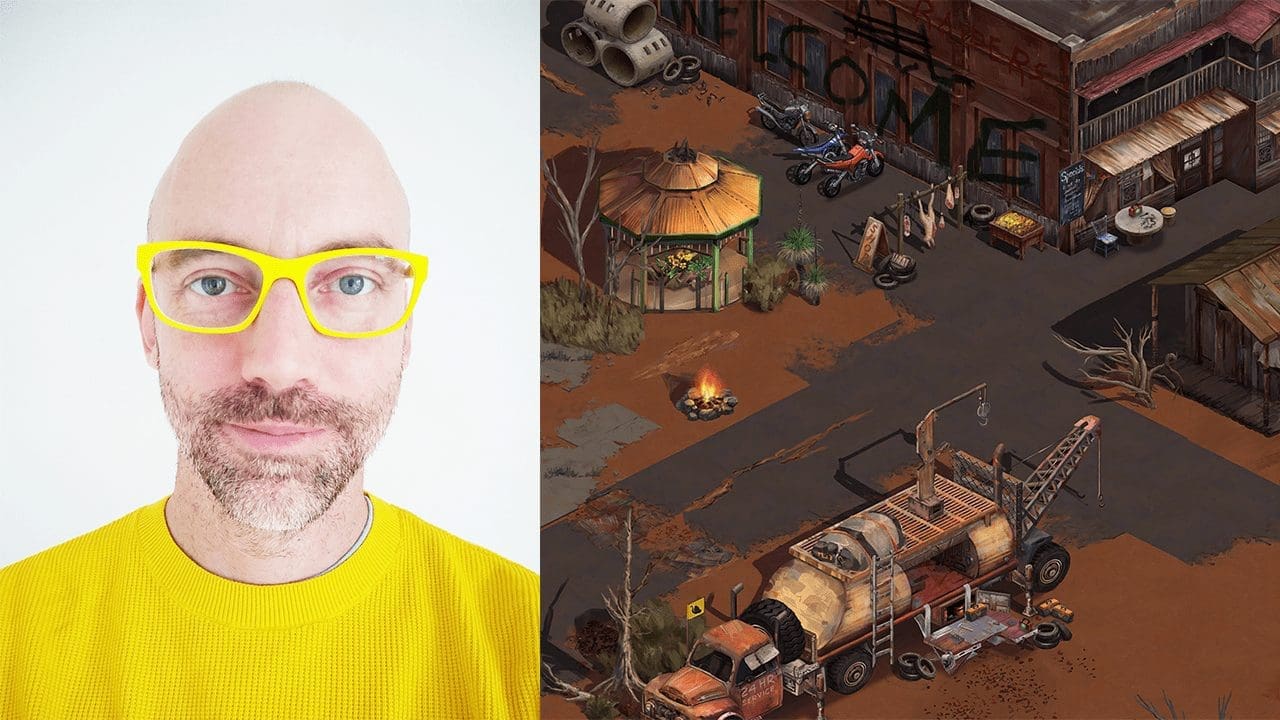
Revealed just before PAX Australia 2019, Broken Roads is an old-school CRPG set in a post-apocalyptic Australia.
You’ll find the genre staples—radiation, raiders, scavenging—but the tone and texture are distinctly Aussie. With new funding
through Film Victoria and a bigger writing team, the project is shaping up to be something special for CRPG fans.
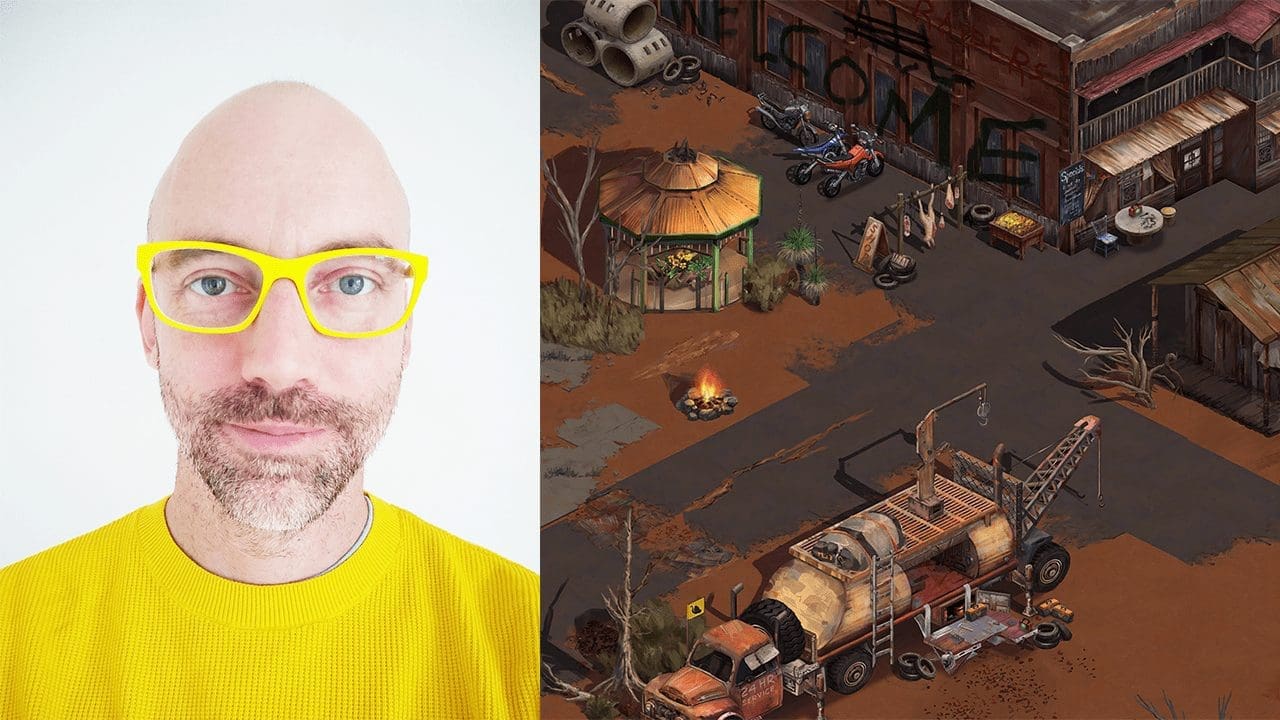
Melbourne studio Drop Bear Bytes recently welcomed Alexander Swords as Lead Writer (credits include
Dead Static Drive, Totem Teller, and an unannounced Mountains project). Swords also self-published
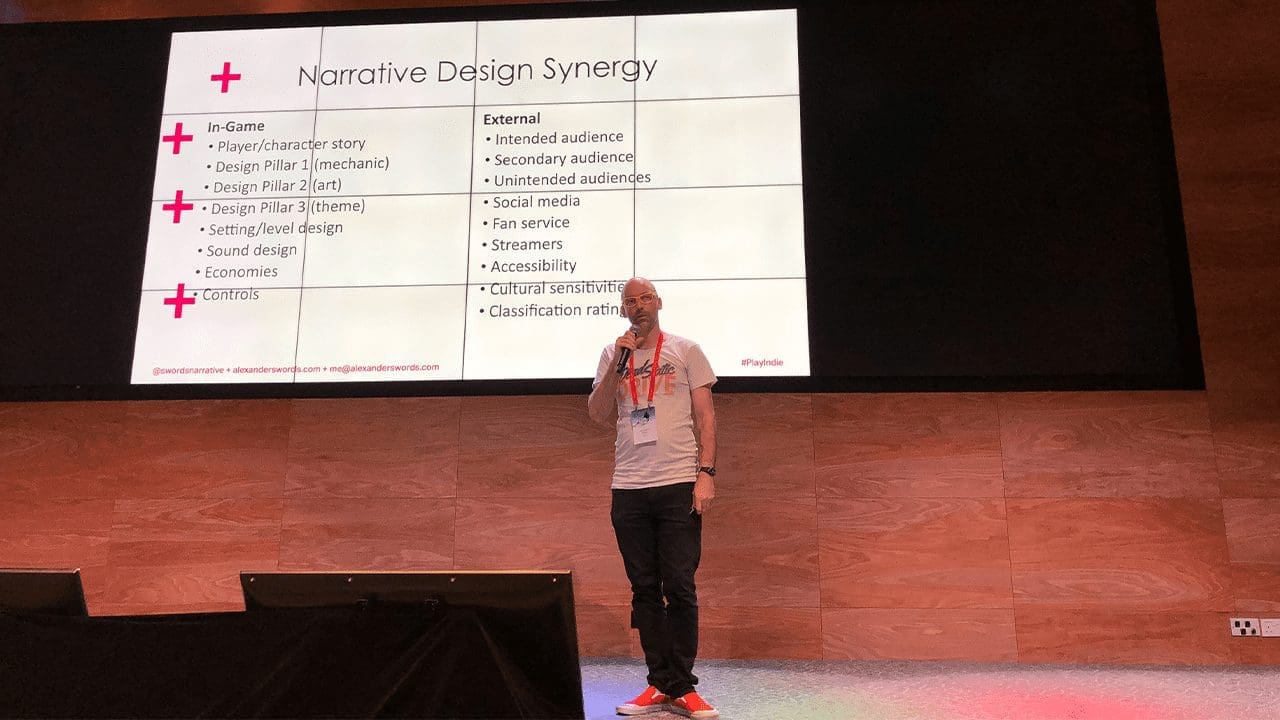
Forest Paths Method for Narrative Design, a practical framework for aligning teams around story intent.
Watch the reveal
A growing, veteran team
Asked about where the story is headed, Swords says there’s plenty in motion with the expanded team and
Colin McComb ( Fallout 2, Wasteland 2, Torment: Tides of Numenera) now on board:
“I can’t get into any real specifics at the moment… a team of diverse writers, and now Colin McComb joining us
means instead of tying them down to a specific plot we can open things up to be a bit more emergent.”

The Moral Compass: philosophy in play
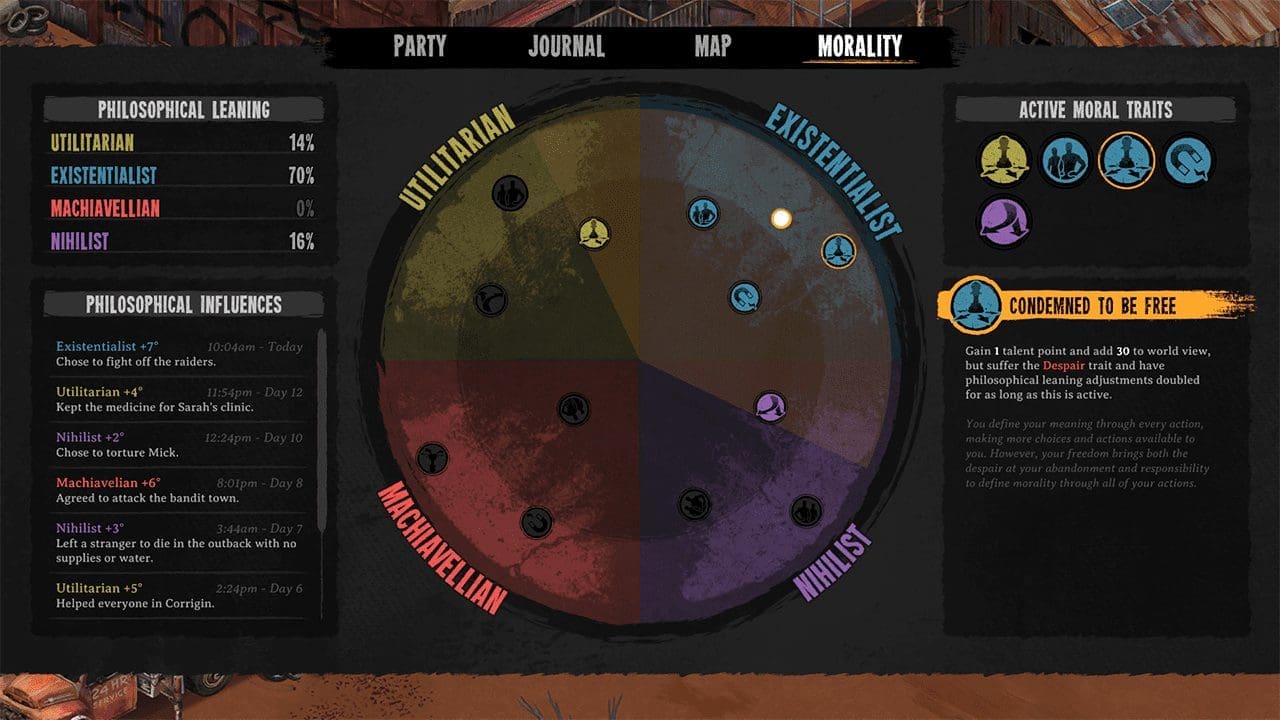
At the core of Broken Roads is a Moral Compass that shapes your dialogue and decisions through four lenses:
Utilitarianism, Nihilism, Machiavellianism, and Existentialism. Choices shift your leaning across
this compass, opening—and closing—paths without binary “good/bad” labels.
“We’re creating a world full of interesting communities and people facing interesting moral challenges… The moral
compass is at the core of this experience and we’re expecting a lot of discussion about how it plays out set against
the narratives we’re creating.”
Why Australia — and why now
For Swords, the hook wasn’t scale so much as setting, and the chance to sidestep post-apocalyptic clichés:
“Our world is still in flux. Everyone is trying their best around new systems and rituals, and that it’s set in Australia
gives us new territory to explore.”

The Forest Paths Method: aligning story & systems

Swords’ framework favors clear, visual patterns over dense story bibles—faster to parse, easier to challenge, and
better for cross-discipline collaboration.
“As a flowchart that can also display narrative intention it’s a lot easier and quicker to understand than reading chunks
of a story bible… If the narrative design pattern looks like a mess and the team can’t understand it, then there’s buckley’s
chance a player will.”
Beyond The Hero’s Journey
While acknowledging its strengths, Swords cautions against defaulting to The Hero’s Journey—especially in games built
around agency and aesthetics as much as conflict.
“The structure itself is incredibly rigid… This can directly counter the idea of play—voluntary action for fun… with a
crowded market of games that increasingly tell the same story, these are just a couple of the inspirations we should
be looking for and narrative designers need a framework to understand them.”
And for Broken Roads, he adds, fitting that rigid arc would undercut the compass:
“This doesn’t mean the player can’t be a hero, it just means they’ll get to choose their own journey to get there.”
Release window & where to learn more
Broken Roads is currently scheduled for PC, PlayStation, Xbox and Nintendo Switch. Learn more and follow the team:
- Website: brokenroadsgame.com
- Drop Bear Bytes on X/Twitter: @dropbearbytes
- Forest Paths Method: alexanderswords.com/forestpathsmethod
- Alexander Swords on X/Twitter: @swordsnarrative
- GDC Session: The Forest Paths Method for Accessible Narrative Design


![Play Tetris On A Bungee Rope With TopplePOP: Bungee Blockbusters [PAX Online 2020 Preview]](https://b3313143.smushcdn.com/3313143/wp-content/uploads/2020/09/TopplePop.jpg?lossy=2&strip=1&webp=1)

![[Steam Next Fest 2021] Aztech Forgotten Gods Preview](https://b3313143.smushcdn.com/3313143/wp-content/uploads/2021/09/Aztech-Forgotten-Gods-Preview-Thumbnail.jpg?lossy=2&strip=1&webp=1)