
Silenced Review [MIFF 2026]
Silenced is attempting to tackle is the institutionalized misogyny within the court

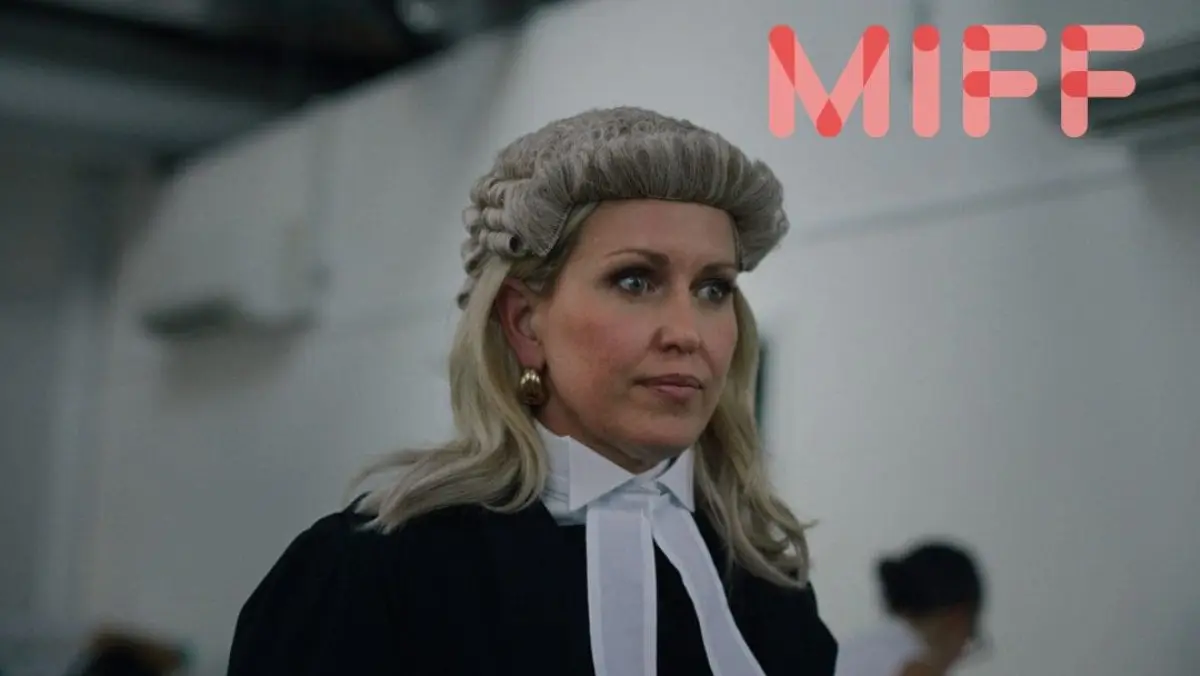
Which is the point of this documentary: it’s about how women are silenced at all points, across the world
The trial of Amber Heard and Johnny Depp became its own weird online sensation. The bigger part of our current cultural obsession with playing armchair experts in trials of all kinds is its own topic, but what Silenced is attempting to tackle is the institutionalised misogyny within the court. And while the inclusion of this singular case is part of Silenced, the documentary takes a broader look at how such cases are treated worldwide.
This documentary from Selina Miles – who also directed this year’s Revealed – Poster Boy: Becoming Zyzz – puts lawyer Jennifer Robinson at the front of the story. However, her parts in the film can feel a little less like necessary involvement in telling the story and more like a way to help spread the message about her book, which tackles similar themes and topics.
When Silenced is at its best is when we’re spending time with Brittany Higgins, the former Australian political staffer and survivor of sexual assault; Catalina Ruiz-Navarro, a Latin American journalist, co-founder of the magazine ‘Volcánicas,’ who is being sued by director Ciro Guerra for writing about sexual misconduct.
When it comes to Amber Heard, the film opens with a significant but important contextualisation as part of her first court case involving Johnny Depp, which took place in the UK. She was there to speak in a case that was actually Depp vs The Sun newspaper. They had broken a story about his abuse, without any involvement from Herd. And yet it became about the two of them, with a folly of Depp fans lined up to cheer him on, support his defence, and hold up signs vilifying her in this weird parasocial relationship many have with celebrities, especially male celebrities, because they can do no wrong.
And it’s really hard to do wrong and get punished in Hollywood as a man. You only have to think about Woody Allan or Roman Polanski, or more recent examples like Conor McGregor as famous male figures, who people are quite happy to push their charges aside for, or choose to believe are made-up fake nonsense, lest we forget Donald Trump, arguably the most powerful man in the world.
In lesser-known cases outside of the celebrity orbit, the film briefly covers the ‘Socker v Stocker’ case, where Nicola Stocker was dragged to court over a claim she had shared on Facebook that her husband had tried to strangle her. The evidence found that the attack itself couldn’t be questioned, but instead, she was in court over odd definitions of the term “strangle,” and had to witness the defence argue that her husband was simply trying to “silence her.” Which is a disturbing 1800s defence to hear in a courtroom.
Which is the point of this documentary: it’s about how women are silenced at all points, across the world, when they’re speaking about abuse of all kinds. You can argue in your TikTok videos and Twitch streams all you like about whether or not Amber Heard also abused Johnny Depp, but it’s not about ‘he said, she said’; it’s about the world in which every attempt was made to silence her and others. Research presented in this film also shows that at least half of the negative tweets online that were part of the storm of social media vitriol towards her came from bots in a targeted attack. When Brittney Higgins was dragged into court, she was also the target of online hate and abuse. When all the women came forward about Weinstein, Trump, etc., there’s also an online trail of vitriolic hate towards the accusers that follows.
I don’t think Jennifer Robinson’s involvement in the film, and focal point, felt necessary, outside of the scenes with her grandmother in which she discusses how, sadly, she feels nothing changed when it comes to abuse against women. Her grandmother easily could have been a bigger part of the film.
[Dylan attended a screening thanks to the Melbourne International Film Festival]
Review
We live in a scary time where it's one step forward and seemingly three steps back when it comes to getting somewhere with working to improve and educate when it comes to violence against women. And this documentary shows that a huge part of that is made up of elements like wild, out-of-control tornadoes: social media platforms and the manosphere.

Dylan Blight
[He/Him] Dylan Blight is the Founder and Editor-in-Chief of Explosion Network, an independent Australian publication covering video games, film, television and pop culture. Since founding Explosion Network in 2017, Dylan has written and produced reviews, news, interviews, features and podcasts across the entertainment industry, while overseeing the publication's editorial direction and content.
MORE FROM DYLAN BLIGHT →

Comments