![Stranger Things: Season 5 Review [Spoilers]](https://explosionnetwork.com/wp-content/uploads/2026/02/Stranger-Things-Season-5-Key-Art.jpg)
Format: Released in 3 volumes
Writers: The Duffer Brothers, Paul Dichter, Curtis Gwinn, Kate Trefry
Executive Producers: Matt Duffer, Ross Duffer
Season Premiere: November 26, 2025
Let me say up front—as far as final seasons with unrealistic expectations go, I could live with Season Five of Stranger Things.
Perhaps this is because the bar was exceptionally low. The two shows that I actually watched from start to finish, and in real time no less, were How I Met Your Mother and Game of Thrones. Hours and hours invested in the two shows that have, in recent memory, the most gob-smackingly terrible finales. Endings so bad that they ruined their own legacy.
So, it might be more accurate to say that the bar for Stranger Things was both exceptionally high and low, for me at least. Of course, I wanted the creators to knock it out of the park, but more than that, I wanted them not to screw the pooch. It would seem that we settled on the latter, which was a safe, fairly disjointed final season, but one that still delivered in certain key moments.
[The following review of Stranger Things: Season 5 contains full spoilers, please beaware.]
First, let’s start with what went right.
The end of episode four, when Will finally manifests his powers (or taps into the hive mind, whatever), gave me honest-to-God chills. Will, who has been a punching bag since Season One, who has been struggling with his identity, finally finds himself and saves his friends? Fuh-get-about-it.
And the reveal of Kali truly did surprise me—I had forgotten about her, and I liked this callback. If anything, it tied up loose ends that would have irked the fandom for years to come (i.e., what happened to Kali? Why was she included in the first place?).
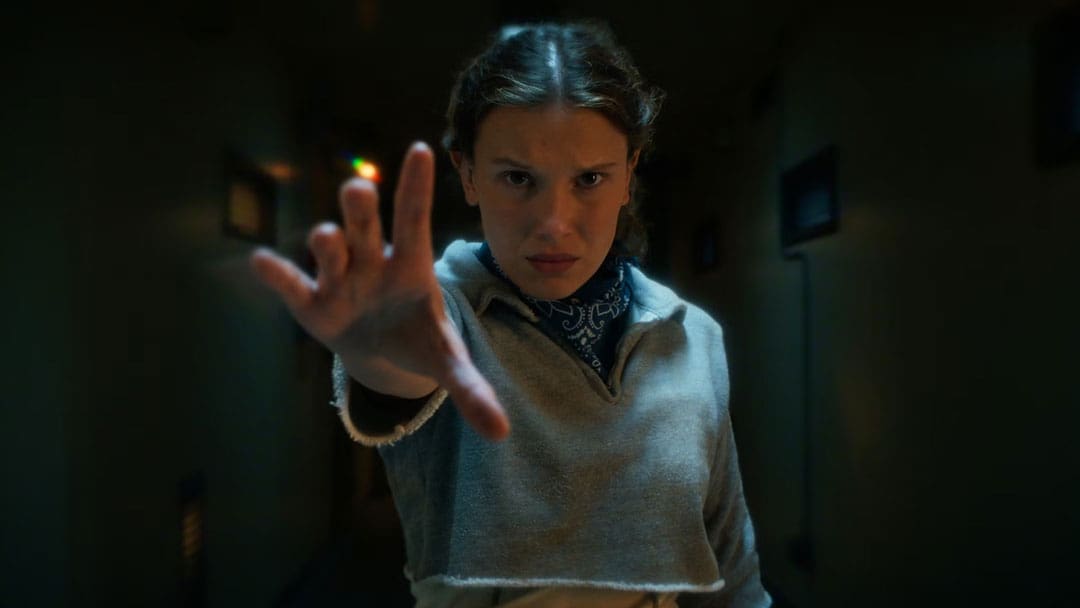
Then we have Karen Wheeler fighting like hell for her kids (I knew she had it in her), and the Max and Lucas reunion, and Eleven doing some admittedly badass stuff in the finale.
Now, what didn’t work so well?
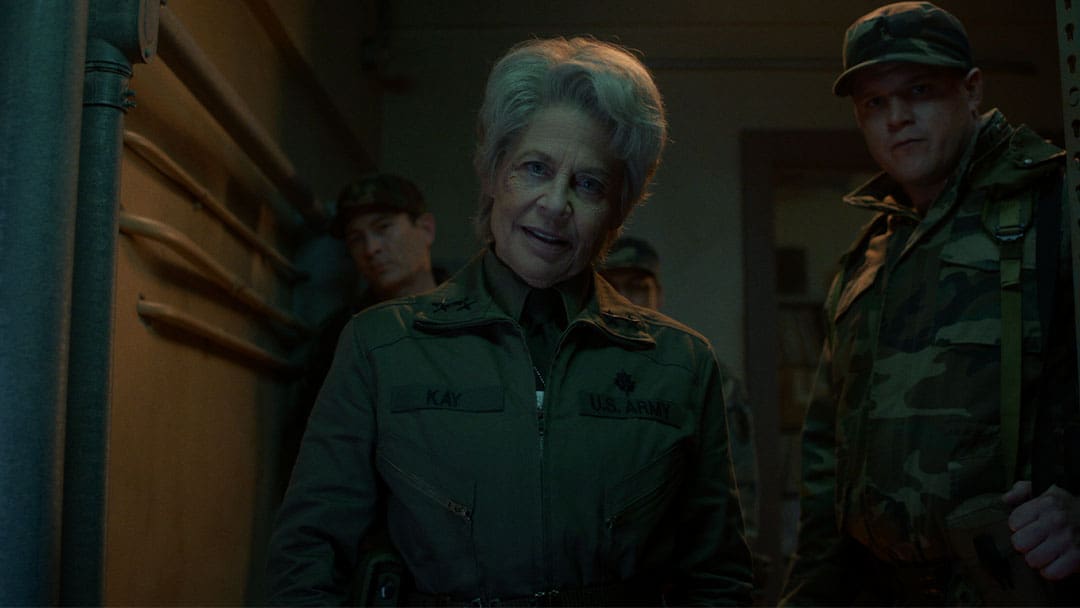
The military plotline(s) were totally incoherent. In Season Four, the military is searching for Eleven because they believe she is an abomination, and the reason for all the terror unfolding in Hawkins. One can assume that they’re trying to find her in order to stop the madness, right? So then why is Dr. Kay trying to breed a contingent of baby Elevens?
Then Colonel Sullivan, who was as one-dimensional a character as I’ve ever seen (a tragic waste of Sherman Augustus’s talents, by the way), was unceremoniously written out of the plot in episode five. The writers pulled a late-stage villain switcheroo—a death knell for most shows, and a mistake that they were barely able to maneuver themselves around.
And so, we pivot to Dr. Kay. But who is she? Was she involved in the earlier program with Dr. Brenner? How was she, as a woman in the eighties, able to achieve such an elevated rank? I, for one, would have loved a backstory on the evil female military scientist. But alas, she departs with as little fanfare as she arrived.
And since this was a two-front war for our heroes, let’s go to Vecna.

Ah, Vecna—did you know his entire backstory is detailed in a play? Yes, a play, as in Broadway and the West End (and potentially an upcoming Netflix special). Suffice to say, this was news to me. My primary complaint about Season Five was that we were given almost no detail about how Henry Creel got his powers—all we got was a confusing scene in a cave with a random man and a suitcase.
It would seem, however, after some basic googling, that Stranger Things: The First Shadow provides everything I wanted to know about Henry Creel. But why is an art form that is inaccessible to 98% of viewers playing such an integral role in the final season?
Using tie-ins, even ones that are canon, is an exclusionary practice. Who can fly to New York and buy a Broadway ticket to learn about a character’s lore? Also, all of this would have been fascinating to explore in Season Five, no? All in all, a cash grab for a prequel at the expense of the main story seems a little unfair to the show’s dedicated fans.
Ok, moving down my list of grievances. Dustin acting like a total brat (yes, I know he’s grieving Eddie) was no fun to watch. Dustin, with his humour, intelligence, and innocence, has always been one of the bright spots of the show, and while they could have explored his grief a little, did we really need to watch him mope and snap at everyone for six episodes? Wrap it up by episode two, please.
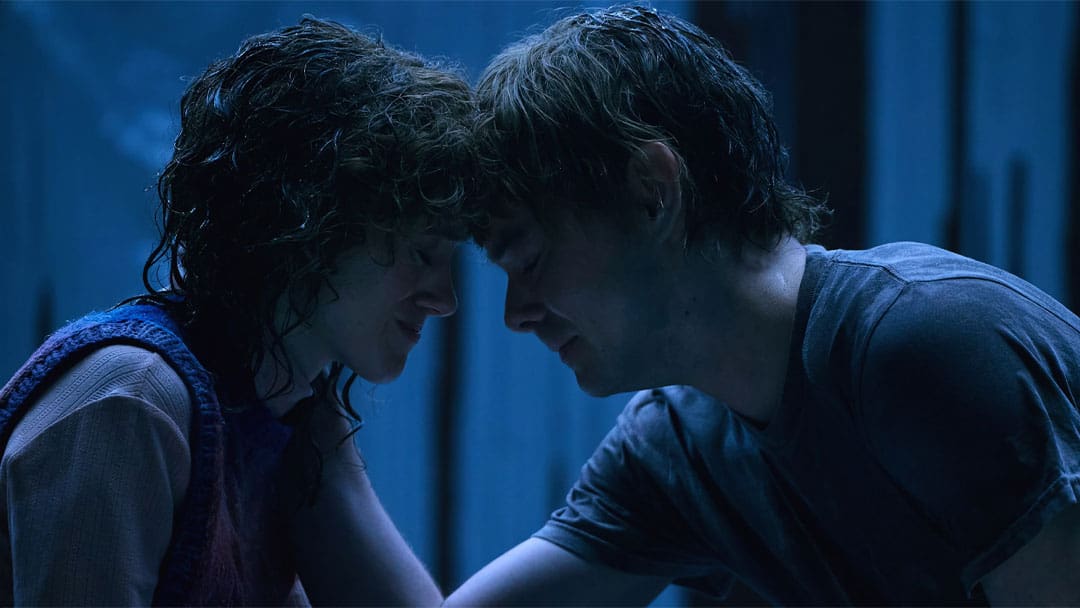
In general, much of the writing felt forced. And how many soliloquies about sacrifice and friendship and being true to yourself did we have to listen to? I honestly lost count. If any of the characters had not made it, maybe these scenes would have had more emotional heft, but to that end, no one died? Not a single character besides Kali.
Had it been available to me, I would have placed a five-hundred-dollar prop bet for a certain character to die (we’ll get to that in a minute). And if not that specific character, someone had to eat it. For everyone to emerge unscathed seems more far-fetched than the notion of interdimensional monsters.
And now look, I appreciate that the final battle wasn’t some unending, repetitive fight that takes so long you end up losing interest. But it did seem like the giant Mind Flayer—the final, ultimate baddie—was taken down, well, kind of easily.
I’m still a little unsure of what the Mind Flayer and Vecna wanted to do—merge their dimension with ours? Take over the earth but not destroy it? How does that work exactly? For a season that seemed hell-bent on spelling out certain motivations (“I have self-sacrificing tendencies, but I care about you”, Hopper and Eleven say to each other for the ninth time), the actual endgame of it all was oddly vague.
But, oh well. The show had to end somehow, and at least the little kids were rescued (that was stressing me out big time).
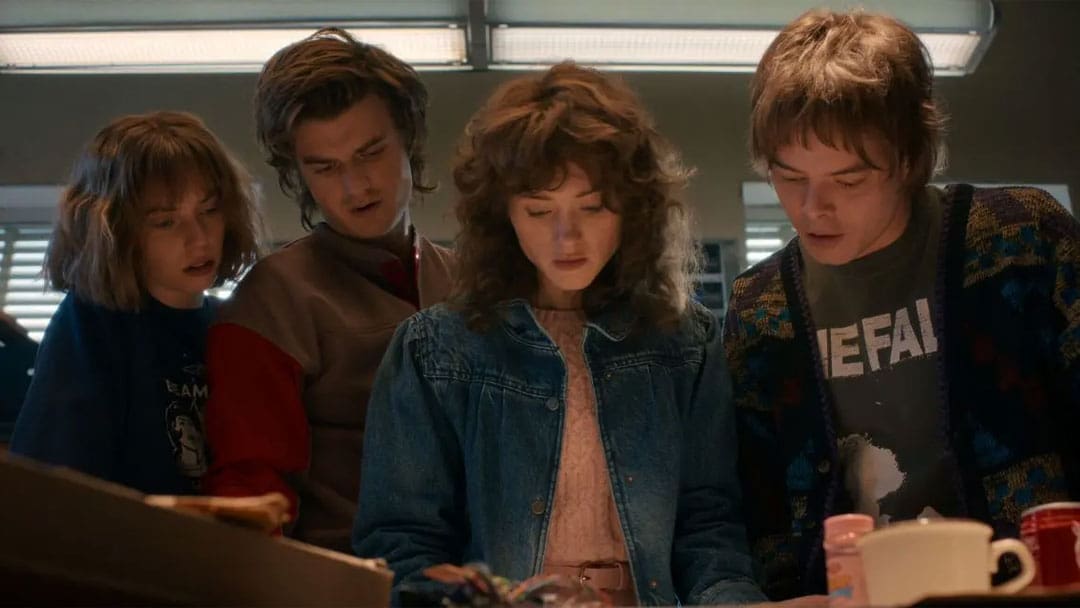
So, with the grievances documented, the next question is naturally what would have made the final season better? Allow me to dabble in a little fan fiction, as I think a few key changes would have greatly enhanced the story.
Structurally, the ending of Season Four was all wrong. The writers clearly wanted to end the season on an ominous note, but it led to a premise—the military quarantine—that never made sense.
Because if the explanation for all that occurred in the Season Four finale was an “earthquake”, then why is the military closing ranks around Hawkins? And why aren’t the citizens of Hawkins protesting this massive intrusion?
One of my ongoing complaints about the Stranger Things universe is that the residents of Hawkins remained so oblivious. This was fine for Season One and Two, but you’re telling me that not one single person looked out their window that July night in 1985 and saw a gigantic monster thudding down the public streets?
By Season Five, it borders on ridiculous. Sure, it’s funny to have some people keep their heads in the sand (Ted Wheeler, for example, who I argue should have stayed that way the entire series), but is it really only our intrepid heroes who are questioning things? What about Fred’s parents, or Jason’s parents, or anyone who saw the ground split open in a decidedly un-earthquake-like way?
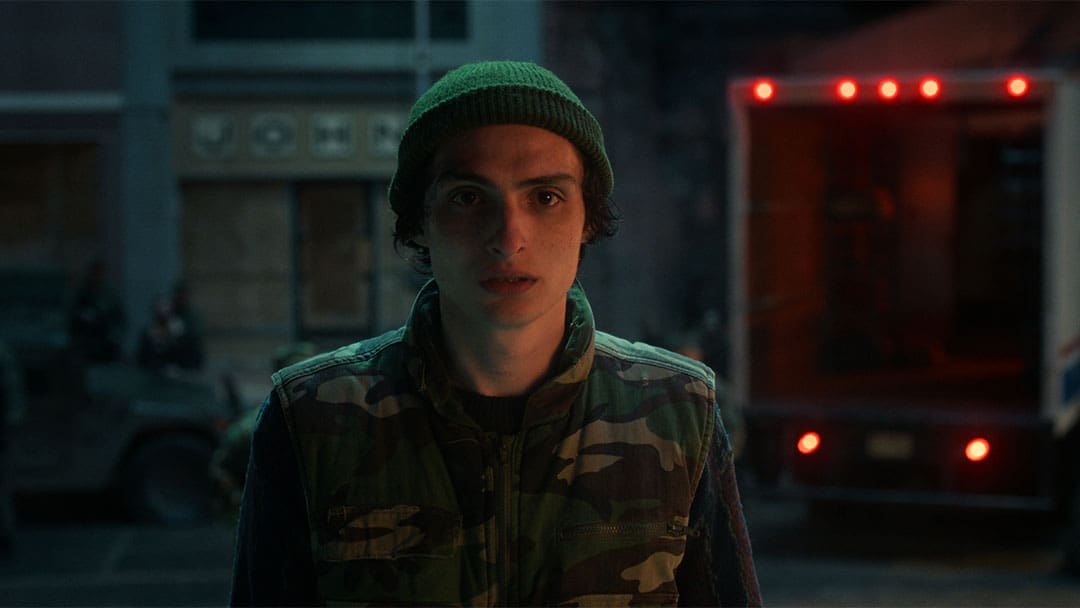
So, here’s what I would have liked to have happened:
We begin in Hawkins, where life remains largely normal. There were no natural disasters, because Vecna was thwarted at the end of Season Four, and seems to have disappeared (though Max is still in her coma). The small gates he opened remain, and when the gang goes to search the Upside Down, they cannot find any trace of Vecna.
The military is still in Hawkins, but its presence is not as overt. They remain determined to find Eleven, whom they deem a national security threat. And I would remove the whole re-starting Dr. Brenner’s program—it was one layer too many. It seemed to add tension purely for tension’s sake, and it was never fully explored (also, I guess all those poor pregnant women just died when the Upside Down was destroyed?).
But the inciting incident for the season remains the same—the vanishing of Holly Wheeler. She’s at a camp, a sleepover/school trip of some kind, with all the other kids. Holly is taken first, as a sort of test subject, while the other kids are held captive by the Demogorgons, and the adults are summarily killed.
Will, sensing something wrong through his connection with the hive mind, and seeing flashes of the violence, convinces the group to go check out the camp. Only when they get there, everything is fine. The kids are playing and smiling, and all is well. How could this be, when we saw Demogorgons slaughtering the adults?
Unbeknownst to the gang, Kali/Eight is in Hawkins—she was brought there by the military, discovered in their hunt for Eleven. Vecna has hijacked her mind, as he is wont to do, and is able to project images in the way Kali can.
And so we move through the season—the gang uncovers Kali, and they realise what Vecna is doing, and that not only was Holly taken, but the other kids are in terrible danger. Max teams up with Holly in Camazotz, and the Derek storyline remains.
Enter episode four—the Demogorgons take the remaining kids into the other dimension, Vecna obliterates the military, and Will finally (yay!) accesses his powers to save his friends.
Only now, sanity must reign. The military finally concedes that there is an enemy greater than Eleven. The gang then works with the military to uncover Vecna’s plan, which is to take over Earth, merge our dimensions, whatever.
Meanwhile, Max is freed from her trance, and we learn that Vecna needed the kids to open a mega gate (we also learn some lore about how Henry Creel got his powers, thank you very much). The gate has to be truly massive—big enough for the super Mind Flayer to get into our world. And thus, the Mind Flayer, along with the rest of the monsters in the hive mind, will enter the Upside Down, intending to use it as the bridge it has always been.
We’ve reached the final battle, which always had to take place in the Upside Down. I think it would have been fun to expand the fight to make it even more sprawling. Bring back Argyle (he comes with Murray!) and Dr. Owens—whatever happened to him? He clearly cared for Eleven, playing a key role in Season Four. And any willing townsfolk, too! This is it, people!
Eleven, Will, and Kali do cool psychic stuff together, weakening Vecna and freeing the kids, but it’s not enough. It would seem that Vecna and the Mind Flayer are too powerful together. The battle rages on until Joyce realises something.
Now, my prop bet. It was always going to be Joyce. It had to be Joyce, didn’t it? But why?
She alluded to this in one of Season Five’s many monologues—that perhaps she was not the best mother at the time Will went missing. And yet since then, she’s been Will’s fiercest protector. The culmination of this, in my opinion, would be Joyce choosing the ultimate sacrifice.
Joyce, who did basically nothing in the actual Season Five finale, is going to come up big here. Joyce, who we might lose track of in the battle, and who might now have access to military-grade firepower.
She reasons that if she could just get close enough to Vecna, who is safe in some inner chamber of the Mind Flayer, maybe she could blow them both to smithereens. The only question is, how is one supposed to get inside a gigantic, moving monster?
The answer has been there all along—the WSQK radio tower. Joyce climbs it alone, knowing what she’s about to do (cue flashbacks to the raw terror and guilt she felt when Will went missing … and we see our girl is determined).
She jumps at just the right moment when the monster is passing by, and maneuvers herself inside. There is heartbreak, of course—maybe she’s able to say goodbye to Will through his connection to the hive mind—and then, it’s over.
The (forgotten in the final episode) Demogorgons and the (totally forgotten in Season Five) Demobats fall limp, and the heroes slowly emerge.
The only thing left to do is destroy the Upside Down, and have a final conversation with the government about how it would be best if they pretended like Dr. Brenner’s program never happened. I think a cool shot would be of soldiers or scientists feeding Dr. Brenner’s research into flames—the past well and truly buried, and Eleven free once and for all.
And then it’s time to close up the shop. And while I do love a good victory lap, the ending of Season Five verged on self-indulgent by the time the credits finally rolled, so I don’t think it needed to be quite so sweeping.
I know—it’s so easy to make these improvements when there’s no pressure, and the basic structure is in place. I wish the writers had been able to stand back from the story enough to see the holes (they certainly had enough time, didn’t they?).
The Duffer Brothers didn’t ruin the legacy of what they created. The finale was watchable, and both enjoyable and satisfying in places. And at least we know our characters are safe to greet the nineties in peace—a stranger time for these eighties kids if there ever was one.