
Every year, PAX Australia features a selection of games under the ‘Aus Indie Showcase’ label. These games have been selected from across Australia, either recently released or upcoming, as deserving of a spotlight.
For the 2025 selection, there are six video games and six board games. You can view the complete list here, along with additional details for each game.
We’ve had the opportunity to chat with some of the team behind the games that will be featured during PAX AUS 2025 and have been able to get some questions answered about the games, as well as the teams themselves. In the lead-up to PAX AUS 2025, please enjoy this series of articles offering insight into some of the featured games.
| GAME NAME: | TRIVIA DEAL |
| DEVELOPER: | FLUENT PIXEL |
| INTERVIEW WITH: | BRETT JENKINS |
What does it mean to you to be included in the PAX Indie Showcase?
Being in the AUS Indie Showcase is massive; getting to show my game alongside some extremely talented developers is very humbling. And most importantly, getting my game in the hands of potentially hundreds, if not thousands, of attendees to get real-time player feedback and motivation is game-changing.
What’s the best pitch to get people to play and check out your game at PAX AUS this year?
It’s a completely new type of trivia that you’ve never played before. Think if Slay the Spire, Balatro, and Who Wants to be a Millionaire had a baby. Also, I’m currently preparing a major update to the demo that will be launched at PAX exclusively. We’ll be having a daily leaderboard with free Steam keys for the winners, and free pin giveaways too.
Can you tell us about your team: size, roles, and how you collaborate
I’m a solo developer, but I do get help from my family on the questions and play testing, and also have some great people on the Fluent Pixel Discord who have been involved in playtesting and providing incredible feedback to help steer the game in the direction it is now.
What’s the process for selecting categories for a trivia game and then sourcing the questions?
I spent a lot of time trying to get the right balance of primary categories, which now sits at 12. From there, I’m trying to get a really good cross-section of all interests. People have all sorts of quirky knowledge – so appealing to a wide audience is important. Also, I try to think about the platforms I’m releasing it on, so keeping it relevant to Steam gamers and their common interests.
Are there any permanent progress elements that you keep between games? If so, how do they work, and if not, what made you choose to keep them out?
At this stage, it’s very much roguelike with permadeath and no meta progression. That’s the most traditional approach and the easiest to implement. However, I do have plans for some additional features that will likely be introduced, which will make it easier to progress and more engaging between runs to feel like there’s some progression regardless of failure. This direction is heavily dependent on the wider playtesting that I hope to see at PAX. I still don’t have a really strong understanding of how difficult this game is yet.
To me, I associate roguelikes with that “just one more run” pull of the gameplay. What is going to keep players doing that here, do you think?
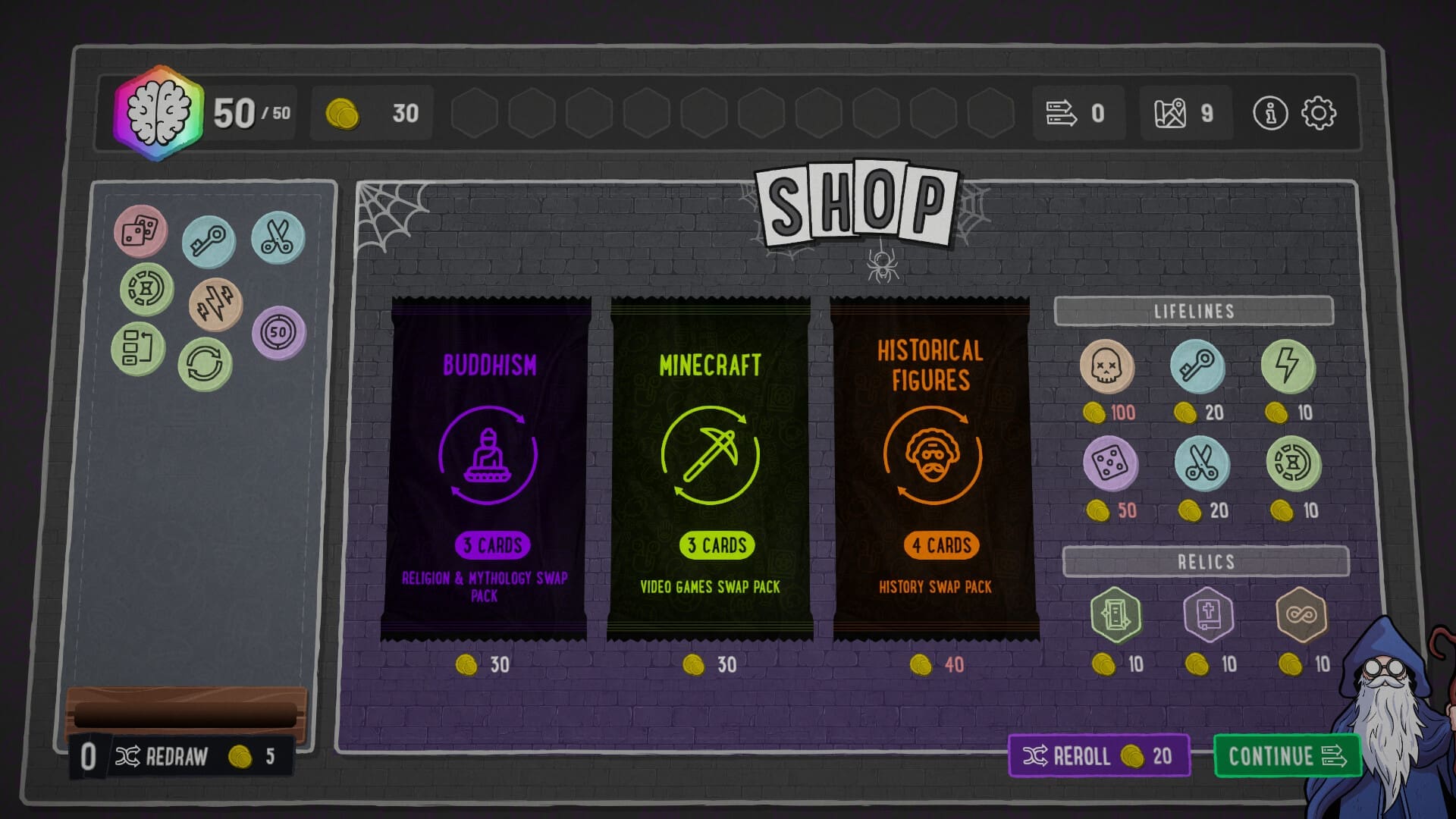
So far, I’ve got over 2,000 questions, so there is plenty of playtime available in this game. And alongside that, there are a large number of Lifelines, Relics and Swap Cards to unlock – with a large number of combinations suiting different playstyles and knowledge. So I think people will want to keep experimenting and finding more efficient ways to get deeper into a run.
Talk more about the ‘Rainbow Reaper.’ Is there any background to them?
The Rainbow Reaper is the constant antagonist in the game, leaving his cards throughout the run as you go, and later in the full game, he will appear in various boss levels and challenges that you will need to defeat.
What has been the most challenging aspect of balancing the video game elements with core trivia game mechanics?
The hardest part is to balance the difficulty and mix of categories that the player should face each round. Difficulty is so subjective as it depends on the player’s knowledge, so the game has to present a broad range of topics and growing difficulty through rounds. Also, as players answer questions correctly, I need to store this and ideally not show that to them again unless they have completely exhausted all other questions – so it’s just a lot of data management and algorithms when creating a new run.

How have you attended PAX before, and what’s your favourite Aussie game you remember checking out?
My first PAX was last year, and I was blown away by the indie scene. I tried out all of the AUS Indie Showcase games and went along to the showcase panel. Julian Wilton from Massive Monsters talk was the absolute highlight though – very inspiring!
What’s the most recently played/watched/listened to Aussie thing that you loved?
I’ve really been enjoying Kill Knight at the moment. I play it with my son, who is definitely better at it than I am! I would like to try out Silksong too, but I know that’s a serious commitment and I have a game to finish… I am constantly impressed by how many games are made in Australia, and as an indie, you really feel like you’re part of something special that’s constantly evolving.
Thank you to Brett for taking the time to answer the questions and help us learn more about the game! You can now add the game to your wishlist on Steam.
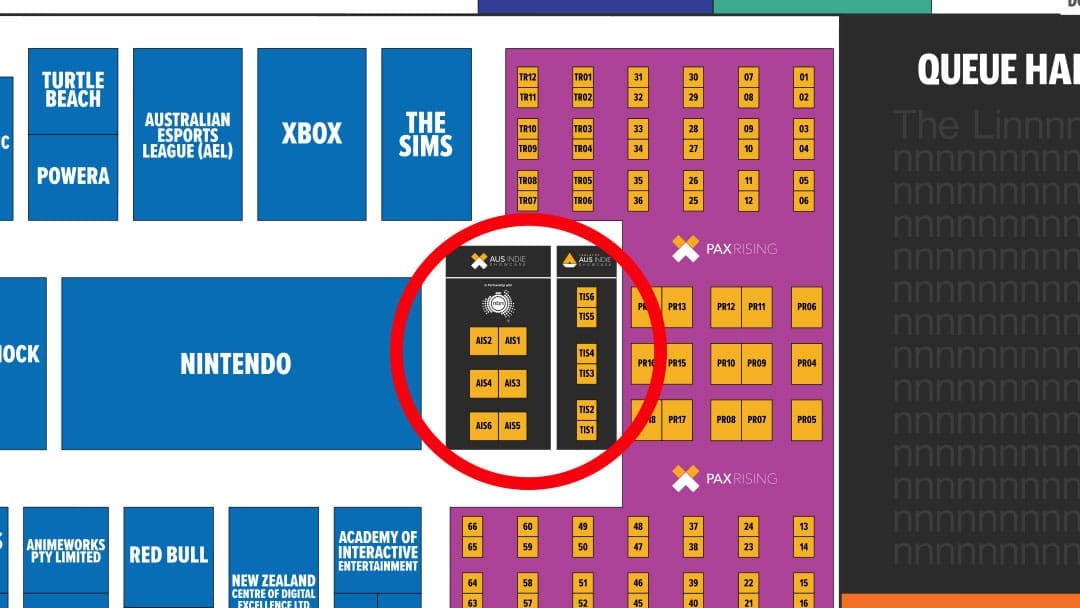
You’ll be able to find Trivia Deal at the Indie Showcase Area, which is not far from entering the PAX Hall via the Que Hall, as circled on the map below.