
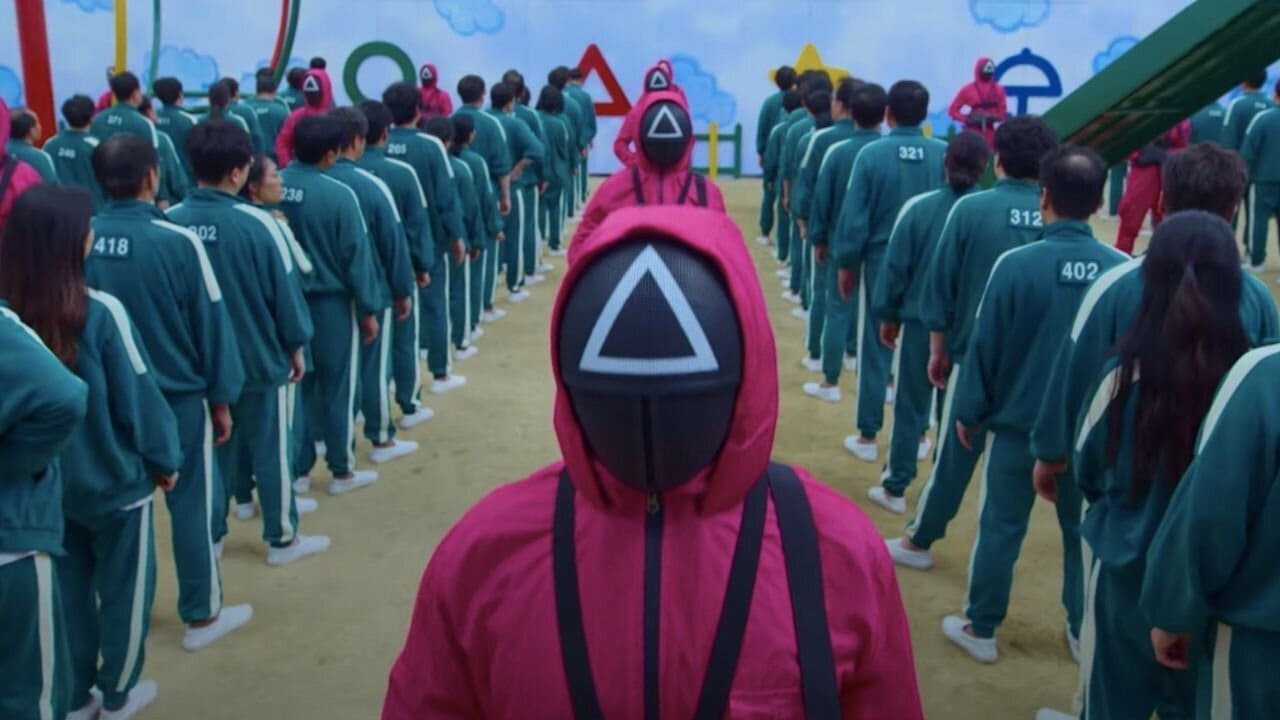
Synopsis: As Seong Gi-Hun finds himself falling deeper and deeper into debt he receives an invitation to take part in a strange game, in which he may have the opportunity to turn his luck around. He quickly realises that he and the other players have all come from similar desperate situations, and while the game they’ve agreed to initially seems childish, they soon realise they’ve committed to something truly sinister.
Format: 9 episodes, streaming on Netflix
Cast: Lee Jung-jae, Park Hae-soo, O Yeong-su, Wi Ha-joon, Jung Ho-yeon, Heo Sung-tae, Anupam Tripathi, Kim Joo-ryoung
Director: Hwang Dong-hyuk
Writer: Hwang Dong-hyuk
Squid Game is an ambitious show. Hwang Dong-hyuk crafts a gripping and well-paced narrative that deals with questions of inequality and humanity. The season draws you in by juggling a strong sense of cultural awareness, flawed yet charming characters, and the horrific yet gripping fresh take on a Battle Royale-style plot. While Squid Game doesn’t quite manage to keep all the balls in the air, it pulls off some impressive tricks in the meantime.
If you’re even remotely online there’s a huge chance you already know about Squid Game. Players in dire need of money, playing games for a chance at winning big, or losing their lives—a kind of messed up Who Wants to be a Millionaire? And Hwang Dong-hyuk’s Netflix series seems to have arrived at the perfect time. Squid Game has pulled an insane amount of attention both in streams and online discussion, likely aided by the Korean entertainment industry’s huge international growth over the last few years and a more recent cultural shift towards stories that emphasise class differences. But that’s not to say the show’s awareness in the zeitgeist is all it has going for it, it’s hard to overstate how well Hwang Dong-hyuk initially manages to balance an intense combination of story elements.
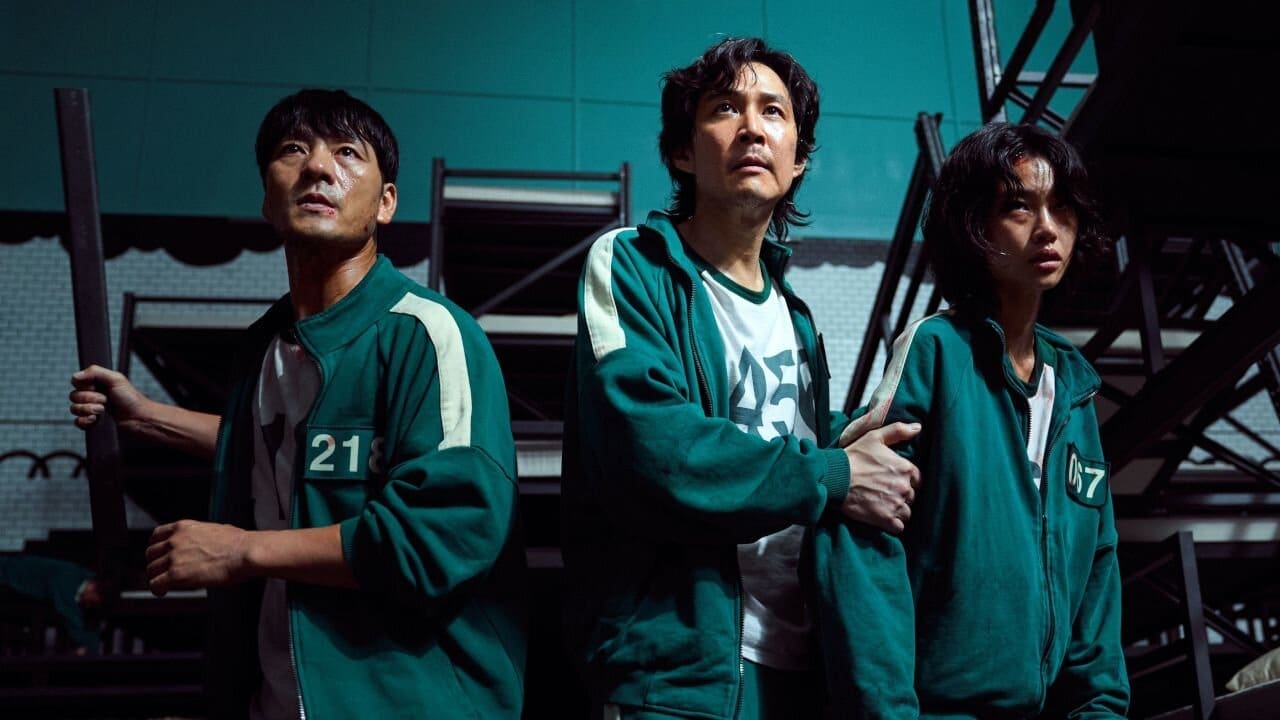
Seong Gi-hun is perhaps the perfectly portrayed absent father. Lee Jung-jae’s acting lends us a somewhat goofy take on a gambling addict who is well and truly, let’s be honest, screwed. While in a sense unrealistic, his whimsical intensity and sheepish stupidity counterbalance his horrendous habits as a father and as a son and turn him into a worthy protagonist, one we can’t help but root for. We see his desperation in his small successes: the spittle that flies when he realises he’s ‘won’ a bet at the horse races; the impassioned hug with a child who wins him a toy at the claw machines; his victory dance, fists pumping and face red from slaps, when he realises he’s won a game of ddakji. And somehow his fantastical, maniacal energy manages to fit perfectly into the grim and oppressive world around him because we allow it to, in a way we need it to.
Alongside him, we’re introduced to other characters like: Cho Sang-Woo (played by Park Hae-soo), a down-on-his-luck (but aren’t they all) financial sector worker who’s in trouble for embezzlement; Kang Sae-Byeok (played by Jung Ho-Yeon), a North Korean defector who tries to use her slick pickpocketing skills to make money in order to secure the safety of her brother and mother; Abdul Ali (played by Tripathi Anupam), a kind-hearted Pakistani immigrant who’s been exploited by his factory boss; Oh Il-Nam (played by Oh Young-Soo), the oldest of the contestants who is also suffering from a brain tumour; and Hwang Jun-Ho (played by Wi Ha-Joon), a police officer from Seoul in search of his missing brother.
While it’s generally quite clear who we’re meant to root for or against, the wealth of characters lends the games of life and death emotional stakes, and as they progress through the six games it’s genuinely worrying to consider who might or might not make it. But the greater purpose the characters seem to serve is to provide a contrasting set of philosophies on how to live through the game. And the show investigates the effect these perspectives have on how they interact not with the game, but with each other.
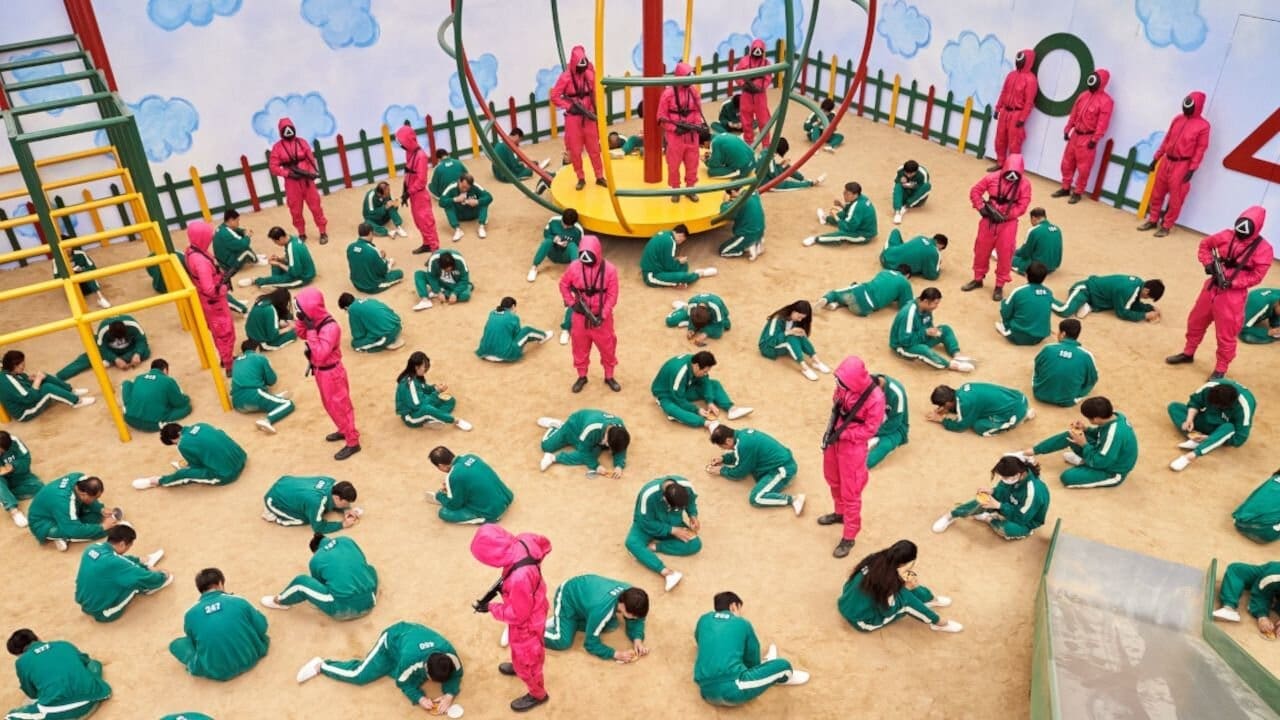
But in many ways, these threads are never pulled on. Moments of characterisation are relegated almost entirely to Seong Gi-hun and after a while, Lee Jung-jae’s airheaded optimism begins to feel one-note or even naïve in the show’s gruesome context—as more and more deaths occur, he remains convinced that he and his band of friends will be able to escape unscathed, a stark and strange contrast to his defeatism in the real world. Even in our protagonist’s case, nuance feels mostly abandoned in the tail-end of the show.
On top of the weighty subject of class inequality, Squid Game makes use of its characters to point towards other avenues of oppression, specifically sexism and racism. Female characters like Kang Sae-Byeok, Ji-yeong (played by Lee Yoo-mi) and Han Mi-nyeo (played by Kim Joo-ryung) are viewed as weak by other players based on their gender, and Abdul Ali is taken advantage of due to his immigrant status.
But nestled within an increasingly raucous plotline, these gestures feel like only that, and it’s unclear what the Squid Game is asking us to consider. That’s not to say that classism, racism, and sexism must always serve to enhance or propel a story—or devolve into trauma porn—but it feels as though the series’ crescendo, while enjoyable, is only achieved by sacrificing and ignoring of some of its most intriguing ideas. And unfortunately, this feeling is further exacerbated by the series’ denouement, which feels unintentionally unresolved.
Squid Game is a truly binge-worthy series, a world both so confronting and engaging that we peer through our fingertips to not only look on but ask for more. And while we’re carried through the ups and downs with all the pacing and intensity of a roller coaster, in retrospect, it leaves us feeling a little too much like the ride was over too soon.