
In their follow-up to the 2019 debut, Arise: A Simple Story, Barcelona-based Piccolo Studio is about to release After Us, the studio’s follow-up. Sharing some similar DNA in the way that the game views our undeniable mistakes as humans having drastic effects on our planet—and featuring a more relaxed experience—my hands-on with After Us is predominantly positive.
With Arise: A Simple Story, the team at Piccolo let the player navigate through the life of an older man right at the end of it. The narrative was emotionally gripping, the music a standout and the art design stellar — but horrible platforming sections let the game down. So when I was first introduced to double jumping and dashing across gaps as Gaia in After Us, I was initially trepidatious. That was until I realised this game uses a fully functioning player-controlled camera, compared to Arise, which used static angles you had to work around. With that significant problem from their previous game out of the way, I dove headfirst into the rest of my ninety minutes of playtime.
Here’s what I said about Piccolo Studios’ first game, Arise: A Simple Story:
“Playing Arise is often frustrating, so I’d suggest being aware of that before playing it, but when the music, visuals and moments in the gameplay just mix perfectly, it’s this colourful cocktail to pull on your feelings out of nowhere because although it’s a simple tale, it’s one we can all relate to.”

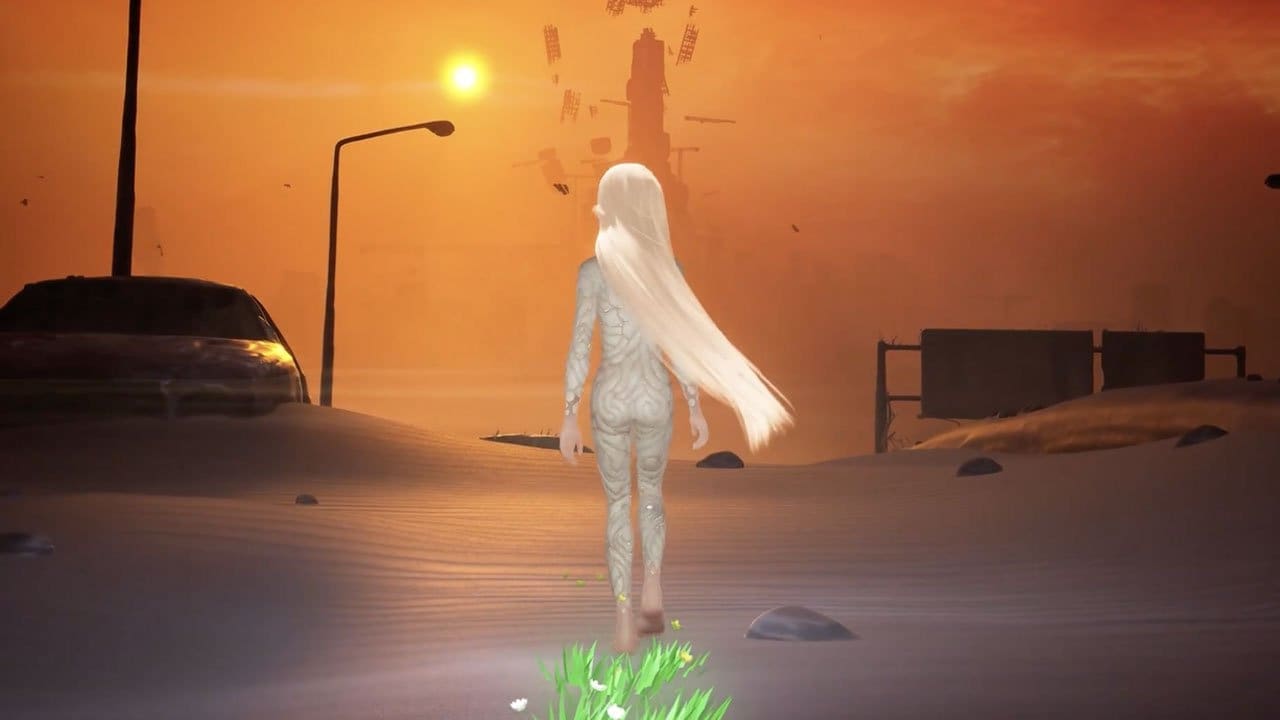
After a calamity causes the extinction of all animals, Gaia, the Spirit of Life, travels to an apocalyptic version of what I assume to be Earth to rescue the spirits of trapped animals and bring them back to life. There’s another spirit helping Gaia—who I took as Mother Nature or someone similar—though I’m still not certain if that’s who it’s supposed to be.
There’s a lot of bleak imagery as Gaia arrives on Earth. Running down a lonely highway for the first few minutes of the game as it introduces the basics, there are cars crumpled into crashes, bridge debris falling away, and in the distance, a towering city which is Gaia’s first goal.
You can hold down the run button and play through these opening chapters of After Us with an almost Journey-like flow. Movement feels good, and the flow between areas doesn’t feature any loading screens, with your goal direction often subconsciously pulling on the controller. However, there is plenty of exploration to do in After Us, and it’s a game that’ll reward a slower pace. Hidden amongst wreckages or atop areas you must platform your way to are smaller, glittering balls of light that Gaia can throw her own energy at to collect. These act as, of course, a form of collectible, but also release a different type of animal spirit into your game. These spirits then appear around the world, atop car hoods and buildings. They don’t offer any gameplay advantage, but as you find more and more—even in my short playtime—they begin to make you feel like you are making a difference on this journey, and their souls become your companions on Gaia’s trek. You can even swipe on the DualSense touchpad to say hello to them.

I came across three types of enemies in After Us that’ll try to stop your mission to save animal souls. The first is the black ooze that surrounds most areas—I presume it to be oil; touching it means death, and some sections also have tentacle-like strands reaching out that’ll grab you if you get too close. Next are airborne enemies that you can counter with Gaia’s ability to release radiant energy to the dead earth around her, causing seeds to sprout trees and vines to grow on wires. Gaia can then grind across and pop pesky floating enemies. Finally, there are humanoid oil creatures I’ve already encountered in a few shapes and sizes. Gaia can throw her light into them to attack, but most take a few hits; a tougher variant carries a TV in front of it, blocking anything but rear attacks. As my session went on, arenas with several enemies at once began to build; they were enjoyable and neither too complicated nor redundant in a game that definitely focuses on the visual-based story and exploration. With one variant already introduced, I expect a few more enemy types by the end to keep things fresh.
As my PlayStation 5 warned that my play session would soon be ending, I was disappointed I couldn’t play more. I had very quickly fallen for After Us—wanting to play for at least a few hours more that afternoon—and I can’t wait to get stuck into more. If what I’ve played so far is anything to go by, Piccolo Studio is building upon the great narrative success they had with Arise: A Simple Story while creating a much more engaging game with enjoyable platforming and combat, without stepping too far outside their narrative- and player-experience–based genre.
Release: After Us launches May 23 on PlayStation 5, Xbox Series X|S and PC.