
Aftermath [AFF 2026 Review]
Here's a woman who went through and witnessed utterly horrific scenes and events and was thrown into a system from the government that wasn't prepared to help

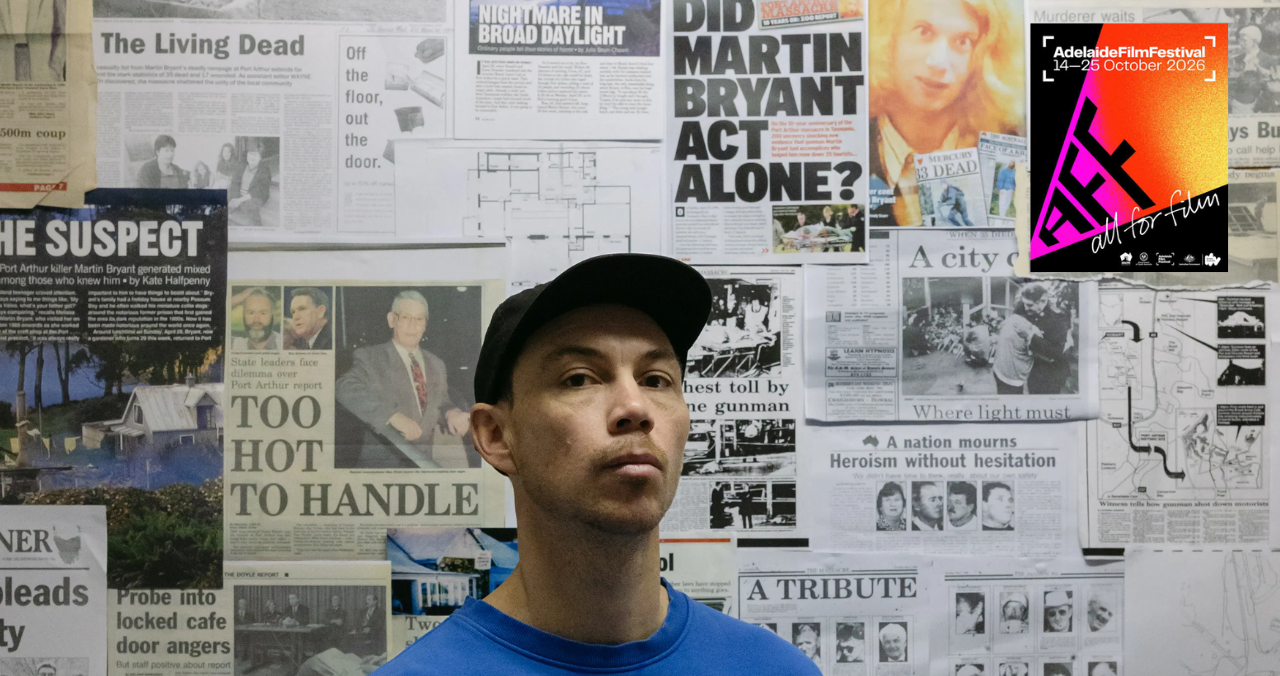
As the politicians of the day steadfastly refused to open a public enquiry, conspiracy theories took hold in the vacuum that followed, as Wendy and others began to question what little was made available by the official narrative.
Years later, emerging documentary filmmaker Jared Nicholson met Wendy, trying to understand how survivors are reshaped by such monstrosity. When her understandable paranoia began to bleed into his own investigation, reopening old wounds of his own, Jared reached out to Ithaka (2021) filmmaker Ben Lawrence for a fresh perspective on the quagmire surrounding the unbearable tragedy.
As a Tasmanian, the Port Arthur Massacre has been and will always be this important and dark point in the state, Australia and the world’s history. I wasn’t sure what to expect from Aftermath, or how it would unravel the post-massacre effects on someone who was there, and the impact it had on their life and those around themIt’s’s an interesting two-part film: one on the subject, and one on the filmmaker themself.
Originally working on the film himself, Jared Nicholson began speaking with an important figure in the Port Arthur massacre, Wendy Scurr, a tour guide and first-aid teacher who helped save lives and triage on the day. He eventually had to reach out to Ben Lawrence, who came on board as co-director, as he found he needed help to piece together the story his film was shaping up to be, as it began to make him delve deeper into his own life and history and the effects uncovering and speaking to Scurr and others around him was having on his own life.
Nicholson first sees Scurr giving a speech while getting his daily news from the now Onion-owned Info Wars, headed up by infamous far-right and Sandy Hook conspiracy theorist Alex Jones. He admits he spent a period living in the echo chamber Info Wars created, and the bubble and worldview it can shape around you. It’s here that the video of Wendy Scurrleads him to the ten years of shaping Aftermath and a film that could have easily fallen into conspiracy-theory rhetoric or an unfulfilling narrative based on ideas, black-and-white photographs, and the accounts of people like Scurr, whose PTSD and treatment by the government completely reshaped their lives.
Wendy Scurr died in 2018, and that moment forced Nicholson to rethink the film and where he was headed with it. In the film, he discusses a moment when he was on a drive with his sister and brought up thoughts of harming himself and harming others. He’s diagnosed with anxiety and depression, and although he later accounts that his medication is helpful, he’s still struggling with alcohol as a coping mechanism for his feelings. It helps him cope with thoughts and feelings, even if they aren’t fully explainable—something anyone who’s dealt with similar conditions can relate to.
Tracing back to his own childhood, Nicholson had his parents go through a messy divorce at the age of three, and this led his father to dive deep into faith. He’d spend his week “living above water” and spend his weekends “head under water”. His father took him to church, witnessing him speak in tongues and grow further into beliefs about signs of the oncoming apocalypse through Y2K, 9/11 and other events. He wasn’t truly aware of how his childhood shaped him, and in some ways, he’s been living similarly in adulthood, both above and below water. His attraction to the conspiracy-theory pool and his distrust of media and politicians likely stem from his upbringing and his father.
Speaking with Wendy Scurr would have only opened up these elements within his brain more, and it’s easy to see how someone who was brought up with this ease into the distrust and conspiracy pool would quickly fall into the type of life that Scurr had spent the years post Port Arthur pulling herself further and further into. Here’s a woman who went through and witnessed utterly horrific scenes and events, and was thrown into a system from the government that wasn’t prepared to help and offered no victim support or compensation officially for having PTSD. If she had been shot in the arm, she would have been awarded more help than coming off with no gunshot wounds, but instead a brain that may as well have been shot with lots of tiny bullets, forcing her to smell, see and hear events from that day for the rest of her life.
Like anyone in Scurr’s situation, you can see how she ended up retelling her story over and over to anyone who would listen, and crossing paths with so many people who fell into conspiracy rhetoric. Each of these on-screen, one an ex-police officer, seemed more interested in pushing a worldwide conspiracy and coordination narrative than in helping Scurr answer the few key questions she had about that disastrous, dark day. Mainly focused on two key things: the six hours it took police to arrive at the scene, and the other on a lock thadidn’t’t work and would have given some others a higher chance to escape the shooting.
As the film chronicles the years of Scurr’s life after Port Arthur, you can see how these few questions grew from a couple into fifty, and eventually grew their own little sub-sections and, from there, expanded beyond her initial point of enquiry, which was to have some Royal Commission opened to dig into the Port Arthur Massacre.
Through Wendy Scurr’s story and Jared Nicholson, the film acknowledges the elements and conditions that lead people to turn to conspiracy theories. Aftermath works as both a post-examination and portrait of one of its victims, while also examining our current conditions and how, in what we’re currently living through, we’re seeing more and more people turn to conspiracies.
Explosion Network attended a screening for the purpose of this review. Read our Ethics Policy.
Aftermath
Aftermath is a hard film to explain, as much as it seems it was a hard film to put together. It is, however, an example of documentary film craft in one of its rawest forms. An examination, and what seems to have been a genuine intrigue and love for Wendy Scurr, and a desire to understand her story better, turned the film's subject inward, offering a unique look at how our past shapes our lives and those around us.

Dylan Blight
[He/Him] Dylan Blight is the Founder and Editor-in-Chief of Explosion Network, an independent Australian publication covering video games, film, television and pop culture. Since founding Explosion Network in 2017, Dylan has written and produced reviews, news, interviews, features and podcasts across the entertainment industry, while overseeing the publication's editorial direction and content.
MORE FROM DYLAN BLIGHT →
Comments