
Wicker Review [AFF 2026]
On paper, it's easy to describe Wicker as "the film in which Olivia Coleman has a lot of sex with a wicker man played by Alexander Skarsgård."

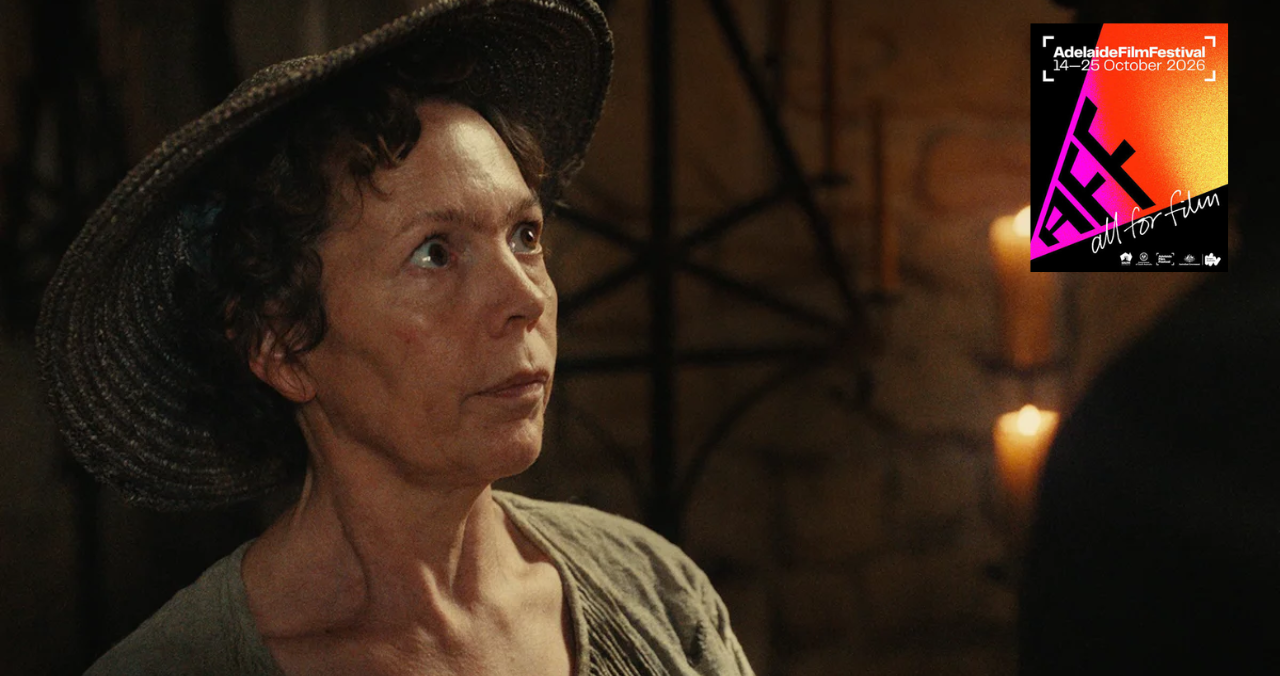
On paper, it’s easy to describe Wicker as “the film in which Olivia Coleman has a lot of sex with a wicker man played by Alexander Skarsgård.” But the film offers more; it happily leans into its fun concept. A unique take on gender roles, with a surprising amount of heart, awaits within the weaves.
In this 1600s-inspired world that isn’t quite on our Earth but certainly has signs of it, everyone is referred to by very strict gender roles and doesn’t even seem to have real names. Men are titled by their jobs, like “the butcher”, while women are referred to as “the butcher’s wife.” A man’s place in the world is his ability at work, which signifies his social status, while a woman’s is always to be the homemaker and child-raiser. That is, other than Olivia Coleman’s character, The Fisherwoman, who was left to fend for herself as a child and has since had to look after herself. She is mocked for her fishy odour as she makes her way into the town market, and after a wedding, she is also teased for the idea of a man ever marrying her.
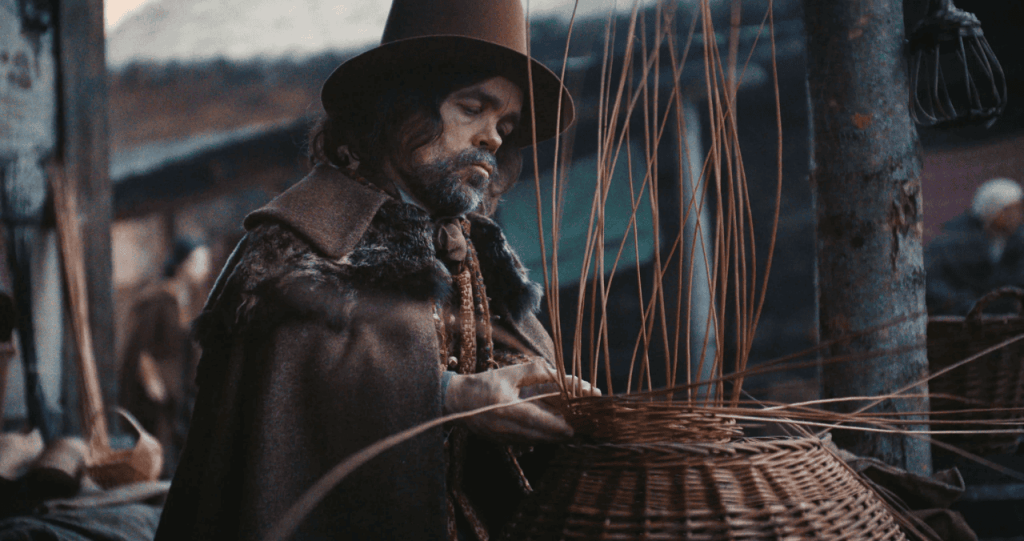
That wedding ritual here even sees the regular exchange of vows and rings, only to end with the man placing a collar on his wife and the pronouncement, “man and wife and now man and the wife!” Wicker’s social commentary is rooted in a silly tone, despite the dark idea and narrative.
For a bit of a laugh, the Fisherwomen ask the Basketmaker (Peter Dinklage) to create a husband. He takes it to a sort of Frankenstein monster, creating a living man. This Wicker Man meets her at church in the morning, and, giggling at how silly the request has become, the two wed without the aforementioned collar she insists she won’t need.
The Wicker Man sends the village into a bit of a shock. First, at the sight of this creation being ungodly, though that’s quickly moved on from; then, as his arrival sends both the men and women of the village into a frenzy, his relationship with the Fisherwomen disrupts the normality everyone has been used to seeing and experiencing. The Fisherwomen and Wicker Man work together to fish; she tends to selling the fish in the market, while he stays home to do the washing and fix the home. Then there’s, of course, the initial flurry of sexual tension and intercourse the two have, as the Wicker Man is also able to please his women like none of the other men in the village seems to be able to do.

As their relationship becomes more public, word of his ability in bed seems to spread. The men grow frustrated as their wives begin to see and want for change. Whether it’s the genuine love between them, their relationship built on partnership, or how everything they do seems to disrupt the seemingly set-in-stone rules for men and their wives, tenacious seeds begin to grow within. This is especially true with the Tailor’s Wife (Elizabeth Debicki), seen as the mother hen of the village, overseeing and shaping each of the new wives.
There’s plenty of laughs to be had with Wicker if you can lean into its tone. At the end of the day, this is a Wicker Man having sex and deep conversations at times about life and love with a human woman. Coleman and Skarsgård make that intimacy believable and work, to the point that I wish we’d got more of it and a little less of the silly stuff, as much fun as some of it can be at times, including a short appearance by Richard E. Grant as The Doctor. This struggle to balance the film’s tonal elements at times affects its pacing. The comedy works, but it’s overbearing in the more serious scenes, and the prolonged final act is drawn out to drive home the lesson to the villagers.
With some of the film’s roots in Adelaide—co-director Eleanor Wilson was born there, and the film’s SFX were done there—there was already a crowd rooting for Wicker at the Adelaide Film Festival. That same sold-out crowd was on board for this film’s comedy, and I overheard post-film conversations about how much they appreciated the film’s tone and jokes. I was with the right crowd, and if you can find one, that’s the best way to enjoy Wicker, with a community willing to laugh and cheer at the right moments.
Explosion Network attended a screening for the purpose of this review. Read our Ethics Policy.
Wicker
Uneven pacing and a struggle to balance its different tones keep Wicker from reaching its full potential. Still, the film succeeds, particularly in its comedy, thanks to its fantastic cast.

Dylan Blight
[He/Him] Dylan Blight is the Founder and Editor-in-Chief of Explosion Network, an independent Australian publication covering video games, film, television and pop culture. Since founding Explosion Network in 2017, Dylan has written and produced reviews, news, interviews, features and podcasts across the entertainment industry, while overseeing the publication's editorial direction and content.
MORE FROM DYLAN BLIGHT →


Comments