
Synopsis:
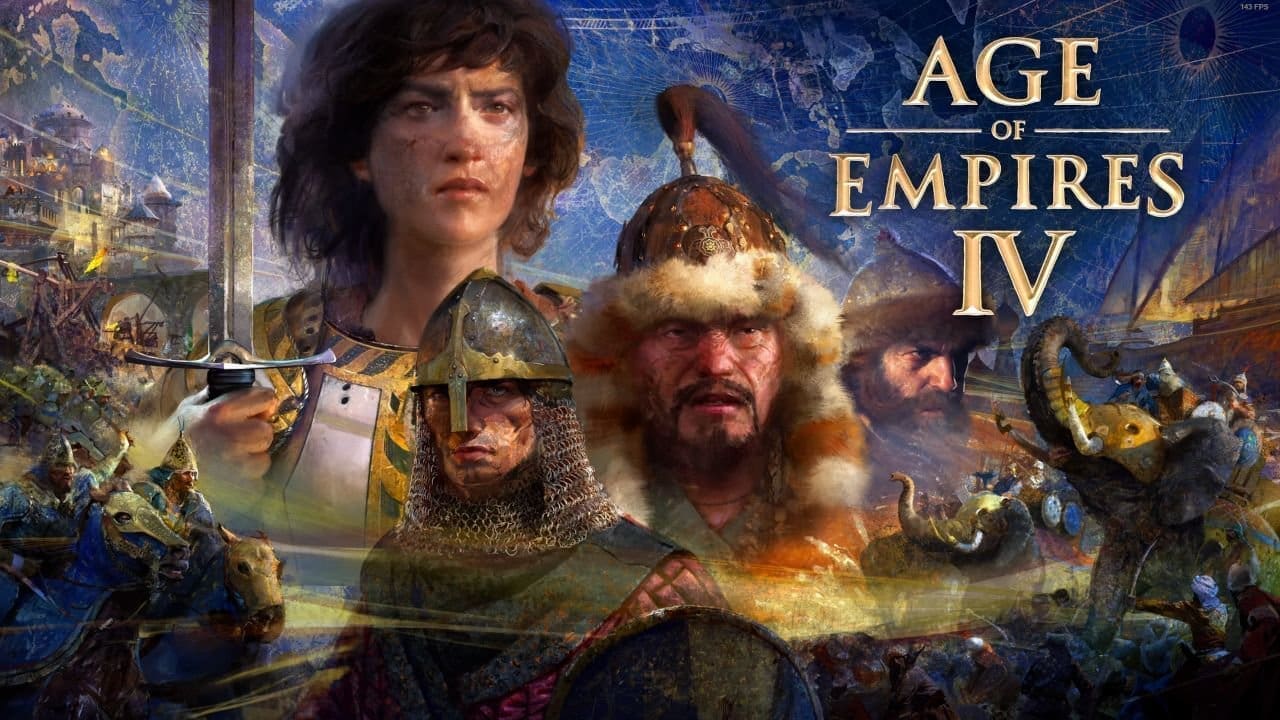
One of the most beloved real-time strategy games returns to glory with Age of Empires IV, putting you at the center of epic historical battles that shaped the world.
Originally posted as a Review in Progress on 25/10/2021
Publisher: Xbox Game Studios
Reviewed on: PC (Intel i5-9400F @2.90GHz, RTX 2060, 16GB RAM)
Also available for: N/A
Developer: Relic Entertainment
Directors: Adam Isgreen, Quinn Duffy
Writers: Noble Smith, Philippe Boulle
Artists: Han Randhawa, Zach Schläppi, Roland Longpre, Brent Breedveld
Age of Empires IV turns back the hands of time in more ways than one, whether it is the several campaigns delivering history lessons on battles and the progress of each civilisation across an era or the modernisation of the game whilst still maintaining the Age of Empires flavour. Age of Empires IV achieves much of what it sets out to do, delivering a worthwhile experience for RTS fans and those curiously interested in building their armies.
The standout feature of Age of Empires IV is the campaigns, and they are well worth experiencing. They chronicle important epochs of four different medieval civilisations dropping in at specific defining battles to show what it was like for the troops on the day and why it was a defining point for that civilisation. The mission structure of the campaigns does well to sell you whatever situation you find yourself in at that time, whether it is being in an against-all-odds battle having to win with limited resources or a show of power starting with a huge army and resources engaging in larger pitched battles. The mission structure is reasonably engaging and includes a good amount of variation, keeping it fresh throughout, broadly being differentiated as being on either the offence or the defence for that mission.

There is a good amount of story-driven content with four different campaigns to choose from, playing as four of the eight civilisations. One of these is the French 100 Years’ War campaign, which starts at the very beginning of the century with the French mainly in disarray and lacking the unity to defeat the English. An early mission has you choosing a set of knights in a chivalrous tournament-esque battle, having you weigh up the suitable composition to win the fight. The campaign goes right through to Jeanne d’Arc (Joan of Arc) and the influence she had on the war until her death, giving you missions where you are sweeping through the English forces with her army of knights, saving villages and taking back cities. The French campaign finishes with the development of technology that finally turned the tide towards the French and ended the century-long war, giving you missions focusing a bit more on the economic side of things, researching and setting up trade routes before finally erasing the British from France.
Between missions, you are treated to truly excellent history vignettes made to the highest quality using modern real-life settings that do so well to engage you in the period you’re experiencing. The way these have been produced and directed is unlike anything else I’ve experienced in a video game. It seems like they would be more at home on a history channel. The partnering up with Lion TV has come off well in the game and adds an extra layer of immersion.

Completing a campaign mission also unlocks a mini-documentary about a particular technology that civilisations utilised through the period and the science of how it was developed and how it functioned at the time. Whilst optional, these maintain the high quality of the aforementioned vignettes and give you insight into the technology behind crossbows and cannons, the role of a barber-surgeon within the medieval army and what it was like to be on a campaign for many months on end. The supplementary material to the campaign missions goes above and beyond and is largely why the campaigns are so engaging.
Age of Empires is just as much about skirmish battles against AI and online opponents as it is about structured historical campaigns, and Age of Empires IV’s PvP is also excellent. Launching with eight civilisations might seem a little low to some veterans of the series; however, this has allowed Relic Entertainment to focus on the points of difference for each civilisation. Whilst there are unique units to each, the most significant differences are how they develop and maintain their economy. This may not sound very exciting, but these differences are a huge part of why each civilisation has its own identity. The diverse economic development has also jazzed up the Dark Age, making it so that civilisations have different openings where these used to be much more similar. The Rus, for example, don’t have to worry about mining gold straight away, as their scout can roam the map killing deer whilst placing their unique Hunting Cabin optimally by trees to net gold per minute.

These differences in economy stretch into the mid and late game as well. The English should focus on gaining food from their buffed farms earlier, while the Rus will be focused on bringing back all the already slain deer from around the map on the back of their scouts. On the other hand, the Mongols will see a benefit to mid-game raids as they gain resources for every building they destroy, allowing them to pressure their opponents’ economy and still benefit their own.
Rock–paper–scissors counters are alive and well in Age of Empires IV, and army composition is the most important aspect of many encounters. Spearmen counter cavalry who counter archers who counter spearmen — as has been the historical case in the franchise. There is more nuance to this, with armour coming into play and bringing the commonly available combat units up to about six across the civilisations. The uniqueness of each civilisation can add some extra flavour into these calculations — you probably don’t want to mass spearmen against the English since their longbowmen will make short work of your army, but a strong spearman presence will be effective against the Rus who get their knights earlier than others. The combat aspects blend nicely, and as you develop your skills and APM, there are opportunities for micro-managing your army’s movements to ensure favourable unit matchups.

Many of the negatives about Age of Empires IV can be attributed to missing features from the older games. Some missing parts are somewhat baffling but are ultimately not make-or-break details. The fact that you are always blue vs. red is a bit of flavour that is missing. No option to play as a random civilisation or let the AI be random is another minor annoyance, along with keybindings being more limited than previous games. A lot could also be said about the graphics — visuals can lack clarity and don’t scream “2021” — but that isn’t something I stop and appreciate often and therefore isn’t a deal-breaker.
There is a question of whether this will bring over all the Age of Empires fans under one banner. Age of Empires IV does enough to secure its own identity, though I don’t doubt that some of the older games will maintain their communities due to the lack of bigger risks to draw them in for the long haul. However, Age of Empires IV is the best place for new players to the franchise. A few Art of War challenges help newcomers understand the important aspects of army positioning, composition, and early and late-game economy. While very useful, a few more challenges would be appreciated.
Age of Empires IV balances the fine line between too new and too familiar. Excellent and varied campaigns are the highlight, along with the documentary-style videos that bring an understanding and appreciation of the battle situations and the technology of the time. The skirmish modes are also just as fun and engaging as ever, with the uniqueness of each civilisation adding a lot of flavour to the mix.