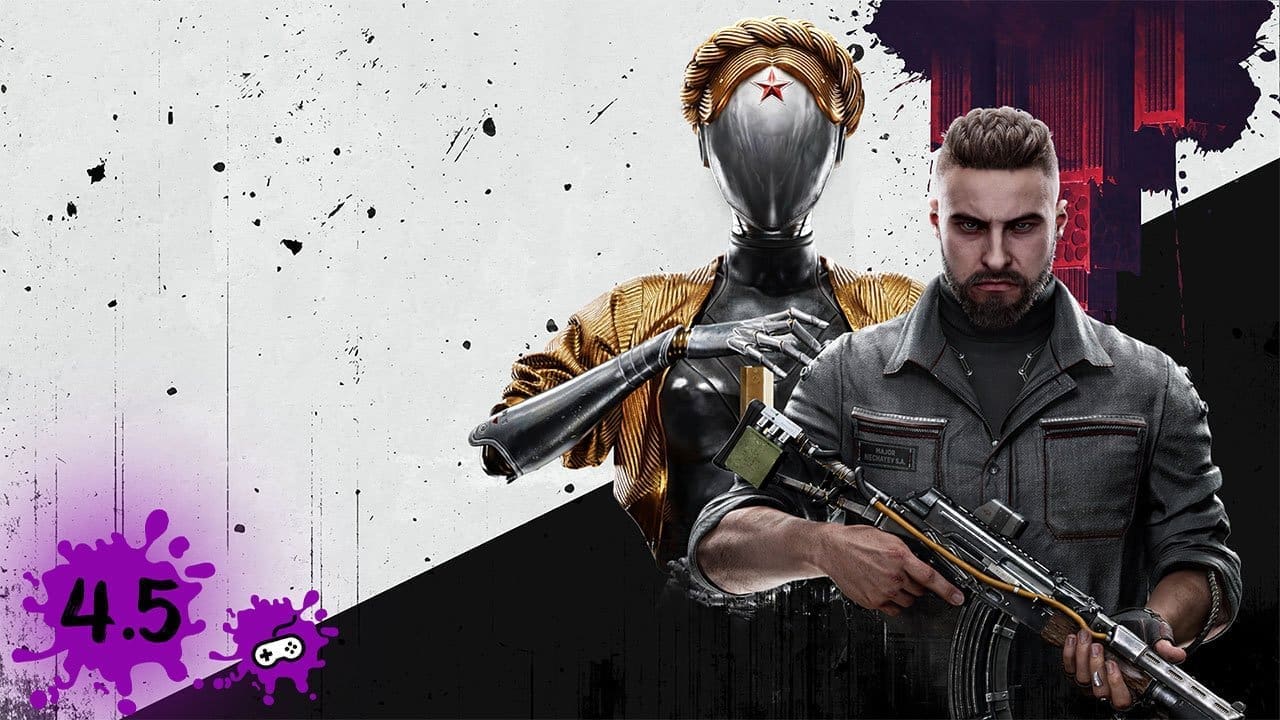
Synopsis: In a mad and sublime utopian world, take part in explosive encounters. Adapt your fighting style to each opponent, use the environment, and upgrade your equipment to fulfill your mission. If you want the truth, you’ll have to pay in blood.
Cast: Adam Simms, Alex Jordan, Alexander Ballinger, Alexander Capon, Bill Hope, Cherise Silvestri, Chris Ragland, Dev Joshi, Diana Bermudez, Elena Saurel, Eric Loren, Eric Meyers, Eric Sigmundsson, Eve Karpf, Garrick Hagon, Glenn Wrage, Graham Vick, Ian Portez, Jay Rincon, John Schwab, Jules De Jongh, Kerry Shale, Laurel Lefkow, Laurence Bouvard, Lewis Macleod, Mac Mcdonald, Martin T. Sherman, Meaghan Martin, Mike Bodie, Peter Brooke, Peter Marinker, Rachel Atkins, Samantha Kamras, Shai Matheson, Stephanie Cannon, Taylor Clarke Hill, Vincent Lai, William Roberts
Developer: Mundfish | Director: Robert Bagratuni
Writers: Robert Bagratuni, Artem Galeev, Harald Horf, Alexander Dagan | Lead Artist: Artem Galeev
Publisher: Focus Home Interactive | Reviewed on: PlayStation 5 | Also available on: PlayStation 4, Xbox One, Xbox Series X|S, PC
Atomic Heart wants to be BioShock very badly. It wears the inspiration on its sleeve and, while that isn’t always a bad thing, it only manages a world design that’s somewhat as interesting as Rapture’s, while misfiring on almost everything else. Most prominently, the narrative is a pile of clichés led by the most unlikeable protagonist I’ve played in years.
Set in an alternate history, the USSR lives among the clouds as a technological marvel far ahead of the rest of the world. When innocent, chore-doing robots produced by the USSR and sold globally go haywire, you’re sent to investigate at Facility 3826. After a prolonged, drawn-out 30-minute opening, you’re finally let loose: the robots have killed many innocents, and the USSR wants it hushed up to keep selling. I guessed the narrative turns a couple of hours in, and you probably can too. There’s nothing here you haven’t seen before, and for a game set in and around the Soviet Union, there’s little meaningful to say that you haven’t heard elsewhere. Is communism bad? Good? What is free will? Was the Soviet Union good or bad?
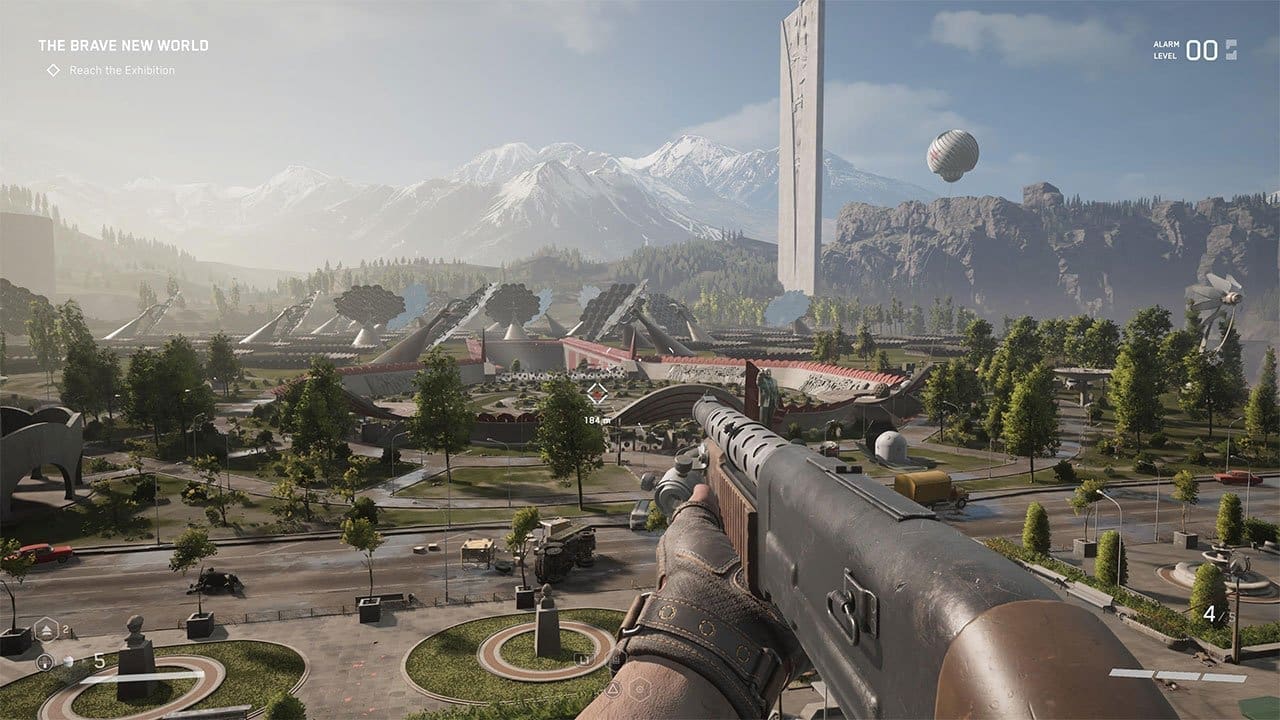
There’s plenty of surface-level material here, made more curious since developer Mundfish has previously stated they don’t do politics. When you’re making a game about an alternate-history USSR, that’s a wild claim. I can extend some grace—perhaps the team is protecting itself as a Russian studio working under strict laws. Still, you’ll hit a point where a Russian villain talks about invading other countries and it’s impossible not to think about Russia’s current invasion of Ukraine. Meanwhile, Ukrainian developers like Frogwares struggle to work between attacks on their homeland, while Mundfish ships a mediocre alt-history game about robots killing innocents. Even granting that not everyone in Russia supports the war, I couldn’t get it out of my head.
Back in fiction, you play as Major P-3, an insufferable lead who annoyed me like no character has in years. P-3 is an ignorant blowhard who blindly follows orders from the head doctor behind Polymer and many of the USSR’s advances. Polymer tech underpins an upcoming neural network to connect the Soviet Union—and beyond. If strapping a device to your head to “connect to others” sounds like a red flag, it is. P-3 doesn’t care; he’s a dude who loves dropping his catchphrase (“crispy critters”) and shooting things. He spends most of the game talking to his AI glove “Charles,” which grants abilities you unlock over time. Charles grew on me; the fact a talking glove has a more interesting arc than the protagonist says a lot.
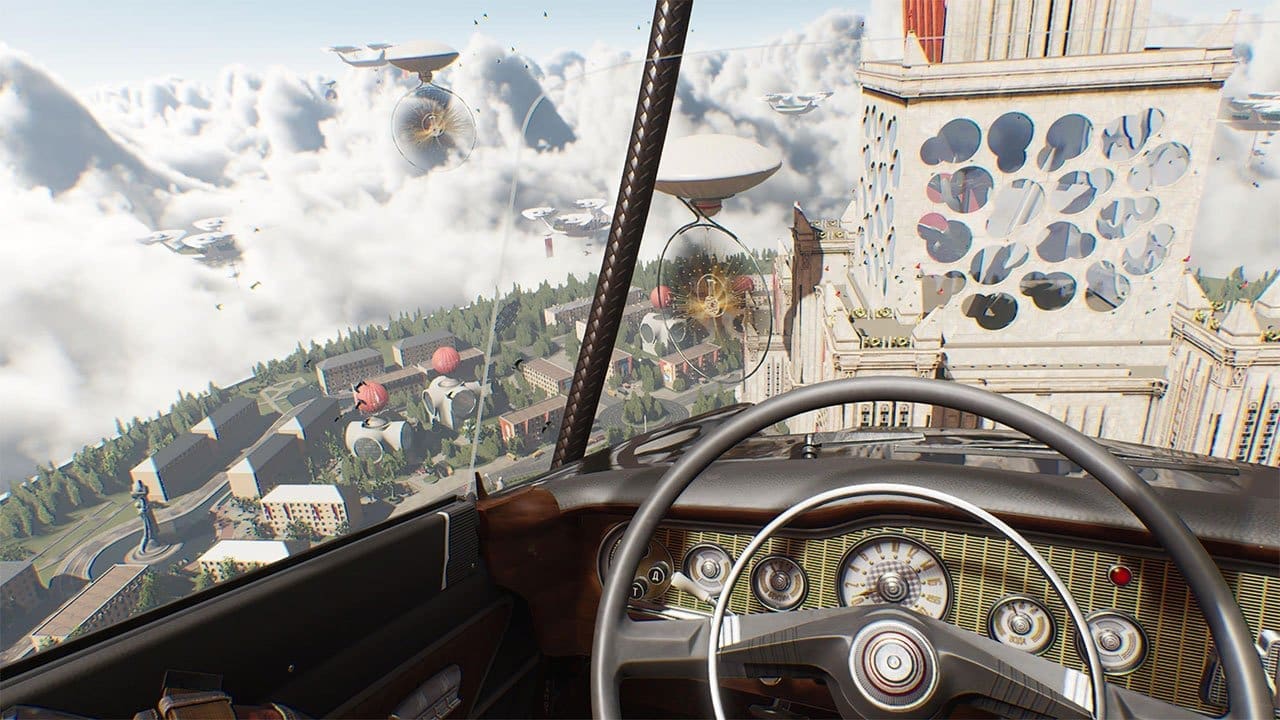
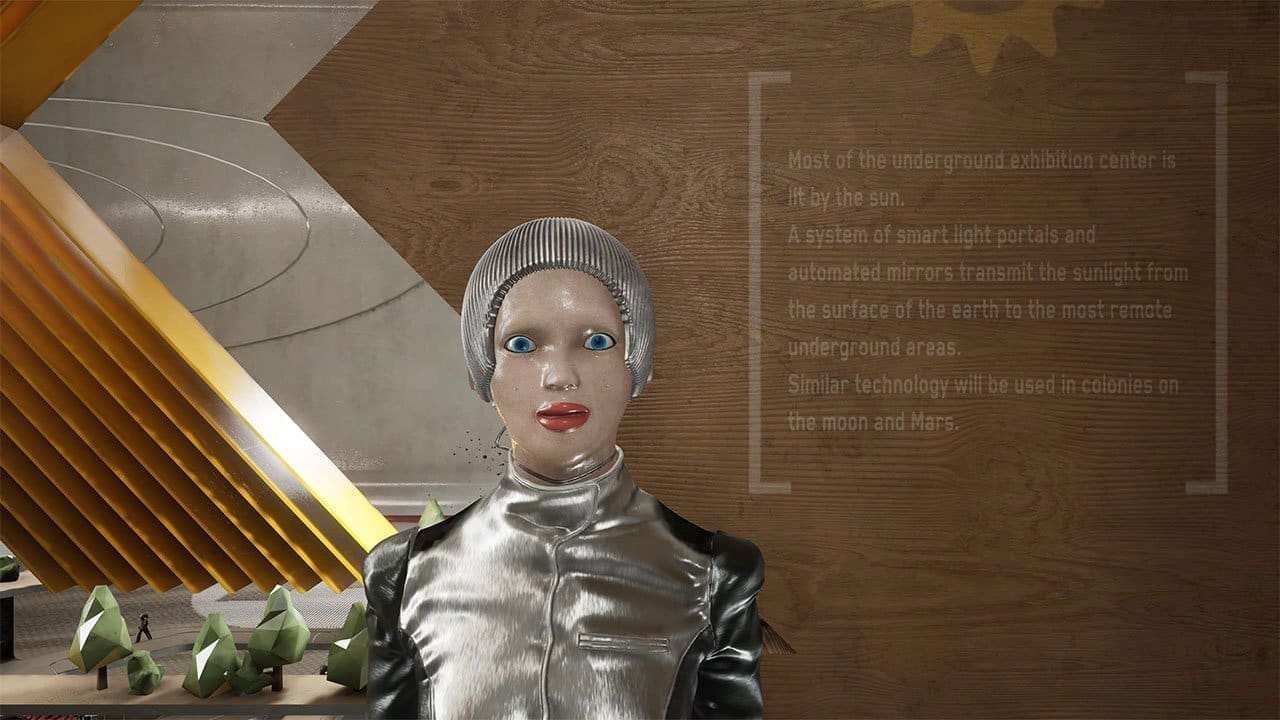
There’s also a grotesque amount of sexism. Often I wondered if a 13-year-old wrote it, or if it’s just been sitting in a time capsule for 20 years. Beyond the undeniably beautiful world, the biggest sin is an upgrade vendor robot that’s weirdly, incessantly sexual—begging P-3 to “stick” things in it, among other lines. During one semi-pornographic tirade while I was just trying to buy ammo, I muted the TV. The two ballerina robots featured in marketing also get lingering, leering shots for no reason—one of several man-gaze sequences.
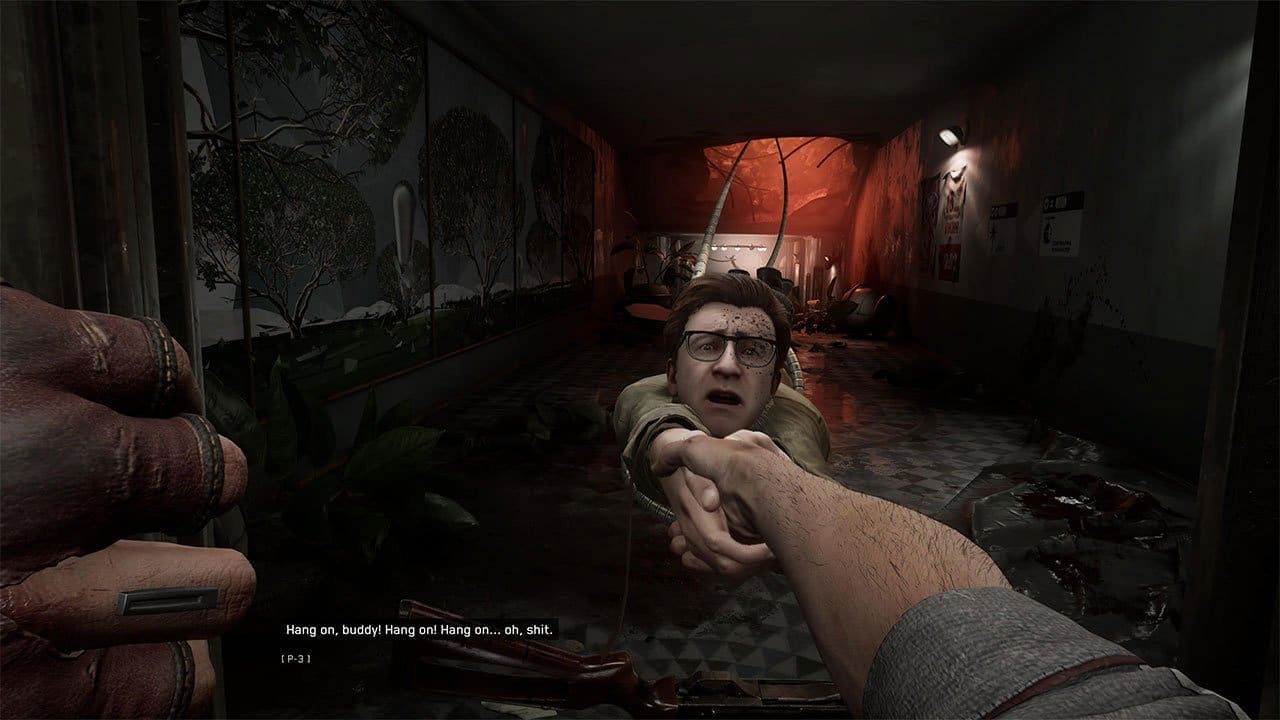
What Atomic Heart does have is a delightful arsenal and combat that can feel good when you’re carving through enemies. P-3’s kit expands to shotguns and LMGs, energy weapons, and several melee options. Polymer abilities let you freeze, shock, and levitate foes. The BioShock influence is obvious as you juggle guns and powers, but the abilities aren’t nearly as varied as BioShock’s. Guns do feel great—the shotgun’s kick and an energy weapon’s alt-fire EMP never got old. Still, pacing is off, and encounter consistency is all over the place.
The first hours funnel you through tight corridors where every robot is a major threat. Ammo is scarce, so you dodge and melee a lot. Cheap deaths didn’t bother me; I learned to move carefully and listen for sprinting bots. Once you emerge into one of two semi-open biomes, though, objectives are a 10-minute run away, and the enemy density becomes numbing—security cameras call more enemies to swarm you, while medic bots swoop in to revive the ones you just downed. The game says there are secrets, loot, and bite-sized dungeons testing combat, puzzles, and platforming—but slogging from A to B made exploring more frustrating than fun.
One thing I can’t knock is Mick Gordon’s original soundtrack. The moody build-ups and explosive boss tracks rip—hard. If DOOM Eternal left you wanting, Gordon’s heavy metal here absolutely slaps. Plus, he donated his entire fee to the Red Cross in support of Ukraine.
Atomic Heart is gorgeous, with striking locations and an alt-history premise primed for great storytelling. But this ain’t it. Great looks can’t cover bland characters, annoying world design (with a useless map), immature writing, odd sexism, and the creeping sense you’ll regret the time spent.