I played Bravely Default when it was released on the Nintendo 3DS in 2012, but I don’t think I ever finished it. Not for any particular reason, either; I think I just fell off it. However, with Bravely Default Flying Fairy HD Remaster as one of the Nintendo Switch 2 launch games, it was the perfect time to pick up the game again, both in front of my TV and in handheld mode. It was a great game to test the new console thoroughly.
The project originally started as a sequel or spin-off to Final Fantasy: The 4 Heroes of Light, before evolving into a standalone project. Since then, it has spawned several sequels and spin-off projects of its own. The most recent of these was Bravely Default II, released in 2021 for Nintendo Switch and PC.

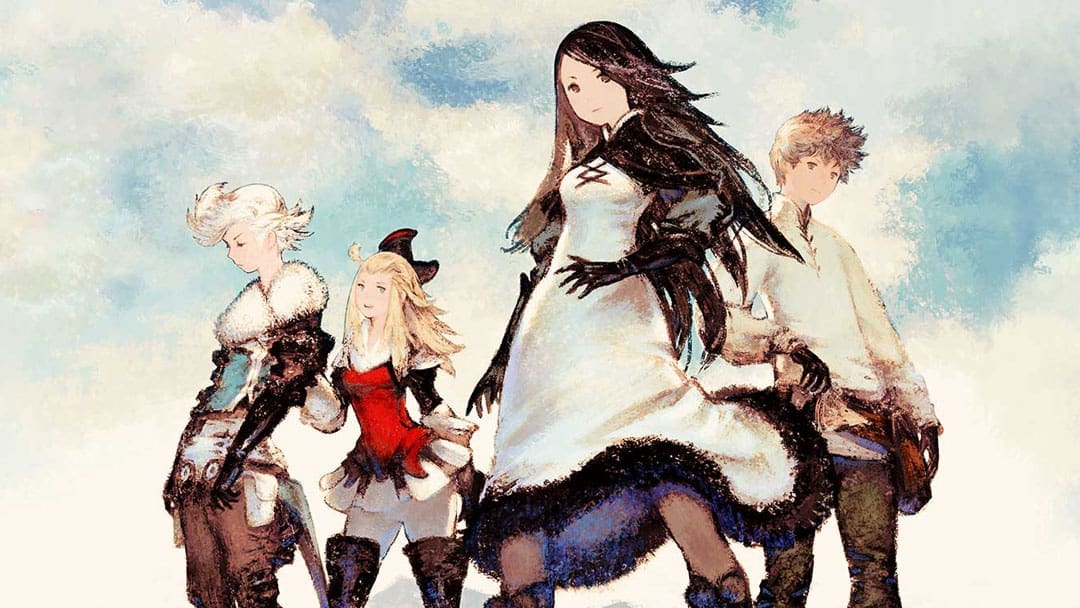
The plot in Bravely Default: Flying Fairy HD Remaster follows that of earlier Final Fantasy games. A great chasm opens up in the world, swallowing the village of Tiz, and he soon meets up with Agnes Oblige, who is the vestal for the Wind Crystal. The two end up teaming up with Ringabel, who is suffering from amnesia, and also Edea, who turns against her father, who is out to stop Agnes when she discovers what he’s doing. The four of them embark on a quest to save the world and restore each of the four crystals to their former power.
Where I believe I fell off Bravely Default in its original release is about halfway through the game, and I reached a similar ‘oh god here we go state, with Bravely Default: Flying Fairy HD Remaster. It’s hard to discuss without spoilers, but the narrative takes a turn about halfway through the game that can make the gameplay feel overly grindy, especially in an RPG that was already quite grindy. It’s a brave choice, and one that I couldn’t blame anyone for not wanting to push through to see how the story finishes, even if I can now say for sure it’s totally worth it. Narratively, Bravely Default: Flying Fairy HD Remaster remains a strong game, with a core cast of likable characters that are well-written and, in this updated version, now voiced, which further enhances the experience. But the biggest twist, as the game reveals more of its hand, is how it swoops back around and makes even the smallest of early villains and fights more meaningful in a game that, by the final credits roll, made me feel like every character was meaningful in their own way.
What is most memorable about Bravely Default, even if you never finished it upon initial release like me, is its RPG system. It combines a classic JRPG job system seen in past Final Fantasy games, and introduces the Brave/Default system for added strategy in how you take on fights. Each of the four characters can change to any of the different jobs as you unlock them, and as you level those jobs up, you’ll unlock new skills, some of which you can then use even if you switch out to another job. You can also mix in any of the jobs you’ve used and their main ability tree with another class. For example, you can level up the Black Mage to earn the mid-range spells like Fira, and then switch to White Mage and still choose to have access to the Black Mage tree. Or you could use the White Mage skills on the Black Mage tree. Although that’s a mix that makes sense, you can also play as a White Mage with access to the Thief class skills, for instance.

The Default/Brave system is the standout system; however, as you learn to master and use this system properly, it is what makes some of the later game bosses possible, or something that’ll run you over. You can ‘Default,’ each character’s action per-turn, which will make them defend against the next attack and then stock up a ‘Brave Point,’ or ‘BP,’ to a max of four BPs. On the opposite end, you can start a fight and Brave into negative four points so you can do an all-out attack, but leave yourself open to making no attacks for three turns afterwards. This works great when you’re running into random encounters and know what attacks and moves will take down an enemy, and you’ll want to expend your BP by all characters to finish the fight fast. Even if that’s as simple as setting all four party members to do a basic attack four times in a row each. However, if you did something like this against trickier enemies, especially boss fights, leaving yourself defenceless afterwards is only bound to end up with your team getting wiped out.
The strategy comes from knowing when to Brave or Default. And defending until you have four points isn’t always the best action either, as you’ll still be taking damage, and this isn’t a game where “the best offence is the best defence” is necessarily true. Sometimes it’s about mixing up who is expending attacks, and then making sure your healer has enough BP at all times to expend several healing spells in a row if necessary.
There are more differences and upgrades from the Nintendo 3DS version of the game than you may think at first. Notably, it’s the visual upgrade that’ll stand out, as the game retains its art style while offering gorgeous art design, especially in towns, where staying still for a moment allows the camera to pan out and provide an overhead view of everything. The game also feels great, running at 60fps. I was amazed by how good it felt to move around the towns and cities of the world, each looking like a gorgeous pop-up book at times.
There’s also some quality-of-life upgrades here while you move around the world, like showing recommended levels for any particular area, as well as new icons that show side mission content.
Auto-battle and fast-forward features have been added here so you can speed up your grinding and have your team repeat the same attacks over each encounter. A very welcome addition in a game that will require you to stop often and grind up a bit to be ready for the next big boss fight.
You can also change the encounter rate to help with this, and by playing in the new Nintendo Switch 2-focused mini-games, you can unlock a 0% spawn rate option as well as one for 400% spawn. The mini-games are available early in the game in Flores and are played using the Nintendo Switch 2’s Mouse functions. In ‘Light Support Rhythm Catcher,’ you move the cursor around a screen during music-video-like scenes featuring music from the game. And then in ‘Ringabel’s Panic Cruise,’ you must move the cursor around the screen to steer a ship, flick switches, fire cannons and more. Both are surprisingly fun and good breaks from the core game. The music in Bravely Default: Flying Fairy HD Remaster is well worth appreciating in a music mini-game, and if anything, the ship mini-game is a great showcase for how the mouse mode works on the Joy-Con 2 controllers, as you must use two in this game.
As a launch game for the Nintendo Switch 2, Bravely Default: Flying Fairy HD Remaster might not be for everyone as it is a grindy RPG with some very Japanese flavour, but for those looking for something great to take on the road, it’s a must-have in your library.
(Review code provided to Explosion Network.
Read about our review and ethics policy here.)