Catan is probably the most well-known board game for board game players. And by that I mean, Monopoly is perhaps the most well-known board game worldwide, but to people who classify themselves as ‘board game players,’ even if you haven’t played Catan, or as it was previously known, The Settlers of Catan, it’d have to be the most well-known game. People even dress up as characters from the game and run around, playing real-life versions of the game, at conventions like the upcoming PAX Australia. So what does a 2025 revision of the game have to offer? Gameplay remains the same classic that fans have loved for thirty years; however, this new edition is excellent for both new and old players, with everything you need to play and some more accessible changes, while also repackaging it in a way that makes it worth upgrading for fans.
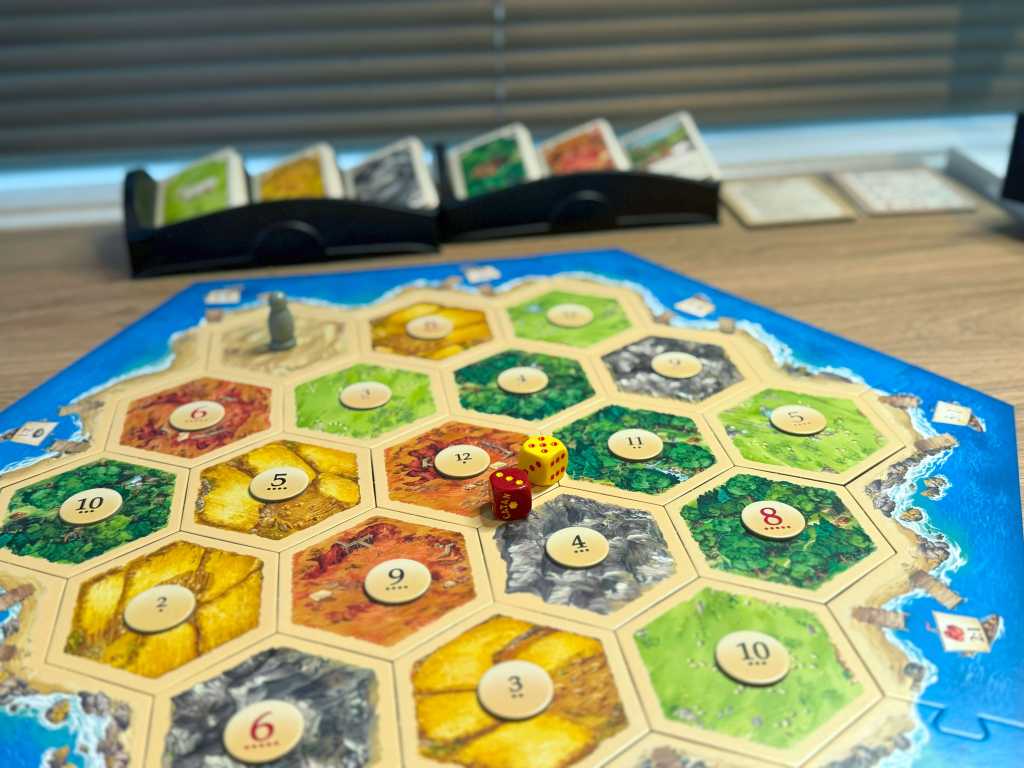
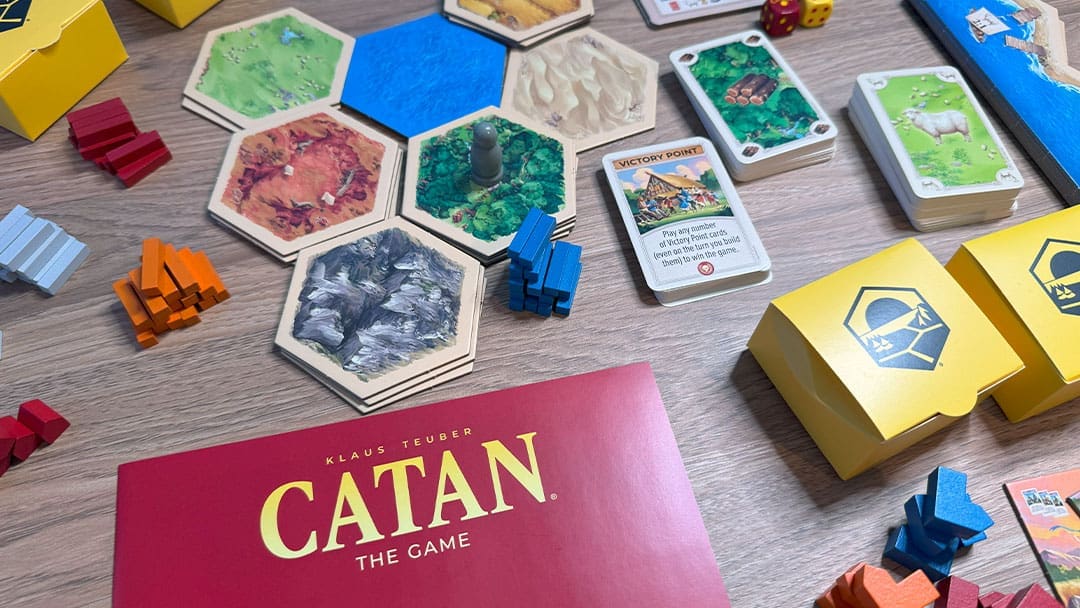
The reason for Catan’s long history, many spin-offs, venture into video games, and movie adaptation potential have all been because of its relatively simple presence, but one in which players have been able to reach endless replayability, and also been able to expand the world and island of Catan into their own little adventures. Playing the game itself only needs 3-4 players, and it can take an hour, maybe two or a bit over to wrap things up. This, within the world of tabletop, helps the game’s popularity grow and encourages players to keep playing over the years, or even throughout the night. Looking at the board itself, you’ll see an unclaimed island featuring nineteen different areas that are broken into hexagonal spaces. The simple idea is that players are racing, trading, selling and buying to get the largest community on the island. You’ll do this with focus on five primary resources: brick, order, wheat, wool and the all-powerful wood — which for years now can’t make me think about this Aunty Donna skit, so enjoy that below.
Each of the land areas on the board provides different resources, excluding the desert. The player whose turn it is then rolls two D6, and whatever numbers are rolled correlate to which land areas will be producing resources. If you roll a seven, however, the Robber, who always starts in the desert, is activated, and you can play him on any other land area, which stops that land from producing anything until the Robber leaves again. If you use the Robber on another player, you expect to see some revenge. Additionally, when you may need to trade resources with someone else to progress, I wouldn’t expect it to go smoothly, or at least for it to be a fair trade. But that’s sort of Catan, it’s about being smart with the small decisions, being open to commerce with other players, but ultimately working to create your small city first, while allowing others to also progress, just not at the same speed as you may be.
As turns progress and players get more resources, you’ll be spending those on building roads to connect to other land areas and thus, be able to earn more resources, but also then being able to build settlements and cities, which earn you victory points: the first to ten of those will win the game.
WHAT'S IN THE BOX?
- 6 Sea Frame Pieces
- 19 Hexes 2 Bonus Victory Point Tiles
- 18 Number Discs
- 4 Player Aids
- 120 Cards
- 2 Dice
- 1 Robber
- 96 Player Pieces
- 2 Card Trays
While it may seem from a distance that this is just a subtle artwork update, when you see the sixth edition of Catan on shelves, it’s what’s on the inside that counts the most, and inside the box, there is delivery. The pieces are all solid quality and don’t feel like they’re easily breakable — aside from the ‘build them yourself’ cardboard boxes you can put the four sets of player pieces inside, but that’s the least of what usually worries. The pieces, the board itself, all feel very good, and the standout is the box itself, which comes with an insert that guides you as to where every bit should go inside the box. With everything having a lovely home upon set-up, you’ll be able to jump into games a lot faster when you open the box instead of searching through bags and whatnot and sorting through unorganised boardgame jank.
When it comes to the gameplay front, there are only subtle differences between this and previous versions, and none that really matter. The rulebook now calls “Lumber” “Wood,” and “Grain” “Wheat, for example. The rulebook, however, is written in a much clearer and easier-to-understand way. I don’t own any earlier versions, but I’ve had friends who have, and I even tried to play it when I was a kid, and the rulebook just confused the hell out of me, and I found it to be almost something of a bad translation. The ‘fixed’ starter layout has changed when comparing it to an older rule book. I’m not sure if that’s for particular reasons, but it’s clear that the focus here has been on modernising the game, making it more friendly for younger and newer players, rather than attempting to reinvent the wheel.
(A review unit was supplied for the purposes of this article.)
This post includes a sponsored link. We may earn compensation when you use the link provided.