

Synopsis:
Turn on your ghost detector and join your new pals in a funny, thrilling, and lovingly-presented interactive text adventure. Brain-teasing puzzles, a cartoon visual style, and engaging audio design — Delete After Reading weaves a delightful interactive tale.
Publisher: PATRONES & ESCONDITES
Reviewed on: PC (Ryzen 7 5800X, 32GB RAM, Nvidia RTX 3070)
Also available for: Android, iOS
Developer: PATRONES & ESCONDITES, TLR Games
Original Idea & Game Direction: Daniel Calabuig
Project Management: Beatriz Osorio
Illustration & Graphics: Albert Corberó
Scriptwriter: Daniel Rissech
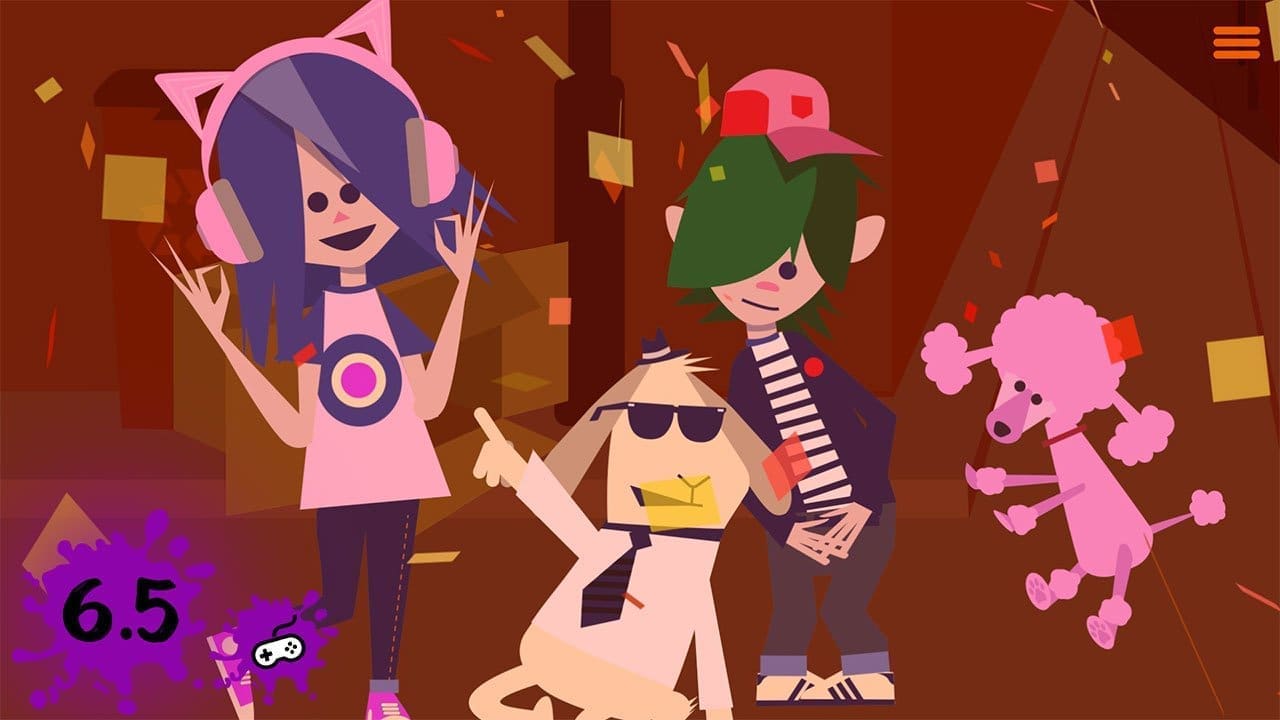
Delete After Reading is a point-and-click adventure where the story starts with an upset kid writing in a diary. Click highlighted words to progress the story; this text-driven puzzle is followed by the revelation that the protagonist has discovered a strange device on the bus ride home that displays a message. The machine requires you to solve puzzles to unlock the newly received message. These first puzzles are simple; if needed, there are hints in the menu to assist. The puzzles eventually lead to a hidden room and introduce three additional characters. These strange personalities share the backstory of a game series they all loved, where the fourth game was produced but never released. Your goal becomes to find and save this unreleased game, titled “The Curse of Penguin Island.”

The game has five chapters, each with a unique setting that progresses the story differently. Players can begin at any chapter, and there’s no mid-chapter save. I started at chapter one, went through to chapter five, and finished in two sittings. With total playtime around three hours, a more focused player could finish even faster — potentially in one sitting.
Delete After Reading is a low-fi style game, with graphics made up of cartoony stills and text. It was never taxing on my system, and the graphics settings are limited to three resolutions. The melodic music is a pleasant backdrop, though in the final chapter I lowered the volume to focus on a cluster of tasks. Voice work is limited but effective.


The story is enjoyable and the characters amusing. The innovative puzzles stayed challenging enough that I kept a notebook handy for clues, while remaining (mostly) clear. Difficulty ramps across chapters; the final chapter is by far the toughest, and failing any puzzle there costs time as you must restart that chapter.
I did hit a few snags: occasional click-inaccuracy on certain screens, a couple of puzzles I solved seemingly at random, and hints that could have been more specific. I also couldn’t get it running on my main PC but had no trouble on a laptop.
Delete After Reading is a return to a simpler style of game. The story is compelling enough to keep you playing, and it doesn’t outstay its welcome. The puzzles are challenging without being punishing, and even when I couldn’t solve all of them cleanly, I still had fun. It’s linear and skews younger, making it a nice one to play with the family.