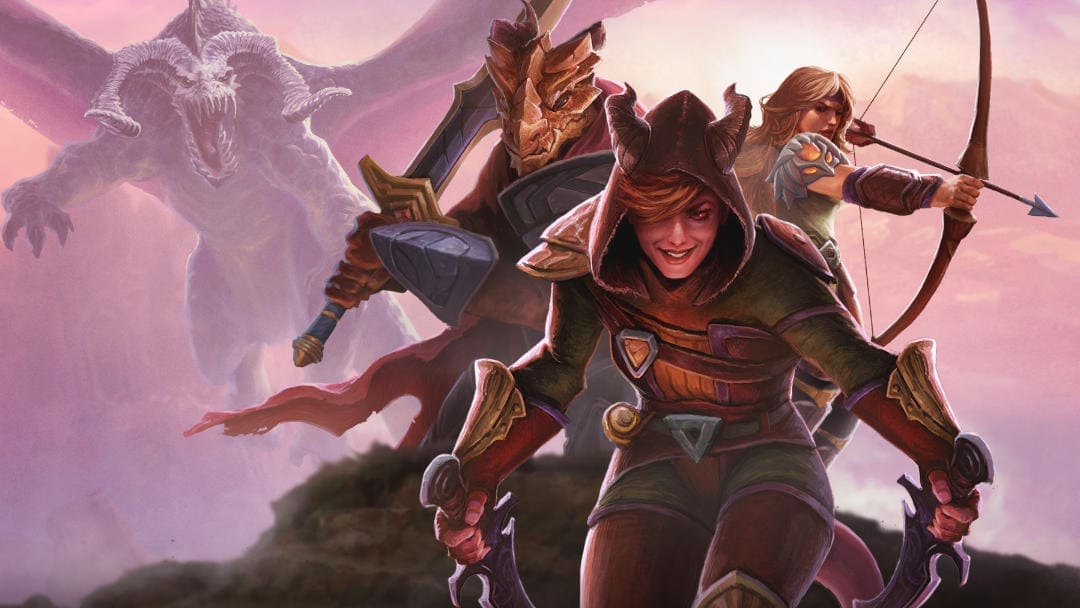
For those interested in a Dungeons and Dragons campaign and not having the time or close friends to play with, Demeo x Dungeons & Dragons: Battlemarked could be what we’ve been waiting for. The game is a great example of what a DnD campaign aims to achieve. While removing some of the loftier goals of games like Baldur’s Gate, it strikes a nice middle ground. It further defines itself by including a tactical card game element. It allowed me to experience a simple dungeon campaign with a narrator and a squad of my own control. The game also features a multiplayer mode where I could play with friends, host or join other sessions, and make new friends.
The game starts with the options to build a character or choose one of the multiple pre-made characters. From six prebuilds, I was able to change the name, the look, and some other basics, but the mini’s race and class remain. Once I had my character, it was time to choose single-player or multiplayer, then select a campaign. There was also a short tutorial that provided a quick dungeon familiarisation with the controls and the game’s mechanics. Once I understood how everything worked, it was time to dive in. The makers have made it simple to step into the world of Dungeons and Dragons. The campaign follows a main story, but you can complete many side quests as you progress.
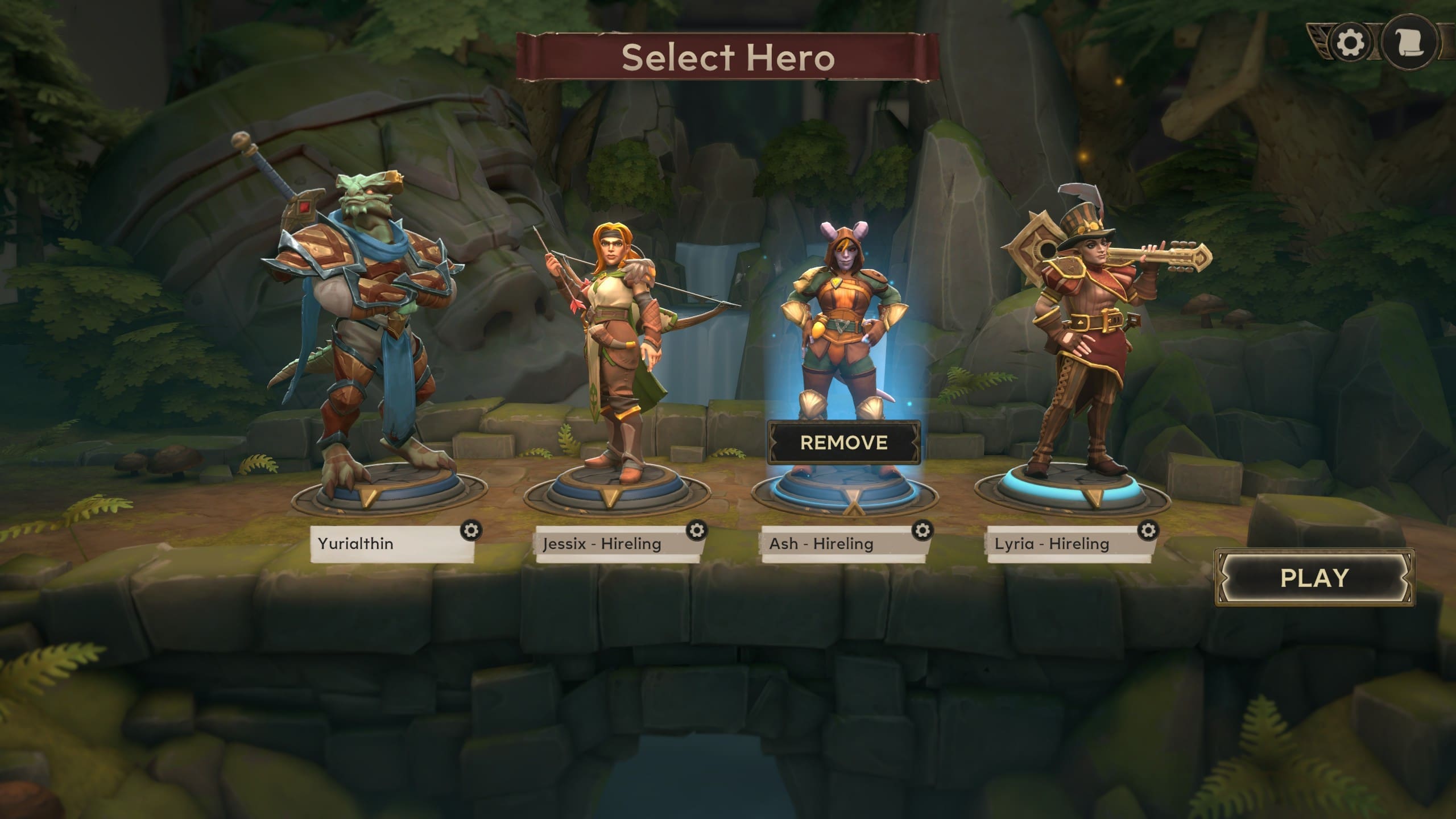
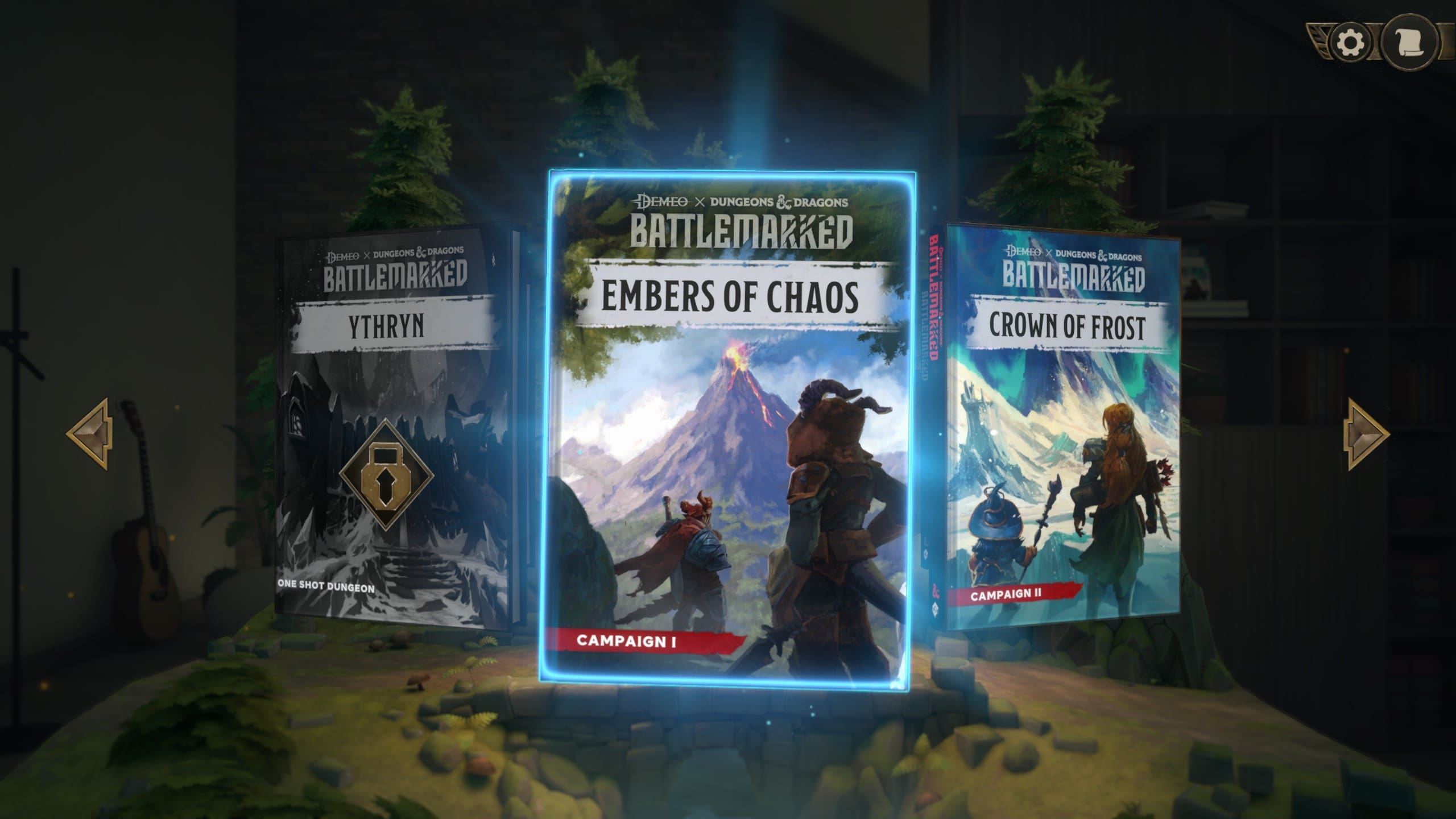
There are multiple Campaigns to play, but only two were unlocked initially for me. I played the first campaign solo and was assigned three controllable companions. The first few battles were easy; however, as the story progressed, so did the difficulty of the battles. Along with the enticing main story were a few side quests that could be completed. They assisted in levelling my character; they were also surprisingly difficult. The game itself has some interesting variables. As a D&D campaign, there is a combination of dice rolls, attack, and defence rolls, as well as the card aspect. There are variations on the dice, where a twenty-sided dice is still rolled, but the results are either crit fail, crit success, or standard attack, with the former two only having a 1/20 chance of occurring. This applies to card attacks as well as standard attacks. The standard twenty-sided dice comes into effect when trying to do other tasks, such as dodging a trap or persuading an enemy.
The textures of the world are well thought out, and the dungeons are procedurally generated. There is decent variation on every adventure. My favourite part is still the mini figures; they look just like their real-life counterparts and work in the same manner. Character work on a grid system, which is applied to movement, attack and defence. Grids appear when moving the characters, and estimates can be made from them. If a mini is behind a wall, it’s safe from specific attacks. However, objects in the world can assist with attacks; these can include acid, lava, or even explosive barrels. It is a spectacular feeling to take out a group of enemies with the well-timed explosion of a barrel, even if your tank takes some damage as well.
As with many D&D campaigns, not every adventure is successful. I was unable to beat some levels due to poor rolls and had my characters all die; the difference is that the game allowed me to reload and try again. The benefit was that I was able to complete the story and keep enjoying the game. The campaigns and stories in the game are also immaculate and play out with twists and turns where your characters are seen as heroes, and the villains are well-rounded. It is hard to battle someone when they have a solid argument, but it is made easier when they are about to destroy the world.
I dove into multiplayer a few times, joining other people’s campaigns via the multiplayer tab. These sessions also have voice chat, which made the session much more enjoyable; some chose to lean into their characters while others were just fun to chat with. It was an experience like being back at the table playing with friends. The multiplayer campaign works the same as the solo, with the slight variable of there being up to four player-controlled characters. If spots are missing, they are filled like the solo campaign, with the host controlling the other character’s actions.
One of my favourite things about the game is that it runs perfectly on the Steam Deck. Making the game one of the easiest ways to get a D&D fix on the run. I played the vast majority of the game on my Deck. The game works well with the sleep function, which is fantastic for a quick couple of battles before sleeping the title and heading to do what I needed to. The game works very well with a keyboard and mouse or a controller, and switching between them is handled automatically.
Overall, I have enjoyed Demeo x Dungeons & Dragons: Battlemarked, and I will be striving to get a few more friends on board so that we can play through a campaign. I have already gifted a copy to one of my friends, hoping that we can play soon. The developers have made the game interesting and have allowed many aspects of D&D campaigns to carry over.
(Review code provided to Explosion Network.
Read about our review and ethics policy here.)