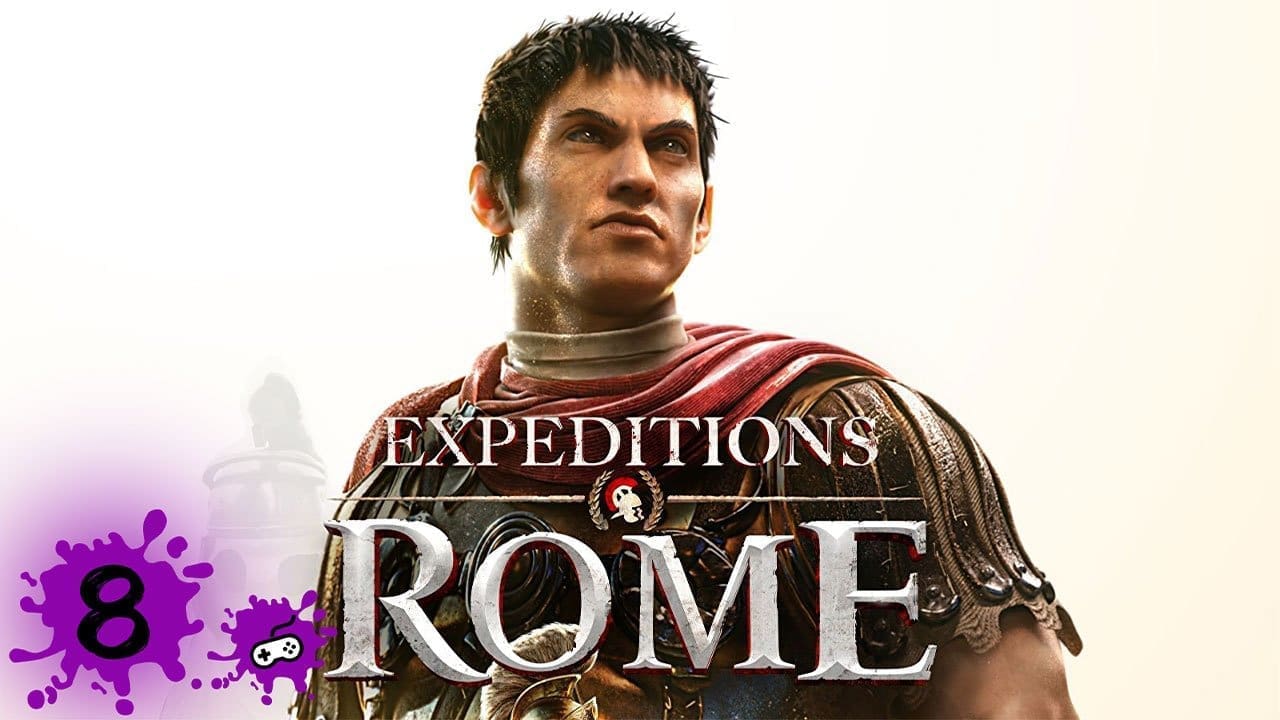
Synopsis: Determine the destiny of Rome as you conquer foreign lands and navigate political intrigue in this turn-based RPG. Directly fight with your party of Praetorians, guide your legion to victory, and choose your own path in a story where every decision matters. How will you shape the future of Rome?
Publisher: THQ Nordic
Reviewed on: PC (Intel i5-9400F, @2.90GHZ, RTX 2060, 16GB RAM)
Also available for: N/A
Cast: Adam Howden, Rosie Jones, Scott Joseph, Christos Lawton
Developer: Logic Artists
Creative Director: Jonas Wæver
Technical Director: Juan Ortega
Art Director: August Hansen
Managing Director: Ali Emek
Producer: Sonat Ozturk
Despite travelling to all ends of the Roman Empire, Expeditions: Rome is a smart game with the scope of its gameplay and systems. It offers an RPG experience that is streamlined into always feeling that you are progressing your party and the story forward, but still has some points where the game can grind to a halt. With great set dressing, an engaging story with well-voiced characters and a combat system that is the right amount of challenging, Expeditions: Rome is overall a Historical RPG worth experiencing.
After your father dies in mysterious circumstances, you are smuggled out of Rome to be protected from the conspirators and into Greece. You find yourself involved in quelling a local rebellion, rising through the ranks quickly to take control of your own Legion. Curiously enough, this rebellion seems to have links back to the political intrigue back in Rome, and you try to uncover the secrets of a power-hungry Consul trying to dispose of your family. As a Legatus, you must regain control of the Greek region by sending your legion to invade cities. You undertake some covert missions to take out local leaders in the Rebellions or negotiate with other leaders. This is the format that Expeditions: Rome takes across its three main acts as you quell uprisings across Greece, Egypt and Gallia whilst learning information tying back to the intrigue in Rome.
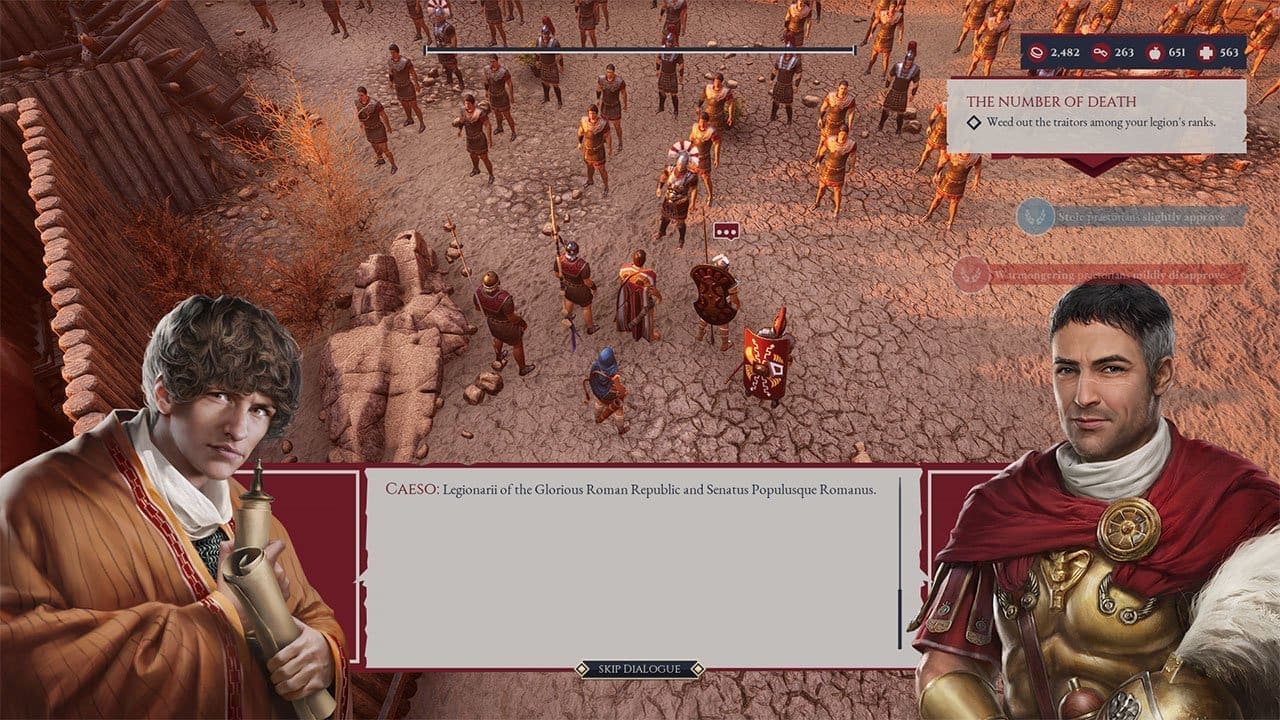
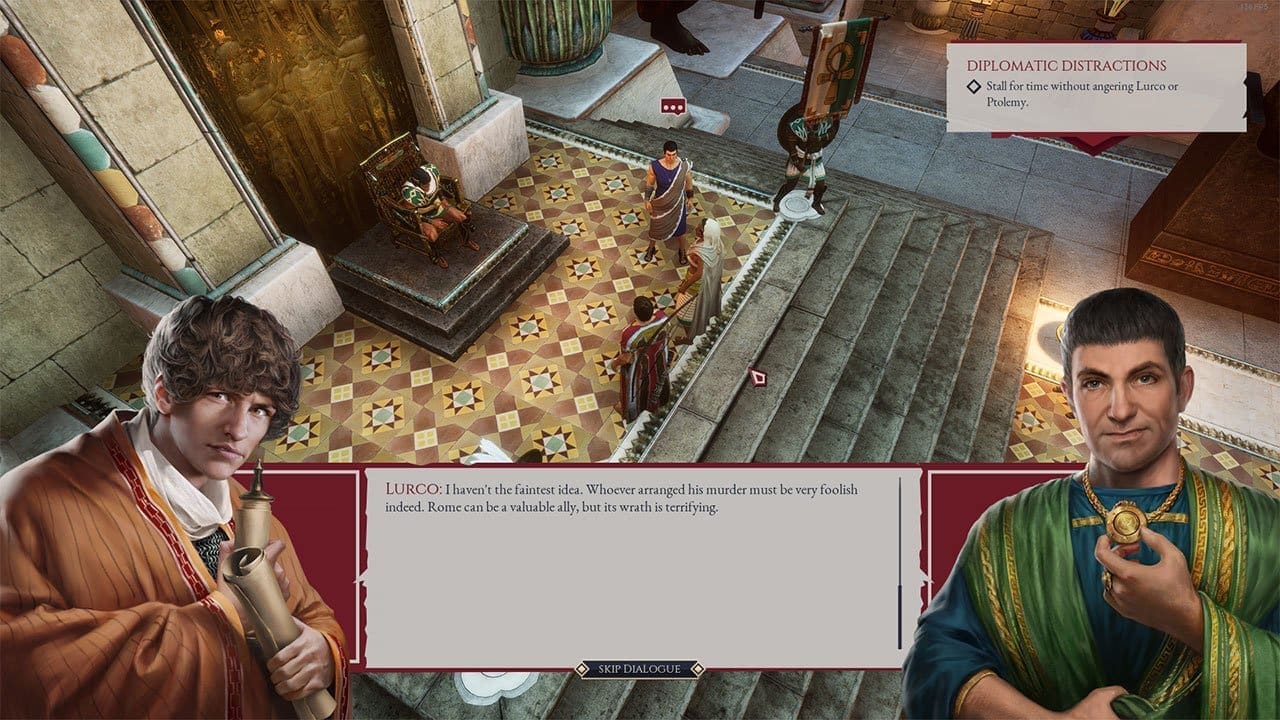
As an RPG, the story is an important aspect of Expeditions: Rome, and it is one of the more interesting aspects of the game as you engage in political intrigue and warfare. The voice acting is all quite well done, and the characters around you are well realised and consistent in their presented personality. Decisions are made throughout the game that circles around and has relevance later on. Early on, you have the option to execute the captain of your ship on the way to Greece after being attacked by pirates. He may be working with them! If you choose to spare him as I did, you have the opportunity to call in a favour later in the game, which changes the next mission’s structure. It also utilises its historical standpoint by introducing you to many historical figures that you can meet, discuss philosophy with, get assistance from or even flirt with.

You travel separately to your legion much of the time, and while there is a lot of travel, it is all done via a world map with options for how quickly time moves forward, meaning you can take it as slow or as fast as you like. This is one of the first areas that shows that patience is a virtue in playing Expeditions: Rome. The game encourages you to explore the map off from the quest marker, rewarding you with resources. Time moves forward as you travel, but wars are slow things, and you can take as much time as possible. Though you do have to balance your food, water supplies and injuries to your Praetorian Guards amongst your travels, it does mean that injuries to Praetorians become delays and not necessarily hurdles as more often than not, you simply put them in the medic and wait until they are fully fit before venturing off again. Though I felt that exploring had offered up most of the tricks you would see as the acts went on, I tended to stick more to the main quest when exploring the main map.
There are side quests in Expeditions: Rome, but these are not thrown at you in a way you’re expected to do them. Instead, they are often found by exploring some of the city areas you can wander or given by companions as you chat with them in the legion camp. They are quite interesting if you choose to engage in these optional components and improve your relationship with your companions as you help them resolve deeds from their past. The city and combat spaces that you can explore are all varied across the three acts and are beautiful spaces while also feeling realistic and creating an authentic atmosphere.
Expeditions: Rome throws random events at you across the world map, which can result in positive or negative outcomes to any game’s systems depending on your choices. Choosing to steal from an abandoned camp may result in a boost to your food supply, but also negative reactions from your companions depending on their traits. Choosing to send a Praetorian Guard into exploring an ominous looking cave could result in some quality loot or a serious injury dealt to them. Some of the most serious of these random events were the combat encounters, which did sell you on the fact you were being ambushed; these were some of the combat encounters that I sustained the most injuries to my Praetorian Guards in or had my most failures.

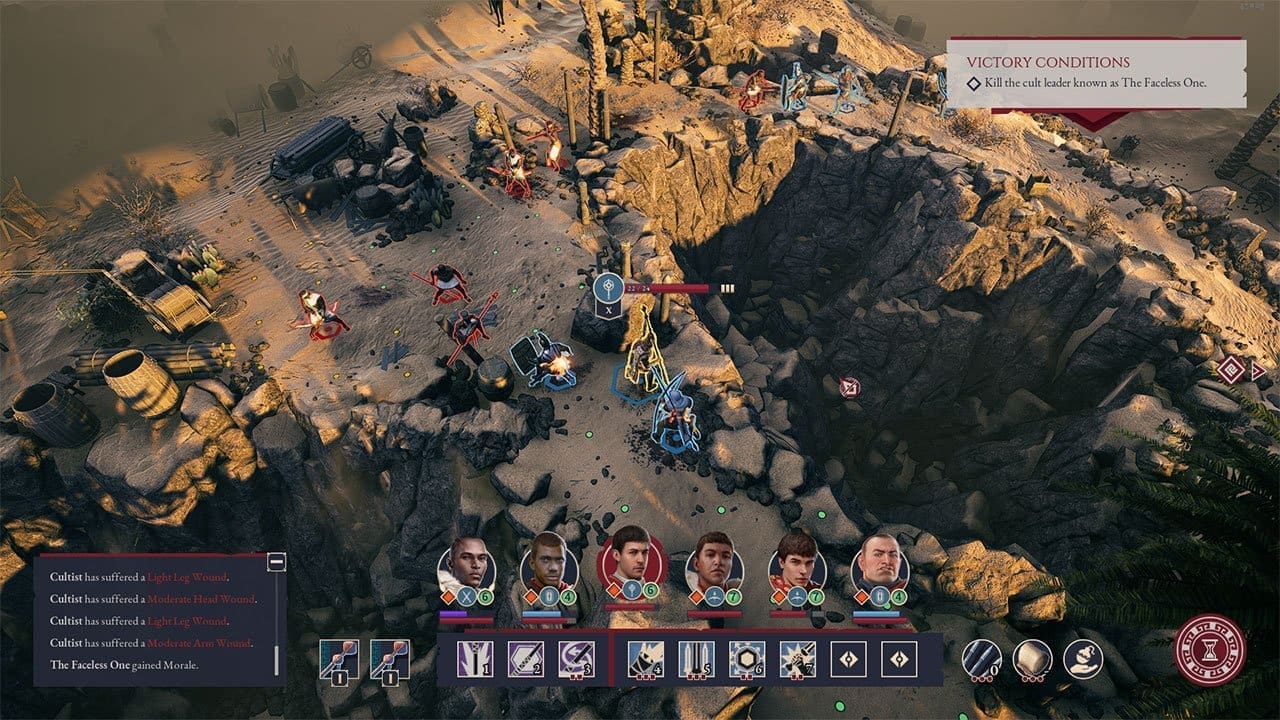
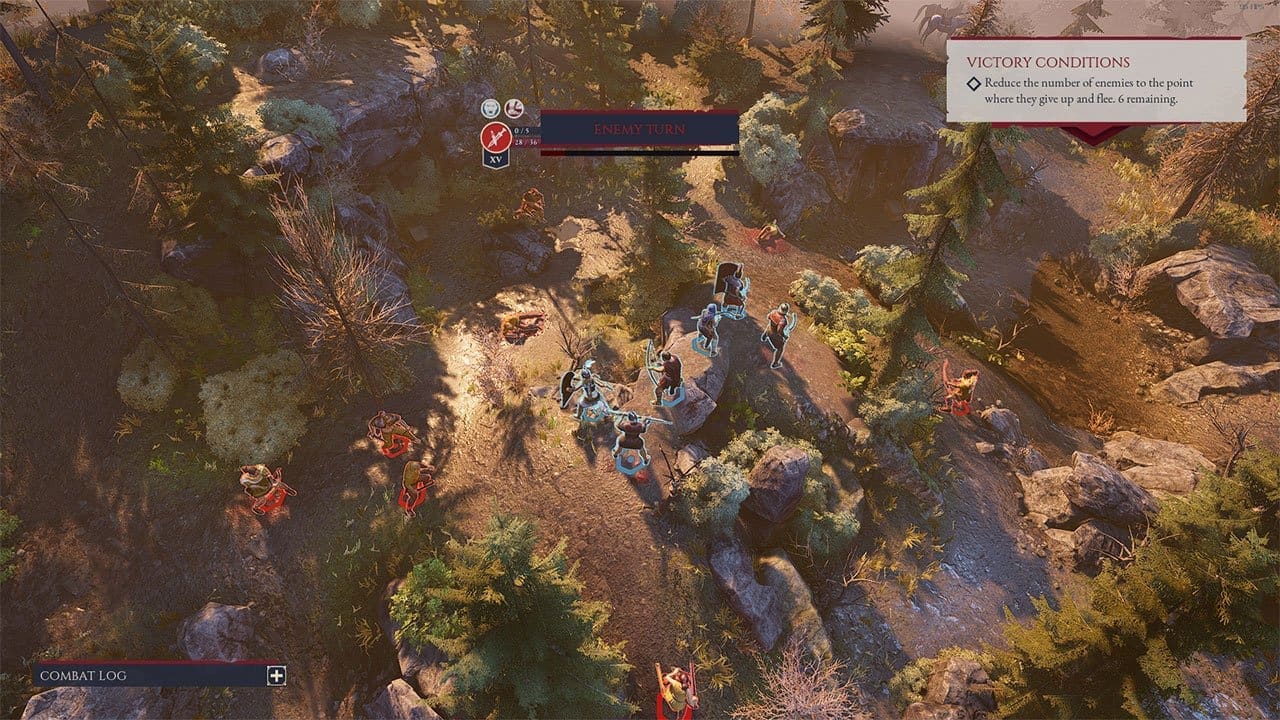
The combat encounters themselves are also one of the best aspects of the game, with the tactical turn-based combat having enough meat to it to be engaging throughout the run of the game. There is a lot to be considered in these encounters, but most notably, the positioning of your Praetorians and their position against the environments. With three out of four classes available to you being melee orientated and often being outnumbered by enemies, utilising choke points is a huge advantage in combat. Most of the combat situations I failed resulted from poor positioning and tactics. During these sequences, Expeditions: Rome has a very free camera, though perhaps in some aspects too free as it could lead to some serious clipping or just completely disorientating yourself. There was also another instance that I failed a combat encounter as I could not save my companion, despite being right next to him, as there was an enemy down on the same square, blocking me from being able to target my companion, causing a restart in a more extended combat sequence, but these contrivances were few during my time with the game.
Despite generally wanting to move you on from things fairly quickly, one of the slowest aspects of the game is the inability to skip enemy turns. Enemies take their turns individually, which means that you wait what feels like an eternity in some instances between turns during the combat encounters. This is compounded when non-controlled friendlies are in the battle, which also delay the time between your turns. While it is not as noticeable in smaller encounters, it kills a lot of momentum in the largest encounters as you watch the enemy individually move across the encounter space.
With four classes to choose yourself and your Praetorians from and each having three skill trees, there were plenty of ways to adapt your playstyle that suited my play style. Weapons are also important for each character, as different weapons offer different attacking abilities. Though I overall do think the game has a small gear problem, as you can get much of it, there is little variation, and improvements can be fairly minuscule. This is compounded by the fact that upgrading equipment is unlocked much too late into the game to be of huge relevance.
As a Legatus, you also have a legion to lead and manage. You can choose and assign Centurions to lead under you that offer different benefits in the Legion’s separate combat system. You mainly engage with your legion in their legion camp, where you get updates on their morale and recruit more into the legion if numbers are dwindling. The systems around managing the legion are streamlined and fairly menu-based, so whilst they may not feel as engaging as other aspects of the game, they help you overtake regions in the world map in a birdseye esque kind of way is very thematic. However, the actual combat encounters when head to head with another army were the least interesting part of the game, as you watch squares representing different cohorts in your army, like a history channel documentary, battle away with other squares, and make tactical choices depending on what was happening in the battle. Thankfully you can essentially skip the animations and make the decisions and be out of there in thirty seconds. Developer Logic Artists, however, have acknowledged that this is a weaker part of the game and are currently working on an update to make this system more engaging for the player.
While not all components of Expeditions: Rome are equal, Logic Artists have still delivered an engaging and interesting Historical RPG. Even amongst the unequal systems, the lesser systems take up less of your time than the more engaging systems like the story, voice acting, decision-making, and excellent tactical combat. Overall, an enjoyable RPG with a little bloat, allowing you to progress at your own pace as you quell rebellions across the Roman Empire.

(Expeditions Rome code provided for review)