
Kena: Bridge of Spirits Review – A beautiful journey that leaves a little to be desired
<p class="">I wanted more from Kena as a character, and the combat wasn't deep enough to warrant the frustration I found in its difficulty. That said, this is the developers first game, and I hope Kena can return for a fully-fledged sequel.</p>


Synopsis:
Kena, a young Spirit Guide, travels to an abandoned village in search of the sacred mountain shrine. She struggles to uncover the secrets of this forgotten community hidden in an overgrown forest where wandering spirits are trapped.
Publisher: Ember Lab
Reviewed on: PS5 (Performance Mode)
Also available for: PS4, PC
Cast: Dewa Ayu Dewi Larassanti, Sam Cavallaro, Joshua Vincent, Masashi Odate, Vlasta Vrana, Tod Fennell, Alan Adelberg, Gita Miller, Amber Goldfarb, Charlie Cavallaro
Developer: Ember Lab
Creative Director: Mike Grier
Animation Director: Hunter Schmidt
Cinematography & Lighting: Boa Simon
Combat Designer, VFX: James Beck
When Kena: Bride of Spirits was announced at PlayStation’s Future of Gaming event, it became one of the most anticipated games for the upcoming PlayStation 5 console. Since then, it’s been showcased several more times and was even at this years Tribecca Film Festival, where Kena competed for the inaugural Tribeca Games Award. Although it didn’t win that award, a film festival feels like the place developer Ember Lab wishes their games to be seen. Kena: Bridge of Spirits is a beautiful game, as all the trailers have promised, and there are cinematic qualities that make it rise amongst the ranks; however, the moment-to-moment gameplay feels very safe and un-inspired.
Kena is a young novice spirit guide who comes across an abandoned village and surrounding forest afflicted by horrible corruption. She meets two kids, Beni and Saiya, who are seeking their long lost brother. Kena also meets the Rot, which are small cute critters that don’t look anything at all like their name would have you believe. As a spirit guide, Kena recognises there are still spirits trapped in the village due to the tragedy that occurred years ago. Still, to learn the truth of what happened, she’ll need to save the corrupted spirits terrorising the three regions surrounding the village.
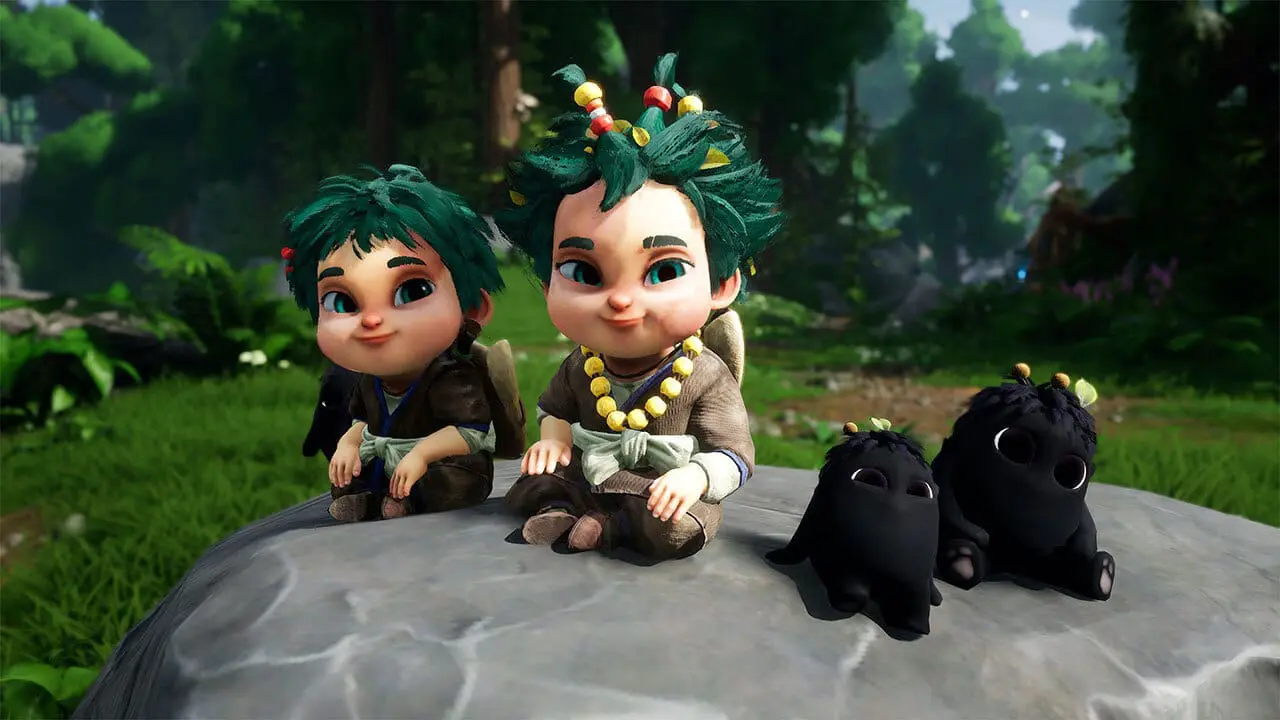
To save each of the corrupted spirits, Kena needs to collect three important mementos before she can summon them and fight their corrupted form — this is the primary objective of Kena: Bridge of Spirits during its 6-8 hours campaign.
The Pikmin franchise feels like an inspiration for Kena as you collect cutie little Rots hidden around the world, and they help you solve puzzles and move through the world. You can order them to carry boulders to help Kena reach higher platforms and even hold a broken bridge in place so Kena can cross safely. The Rot doesn’t follow Kena in a straight line, but they constantly appear in and around Kena as you move through the world. As you climb a platform, you might see them magically appear above you, a line of ten rot just sitting there watching. Other times you may jump into the water, and you’ll notice the fluff-balls keeping afloat both closely and off in the distance. They’re adorable, and thanks to the game’s photo mode, I often stopped to take a few snaps. What’s more, one of the collectables of the game is hats for the Rot to wear, which is just perfect.
There’s a lot of combat in Kena: Bridge of Spirits, and although the early fights feel like the game will be a button-masher in the vein of a third-person brawler, you’re soon overwhelmed with enemies that hit hard and will send you back to the nearest checkpoint. Do not let the Rots cute looks and the Disney inspired art style make you think Kena: Bridge of Spirits will be a walk in the park. On normal difficulty, the game’s combat kicked my ass a lot, and I was somewhat shocked at how hard the fights were given the design and vibe the rest of the game was giving.

Kena uses a staff to perform light or heavy attacks; she can dodge out of the enemy attacks or summon a Spirit Shield to block incoming attacks for a short time; if you time it correctly, she’ll parry an enemies attack. You can unlock a more potent charged attack and a jumping strike, but there are no combos Kena can learn to help you perform better in combat. Once you unlock the bow, you can shoot weak spots on enemies to stun them, which is about the only time you can use heavy attacks because it has such a slow animation, so you’re left primarily with light attack spamming.
The game relies on building up a Rot Courage to perform special attacks or using the Rot to distract enemies. On Spirit Guide (normal), your Rot abilities recharge when taking damage or dealing damage, while on Story Mode (easy), they recharge both passively and when taking damage or dealing damage. To heal in the middle of a fight, you need a full charge of Rot Courage to be able to order the Rot to crack up a healing item in the world around you, so even on normal difficulty, things can feel very punishing. I also didn’t find the window of time for the parry to be very finely tuned. It left me wanting to spend more time dodging out of the way, which is a pity because you can unlock a counterattack ability for a correctly timed parry which will damage all the enemies around Kena at the time. By the time I got to the last area of the game, I’d grown frustrated with the combat and ended up switching it to Story Mode difficulty to finish my playthrough.
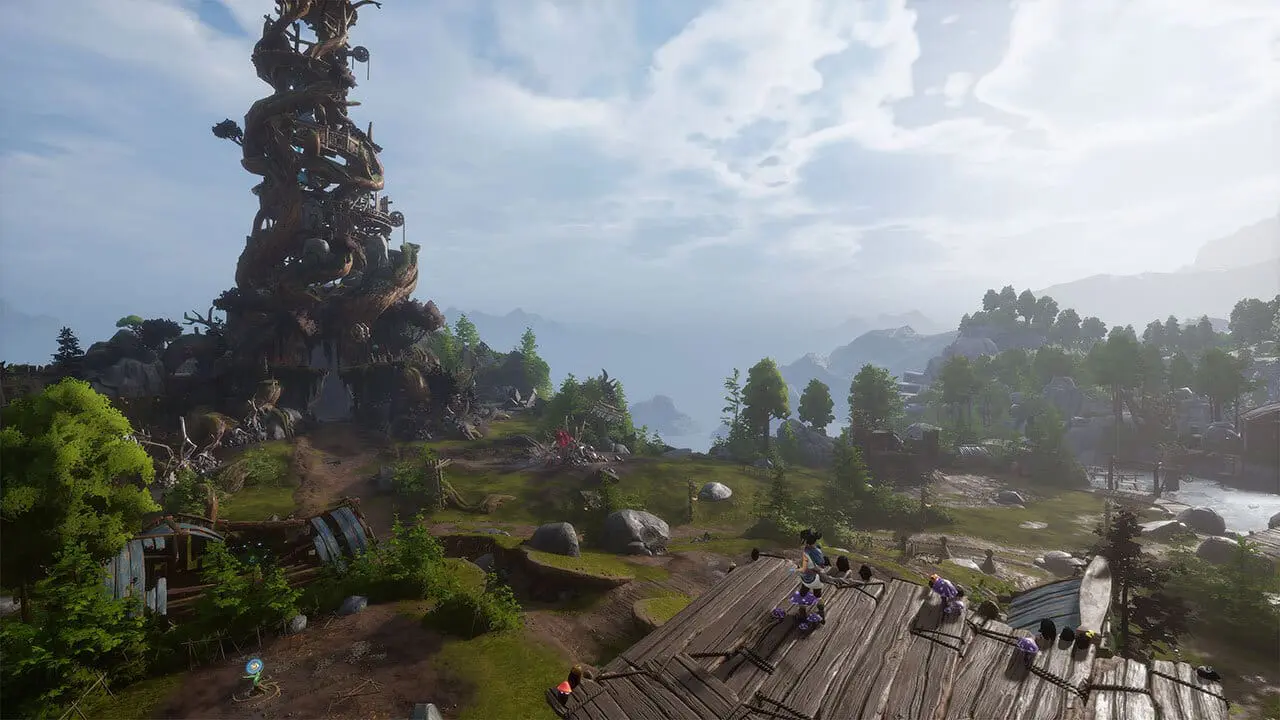
My favourite thing in Kena: Bridge of Spirits was uncovering the hidden truths of each character and finding out what had happened to the village. When you free a spirit from its corruption, you’ll get to watch these stunning cut-scenes that explain what happened to each character. These usually go for a couple of minutes each and feel like well-directed animated shorts, which is the background of developer Ember Lab before jumping into video games with Kena: Bridge of Spirits. The relationship between characters like Beni, Saiya and their lost brother is the game’s driving force. There are collectables to find, like the hats mentioned above, along with fox shrines and letters to deliver to corrupted houses in the village. Still, none of these, even the villagers’ homes, provide side stories or tidbits about other villages outside the core cast.
Kena herself gets very few character moments, except in the latter half of the game, where you learn a little about her past. For the most part, it feels like she could have been a player-created character and served the same role as a lone spirit guide. Kena is a nice person; she’s kind, she’s strong, but even after rolling credits, I couldn’t say I understand who she is at all. A sequel would presumably dive into a more personal story. Because of that, Kena: Bridge of Spirits feels like an introductory chapter to a much larger story that Ember Lab wants to tell, and this story, an overlong prologue.
Kena: Bridge of Spirits is a stunning game with the art and character designs having obvious Disney inspirations, but the world draws from Eastern locations, especially Indonesia and, specifically, Bali. Jason Gallaty created the original soundtrack in collaboration with the Balinese ensemble group Gamelan Çudamani, and it’s an inspiring selection of music that keeps the game feeling cinematic, even in its slow points and a contender for one of the best soundtracks of the year.
You feel the passion of Ember Lab to craft a cinematic game with Kena: Bridge of Spirits. Visually and aurally, they achieve their target as it’s a beautiful game, but from a story point-of-view and as a video game, it doesn’t quite hit the mark. I wanted more from Kena as a character, and the combat wasn’t deep enough to warrant the frustration I found in its difficulty. That said, this is the developers first game, and I hope Kena can return for a fully-fledged sequel.

Kena: Bridge of Spirits Review

Dylan Blight
[He/Him] Dylan Blight is the Founder and Editor-in-Chief of Explosion Network, an independent Australian publication covering video games, film, television and pop culture. Since founding Explosion Network in 2017, Dylan has written and produced reviews, news, interviews, features and podcasts across the entertainment industry, while overseeing the publication's editorial direction and content.
MORE FROM DYLAN BLIGHT →

Comments