
Synopsis: A brand-new RPG set in the world of the popular anime ONE PIECE. Play as members of the Straw Hat crew in a fantastic adventure set across the ONE PIECE world.
Publisher: Bandai Namco Entertainment
Reviewed on: PC (Ryzen 7 5800X, 32GB RAM, GeForce RTX 3070)
Also available for: PlayStation, Xbox
Cast: Mayumi Tanaka, Akemi Okamura, Kazuya Nakai, Kappei Yamaguchi, Hiroaki Hirata
Developer: ILCA, Inc.
Directors: Tomohiko Saito, Daisuke Goto
Graphic Director: Atsushi Numata
Lead Battle Planner: Mitsu Iwao
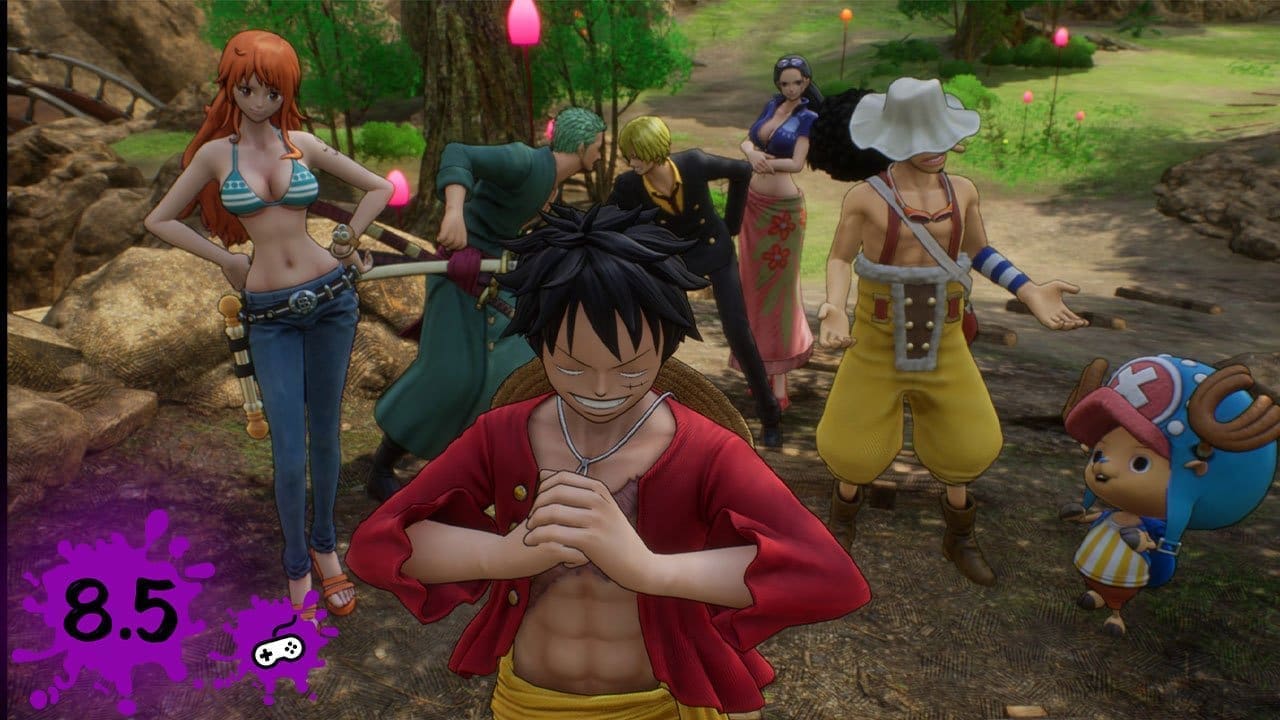
Welcome to the wacky, wonder-filled lives of the Straw Hat pirates. This adventure begins with the Thousand Sunny shipwrecked on the island of Waford. The prologue scatters the crew as their beloved ship breaks apart on the rocks. Waford holds many mysteries, immediately explored by a player-controlled Luffy, who searches the beach for his crew. He soon finds them and learns Nami has been kidnapped by local wildlife—a strange bunch of ape-like creatures. The crew heads through a cave, battling various foes to save their navigator. They defeat a giant ape and its minions, only to be ambushed by a steel colossus wielding flame powers. Their attacks do nothing—until a mysterious man and a young girl intervene.
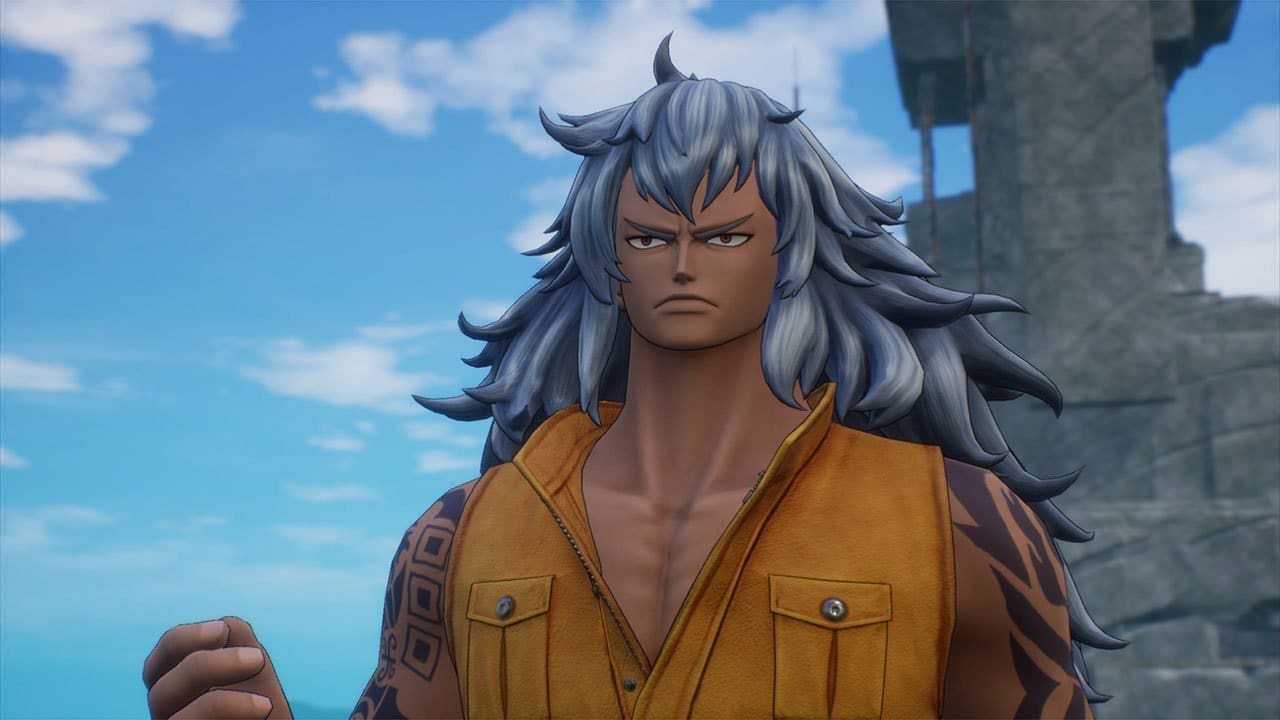
Celebrations are cut short when the girl uses her ability to strip the pirates of their powers, weakening them. The crew is perplexed, but investigation reveals the pair aren’t as bad as they first seemed. Their names are Adio and Lim, new additions to the ONE PIECE world. Adio quickly becomes friendly; Lim is standoffish until you earn her trust.
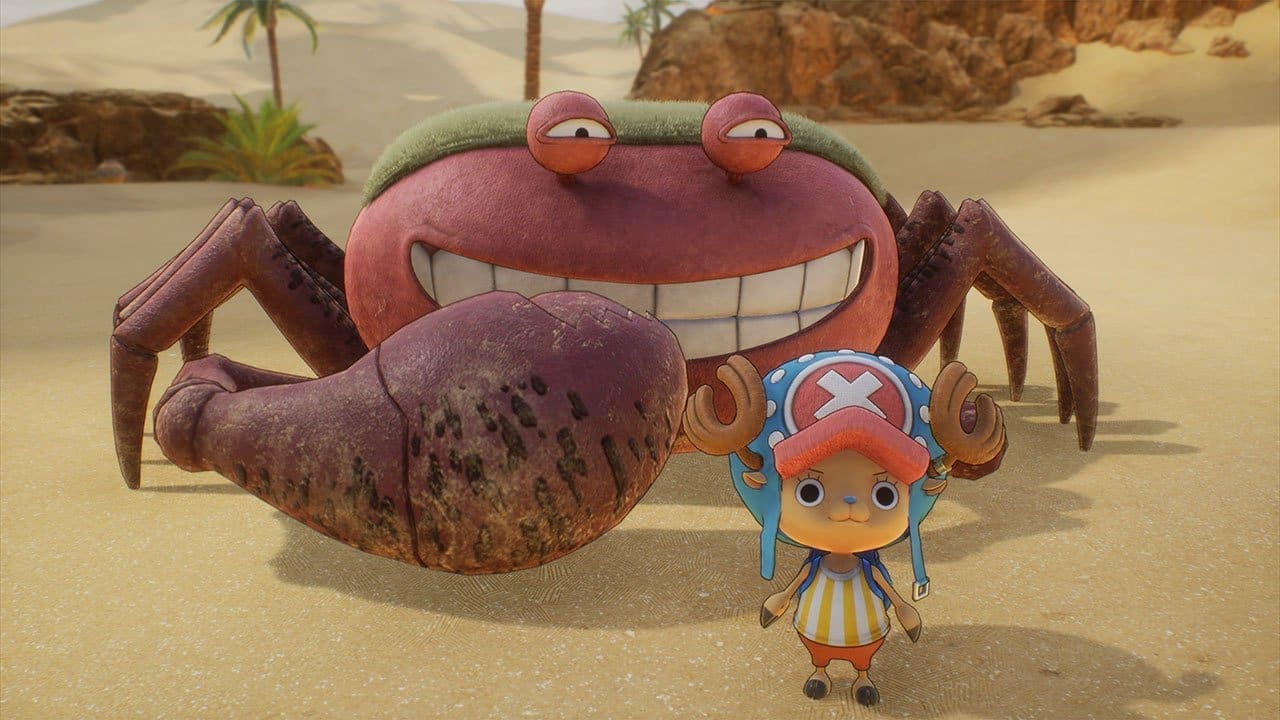
ONE PIECE is renowned for substantial story arcs. One Piece Odyssey lets players revisit four of them, starting with Alabasta and finishing with Dressrosa. The smart narrative device here is Lim’s memoria power (a memory-type Devil Fruit) that reframes these arcs as memories. Because memories aren’t perfectly defined or objectively accurate, events inside each arc can play out differently (while end points stay familiar). Bandai Namco also provides a handy story guide if you want to brush up on the canon versions. Expect laughs, tears, and nostalgic closure as past characters return in new contexts.
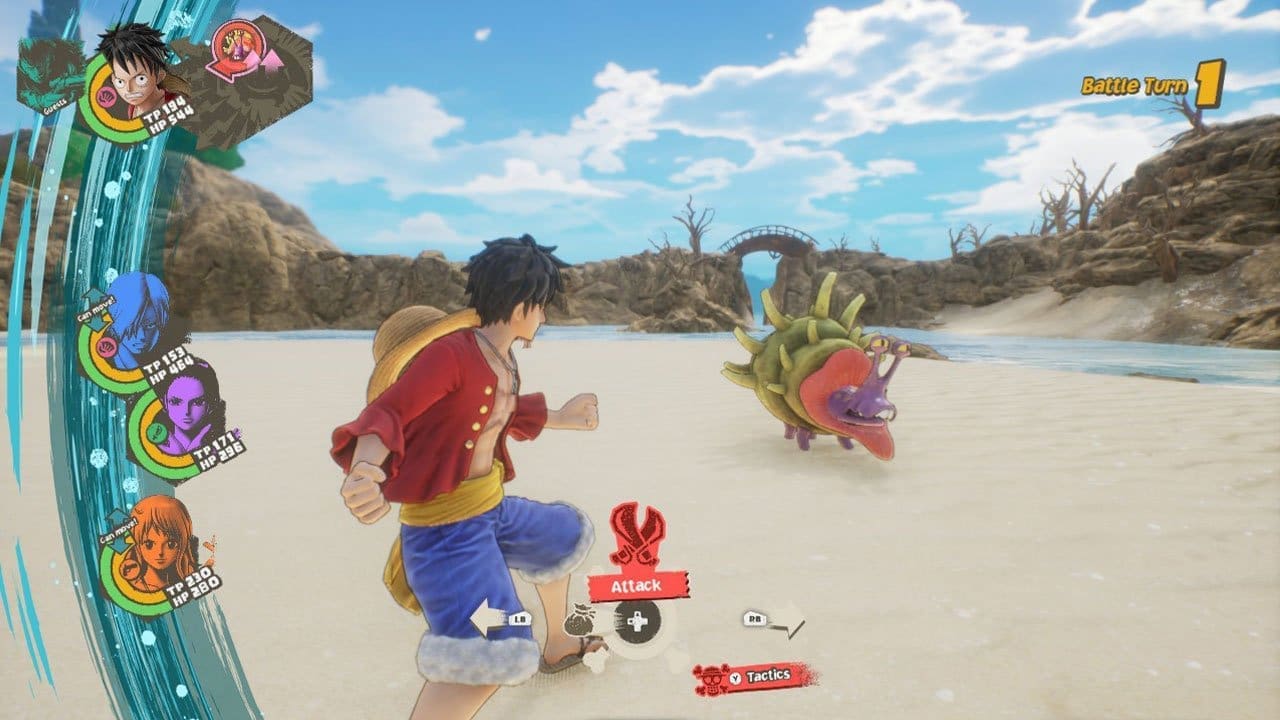
Combat is classic turn-based RPG with a few twists. Each battle has up to four zones, and the field divides enemies and allies across them (up to four per side in a zone). Positioning matters: some skills target multiple zones; others hit only your current skirmish. Attacks can knock back foes into other zones, damaging anyone they collide with. Enemies and characters have type strengths/weaknesses, so building a balanced party and swapping targets is key.
“Dramatic Scenes” are mid-battle objectives that grant bonus XP for overcoming awkward situations (win before a KO, defeat an enemy with a specific character, etc.). Engagement is initiated on the field—rear attacks grant advantage. You can play manual or toggle Auto-Battle for grinding, and there’s a battle-speed up option to speed through easier encounters. Fights start simple but grow challenging; I needed occasional grinding to stay ahead of the curve.

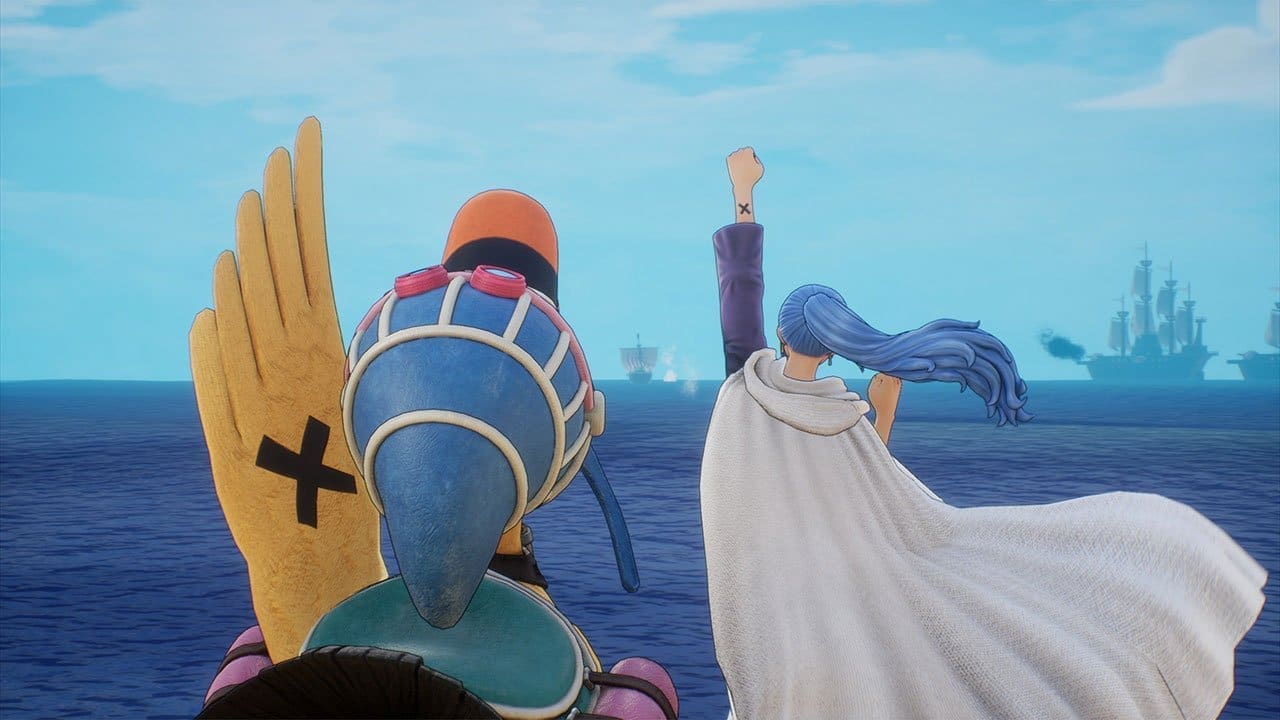


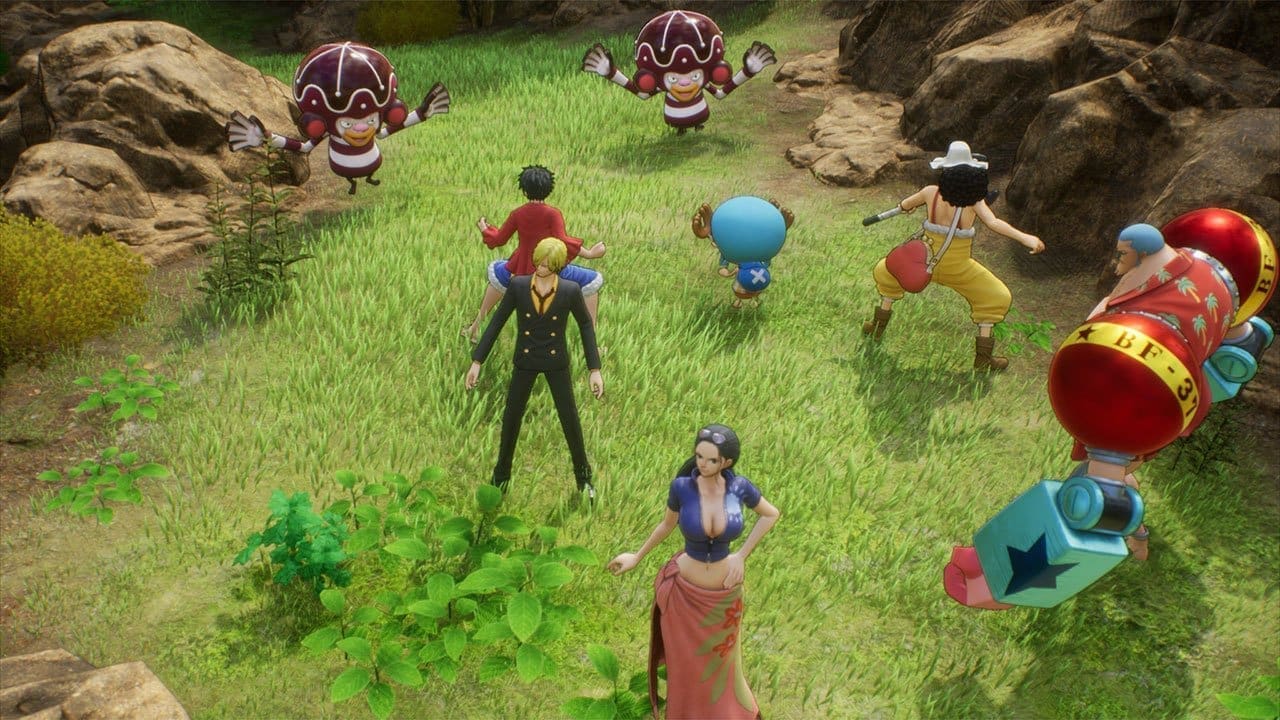


There are multiple interconnected systems: experience/leveling, a flexible gear grid, and the battle toolkit. XP flows from victories, with Dramatic Scenes boosting gains. Gear takes a minute to click: each character can equip items that raise stats (HP, ATK, DEF, etc.), and later you can combine items to make stronger, multi-stat gear. Auto-equip presets help target builds (offense, defense, utility). Combat also uses TP (technique points) to fuel special attacks, earned as you fight.
Finally, Bonds let you unlock flashy multi-character techniques—e.g., Zoro, Chopper, and Usopp chaining a massive combo—usually progressed via side content like memory repair missions.
The crew feels ripped straight from the anime, with expressive 3D models and writing that nails their voices: Zoro and Sanji’s bickering, Nami’s greed, Chopper’s caring nature. Supporting characters, enemies, and wildlife are similarly well realized. The story—while not canon—unfolds in a satisfying arc with twists, turns, and a tone true to the series. You can dive deep via side quests, bounties, and memory missions, or beeline the main plot.
One Piece Odyssey won’t be for everyone. The gameplay is fun if occasionally repetitive, and I wanted more encounter variety at times. But the strong story, faithful character work, and crunchy RPG systems kept me engaged. If you’re a ONE PIECE fan or enjoy a challenging turn-based RPG, there’s plenty to like—and plenty to do, see, read, and explore. The battle mechanics take practice to master, but that depth adds to the experience. I’m excited to see what ILCA does next.