
Returnal PC Review – Enjoyed my turnal
<p class="">Returnal is the latest of Sony's first-party games finding a new audience on PC, and it feels right at home on the platform through a solid port.</p>


Synopsis: BREAK THE CYCLE. Fight to survive as this award-winning third-person shooter brings Selene’s story to PC. Take on roguelike challenges. Engage enemies in bullet-hell clashes. Share your journey through Returnal with another player.
Publisher: PlayStation Studios
Reviewed on: PC (Intel i5-9400F @ 2.90GHz, RTX 2060, 16GB RAM)
Also available for: PlayStation 5
Cast: Jane Perry, Nicholas Parris
Developer: Housemarque, Climax Studios
Game Director, Story: Harry Krueger
Writer: Luke Maulding
Executive Producers: Jari Hokkanen, Sami Nurmio
Concept: Harry Krueger, Harri Tikkanen
Lead Game Designer: Henri Mustonen
Returnal is the latest of Sony’s first-party games finding a new audience on PC, and it feels right at home on the platform through a solid port. The fluid and swift movement is a pleasure to control with a keyboard and mouse, and the port coming without some of the teething problems of the PS5 release makes Returnal an approachable proposition. I found Returnal’s combat to be the hallmark of the experience. I was always happy to relive my crash landing, even if the roguelike systems felt disjointed and the story left you largely in the dark.
I don’t typically make many performance-related comments during my reviews, but being that this is a port of a title many of us know a lot about already, it is a little more prudent than usual. On my modest PC (specs above), I found Returnal to be a solid port. I ran the game on the “Medium” preset throughout and was typically sitting around 70–80 FPS. Even on this preset, the world of Atropos was a marvel to explore and be lost in, still achieving a sense of isolation and fearful curiosity. My only consistent qualm with performance was the pop-in of the grass in the first biomes, which could be quite glaring, especially considering the speed at which Selene can zip around arenas. I did experience two crashes early on and a few instances of my framerate tanking into the 20s, but these accounted for about 10 minutes of frustration in my ~20 hours of gameplay.

This port includes the ability to play with a keyboard and mouse, which I did through my entire playthrough and almost couldn’t imagine having it any other way. After a few runs, I remapped some keys to feel more comfortable—mainly dash and alt-fire—to extra mouse buttons, which helped me easily navigate combat arenas. The settings overall felt expansive and covered most bases. On first start-up, I was greeted with a quick-settings screen to get things going, but something I appreciated after this was that there was no main menu. Instead, subsequent start-ups had you loading right back into where you left off—and quite literally where you left off—as the PC port can suspend your runs, something lamented at the PS5 release.
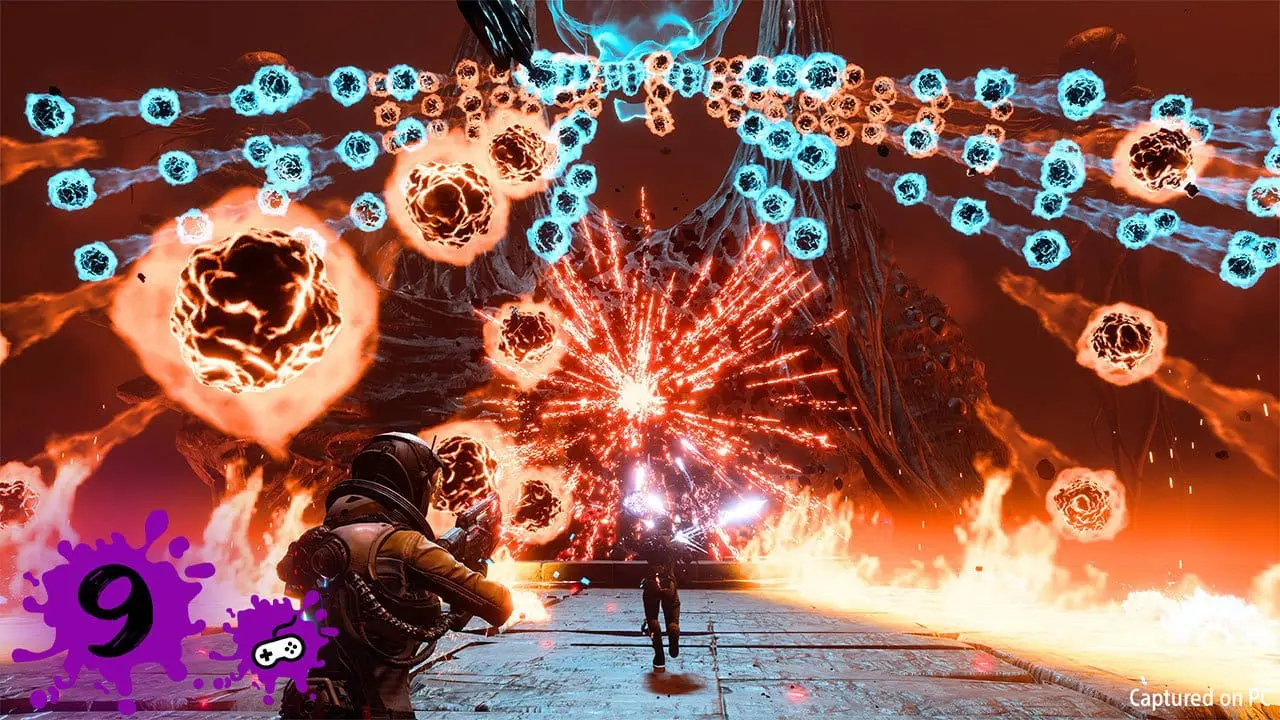
Within these runs is where Returnal shines. Its roguelike nature focuses on combat, which has you ducking and weaving in well-designed arenas while wielding interesting and varied weapons. The core pillar of the combat system is the movement—so free-flowing yet controlled—giving you a lot of agency and speed, which was appealing to me. The outstanding design of the arenas complements the movement system, improving the way you weave through them to avoid and strike back at enemies. This doesn’t extend to the boss arenas, with most of these being round spaces. I don’t consider this a negative, as it emphasises the movement skills you’ve developed on the way to the bosses.
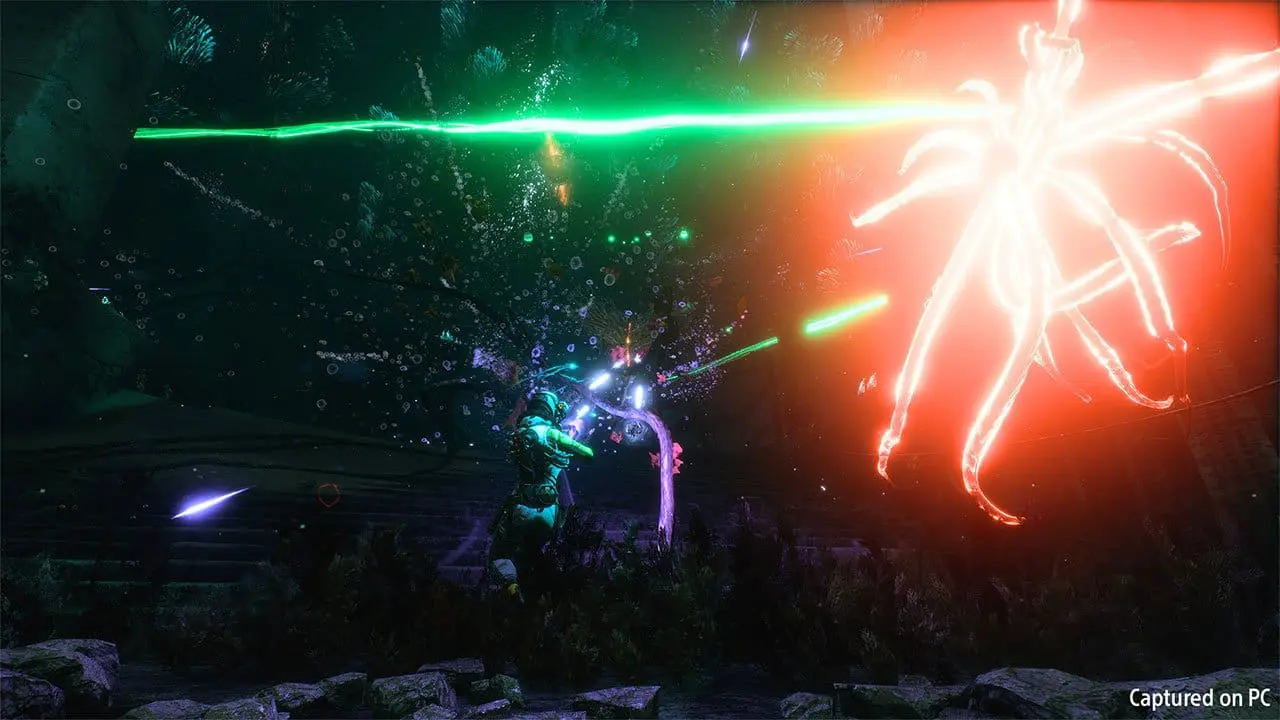
The weapon design in Returnal is superb, each feeling unique and a pleasure to wield. Of course, I developed some favourites, but each felt like it had its purpose and identity—some even unique compared to contemporary games. Weapons are upgradeable, and the more runs you have through Atropos, the more traits can be unlocked. Some trait combinations can be powerful and were the main source of variation between runs.
One thing that felt barebones was the overall build diversity between runs. Weapon traits were the primary source of variation and, while there were strong combinations, I never felt they significantly changed how I approached combat with that weapon. The only way to change these traits mid-run is to swap weapons altogether, and the non-weapon perk and malfunction systems also never made a meaningful difference to how I approached a scenario. All my best runs happened when I found a good weapon and stacked health upgrades. This is nitpicking—while I’d love more control over my build during a run, I never stopped enjoying the combat thanks to its strengths elsewhere.
Behind these weapons and all the high-velocity movement is Selene, cursed to relive the hell of being stranded on the alien planet of Atropos. While Returnal is high-octane for much of its runs, it contrasts this with quieter moments—windows into Selene’s past and reflections of her present. The mood is often pensive and sombre; the game offers just enough and lets the player fill in the blanks, keeping meanings murky and enticing you to want more. At times I was disengaged from the forming narrative, but Returnal utilises the roguelike structure smartly and ends strongly, the breadcrumb trail leading to a satisfying finale that still leaves plenty open to interpretation.
Returnal succeeds as a mysterious sci-fi thriller with an addicting, smooth combat system. It’s held up by how movement interacts with the arenas, and its satisfying weapons make blasting away at enemies some of the most fun you can have in a roguelike. In our original PS5 review, we finished by saying, “if you have a PlayStation 5 and you’re not playing Returnal, you’re not treating your PS5 right.” I largely believe this sentiment holds for this solid PC release.

(Returnal code provided for review)
Returnal PC Review

Comments