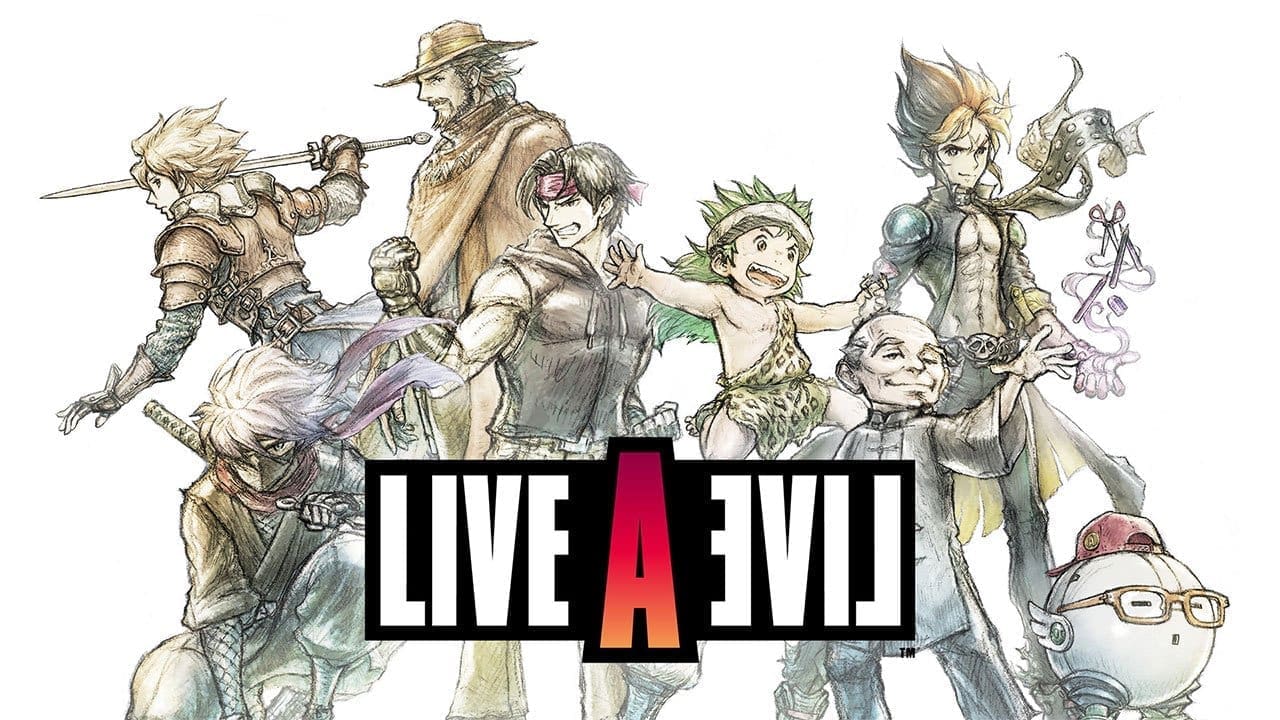
Synopsis: LIVE A LIVE, originally only released for the Super Famicom in Japan, is being revived on Nintendo Switch! Experience this legendary RPG for the first time in the west, brought alive in the same HD-2D visual style as OCTOPATH TRAVELER and TRIANGLE STRATEGY.
Publisher: Nintendo
Reviewed on: Nintendo Switch
Also available for: SNES (Original Release)
Cast: Yoshihiko Maekawa, Yasushi Matsumora, Yasunori Mitsuda, Misako Tsutsui, Akiyoshi Masuda
Developer: Historia Inc, Square Enix Creative Business Unit II
Director: Takashi Tokita
Scenario: Takashi Tokita, Nobuyuki Inoue
Battle Director: Nobuyuki Inoue
Music Composer: Yoko Shimomura
Live a Live is an eccentric game that has been brought into the modern gaming landscape not just through its stunning pixel work but also with some modern features that make it a breeze to play through. Its unique structure was intriguing throughout, and the short, self-contained chapters throughout most of the game make for an easy pick-up and play experience. The gameplay may be rudimentary in some parts, but it is varied smartly through these chapters in a way that stays both fresh and still engaging.
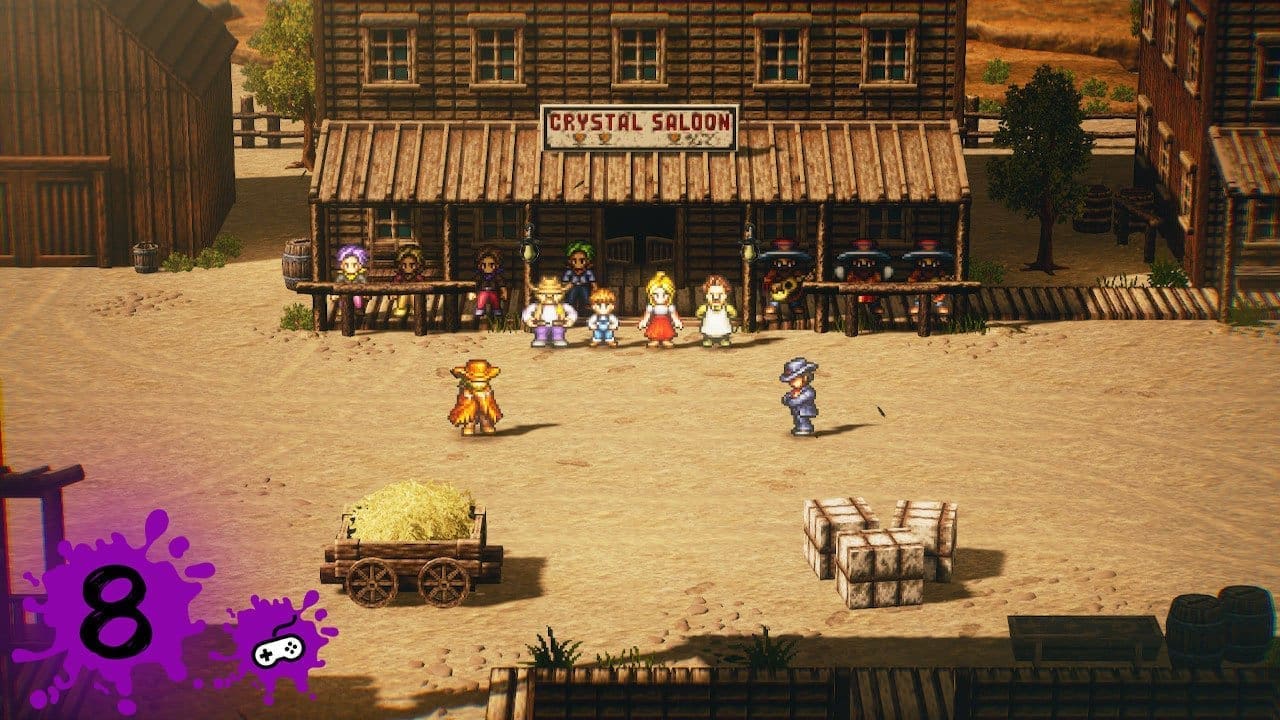
Live a Live quickly became my most screenshotted game on my Switch due entirely to the stunning use of the 2D-HD style — the pixel art was excellent throughout. The different chapters and times all felt unique in their presentations due to different colour palettes but still all vibrant in their presentation. The pixels of the individual characters are also incredibly emotive, making the voice acting and pixel art combo work well. However, it is not just the pixel art that makes Live a Live great to look at; it is also due to great uses of perspective and camera work that made for some awe-inspiring vistas, leading to some cinematic moments throughout the chapters. The presentation of Live a Live is capped off by a great soundtrack that is also varied throughout to help differentiate the chapters.
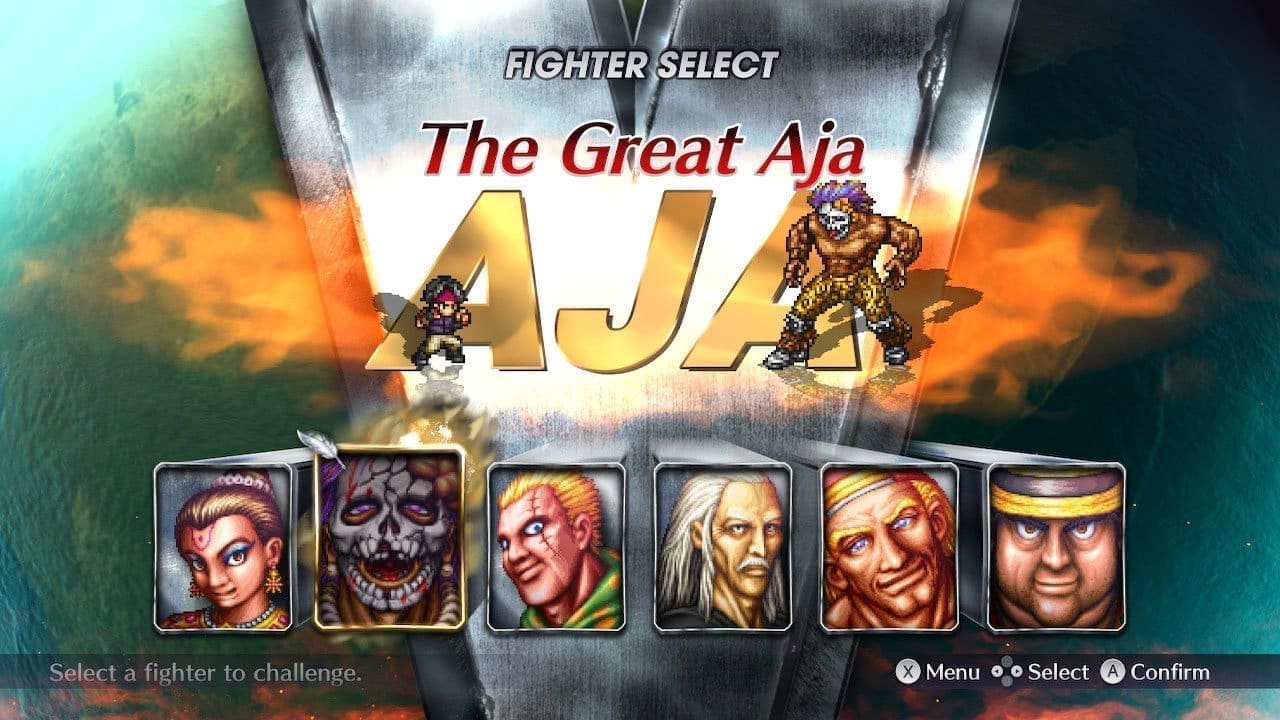
The chapter structure of Live a Live is one of its strong suits and selling points. Through the first three-quarters of the game, each chapter is a self-contained vignette set across various points of humanity’s history and future. Chapters can be played in any order and only take a few hours to complete. As they are self-contained, I found it engaging to play in each vignette as a whole but still guess at what the connective tissue may have been through the story sequence, both thematically and in direct story links. This structure has its ups and downs, but for me, it was ideal as you can have new experiences each time you open the game without retaining extensive story information. It also allows for different structures, with chapters taking on different identities, like a boss rush chapter reminiscent of Street Fighter, a horror-esque sci-fi mystery and the classic, saving the kidnapped Princess.
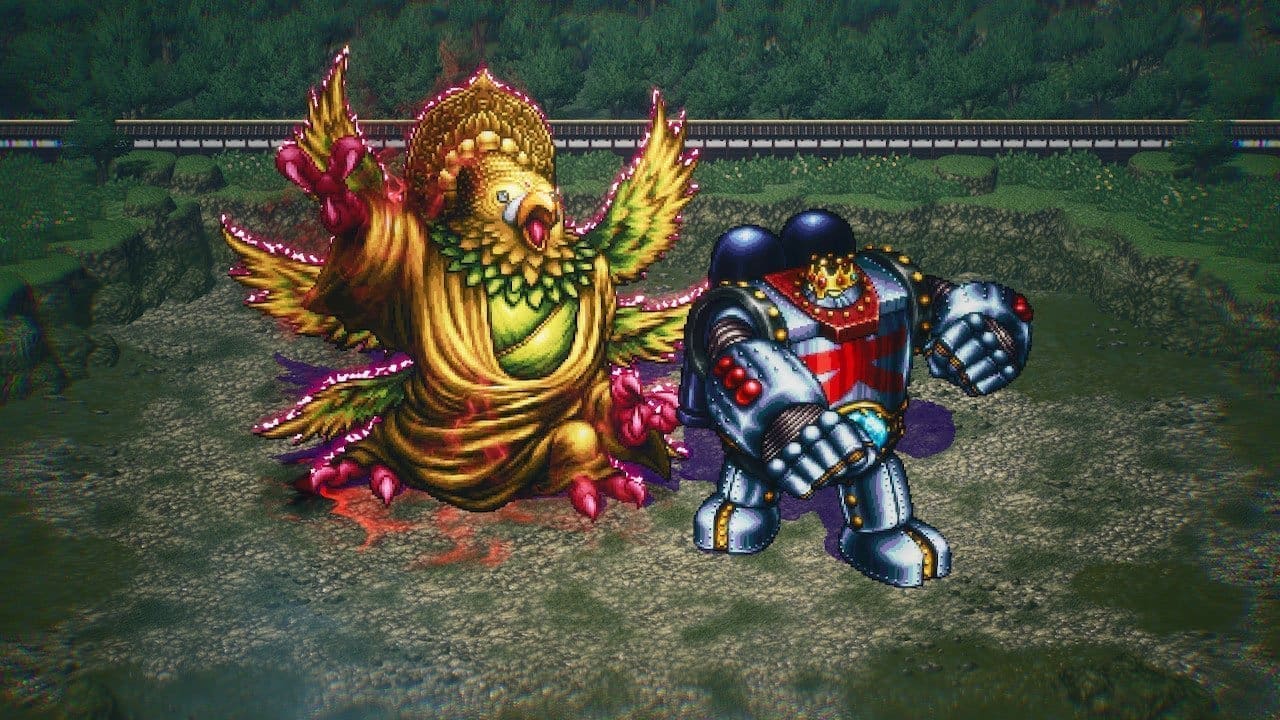
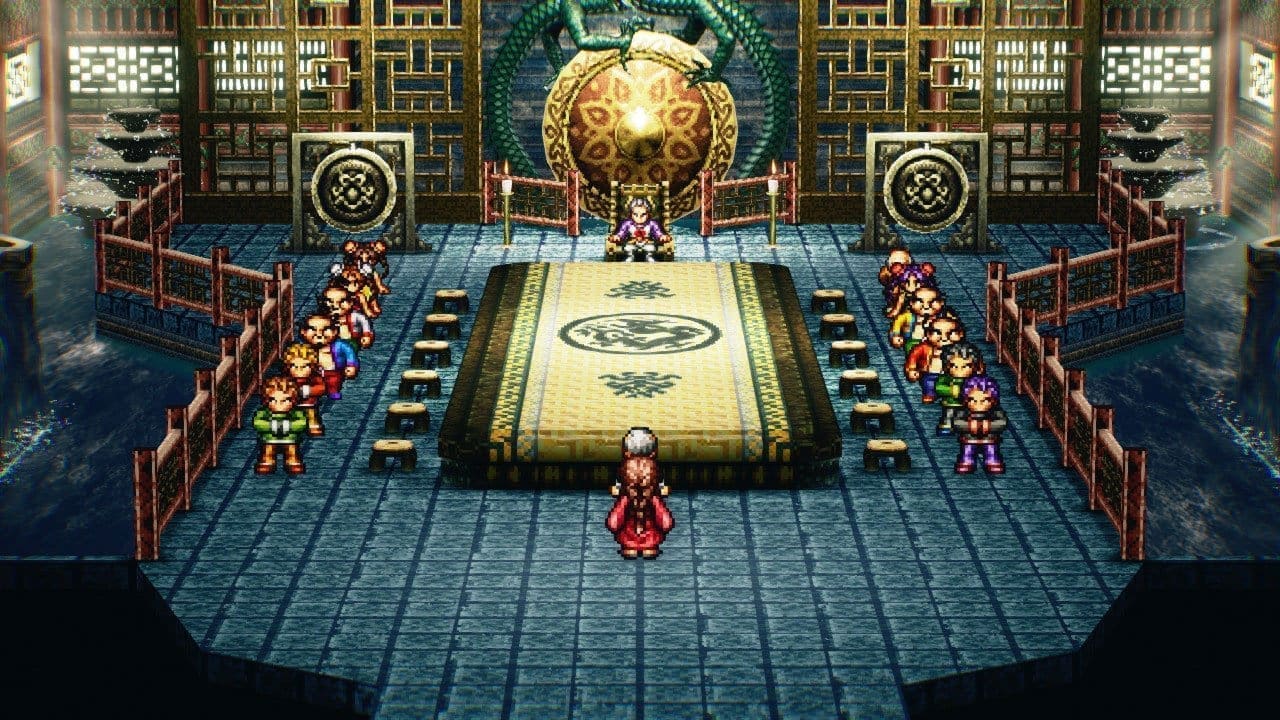
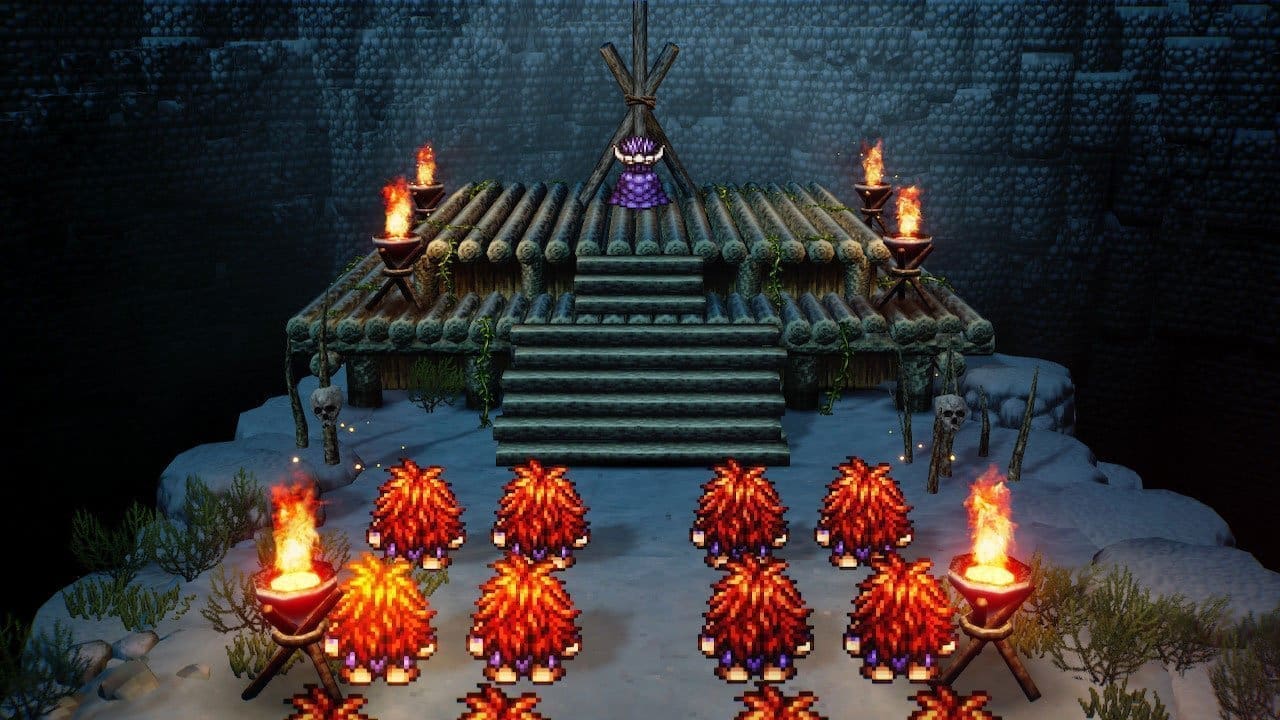
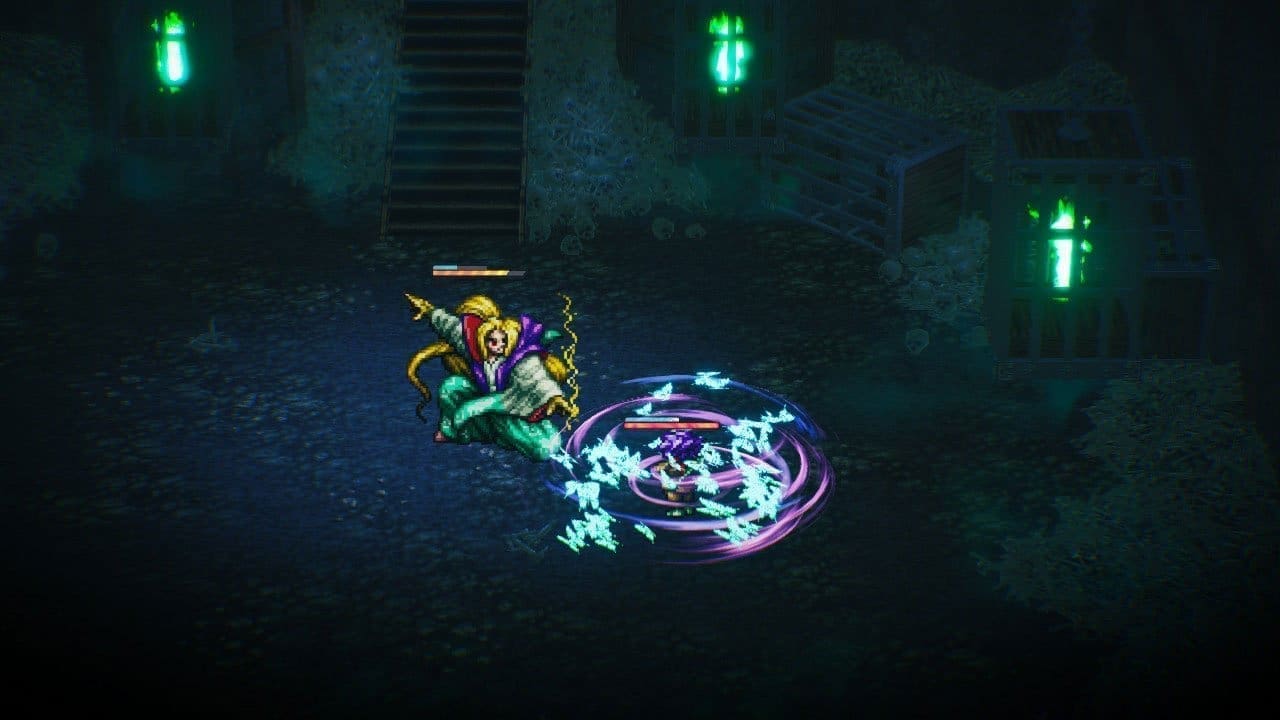
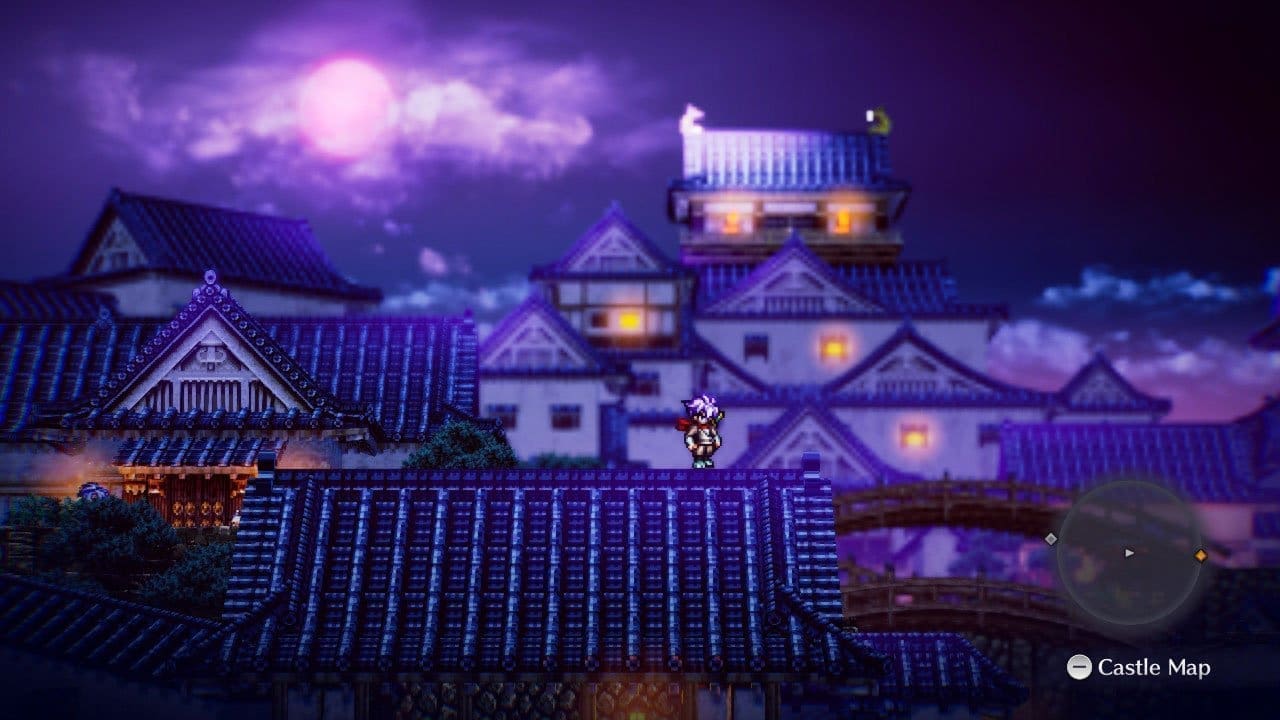
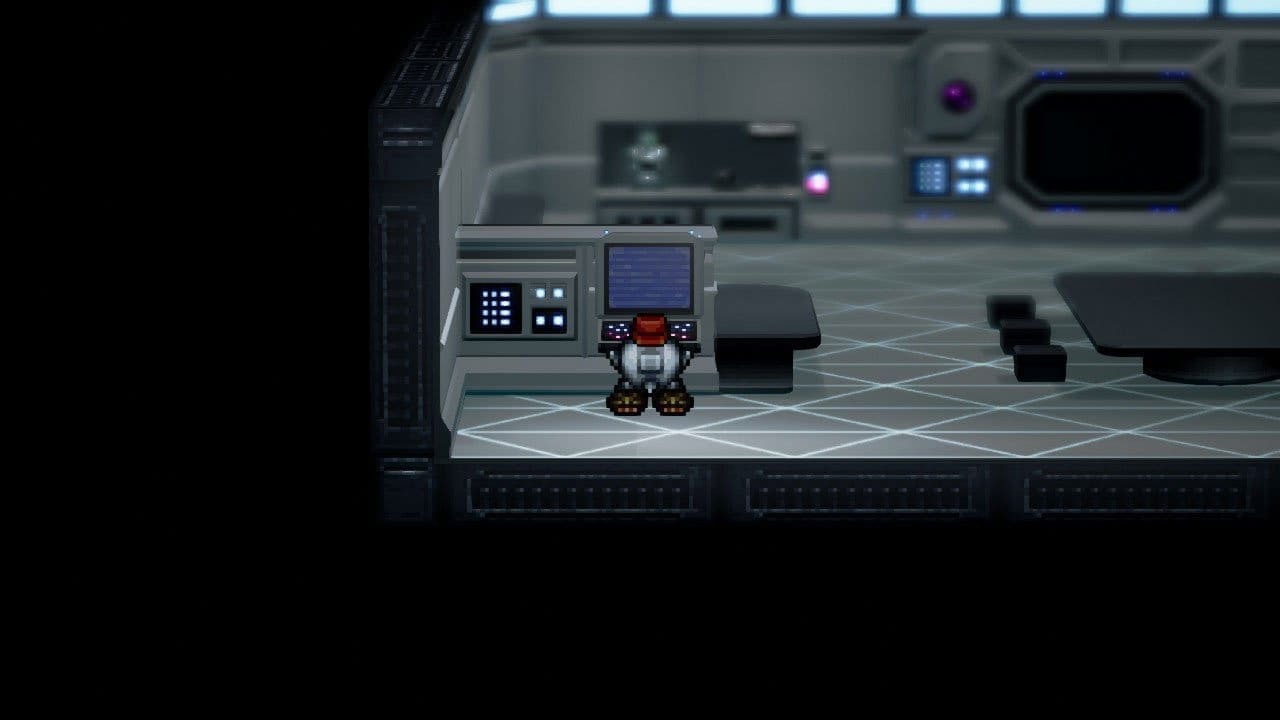
Live a Live’s chapters offer different experiences that share a core DNA. Some chapters are relatively linear, and some give you broader spaces to explore. Some chapters hold the classic random encounters of a SNES-era JRPG. In others, they are telegraphed, so you can seek them out, avoid them as you wish, or have no random encounters. In combat, different mechanics are brought more to the forefront than in others, such as the ‘overpower system’ allowing you to defeat a single commander enemy and win the fight, which is very prevalent in some chapters and missing from others. This helps with the freshness of the chapters, with each structure bringing something different to the game. However, it does mean that your enjoyment of different chapters can vary.
The primary way that the game achieves all these slight changes in structure in the chapter without becoming overwhelming is due to the streamlined, shared DNA of Live a Live. Whilst a 1994 JRPG may conjure images of vague ways forward and running around in circles, this could not be further from the truth with Live a Live. A minimap is provided in each chapter with clearly marked entrances and exits, telling you where you have been before, where you haven’t and most importantly, where to go to progress the objective forward. Whilst some chapters do have areas to explore, and it can make Live a Live feel like a very linear experience, which was something I enjoyed and appreciated. Progress is constantly being made within these chapters, but the streamlining does not stop there.
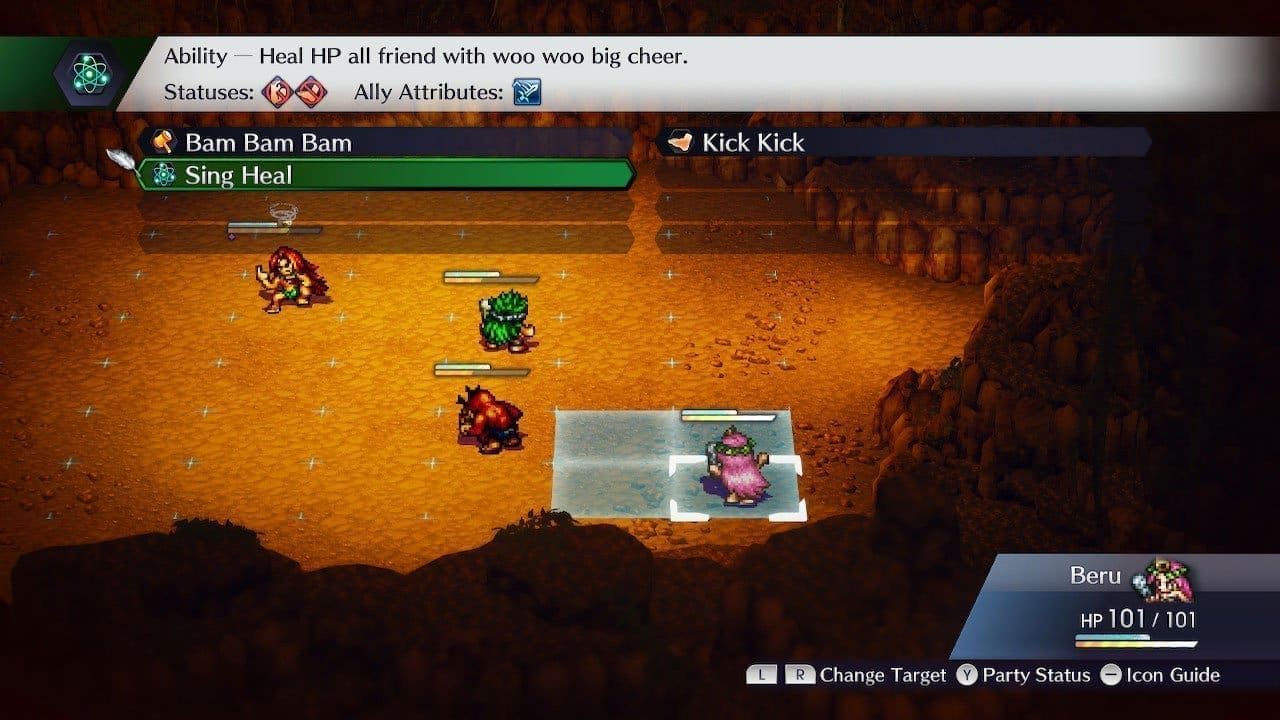
Whilst I still did enjoy the combat in the game, turn-based set amongst an 8×8 grid, but with a meter to be filled before your next turn, the streamlined nature extends into the combat. Due to the chaptered nature and leaving a character behind after a few hours, you never truly feel that you have carried a character from novice to master as you often do in an RPG. Though this can still be seen as a strength and allows for the game to stay fresh, as each of the characters you controlled had a widely different move set and play style — in some chapters, you were a lone wolf, and in some, you were building a classic RPG party. However, some combat sequences could feel rudimentary, especially considering one of the streamlined components of combat was that all weaknesses and resistances were provided to you off the bat, always visible at the edge of the screen. The challenge can be lacking as you are given the key to victory in each encounter.
Overall, I found the uniqueness and eccentricity of Live a Live to be great to play through and suited how I like to play games, especially on the Nintendo Switch. Its chapters were easy to pick up and play due to their separation in the story but retained a core DNA, making it a breeze to engage with and play through. The gameplay is engaging but streamlined to a point where some may find it easy, but the constant changes in chapters and new ideas make it so that the game still has layers of freshness throughout.