
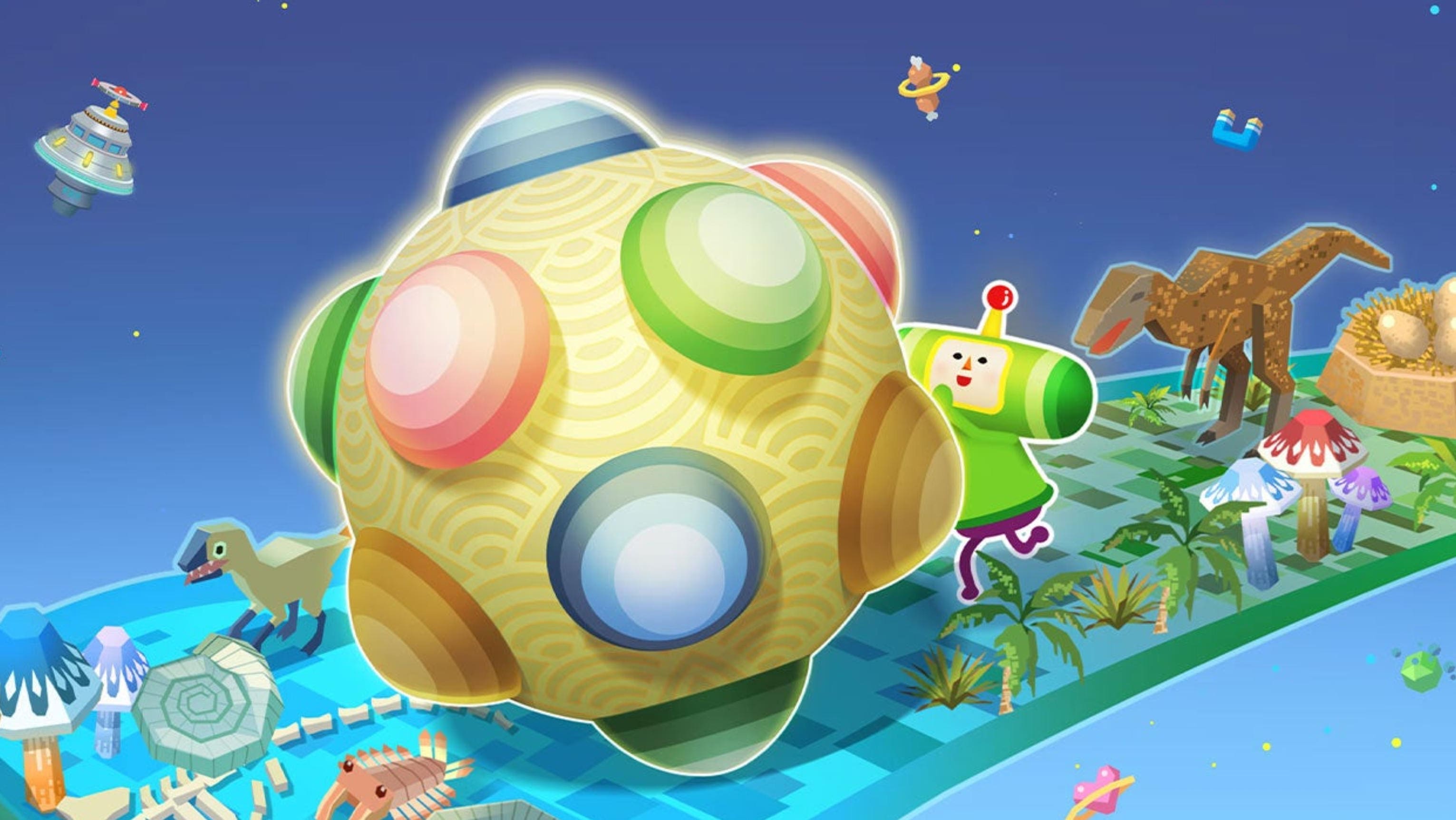
Once Upon a Katamari is the latest release in the Katamari franchise, and I was very keen to get my hands on this one. As with earlier releases, I have had great fun playing these titles, and this one has been no exception. The weird and wonderful world of Katamari is hard to explain; however, it has always found a spot on my devices.
In this instalment, the King arrives on Earth in Edo, Japan; however, throughout the game, we travel the world and through time. Through the story, I was whisked across time as I restored the stars with Katamari. I rolled through many timelines, including Edo Japan, the Prehistoric era, the Ice Ages, and more. Rolling a Katamari and gaining size was not the sole goal of the game, with many challenges being put up with each level, including select items, food, and weight. In addition to the main goal, I was tasked with finding crowns, presents, and cousins who were hidden at each level.
This Timeless Katamari game is perfect for the Steam Deck, where I have played much of it. I am absolutely having a Ball. The game’s simplistic design is part of the fun because the locals’ and even the cousins’ faces and expressions are limited, and it conveys exactly what they intend. The music and melodies fast become earworms hard to cleanse. I found myself often singing the Katamari theme as I was tooling around doing other jobs.
Progression was as simple as completing the levels; however, some blockades regarding the crowns halted progress until specific numbers were found. Along with the crowns, presents were also found that unlocked items to dress up your selected cousin. With each character chosen, I was able to customise. The customisation went whole hog, meaning I could change all individual colours and even faces. There was also a multiplayer feature that I was unable to test against other people during my time. I played many rounds against the AI and found myself at a disadvantage, as it was very competitive.
This addition to the Katamari series has been great. It is an excellent addition to the Steam Deck Library; it suited the handheld format, and the short session time meant the quick sleep function worked flawlessly.
(Review code provided to Explosion Network.
Read about our review and ethics policy here.)