“Pata Pata Pata Pon, Pata Pata Pata Pon”, “Pon Pon Pata Pon, Pon Pon Pata Pon.” More than just a catchy rhythm, it’s the tribal song that’s been etched into my memory, haunting me in those quiet hours. It’s the song of the Patapon, and it’s the running theme of Patapon 1 + 2 Replay.
Patapon is a unique blend of rhythm and strategy, where I am a God and the Patapon are my loyal followers. Through a call-and-response mechanism, they battle, hunt, and march their way to victory. At its core, the premise is simple: the Patapon are in need, and I am their deity, aiding their journey through rhythmic commands. Using the drumbeats mapped to the face buttons, I helped them act. My decisions, timing, and rhythm directly affect their success or failure.
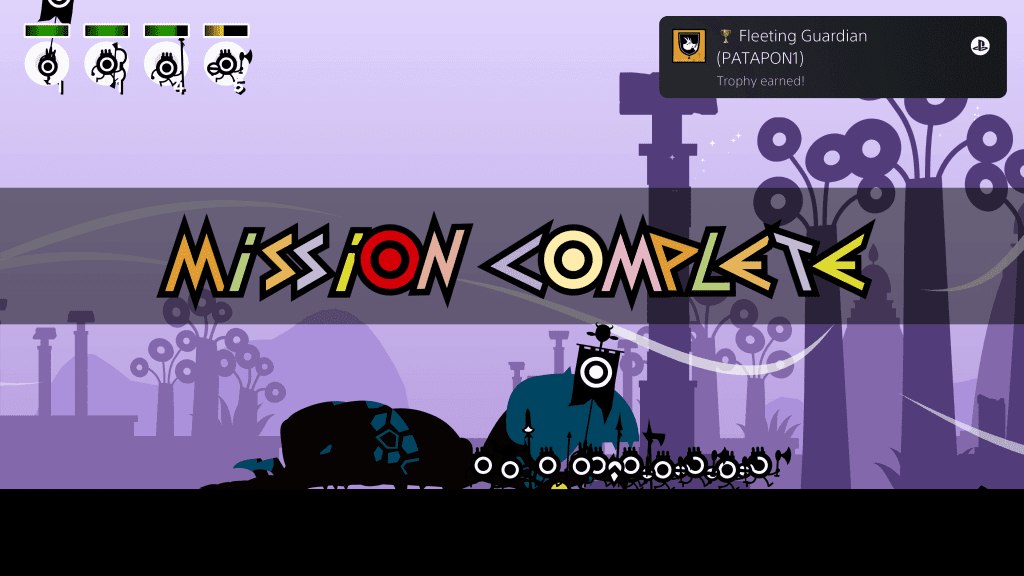
Though a God, I was a flawed one. I hate to admit it, but this game challenged me more than I expected. Hit the beat perfectly, and your followers are driven into a frenzy, dealing extra damage. Miss the beat, and they either stop in confusion or fall flat on their faces. My first battles were marked by frustration. I couldn’t match the beat, and the Patapon made sure I knew it, offering only disappointing glares and calling me out. Eventually, I discovered my TV was set to ‘Cinema’ mode instead of ‘Game’; the input lag was sabotaging my rhythm. Once corrected, everything clicked. My followers surged into battle, I hit Fever Mode, and we won our first true fight together. No losses, only triumph. I was thrilled to see them celebrate and find a new home.
At this new encampment, I was introduced to my followers. They called me the great and powerful Yuri, who led the way, and hope was restored. The Patapon quickly built a settlement, and I prepared them for their next trials. This hub became my base: where I built my army, managed items, and selected missions. It doubled as the game’s menu screen, where victories were celebrated, and defeats were mourned.
With everything falling into place, we marched onward. Battles were short but satisfying, and I could feel the rhythm in my bones. New unit types were introduced, including spearmen, axe-wielders, and archers, along with hero units who expanded on these classes. I quickly learned that hunting required precision and timing, while battles demanded a full battalion. More drums were added, along with additional patterns, and I had to adapt fast.
This steady rise in challenge defined Patapon. It tested my timing and my divine leadership, but I enjoyed every step. Eventually, I transitioned to Patapon 2, which refined everything I loved from the first game. New items, units, and missions added depth. I was able to transfer my save file over and continue the journey, now beginning with a shipwreck and rebuilding from scratch. The rhythm gameplay returned, now more responsive and polished. The expanded evolution system added complexity to the gameplay, and I found myself preferring Patapon 2 overall.
Although I enjoyed both games, I struggled to find the right time to play. Life, family, work, and general distractions pulled at my focus. And this game requires focus like few others. That’s why I enjoyed the original versions back when they were released. These days, I think the perfect way to play would still be on handhelds such as the Switch or Steam Deck, where I could slip away and give it my full attention.
(Review code provided to Explosion Network.
Read about our review and ethics policy here.)