
Synopsis:
In this story-driven detective thriller, a young Sherlock Holmes struggles to prove himself as he navigates an exotic, dangerous island in the Mediterranean to investigate the mystery of his mother’s death.
Reviewed on: PS5
Also available for: PS4, Xbox One, Xbox Series X|S, PC
Cast: Alex Jordan, Will Coban, Michael Golab, Phillipe Bosher
Developer: Frogwares
Publisher: Frogwares
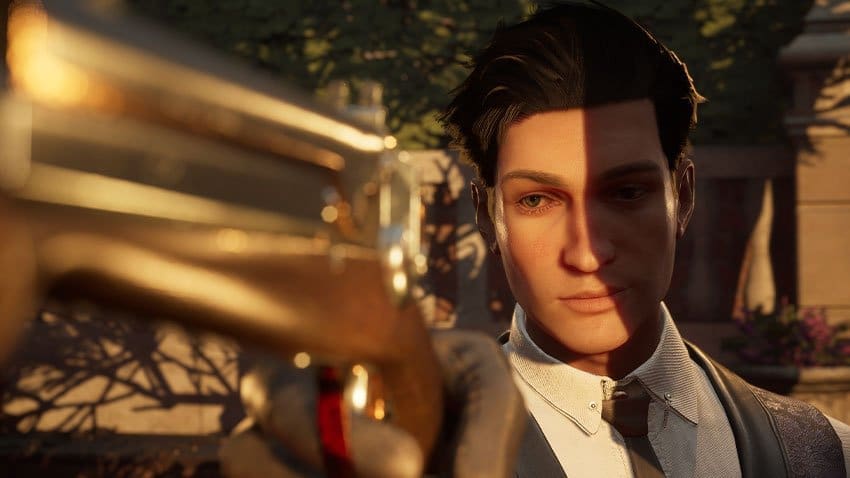
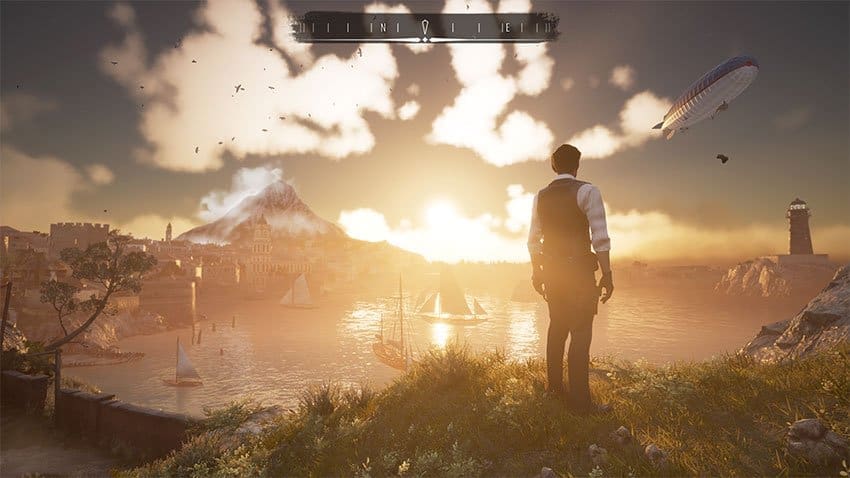
Frogwares is a developer that’s no stranger to the world of the famous detective, Sherlock Holmes, since their first outing in 2002 with Sherlock Holmes: The Mystery of the Mummy. Now with a fresh new look, Sherlock arrives in 2021 in Sherlock Holmes Chapter One. Frogwares has decided to step into the shoes of a much younger Sherlock as he makes his way to the streets of his childhood, the island of Cardona, to discover more about the final days of his mother’s life. But of course, this would not be a Sherlock Holmes story without a series of murders and mysteries for the great detective to solve. This fresh new look presents plenty of opportunities for Frogwares to continue evolving this franchise, but it does come with a few missteps to learn from in future chapters.
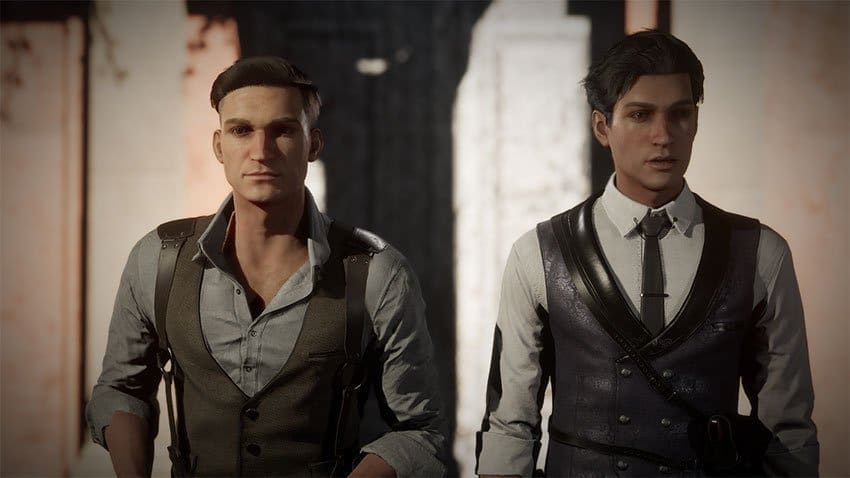
Appropriate for the character created by Sir Arthur Conan Doyle, the narrative of Chapter One is where the game truly shines. From the initial arrival to Cardona, discovering the mysteries of Sherlock’s childhood home, Stonewood Manor, and working their way through the five main cases and twenty-five side cases, Frogwares shows their experience crafting these mysteries. There never seems to be any repeated points or unnecessary detours throughout each case, and no part feels any less important than the main story cases as you wander through the districts of Cardona. With that said, the jewel at the centre of this narrative treasure trove is the focus of Sherlock’s past and his friend Jon who accompanies Sherlock throughout Chapter One, providing some great chemistry with Sherlock and some not-so-great advice at times (more on that later). From the early moments of this game, it is established that this is not John Watson, and Jon is a part of Sherlock’s cognition. Yes, that is right, Jon is an imaginary friend. Jon’s existence is immediately interesting and proves to be central to the mystery of Sherlock’s path.
Through this relationship with Jon, Frogwares dives further into the humanity of Sherlock Holmes in ways that haven’t yet been explored through their previous instalments. Sherlock is often presented as an unsympathetic character that sees facts rather than people in many instances. Still, when it comes to Sherlock’s mother and Jon, it is easy to see that there is more to this younger Sherlock that will undoubtedly further grow as we continue with this iteration on his path. This newly shown compassion from Sherlock also extends to many of the cases throughout Chapter One as Sherlock’s cases are not written with obvious right or wrong answers. Players can only make decisions from the evidence and information they have collected throughout their investigations. During a case in the second half of the game, one decision rests more on morality and personal justice than any one correct answer of how to resolve the case. After each one closes, this provides plenty of food for thought as I was never truly sure I had made the correct decision. Should someone be punished for their actions, or is their punishment worth putting a victim in further jeopardy?
It’s within these shades of grey that I appreciate Frogwares growth throughout their Sherlock instalments. I would always find it frustrating if I felt that I had made an incorrect judgment or decision by the end of the case. In Chapter One, this is not made so obvious and left to the player’s own interpretation when all things are said and done for each case, and this extends not to just the main five cases of the game but also throughout the plethora of side cases and stories. More than before, Frogwares places the player in Sherlock’s finely tailored shoes, wanting the player to think through all the provided information to find the next steps in the case with some slight prompts. It’s within this desire that Chapter One creates its highs and some of its more frustrating lows.
In this desire for players to take on the role of Sherlock Holmes, Chapter One can make simple tasks feel tedious and inconsistent within its game design, and often you will be given a location by its address. For example, it is simple enough to read the map to find the location, but I often found myself wandering around trying to find the exact door or person as there are no accurate waypoints when finding these locations. There were also several times throughout the game where Sherlock was required to speak to people on the street to get more information, but it is not always obvious who that person is you’re looking for, leaving me to ask which person will have the information? Do I need to be using the disguise system for them to talk to me? Because of Frogwares desire for the player to make these deductions, I often asked random people walking the street and received a series of repetitive lines telling me to “jog on” — so to speak. Annoyingly this would also be accompanied by a prompt that Jon was disappointed and a negative entry made into Jon’s Diary. It’s a system designed to assist the player in understanding they are not on the right track but provides frustration primarily as Jon’s repetitive entries often come off as condescending rather than helpful.
Within this design philosophy, I can appreciate the desire to make players think beyond the norm for video games, but it would make the game more inclusive if players were given more assistance in the form of a hints system or as simple as waypoints placed on the map once players have made the correct steps. Throughout Chapter One, this desire to make the players feel like a detective could lead to many players putting down their controllers. Once the player understands how Chapter One works, the game plays out straightforward in its final cases, but this learning curve in the early hours of the game could prevent so many from experiencing Sherlock and Jon’s story in fruition.
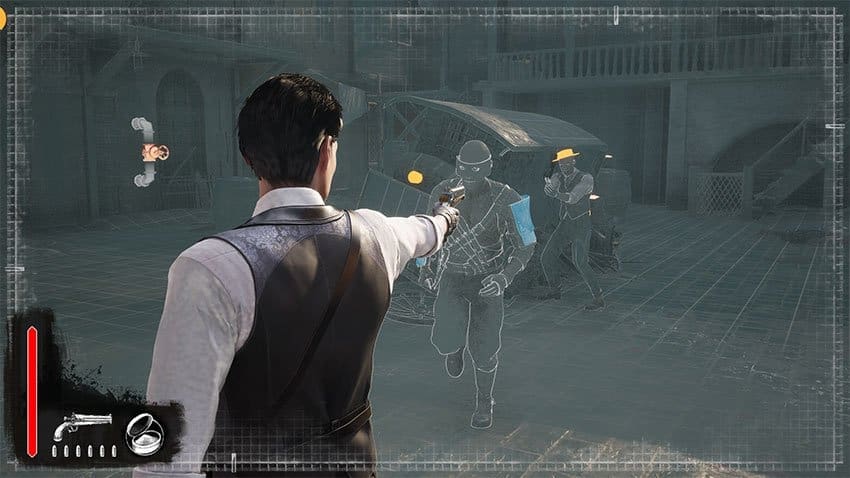
Chapter One falls short in the somewhat forced action gameplay laced throughout the primary story beats. Sherlock often finds himself placed in very bland-looking arenas as waves of generic enemies (most bearing a repeating character model of a somewhat recognisable character) attack; Sherlock is advised against killing these men, which leads to trying to take them out through several methods such as shooting a valve to cause steam, shooting off pieces of armour or throwing snuff powder in their eyes (once the armour is removed, of course). This part of the game quickly becomes stale, running around the bland arenas as the enemies follow you around as you pick them off one by one. I understand the desire to change pace within the game, but the narrative writing is good enough that these moments are not needed, and I found myself avoiding them whenever possible.
Sherlock Holmes: Chapter One is not a perfect game; the action gameplay is dated and repetitive; the open world seems overly ambitious at times, especially with consistent frame drops on PS5; and the learning curve to become the great detective may dissuade some players. But at its core it has a truly remarkable and insightful narrative about a young man trying to come to terms with the troubles of his youth, solving a number of grisly murders along the way. Frogwares have come leaps and bounds since The Devil’s Daughter in 2016, but there is still plenty of room for growth within the coming instalments in this Sherlock Holmes story.