
The long-awaited System Shock remake, initially launched on PC last year, is now making its way to consoles with the exciting addition of full controller support.
When I was younger, I had a friend who loved the original System Shock. I was always curious about it, but I never got the chance to play the original game. When I heard about the remake being announced for the console, I knew I had to take the opportunity to check it out.
The game is set up as a sci-fi fictional future, humans are living in space working with an A.I. named SHODAN. You play as a Hacker, forcefully taken from your home to the space station called the Citadel. A deal is struck between the head of the Citadel and me to hack and remove some barriers from SHODAN in exchange for freedom. As soon as I completed this task, I was beaten and dumped in a room losing consciousness.
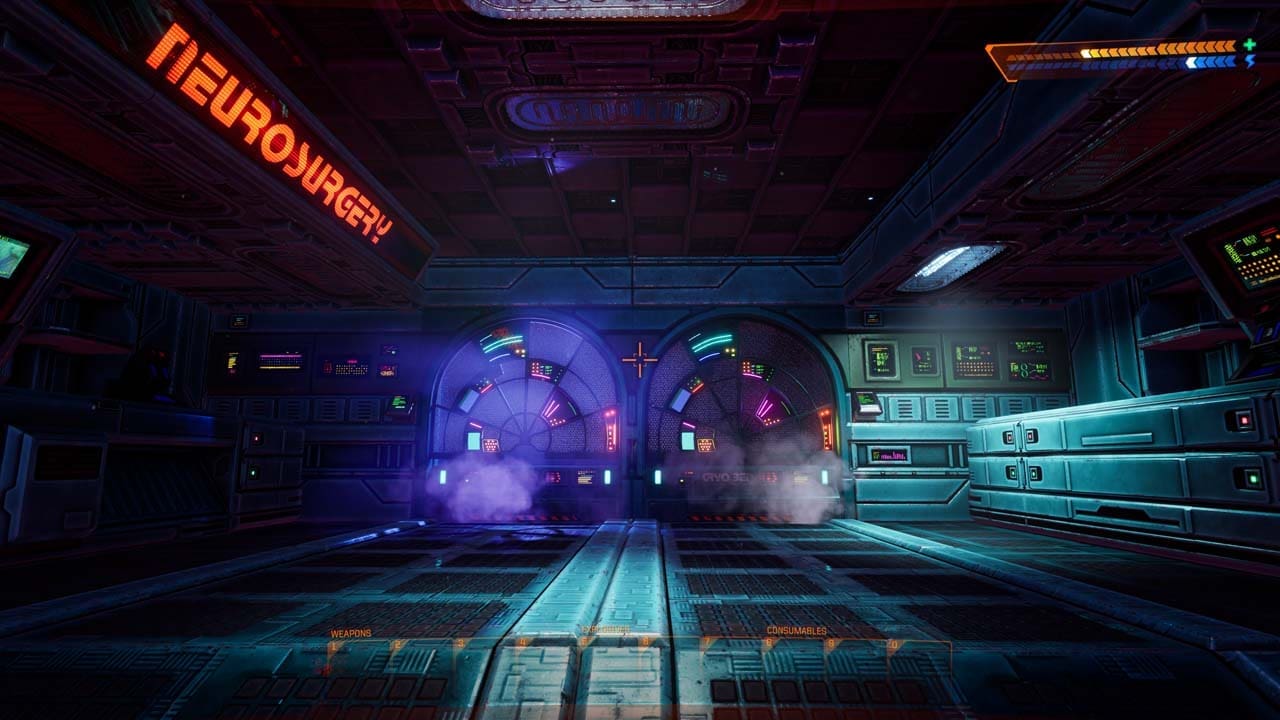
When I woke, I was in a completely different part of the ship; after some research, it appears six months had passed on the Citadel. The room I was in was large and filled with space-aged computers, shelves filled with junk, a ramp and two doors. This was the first puzzle I had to overcome; searching the junk, I found a modifier for my special cyborg enhancements and installed it. I now had access to maps, inventory, and a few other screens. From there, I had to find my way out of the room, solve a computer puzzle, and unlock one of the doors, which contained a storage room; in that room was a keycard that unlocked the other door, a weapon, and an audio log reader.
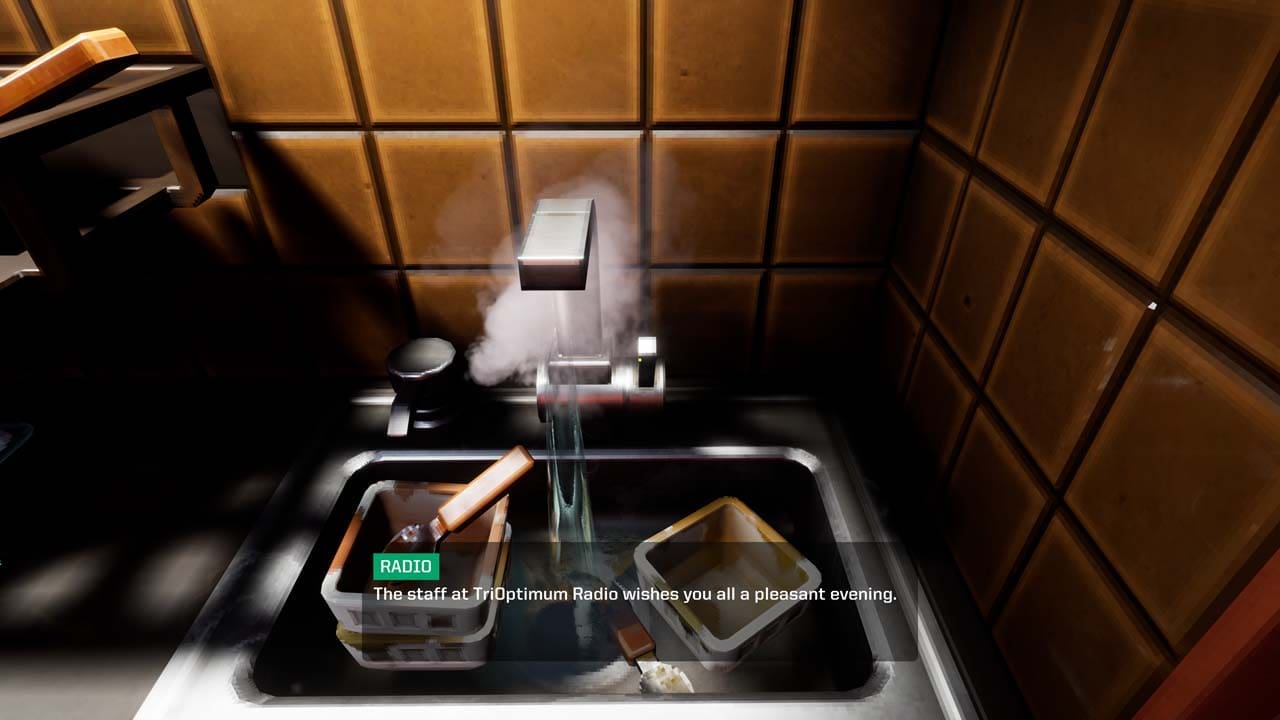
Once the other door was unlocked, I was confronted with a weird mutant, whom I beat to death, only to find a robot ready to attack me close by. After defeating the robot and discovering the healing chamber, I soon investigated the station. It seemed I was on the second floor, and things had gone very wrong since my little hack job. From there, it was time to discover what was going on; the game was very good at not placing a waypoint for me to follow and allowing me to experience the world, using memory and intuition to guide my progress. After a few minutes, I discovered a note with the door password and acquired a second weapon: a gun. I had also turned off the camera in which SHODAN was watching me, noticing a drop in the percentage of her control on this floor.
The game grew more intense, and I became engrossed in it. The story and world-building were slow and deliberate, with a clear purpose. I was eager to discover what had transpired during my absence. As I explored the Citadel, I uncovered an abundance of lore and storytelling. Voice memos, communications, radio chatter, and emails provided a wealth of information to process, allowing me to mentally piece together the events on the station and SHODAN’s objective. I could now understand why my friend was so captivated by this game. The longer I played, the more I recognised this title’s significant influence on modern games.
While the story is great, a few features are lacking in the game’s overall build. Some quality-of-life items that have made modern games more advanced are simply lacking in the title. As much as I was enjoying the game, I could feel the little annoyances building; things like controls and menu layouts were all designed around the PC. Aiming and shooting worked fine when you had the time, but in many instances, there was a distinct feeling that it was made for a mouse and keyboard, and the joysticks just didn’t react as well as I might have hoped.
There was a vast inventory system, and organising it was difficult but manageable. There was, however, little to no information on the other management systems, like holding one of the trigger buttons would automatically junk items, but a second press would vaporise them. It was very handy to clear space, but there was a way to earn currency by recycling junk. This meant that I was behind in upgrades for guns from the first level. At the same time, each level’s main goal was to reduce SHODAN’s influence over the systems. There was no way to check where it was without knocking out the nextitem to bring down her influence further. The remake stayed very true to the original, but these issues and some other issues showed how old the game truly is.
While these annoyances did wear on me, the quality of the game and its other interesting systems made it easier to overlook these. The atmosphere took on a real thriller vibe, and there were multiple occasions when the hairs on the back of my neck were tingling and rising while my heart was beating a million miles a minute. This was never the best choice of game to play before going to bed due to the intense thoughts and dreams that occurred when I did. Although there were a few things I didn’t like, there were more than I did. The game’s free-roaming structure and use of storytelling are compelling and make exploration rewarding. There is a lot to read, listen to, and discover on every level of the Citadel, which enriches the story of what happened since you initially arrived.
While the shooting wasn’t fantastic, the variety of guns, unique sounds, and feel of them made up for that, and the adjustability in tactics meant that most of the time, I was trying new weapons and tactics. The overall atmosphere of the game was also enthralling, between the music, levels, enemies, and soundscape. The game did an amazing job of keeping you on edge when it was needed, like sneaking into a room only to have the monitors light up and SHODAN whisper creepy messages to me or send some less-than-welcoming cyborgs my way.
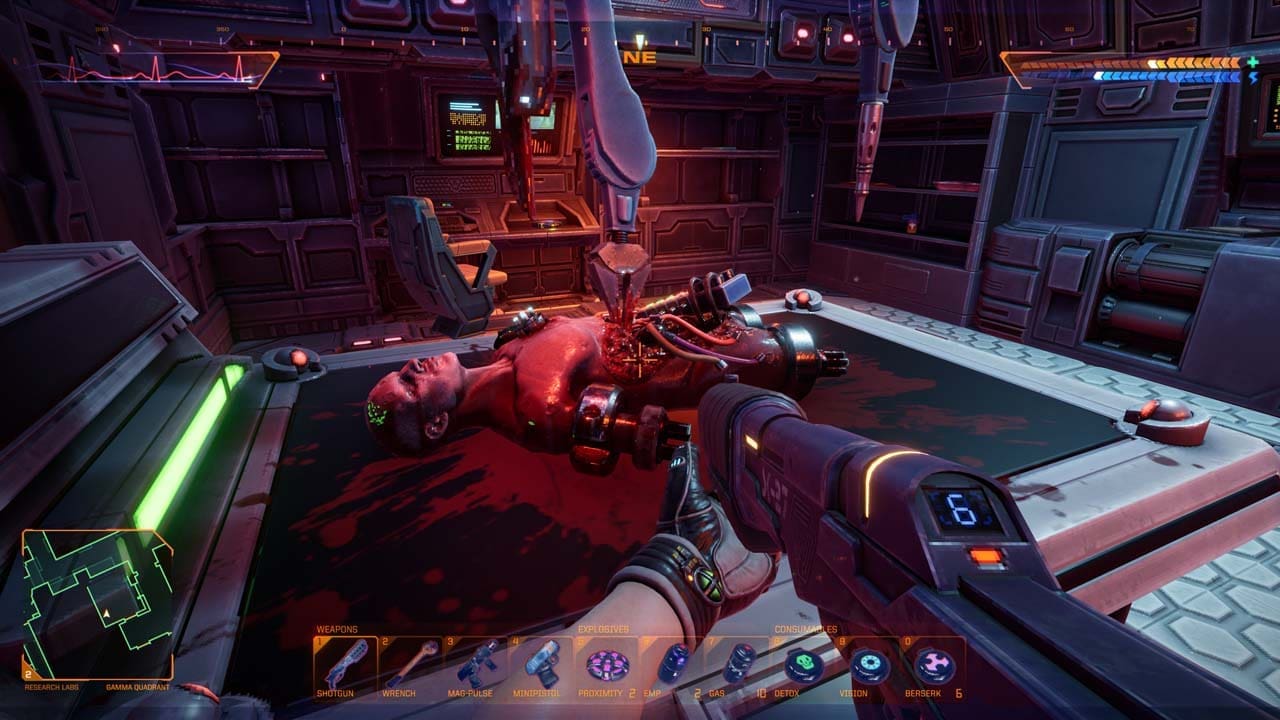
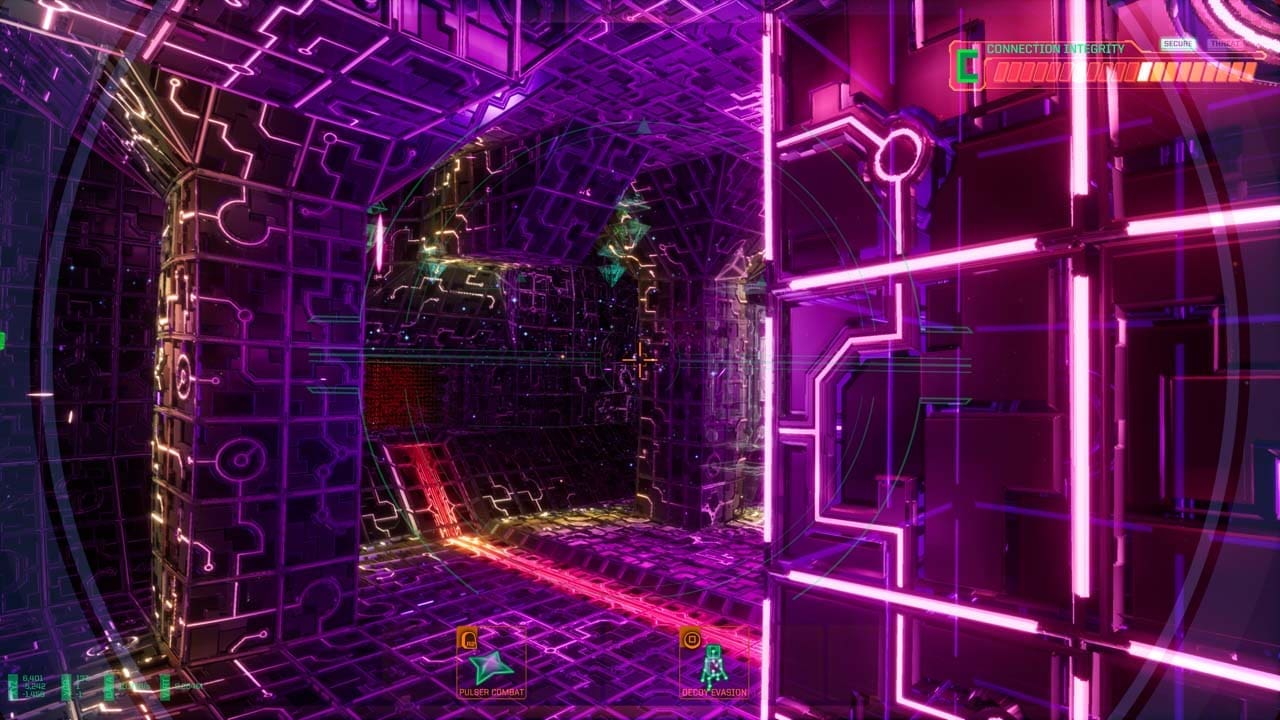
I remember that before starting the game, there were various difficulty options. I chose the lower end, consisting of four settings: SHODAN, Enemies, Puzzles, and Cyberspace. These options made different parts of the game more challenging. It was a unique feature that I found very useful. The puzzles were not difficult for me, so I could have chosen a higher setting for that. However, I was happy with the enemy’s difficulty because I wasn’t great at aiming and shooting. I particularly enjoyed the cyberspace interactions, flying around and blasting pixels with different weapons. It felt like something out of a 90s-style hacking movie. The game’s graphics are amazing, and Nightdive managed to make it look both pixelated and modern at the same time. The retro-futuristic look extends to the computers, logs, and inventory, which gives the whole game an amazing look and feel.
The remake of System Shock is a wonderful example of how to modernise a game while maintaining its original charm. Although it may not appeal to everyone, I personally encountered some frustrations. The game’s storytelling is exceptional, allowing players to use their imagination to fill in the gaps, which is a departure from many contemporary games that offer explicit detail.
(Review code provided to Explosion Network.
Read about our review and ethics policy here.)