
The Blood of the Dawnwalker Review
The Blood of Dawnwalker's story kept me captivated, but it was the world and its characters that made me reluctant to put the controller down

Coen is a young man whose life changes irrevocably after a series of tragic events transforms him into a Dawnwalker, a rare hybrid who remains human during the day but becomes a vampire at night. Inheriting the strengths and vulnerabilities of both forms, Coen must forge uneasy alliances as he races to rescue his family from Brencis, the vicious vampire lord now ruling his homeland of Vale Sangora.
Lead Animator Daria Bury-Zawada
Asset Artist Robert Benak
Lead Cinematic Artist Jakub Gutkowski
Sound Designer Denis Grigonis
Lead Combat Designer Karo Castello
Gameplay Designer Tome Davis
Will de Renzy-Martin, Andrew James Spooner, James Macnaughton, Lorne Macnaughton, Mandi Symonds, Dai Tabuchi, Conor McCarry, Jacek Mikolajczak
Publisher: Bandai Namco Entertainment
The day-and-night cycle is one of my favourite mechanics because it discouraged my usual open-world habit of trying to clear every side quest
The plague has decimated much of the country, and Vale Sangora is no exception at least not until the vampires arrive. They seize control of the isolated valley and offer its people salvation at a terrible price. Each week, the locals must participate in a communion-like ritual where a small amount of their blood is drained. In exchange, they drink vampire blood capable of healing physical ailments, including the plague. Outside of these rituals, the peasants are largely left to continue their lives, provided they obey the laws of their new rulers.
Coen’s family is barely holding together under this arrangement. In the opening cinematic, Brencis personally heals Coen’s sister, but the family continues to suffer beneath vampire rule. Coen is plagued by recurring nightmares, while his mother has been left deeply traumatised by the weekly rituals. He and his siblings struggle to provide for the household while also caring for her. His father, a withdrawn former soldier, offers little support beyond berating his son. Times are tough, and the family is on the brink of collapse.
After awakening from a particularly violent nightmare, Coen finds his mother sitting in a near-catatonic state at the breakfast table while his father attempts to feed her. Coen is soon sent to complete a few chores, including chopping wood and visiting the local healer to collect herbs for his mother. This is where the game first introduces its central time-management mechanic. Communion is scheduled for that evening, leaving Coen with eight hours to complete whatever tasks he chooses.
Collecting the herbs is the immediate priority, but several side quests are already available around town. Coen can help an elderly woman or investigate a problem involving a farmer and his brother, but every activity consumes some of his remaining time. Take on too much, and Coen may miss communion or fail to return with the herbs before it is too late.
This pressure immediately makes time feel like a valuable commodity. Instead of clearing every available marker, I had to consider which tasks genuinely mattered. Helping someone might lead to a useful relationship later, but it could also mean neglecting a more urgent responsibility. It is an interesting system that forced me to make meaningful choices rather than simply working through a checklist.
The opening sequence establishes this idea particularly well, guiding me along my chosen path while demonstrating that even seemingly minor decisions can have consequences. It was sometimes wiser to ignore someone in need in favour of a more practical objective, although that decision may return to haunt me later.
My choices eventually led Coen to join a local militia attempting to resist the vampires. The resulting confrontation ended with the vampires attacking Coen’s hometown, capturing Coen’s family and attempting to turn him into a vampire. Their plan ultimately backfired. Coen became something different, not entirely human, but not a true vampire either.
During the night, Coen possesses a vampire’s strength, movement skills, heightened abilities and relentless bloodlust. When the sun rises, he returns to his human form. This transformation becomes the foundation of both the story and the game’s combat, exploration and quest design.
As Coen begins to understand his condition, he also becomes immersed in blood magic, an ancient form of witchcraft that grants his human form abilities beyond those of an ordinary warrior. During the day, he can perform powerful attacks and magical manoeuvres that complement his conventional combat skills.
One of the more intriguing abilities is Coen’s power to communicate with the dead. Summoning spirits allows him to uncover information, investigate past events, and learn secrets that have been buried for years. These encounters add a supernatural layer to exploration while giving Coen another way to piece together the mysteries surrounding Vale Sangora.
The day-and-night cycle plays a crucial role in how these abilities are used. Certain quests and interactions are only available during daylight hours, while others require Coen’s vampiric form after dark. Night also brings additional combat options and new dangers, changing how familiar areas can be approached.
Equipment adds another strategic layer, as Coen’s outfits can be upgraded and adapted to suit different encounters. Preparing for spectral enemies, magical threats, or heavily armed opponents becomes part of deciding how to spend the limited time available. Together, the shifting abilities, equipment choices and time restrictions create a world that feels noticeably different depending on when and how it is explored.
Coen now has three clear objectives: defeat Brencis before his coronation, rescue his family and uncover the truth about what it means to be a Dawnwalker. The main mission is tracked through Coen’s journal, which also contains the side quests and other stories discovered throughout the valley. Selected objectives are highlighted on the map and displayed on the compass at the top of the screen, making them easy to follow.
Once the opening town is destroyed and the wider valley becomes available, the game largely stops holding the player back. Missions can be found across the map, and the main deterrent to exploring a particular region is usually its difficulty. This is indicated by a small skull beside the quest marker: yellow for difficult, orange for extremely challenging and red for something approaching impossible.
The map is divided into several regions, each controlled by one of Brencis’s vampire generals. Their positions within the hierarchy can be viewed through the Court tab, which also tracks their growing hostility towards Coen as his infamy increases. The more disruption he causes, the more likely these generals are to introduce additional proclamations intended to slow his progress.
Many side quests directly undermine these regional rulers. Coen can eliminate patrols, destroy blood stores, attack outposts, free prisoners, and assist local rebels. These activities can also uncover clues about the generals’ locations, bringing Coen closer to confronting them and ultimately rescuing his family.
The day-and-night cycle is one of my favourite mechanics because it discouraged my usual open-world habit of trying to clear every side quest and uncover every section of the map. Instead, I was forced to make deliberate choices about where to go, whom to help and which opportunities I was willing to miss. Those decisions can have significant consequences, as ignoring certain quests may prevent potential allies from appearing later.
Coen’s current form can also affect how people respond to him. Rescuing someone as a vampire may cause them to scream and run away, while saving that same person as a human could earn their gratitude, reveal a reward or secure their help later in the game. Other situations may favour Coen’s vampire form, meaning neither side is universally better than the other.
Day and night are each divided into eight segments. Some missions consume only one segment, while others take up most of the available period. The journal generally shows how much time an activity will require, and dialogue options will often allow Coen to delay or decline a quest before committing to it.
Overarching all of this is the thirty-day deadline to rescue Coen’s family. The remaining days can be monitored in the journal, providing a clear indication of when it may be time to prioritise the main story over having a date, investigating a wolf attack or becoming distracted by another problem in the valley. That constant tension gives each decision a little more weight and ensures that even an appealing diversion comes with a potential cost.
Exploring the valley regularly rewarded my curiosity. I encountered people in need, dangerous creatures, hostile guards and wildlife that was not always particularly friendly. However, the most memorable part of exploring was often Coen’s interactions with the people inhabiting the world.
One of my favourite quests paired Coen with a potential love interest as they explored an ancient tomb together. Their chemistry was conveyed through subtle looks, unspoken feelings and the hesitant way they interacted. Both appeared reluctant to take the next step, fearful of what it might mean for them. It was a restrained and believable approach to romance that made their developing relationship feel far more natural.
Some feared him because of what he had become, while others judged him by his actions and recognised that, despite being part vampire, he had never harmed them. This was another area where the game thrived, as I genuinely enjoyed meeting its characters. These ranged from old friends of Coen’s father and people connected to the rebellion to other vampires and potential romantic partners. The stories surrounding these characters and their accompanying questlines felt carefully developed, making the relationships I formed throughout my playthrough particularly rewarding.
Combat initially felt intimidating because of its reliance on directional attacks, blocking and parrying. Once its rhythm clicked, however, these mechanics became second nature. By the later stages of the game, I felt confident enough that I was rarely afraid to throw Coen into a fight.
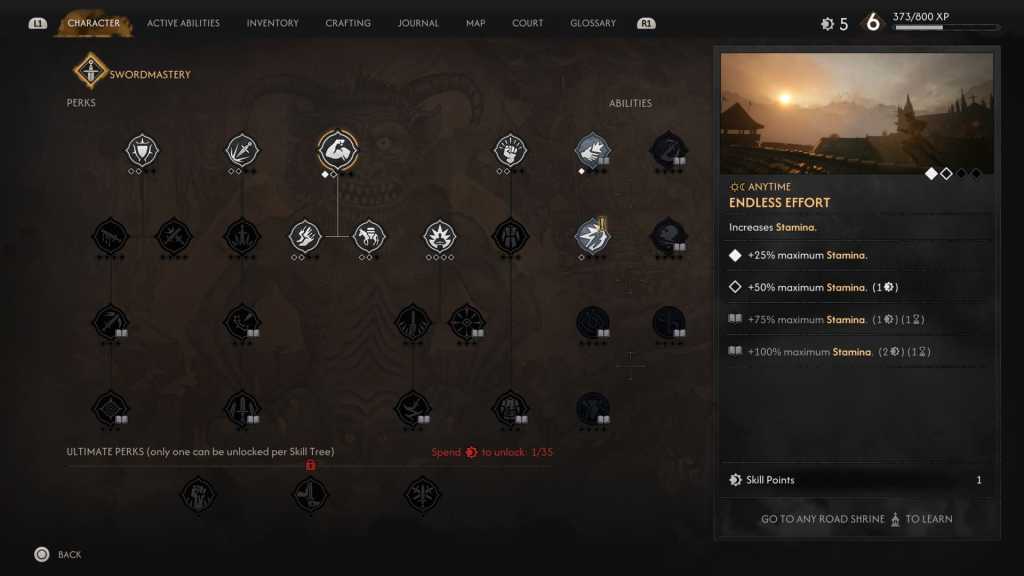
Coen’s witchcraft and vampiric abilities expand the combat system by providing additional offensive and defensive options. New attacks and upgrades can be unlocked through the ability menu as Coen progresses, while other improvements are linked to the corruption he accumulates by drinking blood. Additional abilities can also be learned from skill books purchased from merchants or discovered while exploring the valley.
At its core, combat revolves around attacking, blocking and parrying. Learning how these three mechanics work together can mean the difference between survival and a quick death, particularly against tougher opponents. Parrying is especially satisfying. There is something extremely cool about battling one enemy, noticing another attempting to strike from behind and deflecting the attack before driving a sword or a set of claws into them for their trouble.
I found combat consistently fun and exhilarating, particularly when facing unfamiliar opponents who forced me to reconsider my approach. Once I became comfortable with the system, regular enemies presented less of a threat, although the game’s stronger opponents still demanded my attention. As enjoyable as the vampiric combat was, I personally preferred fighting with a sword in Coen’s human form. Both combat styles looked impressive, but the swordplay made me feel like a properly trained soldier. My preference was so strong that I often continued using the sword even while playing as a vampire.
The main menu is divided into several sections, including Inventory, Character, Abilities, Journal, Crafting, Map and Glossary. Most are intuitive to navigate, while the journal and map play particularly important roles in managing quests and the limited time available.
Crafting allows Coen to create different concoctions that restore health, provide temporary enhancements or otherwise assist him during his journey. These items are separated according to his human and vampiric forms, reinforcing the need to prepare for the different challenges found during the day and at night.
The inventory is similarly divided into helpful categories, making it easy to manage equipment or sort through items while buying and selling. From here, I could inspect, equip or remove gear and prepare separate outfits for Coen’s day and night forms. Having individual loadouts made it much easier to build each version of Coen around its unique strengths and abilities.
The glossary keeps track of the people Coen encounters and the information uncovered about them. It allowed me to revisit character details, written material and previous interactions whenever I needed a reminder. I did not use it particularly often because of the way I approached the game, but it is a useful inclusion for players who enjoy immersing themselves in the deeper lore and role-playing elements of an RPG.
I played the entire game on PlayStation 5 Pro. During my time with the prerelease build, I experienced only one crash and one loading screen that failed to progress. Both were identified as known issues and appear to have been resolved through subsequent patches. Outside of those two incidents, my experience was remarkably stable.
Although I loved the time-management system, it may not appeal to every player. Those who prefer to clear every map marker and complete every available quest in a single playthrough may find the restrictions uncomfortable. For me, however, that pressure was precisely what made my decisions feel meaningful.
Most importantly, the time-management system forced me to make difficult decisions, and I loved the experience. Exploring the map remained rewarding, with hidden stories and pieces of lore waiting to be discovered, but the approaching deadline kept me from treating the world as a checklist to be checked off.
Instead, I had to think carefully about what I wanted to accomplish and which opportunities I was prepared to leave behind. It kept me focused on the main story while ensuring my choices felt meaningful. Knowing that different decisions could lead to missed quests, altered relationships and unavailable allies also gives me a compelling reason to return for another playthrough.
(Review code provided to Explosion Network.
Read about our review and ethics policy here.)
The Blood of the Dawnwalker Review
The Blood of Dawnwalker's story kept me captivated, but it was the world and its characters that made me reluctant to put the controller down. Although the directional combat initially intimidated me, it steadily grew on me. By the end of my playthrough, I had developed Coen to the point where only the most dangerous opponents presented a serious challenge.

Jacob Hegarty
I enjoy games, and spending time with my pets, I also love drawing, painting, and being creative.
MORE FROM JACOB HEGARTY →

Comments