Synopsis:
At the close of the Iraq War, Special Forces hunting for weapons of mass destruction unearth something far deadlier – a buried Sumerian temple containing a nest of unearthly creatures. To survive the night below, they must forge a brotherhood with their enemies from the world above.
Publisher: Bandai Namco Entertainment
Reviewed on: PS5
Also available for: PS4, Xbox Series X|S, Xbox One, PC
Cast: Ashley Tisdale, Paul Zinno, Alex Gravenstein, Moe Jeudy-Lamour, Nick E. Tarabay, Waleed Hammad, Zaydun Khalaf, Alex Mallari Jr, Sammy Azero, Clare McConnell, Nabeel El Khafif, Brittany Drisdelle, Marcel Jeannin, Pip Torrens
Developer: Supermassive Games
Game Director: Will Doyle
Narrative Designer: Andrew Ewington
Screenplay: Khurrum Rahman
Original Score: Jason Graves
Supermassive Games are back for their third entry into The Dark Pictures Anthology. The latest entry follows less of the typical horror tropes that Man of Medan and Little Hope leaned upon, and in that regard, House of Ashes feels exciting — at least for a time. But if you’ve played one of these games before and felt the gameplay didn’t vibe with you, there are little-to-no changes here. Those seeking a new horror story for the season will find some scares inside, but the characters left me with much to desire, and much like Little Hope, I struggled to care about nearly all of them enough or care enough to make decisions regarding their safety.
House of Ashes follows a group of five soldiers and commanding officers during the back-end of 2003 and the invasion of Iraq. During a mission to find weapons of mass destruction, the Americans end up in a battle with the Iraqi Armed Forces, which triggers a mass landfall. The survivors awake in an underground tomb from the Mesopotamian era, but when they begin to fuss around, they realise they’ve awoken an ancient evil.
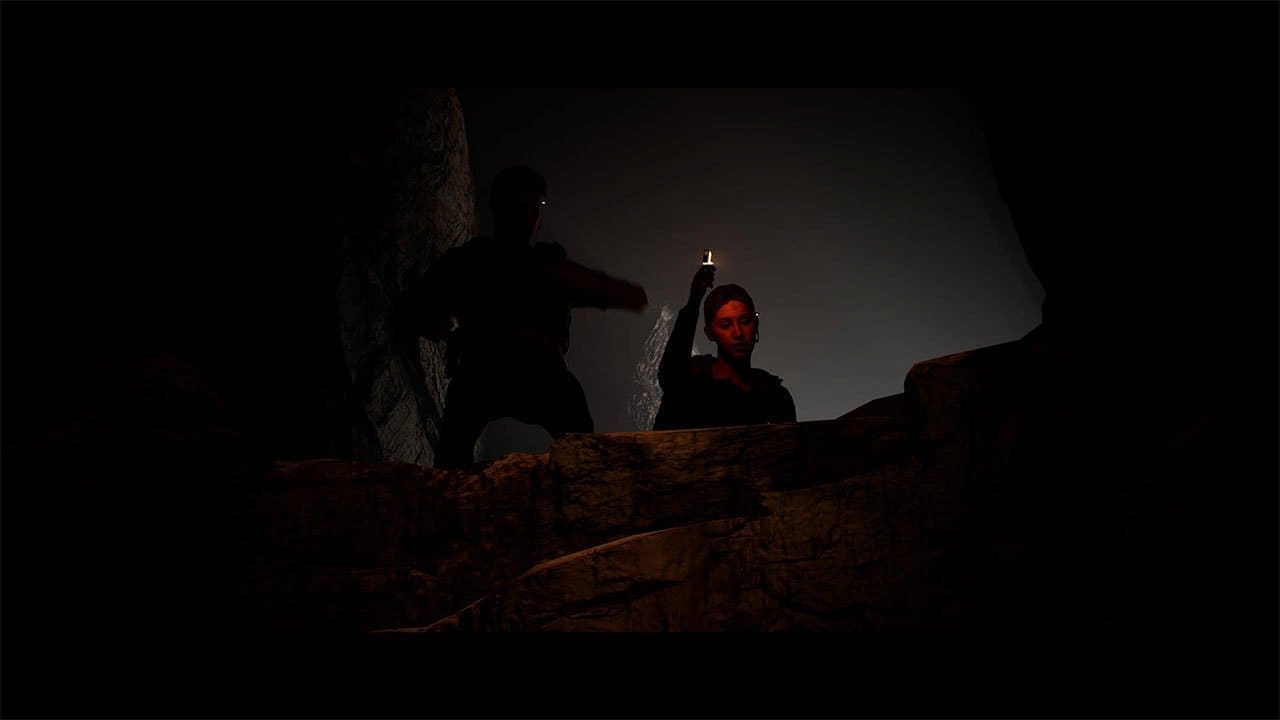
Exploring the ancient temple is exciting, especially if you have an interest in ancient history. Akkadian Empire art is found within the dark and dingy halls, although not always in one piece. You’ll also be able to uncover a dual narrative from a 1940’s explorer group whose own research not only helps fill in the blanks but also grows the historical expedition feeling that started as a war story.
No matter which character you’re in control of, your biggest enemy is always the monsters you’ve awakened within the temple. I don’t want to say too much, as I found how much was revealed in pre-release material gave too much away. As someone who likes horror movies, it’s much more exciting to go in not knowing too much about the creatures. However, their design is unique, and I thought of Neil Marshalls’ The Descent while playing. These creatures have an exciting twist to differentiate them from that film’s underground terrorising monsters.
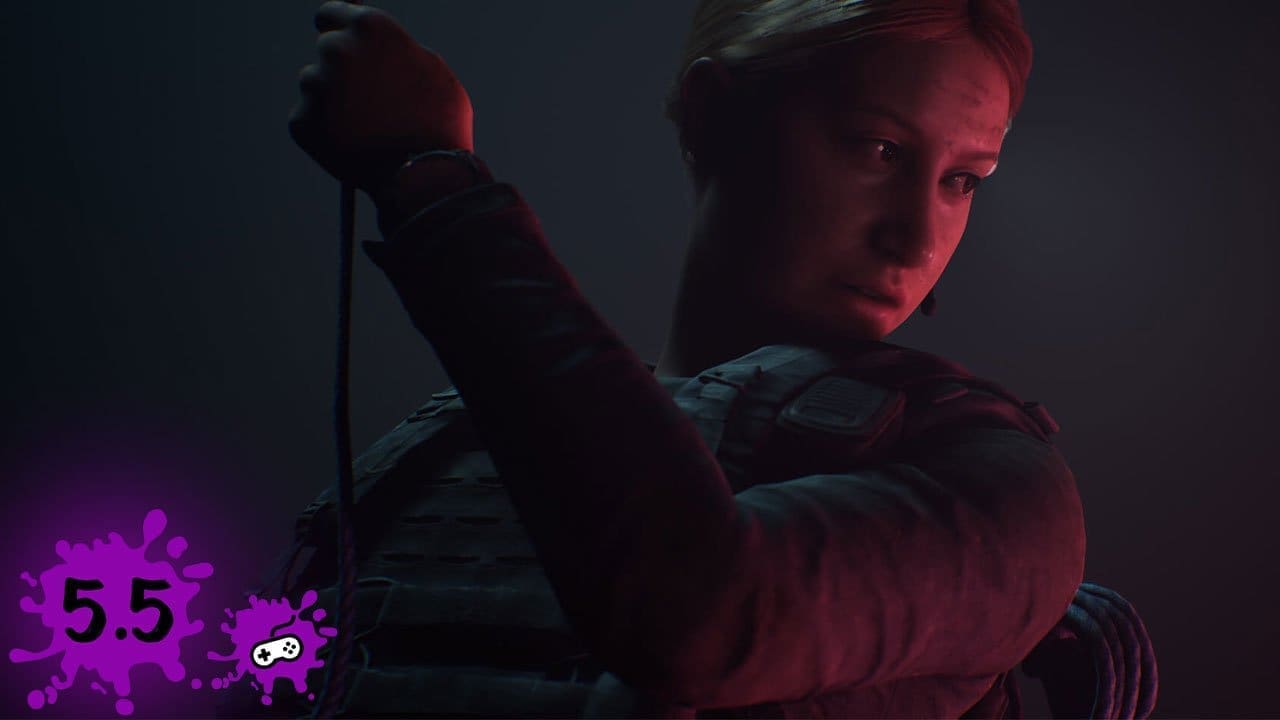
The cast of playable characters in House of Ashes is the CIA Operative Rachel King (Ashley Tisdale), her ex-husband and Lieutenant Colonel Eric King (Alex Gravenstein), lover Sergeant Nick Kay (Moe Jeudy-Lamour) as well as First Lieutenant Jason Kolcheck, (Paul Zinno), and Lieutenant Salim Othman (Nick Tarabay).
The love triangle between Rachel, her ex-husband and her new lover was one of the most tedious and weird subplots to include in a game set during the Iraq War while having a cast of characters crash land upon ancient history. None of it worked for me, and although I did like that Nick was a less-macho military stereotype, a lot of his character is wasted in this love story. Eric is an asshole, and I’m not sure if trying to play him not-as one works — he still comes off either arrogant or weirdly begging for Rachel to take him back.

Salim quickly became my favourite character in the cast. He’s introduced as a man who wanted to spend time with his son, only to be called into a battle by invading American forces. “The war is over; we lost,” he proclaims before his General eyes him down and calls him into action once again. When he falls into the temple, he’s the first to realise the weaknesses of the creatures and the first to extend an olive branch to the American soldiers. It only took me about an hour before I decided I didn’t care who died in my playthrough, as long as I got Salim back to his kid by the time credits rolled.
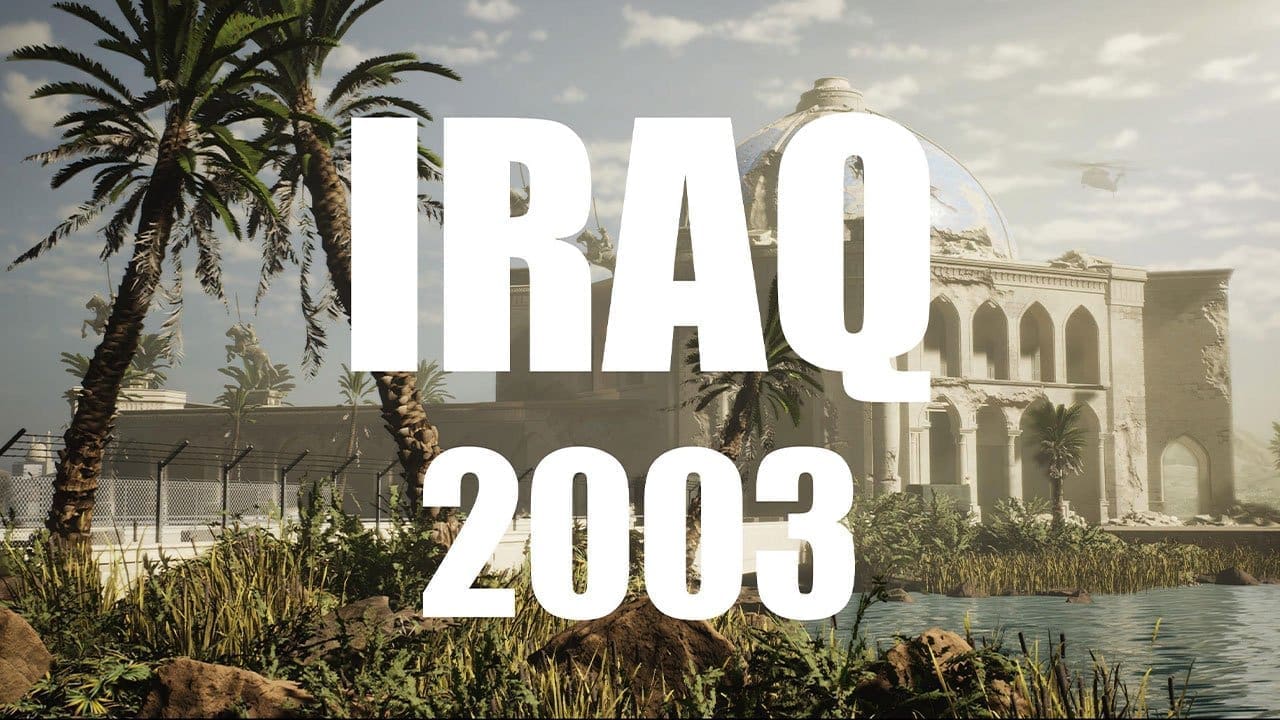
The 2003 Iraq setting is never used in either a pro-war message or an anti-war one — at least as far as I’ve seen in a playthrough and a half. Instead, the game teeters on a rudimentary ‘we should all get along’ tone, which given everything that happened in 2003, and the “hoorah!” celebrating cast of characters, is a very safe direction to take the game. So I can’t help but wonder why the game is set during the war. House of Ashes most exciting elements, the monsters, the ancient civilisations, the explorers before, could have all fit into a game in which a group of Iraqi characters could have fallen upon any other year.
Unfortunately, as enjoyable as the ancient temple setting is, I grew tired of exploring the dark halls as there are many repetitive areas. Of course, there are some standouts, especially in the end-game, where things get otherworldly and the remaining characters venture deep into the heart of the creatures home in which the game feels closer to Alien or an H.P Lovecraft novel. There is a prolonged period in the middle of the game where it felt like I played as every character in the same handful of same corridors several times over and over again, which killed the pacing.

A handful of changes to the core experience of The Dark Pictures Anthology don’t change a very dry and formulaic structure. The camera is now controllable, and each character has access to a light which you can raise and lower with a button and aim around rooms. There’s no moment in the game in which I shined a light source upon a sneaky jump scare, though, and the concept ended up feeling very faux-control. I felt like I had more control and input than previous entries, but it was more of the same. However, one notable addition is the three difficulties that affect how quickly and tough the quick-time events in the game are for the player, which should make it more accessible, and less frustrating for those that struggle with QTE’s.
House of Ashes does have some substantial visual upgrades running on PS5 over the previous entries. The underground setting allows for some rather spectacular lighting, and I was pretty impressed at the use of ray-tracing in segments of the game. The character models still have a mix of either an over-dramatic cartoon face or impressively human-like. The former has been the case with the mo-cap of every game in the anthology so far.
Unlike the previous two games in The Dark Pictures Anthology, I was pleased with how things played out with the core narrative, but this game had my least favourite cast of characters in all three of the games. It’s also the longest entry in the series so far, so I, unfortunately, ended up spending more time with these characters than the cast of the previous two. There was a chance for House of Ashes to be the best entry in The Dark Pictures Anthology, but it all started and fell apart with these characters, and as much as I liked Salim, not even he could save the cast. As usual, the amount of playtime and fun you’ll get out of this game will vary depending on if you have friends to play with either or in couch co-op, which is again my suggested way to play House of Ashes as it’ll help cover the weak spots.

(The Dark Pictures Anthology: House of Ashes code provided for review)