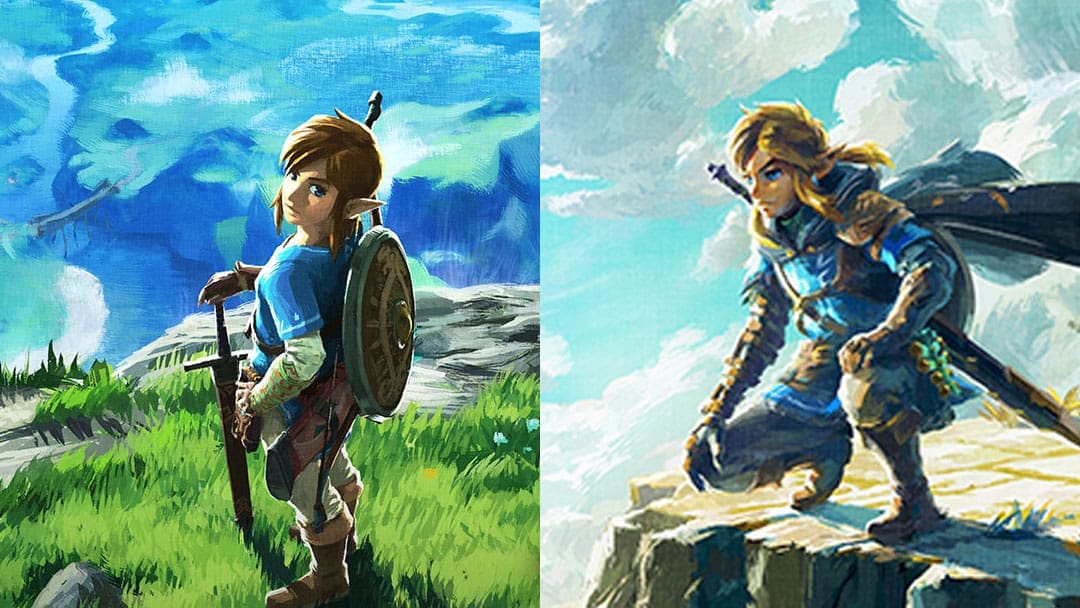
This is a review of the Nintendo Switch 2 versions of The Legend of Zelda: Breath of the Wild and The Legend of Zelda: Tears of the Kingdom. I’m not going in-depth into the core games in this review, just focusing on what’s new for the new console.
The Legend of Zelda: Breath of the Wild
The Legend of Zelda: Tears of the Kingdom
I’m not in the group of people who believe that every game neccesarily needs to run at 60fps and 4K to be worth anything in 2025, and I most certianlly didn’t fall into the camp that felt all games needed to be running at 60+fps in 2017 when The Legend of Zelda: Breath of the Wild was released. However, in the years that passed, and especially by the time The Legend of Zelda: Tears of the Kingdom was released, I had become so attuned to playing games at a higher frame rate that it was more noticeable when certain games, mainly action games, ran at a lower frame rate. Tears of the Kingdom was one of those games, and it was very obvious that it was pushing well above what the Nintendo Switch was capable of in terms of power. Now that the Nintendo Switch 2 is out and both Zelda games are getting updates to bring them into 4K and 60fps, they don’t feel like entirely new games, but at least in the case of Tears of the Kingdom, it feels significantly more enjoyable and playable.
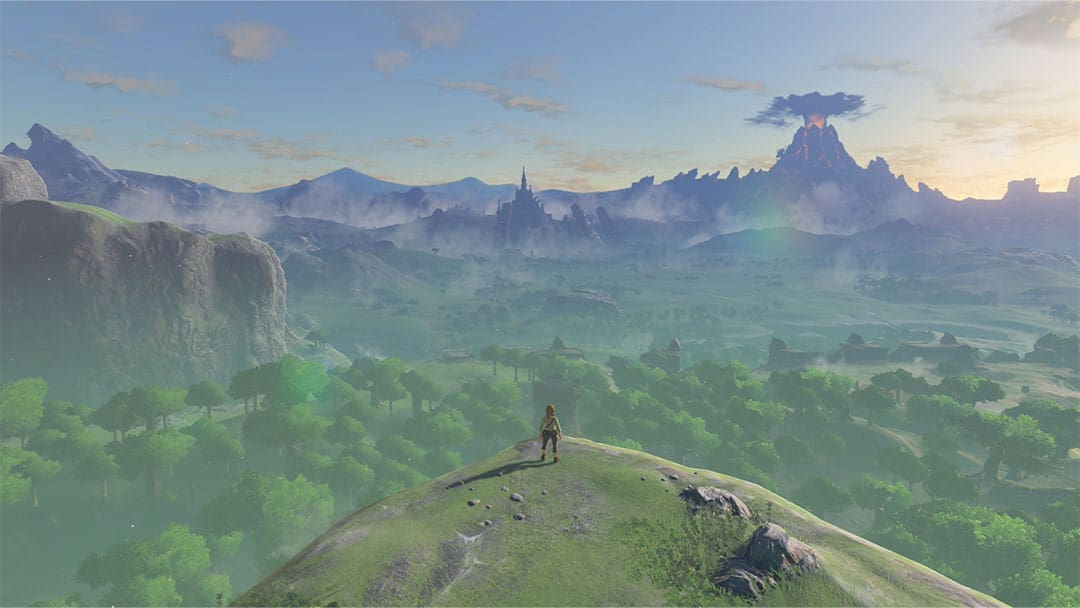
Both Breath of the Wild and Tears of the Kingdom now run at 60fps, and as far as I could tell in what I’ve played, they don’t drop anything more than maybe a frame or two at times, and that’s in Tears of the Kingdom. Both games, again, now display a 4K resolution when docked and 1080p when in handheld mode. It’s not an overall game changer, as it’s still the same game and art direction, but there’s a noticeable difference in the quality of smoke drifting across footpaths, the grass in the fields, and the sharpness and clarity of characters’ faces. The biggest upgrade is the introduction of HDR in both games, which, in specific locations like sunsets or the dark caves of Tears of the Kingdom, can be a visual game-changer. Stopping to stare out at a vista is now well worth taking a break to enjoy and sit with Link to ponder your journey so far in either game.
In addition to the initial load into the game, load times have also seen a significant improvement with the power of the Nintendo Switch 2. You still see a load screen if you die or fast travel, but it’s only a couple of seconds at most. Without getting the original versions of the games out for a numerical comparison, I know it’s a vast improvement.
Both games also feature a new integration with the Nintendo Switch app on your mobile phone. In both games, you can now uncover voice memos left behind by certain characters, and access a map to help you find locations, thus making either the game easier on your first playthrough if you’d like help, or by making replaying it more of a breeze.


There’s also a bunch of stat tracking, which is fun for stat-nerds like me, but the biggest addition that feels like a big whiff-and-sneeze of a feature is the ability to share and download other people’s builds in Tears of the Kingdom. A cool idea, but there’s no way to find other people’s creations in the game itself or the app. You have to look at social media or forums to see what cool things you can have managed to make in the game.
Out of these two games, it’s Tears of the Kingdom that has received the most significant upgrades, as it pushed the Nintendo Switch harder than Breath of the Wild. However, both of the games come away looking and playing better than ever before.
(Review code provided to Explosion Network.
Read about our review and ethics policy here.)