
Explosion Network may receive a commission when you purchase something via a link on our site
For a while there, Star Wars games felt like they were being squeezed into one very expensive box.
Not always a bad box, to be clear. Star Wars Jedi: Fallen Order and Star Wars Jedi: Survivor helped prove that single-player Star Wars adventures still had a serious place in modern gaming. Respawn gave players lightsabers, traversal, emotional stakes, big creatures, bigger set-pieces, and enough wall-running to make every Jedi temple look like it was secretly designed by a parkour instructor.
But Star Wars gaming used to be much stranger than that.
It used to be flight sims, shooters, racers, RPGs, strategy games, arcade cabinets, squad tactics, handheld oddities, and movie tie-ins that absolutely had no business working as well as they did. Star Wars games were not one thing. They were a whole messy cantina booth full of ideas, some brilliant, some broken, and some clearly built by someone who said, “What if we made an entire video game out of that one scene?”
Honestly? That is when Star Wars games are at their best.
And looking at the next wave, it finally feels like Lucasfilm Games is remembering that.

Star Wars does not need one master genre
The mistake is thinking Star Wars games need to chase the “ultimate Star Wars experience.”
That phrase sounds good in a marketing meeting, but it usually means trying to cram every fantasy into one game. Jedi combat. Space battles. Bounty hunting. Dialogue choices. Open worlds. Big cinematic moments. Droid banter. Maybe a card game. Maybe crafting. Maybe a sad mentor who says something meaningful before being stabbed.
But the best Star Wars games usually do the opposite.
They pick one fantasy and go all in.
KOTOR was not trying to be every Star Wars thing at once. It was about identity, moral choice, party members, and whether you could resist the dark side long enough to stop dressing like a Sith fashion influencer.

Republic Commando did not ask players to save the galaxy with a lightsaber. It made Star Wars feel tactical, dirty, military, and claustrophobic. You were not the chosen one. You were the squad leader trying to keep your brothers alive in the mud.
Empire at War zoomed the camera out, turning the galaxy into a strategy map. Suddenly, Star Wars was not just about heroes making desperate choices in corridors. It was fleets, planets, production, and watching your carefully built plan collapse because the enemy turned up where you really hoped they would not.
And then there is Star Wars Episode I: Racer, a game that looked at the podracing sequence from The Phantom Menace and somehow turned it into one of the most beloved Star Wars games ever made. Explosion Network has already covered Star Wars Episode 1: Racer, and it remains the perfect example of Star Wars gaming at its most wonderfully specific. It did not need Darth Maul. It did not need a grand Force prophecy. It needed speed, danger, weird aliens, and engines that sounded like they were one bad turn away from exploding.
That is enough.
The EA era narrowed the lane
This is not to say the EA-exclusive era gave us nothing. It absolutely did.
Battlefront II eventually became a much better game than its launch reputation suggested. Fallen Order was a welcome reminder that people still wanted proper single-player Star Wars. Jedi: Survivor built on that foundation in smart ways, and Explosion Network’s review of Jedi: Survivor rightly focused on how much stronger Cal Kestis’ journey became the second time around.
Still, the overall output felt narrower than Star Wars gaming used to feel.
For years, it seemed like the franchise was trapped between big cinematic action, multiplayer controversy, cancelled projects, and the constant question of what Star Wars games were allowed to be. The old LucasArts days were chaotic, sure, but that chaos created variety. The modern era often felt cleaner, more controlled, and less willing to throw something strange at the wall just to see if it made a cool noise.

That is why the new slate feels interesting.
Not because every announced project is guaranteed to be brilliant. They will not be. That is not how video games work, unless we have entered a fantasy universe even less believable than the one with space wizards.
It is interesting because the lane is widening again.
Galactic Racer understands the assignment
Star Wars: Galactic Racer is probably the clearest sign that someone at Lucasfilm Games has looked at the franchise’s gaming history and realised the obvious: people still want Star Wars to be fun in weirdly focused ways.
The official pitch is not “become the most important Jedi in galactic history.” It is racing. Dangerous racing. Post-Empire racing. Underground speed culture in a galaxy trying to rebuild after the Empire’s fall. That is a strong hook because it immediately gives the game a specific fantasy.
It also has the benefit of tapping into a part of Star Wars gaming that has been sitting there for decades, patiently revving its engines. Podracing and speeder culture are not side details in Star Wars. They are part of its texture. Speeders, bikes, racers, smugglers, gamblers, illegal events — this stuff fits the galaxy perfectly.
Explosion Network picked up on the game during its PlayStation State of Play recap, noting that Galactic Racer looks like it may be more than just another racing entry, with hints of a story mode. That is exactly where this gets exciting.
A Star Wars racing game does not need to apologise for being a racing game. It needs to be the best Star Wars racing game it can be.
For anyone who wants to dig further into how odd and varied this franchise has been over the years, Star Wars: Gamers has put together a complete list of every Star Wars game ever made, and the pattern is obvious pretty quickly: the franchise is healthiest when it is not trying to make every game serve the same fantasy.
Zero Company is the kind of left turn Star Wars needs
Then there is Star Wars Zero Company, a single-player turn-based tactics game set during the twilight of the Clone Wars.
That sentence alone is enough to make the project stand out.
Star Wars has always been a war story, but games rarely slow it down enough to make command feel meaningful. A turn-based tactics structure changes the temperature. It makes positioning, squad composition, risk, sacrifice, and planning the centre of the experience.
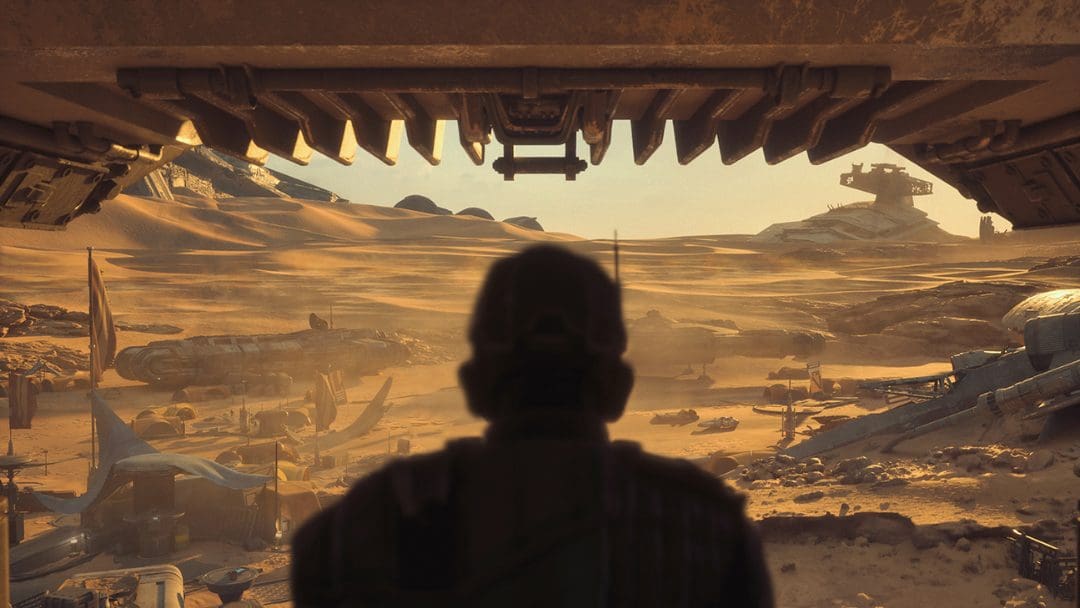
That matters because the Clone Wars setting is often treated as spectacle: Jedi generals, clone armies, huge battles, lightsabers flashing through smoke. But a tactics game can make that same era feel smaller, sharper, and more uncomfortable. It can make players think about who is being sent into danger, who gets left behind, and what victory actually costs.
That is a very different Star Wars fantasy from Cal Kestis leaping across a broken platform while an Imperial base collapses for the sixth time this week.
Good. Let it be different.
Fate of the Old Republic has the biggest shadow
Of the announced projects, Star Wars: Fate of the Old Republic probably carries the heaviest expectations.
That is partly because anything with “Old Republic” in the title immediately summons the ghost of Knights of the Old Republic, one of the most important Star Wars games ever made. You can almost hear fans sharpening their opinions from three sectors away.
But this is also where Star Wars gaming can benefit from committing to a clear identity again. If Fate of the Old Republic wants to work, it cannot just be “remember KOTOR?” for 40 hours. Nostalgia may get players through the door, but it will not carry a modern RPG on its back.
The Old Republic era works because it has space. It is familiar enough to feel like Star Wars, but distant enough from the films to allow real choice, new factions, new philosophies, and characters who are not constantly bumping into the Skywalker family tree.
That is why the older RPGs still matter. They understood that Star Wars is not only about canon events. It is about choosing what kind of person you are in a galaxy that keeps offering you terrible options with dramatic music underneath.
The old weirdness was the point
The further you go back through Star Wars gaming history, the clearer it becomes: the variety was never a side effect. It was the strength.
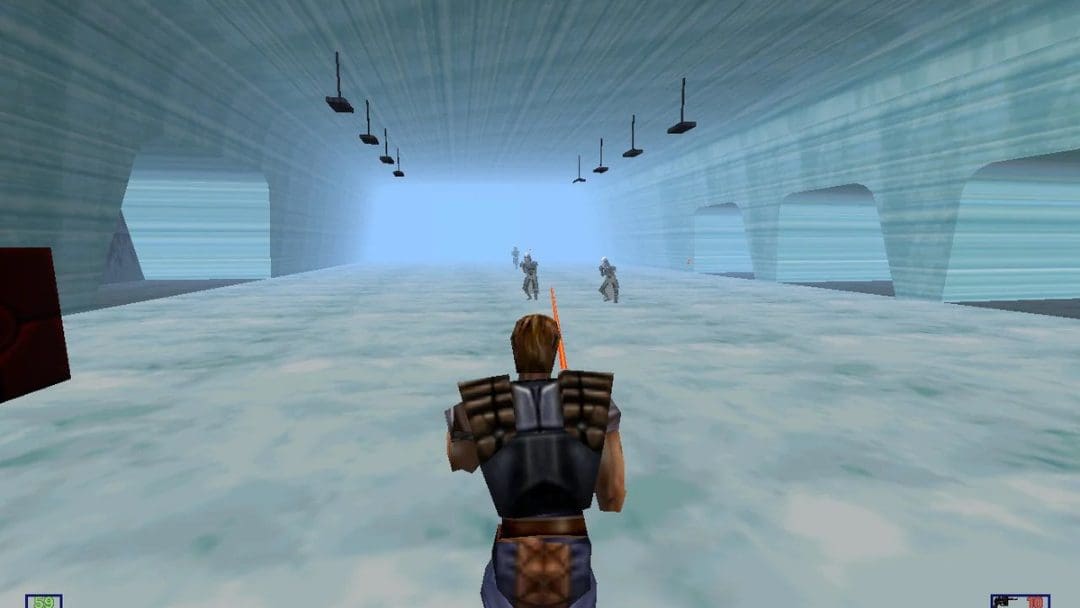
The 1990s alone gave players X-Wing, TIE Fighter, Dark Forces, Shadows of the Empire, Rogue Squadron, Jedi Knight, and Episode I: Racer. That is a ridiculous run of genre-hopping. Space combat. First-person shooting. Console action. Arcade flight. Lightsaber duels. Podracing.
It is the kind of spread modern franchise managers often seem terrified of, because it does not fit neatly into one brand sentence.
But players remember those games because each one had a strong reason to exist.
The Star Wars games of the 1990s are a useful reminder that the franchise did not become powerful in gaming by being tidy. It became powerful because developers found specific fantasies inside the larger universe and built games around them.
That is the lesson the next era should take.
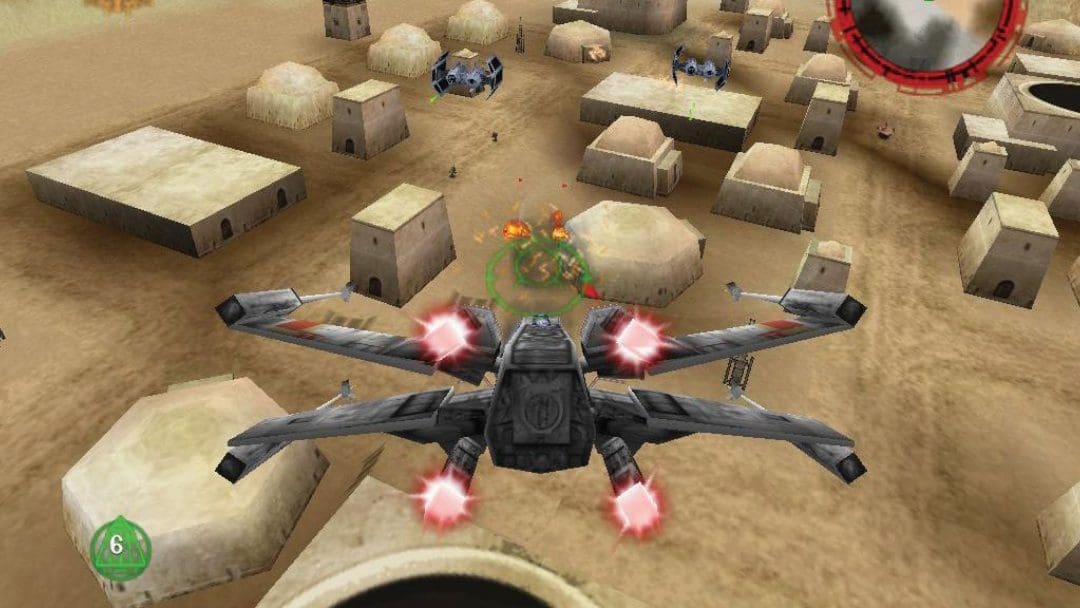
Let Star Wars games be messy again
Not every new Star Wars game needs to be enormous. Not every project needs to be a prestige action-adventure. Not every story needs to feel like it is auditioning for a Disney+ spin-off.
Some should be racers.
Some should be tactics games.
Some should be RPGs with too many dialogue options.
Some should probably be smaller experiments that make no sense until you play them and realise, annoyingly, that they are brilliant.
That is how Star Wars gaming stays alive. Not by finding one perfect formula, but by letting different studios chase different corners of the galaxy.
The next wave of Star Wars games is getting weird again.
Good.
It should get weirder.

![The Explosion Network’s Definitive Ranking of Studio Ghibli’s Films [Updated]](https://explosionnetwork.com/wp-content/uploads/2021/02/ahlcrg4vev8xcdw6zdrb.jpg)