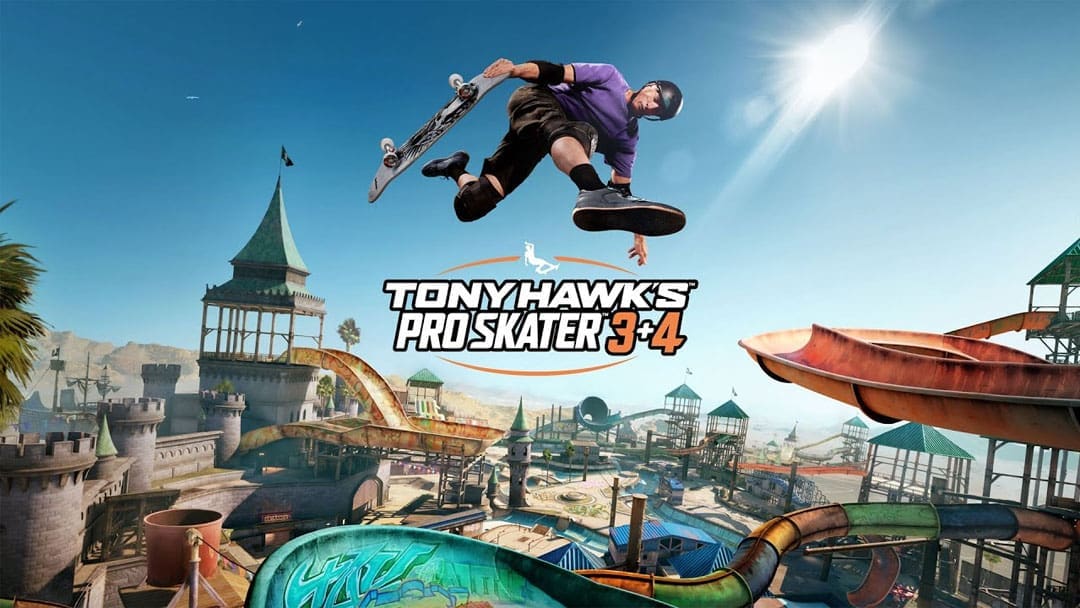
Tony Hawk’s Pro Skater 3 + 4 is out, and I was excited to get my hands on it. After enjoying 1 + 2 a few years ago, I was keen to get back in and start skating. As an avid fan of the originals, it felt like returning home when installing THPS 3+4 onto the PS5 and taking time to sit down and play.
Jumping straight in and playing the tutorial, I was reminded of the simple yet complicated way to get the most out of a skate session. Doing some basic tricks and being reminded how to set up combos to hit those high scores. Using manuals to roll to the next jump and flip into a grind, adding a grab to then drop into a ramp only to stack it and lose all those points, it was fun and devastating at the same time. It did, however, pull me back in to try harder in the next session. When I wasn’t aiming for scores, I was trying to complete the level goals, searching the map for the hidden items, the letters S-K-A-T-E, all while competing against the clock. It was tough, yet I kept coming back repeatedly.

Progress was fast, I soon had most of three’s maps unlocked, and was progressing on four’s, even if I didn’t find the maps in these games as good as the first two, I kept playing through, doing all I could in the limited time frame. After a while, I decided to change up the skater I was playing. Looking through the list of new and old skaters and even some special additions, I decided it was time to build my skater.
The Skater creator menu is easy to navigate, and I was given a bunch of points to put into the stats of my creation. With a multitude of options to choose from, I worked through the list, selecting which type of skater I was. There were three choices, of these choices I chose street skater. This choice set up my skaters’ stats, and from there, I used the additional points to set my skaters’ focus, air, speed, and balance. There is a wide range of clothing and gear options to make the skater your own. Playing through the career mode, I unlocked additional points to add to my player’s stats.

Aside from the stats, I was also able to dress my skater, choosing from outfits or individual items. This allowed me to dress my skater from head to toes and modify my skateboard from grip tape to wheels. Finding the skateboard and clothing that I think best represent my taste if I were a late 90s or early 2000s skater. Now that my skater was complete, it was time to test him in the skate world. I took my time to move through each level again, aiming to improve my skills and scores. I was feeling more at home with my skaters’ stats and more fluid in my gameplay.
As I progressed through the levels, my feelings about their designs shifted; while some levels are enjoyable and fun, others are equally disappointing. Some levels are designed well, allowing for a flow that helps develop massive scores; the Airport Terminal is a good example of this. While others, such as Alcatraz, made it challenging to string everything together as one navigated the prison’s multiple elevations. This affected my ability to maintain my score and unlock all the goals for these maps.
I often felt that the timer was too short during the bad stages, leaving me frustrated as I tried to find and complete all the goals. It was around then that I began to explore the menus, noticing one of the options was a mod menu. This menu opened a significant change in the game, and I used a few mods to check how they felt. The main one I utilised was to extend the timer; this option can be changed up to sixty minutes, but even going from two to five felt like a big difference, especially on Alcatraz and a few other maps, where I was feeling lost and unable to complete the task in the previously allotted time.
There are also gameplay options outside of the career mode, which include multiplayer with up to seven online friends who can play together in a series of modes or locally if you have some buds on the couch. The other is to create a park mode, as the mode suggests, you can create a park of your own. Create a park also now has some new features to set a park with goals and collectables, like the developer built ones and then share it so others can enjoy. Swapping back to the career menu, there are a couple of gameplay alternate options, including free skate, single sessions, speed runs, tutorials, and movies, as well as three and four tours. The tour maps have the tasks or goals, and are fun to explore. There are also competitions scattered throughout the tours, where high scores are the sole focus.

Music was a massive part of the original series, and some of my favourite songs come from these early games. Unfortunately, not all the songs have returned. It is a shame, but I found there are enough songs that have returned that I am still enjoying this aspect of it. Music makes the game; the opening video has Ace of Spades blasting, and it immediately brought me back to enjoying these games with friends and family, and just vibing to the sick tunes. In saying this, enough of the new songs are close enough and still feel like they fit the scene. They have also nailed the game sounds from the security yelling at you or the general nature of a level, even the board, truck and grinding sounds are all right on point. These little things go a long way in the appreciation of the game.
External to the level-based goals are game-based challenges to complete. These can be found on the challenge title, on the menu screen. These are broken up into THPS 3, 4, skater, tricks, and a couple to be unlocked. These challenges range from simple tricks to completing gaps, and even building my skate park. I was unlocking many of these just by playing the game, but I am sure completionists will appreciate the additional challenge these offer. Once these challenges are complete, it unlocks additional clothes, wheels, tape, and boards, all adding to the already massive list of gear I was able to select from.
(Review code provided to Explosion Network.
Read about our review and ethics policy here.)