

Blacksmithing is a profession all about the control of one’s tools, something replicated well in While the Iron’s Hot. It is also a very calm and controlled experience that does well to connect you with the smithing craft through its various minigames required before a piece is forged. The calm and controlled nature is largely a boon in this Blacksmith’s adventure, as While the Iron’s Hot is an overall tidy and enjoyable experience, but never one that burns so bright.
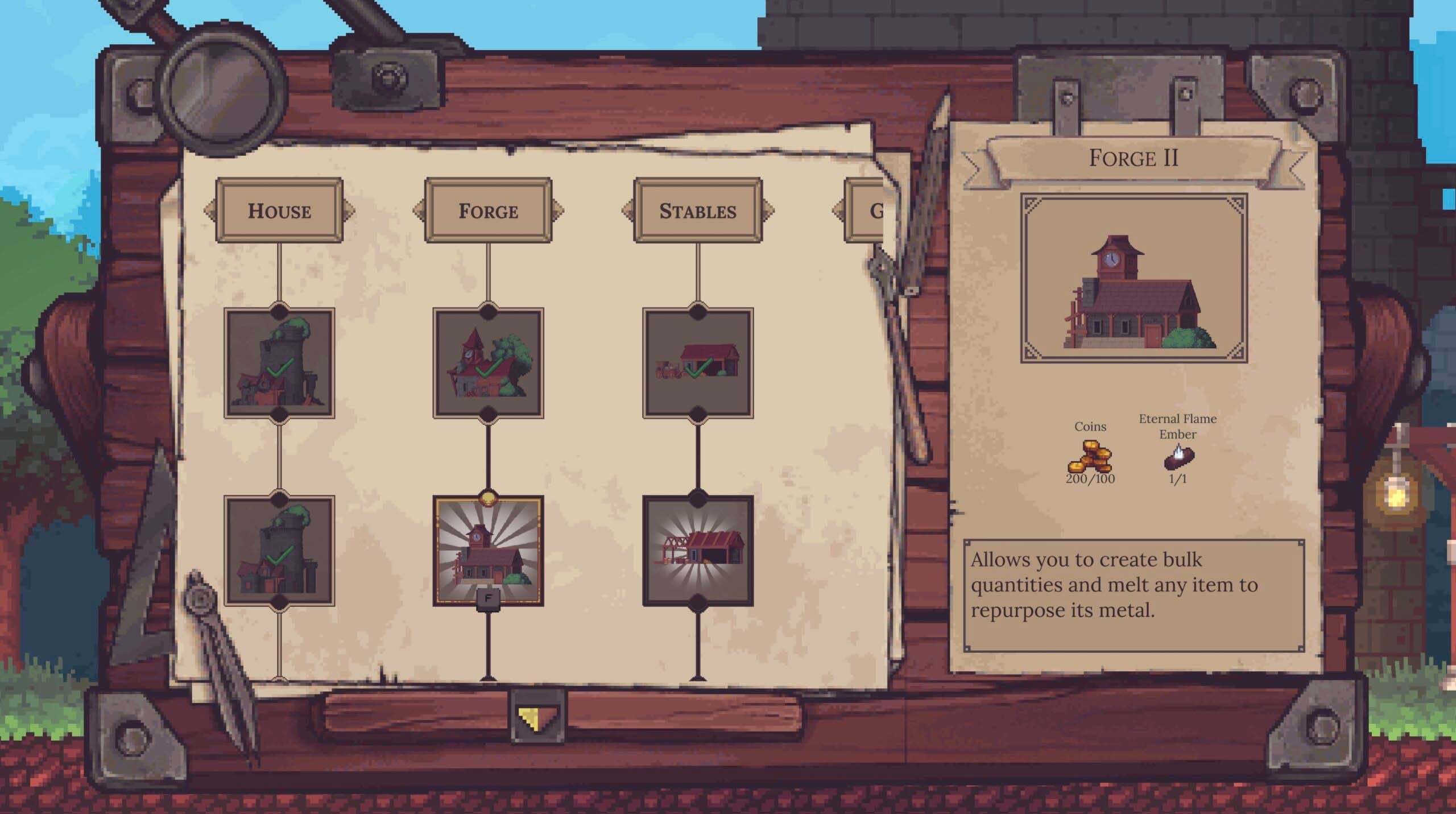
The adventure starts with the self-named character setting sail to the land of Eillan, a land famed for its artisans and wishing to take his smithing craft to the next level. Of course, these crafting adventures can never be so simple as to have you land at a dock and meet the local master. Instead, the ship is damaged, and you wake up ashore near Stal, the rundown town where the legendary smith of the land used to ply their trade. A one-armed former smith in the character of Drystan takes you under his remaining wing, and soon, you are journeying to get the old forge burning again and slowly rebuild the town, returning it to its former glory.

From there, it is time to start plying your trade, so you set out into the world to meet the denizens of the various villages, each headed by a craftsman of their own that sets you a more difficult task to be fulfilled. Completing tasks largely comes in two forms – quest-based tasks or orders. The latter are simple one-off orders for singular items, taken from the noticeboard in towns and largely done for their rewards, be it money or a rarer resource. Completing the quest-based tasks progresses you through the story. However, there are a number of one-off quests given to you by the eccentric residents of the island that serve as entertaining additions. They can include trying to impress a female Ox on behalf of your own bashful Ox or repairing some instruments found in the woods and them coming alive. These side quests did not offer much more than this, but they successfully added some levity and fun, while building out the world.
These side quests also only sometimes engaged the crafting systems; rather, some offered more exploration-based puzzles. These can happen in the top-down overworld, which throws up mazes to be navigated and the reward of more resources for exploring every nook and cranny. Zoomed-in sections of the world commonly required you to use a combination of crafting skills and navigation to get through mines or up towers to locate a chest of goods. The exploration puzzles offered a nice change of pace to the rest of the game, especially since these were often off the beaten path and a reward for clearing all of the fog on the overworld map.
Of course, to complete most of these quests and orders, you have to engage with the crux of the game – blacksmithing. Overall, it is a very engaging crafting system, breaking down the process of forging new items into four separate activities. There is smelting the ore, shaping it along the anvil, sharpening some of the pieces if required and then putting the different pieces you have made into a grid to assemble the final product. Each process step is guided by a minigame, which is simple and difficult to fail. Yet extending the smithing process and adding in the minigames does succeed in its intention of having you be actively involved in the smithing process and engaged throughout.
While the Iron’s Hot also ramps up your ability to produce really well and never particularly bogs you down too much in the grind for resources. Though, it also never particularly evolves the way that you engage the smithing process, which remains the same from the first hours to the last, albeit with slightly more difficult minigames and different resources. Repetition is inherent in this genre, and it still succeeds in having you feel part of the process, but it’s missing a link to having you really feel like you are becoming a master craftsman by never teaching the player a new skill on that journey.

![Jacob’s Ladder (1990) [Imprint Collection #207] Blu-Ray Review – Under-appreciated anti-war classic looks better than ever](https://b3313143.smushcdn.com/3313143/wp-content/uploads/2023/04/Jacobs-Ladder-Movie-Review-Thumbnail.jpg?lossy=2&strip=1&webp=1)