Synopsis: Aztech Forgotten Gods, the cyber-stone universe action-adventure game that follows Achtli, a young Aztec woman, in her quest to become a hero by wielding the power of the gods.
Publisher: Lienzo
Reviewed on: PC (Intel i5-9400F, @2.90GHZ, RTX 2060, 16GB RAM)
Also available for: PlayStation 4, PlayStation 5, Xbox One, Xbox Series X|S, Nintendo Switch
Cast: TBD
Developer: Lienzo
Lead Credits: TBD
Aztech Forgotten Gods reaches for lofty heights with its kinetic movement and action systems, interesting world and thematic story. However, it fails to land both hands on the prize with the way the story is delivered, with pacing and some unfun challenges bringing down the overall experience.
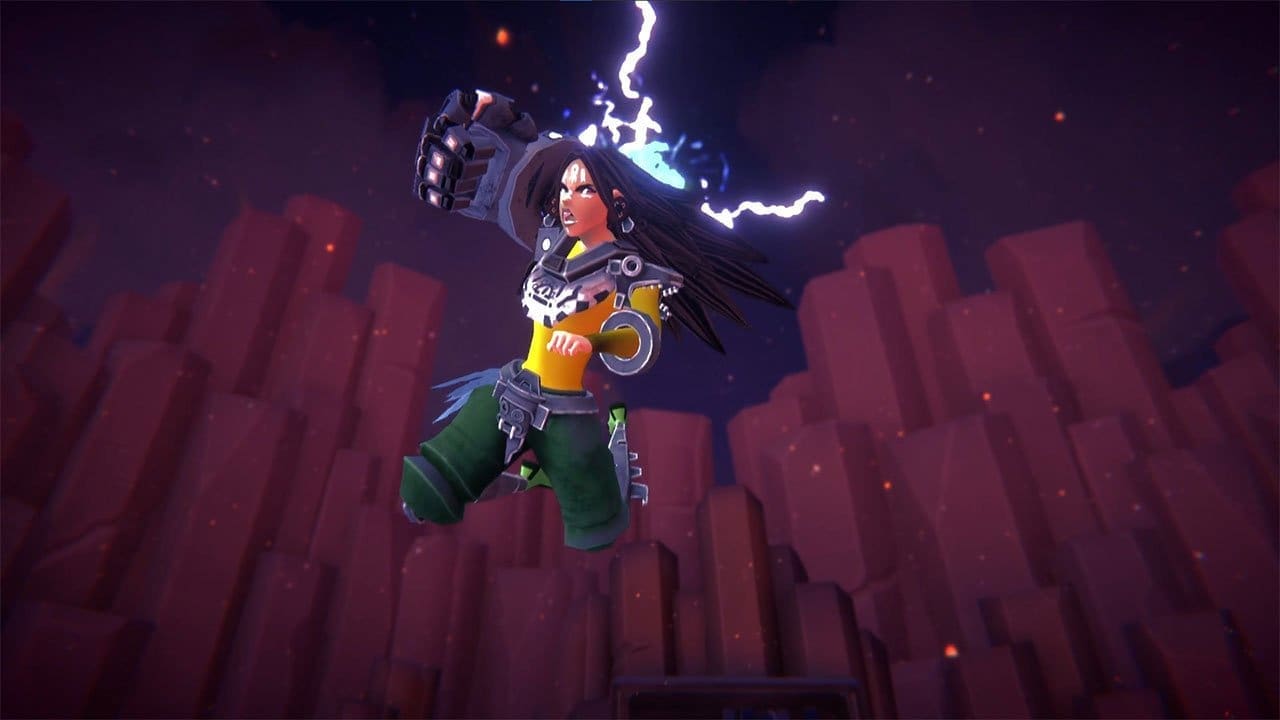
Aztech is at its best when you are given free roam with its high flying movement system. This is mainly fuelled via ‘Lightkeeper’, the gigantic ancient hand device that Achtli and his mother Nanstin discovered in ancient caverns underneath their city. Lightkeeper acts as a Jetpack to send you through the dizzying heights of the far-future Mesoamerican metropolis. It also lets you wall run, offers a boost in any direction and allows you to punch things with your big ol’ fist. The movement system is hard to grow tired of and the highlight of Aztech, as you quickly soar around the city in fast and fun ways.
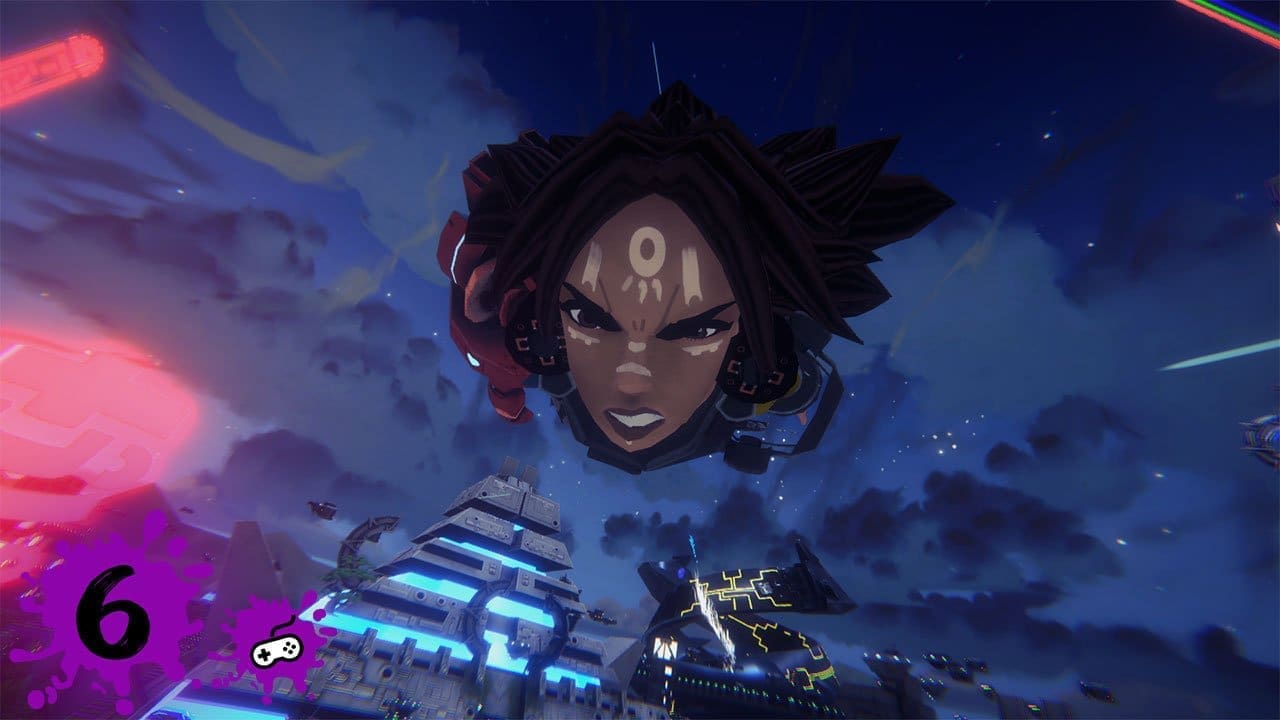
The movement also takes on different qualities during the boss fights, which are the combat highlight of the game. All the bosses are stories high beings based on Mesoamerican Gods that you must buzz around looking for their weak spots as they work to swat you like a bug. They all worked fairly well and had some good variations between the different fights, with some constraining your arena more than others, compared to the regular enemies of the game, which are all dealt with in largely the same way. Aztech does not gain an aimed attack until later in the game – which is your only ranged attack, and the melee attack is just button mashes when the enemies are highlighted, with an option for the heavy attack. While it does simplify things beyond some people’s tastes, considering the frantic movement, it would be impossible to deal with enemies with a more active attack.
GIF Supplied
Aztech is a semi-linear game, with one primary objective at any given time, but set in an open world that you traipse back and forth to complete the main quest. Though there are ‘side quests’ in the open world, these are more challenges that are started and resolved fairly quickly and never require a secondary location. The challenges come in two forms, Fighting or Racing. The fighting challenges were better, simply requiring you to defeat the enemies in the time given to you, relatively easy considering the auto-targeting of the combat system. However, the racing challenges were simply frustrating, for one, as they weren’t races, rather they were challenges to tail a flying creature throughout the metropolis. While in some ways a good challenge to test your grip on the mobility of Aztech, they also resulted in a lot of quick failures as it was not always obvious where the creature would be heading, and the small size of the accepted zone made for split-second mistakes resulting in failures. This made for a frustrating experience that didn’t have me finishing many ‘races’.
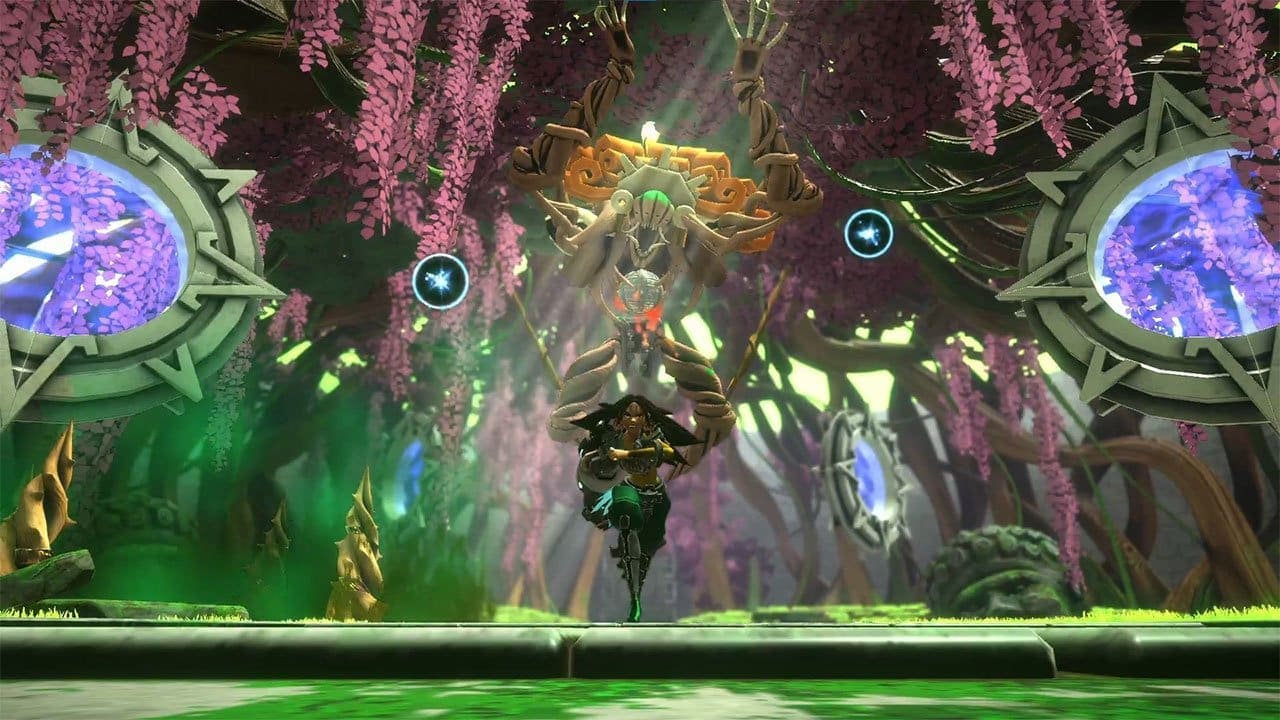
Thematically, the story of Aztech Forgotten Gods was quite surprising as it was deeper than most would expect from the game’s looks. The story delves into themes of accepting responsibility and sharing the burden, accepting and moving past grief and guilt. It was an emotional journey as Acthli worked to protect her city from the reborn, forgotten gods. However, the way the story is delivered leaves a bit to be desired. The deeper notes of the story are not served well by the grunts and gasps coming from the characters, and the story is delivered slowly, with cutscenes that can drag on. I often wanted the dialogue sequences to end as they take you away from the high-flying movement too much, with the first hour particularly dragging on. It’s all compounded by too many instances of a cutscene ending, only for the objective to be a couple of metres away and start another cutscene.
The world of Aztech Forgotten Gods is also equally interesting, with the way a futuristic Mesoamerican city has been designed in a way that is both futuristic and rooted in ancient tradition being well realised. The soundtrack is also killer, with the Rock music nicely scoring all your exhilarating movements.
There are a lot of interesting ideas at play in Aztech Forgotten Gods, even if they have not all coalesced in a way that knocks it out of the park. Still, there are joys to be had when flying around an interestingly designed world and colossal bosses in a way that their size can be fully realised. The positives are let down by the game keeping you away from its better parts for too long and some challenges that are either too easy or completely unfun to try and work through. Still, developer Lienzo has done enough right that I would be interested to see how they refine and move forward with their future releases.

(Aztech Forgotten Gods code provided for review)