Synopsis:
From PlayStation Studios and Bluepoint Games comes a remake of the PlayStation classic, Demon’s Souls. Entirely rebuilt from the ground up and masterfully enhanced, this remake introduces the horrors of a fog-laden, dark-fantasy land to a whole new generation of gamers. Those who’ve faced its trials and tribulations before can once again challenge the darkness in stunning visual quality with incredible performance.
Publisher: Sony Interactive Entertainment
Reviewed on: PS5
Also available for: N/A
Cast: Eve Karpf, Evetta Muradasilova, Ella Dale, Peter Marinker, Clare Corbett, Dino Kelly, Tom Chapman, Michael Carter, Sean Barrett, Anthony Howell, Jenny Funnell, Jonathan Keeble, Chris Reilly, Will Vanderpuye
Developer: Bluepoint Games (remake), FromSoftware (original release)
Creative Director (Bluepoint Games): Gavin Moore
Director (FromSoftware): Hidetaka Miyazaki
It’s been eleven years since FromSoftware released Demon’s Souls for the PS3—a game initially only released in Japan, before a wider launch followed thanks to heavy importing. Like a wildfire, tales of Demon’s Souls’ high difficulty spread across the podcasts I was listening to at the time. I never played it; the game scared me. That was until now. Bluepoint Games, whose previous works include 2018’s remake of Shadow of the Colossus, have taken on the mammoth job of remaking not only a game many consider a classic, but also the title that birthed an entire sub-genre.
At its core, this is the same rewarding and infuriating experience that captivated many and springboarded a genre to the forefront of mainstream appeal. The core mechanics that evolved into Dark Souls and Bloodborne remain. You create a character (with excellent customisation) and pick a starting class. How you build from there is up to you. As you play you’ll collect souls from defeated enemies; return to the Nexus—the hub world—and you can spend them on health, stamina, magic, endurance and more. Combat is brutal, and every enemy can kill you. If you die, you lose all your souls on the spot and return to the start of the level. Make it back to your bloodstain and you can reclaim them; fail, and they’re gone for good.
As someone whose primary Soulsborne history lies with Bloodborne, I was pleased to discover Demon’s Souls leans far heavier into H. P. Lovecraft and Cthulhu inspirations than I’d assumed. The opening cinematic perfectly sets a dark, mystical tone. The villain—‘The Old One’—is laid out as an all-powerful being clearly inspired by Lovecraftian nightmares. Once the game begins, how much you read into the story is up to you: ultimately your goal is to slay several demons and stop King Allant, who awakens the Old One from its slumber—bringing a demon army with it.
Your journey begins at the locked gates of Boletarian Palace. Skeletons and zombie-like dreglings attack from behind fortifications and castle debris. Roaring above, red and blue dragons guard the inner sanctums. Your goal lies within the walls. You must stop the King—but many before you have failed. You will too, but as with the games that followed, in Demon’s Souls dying is simply part of the journey.
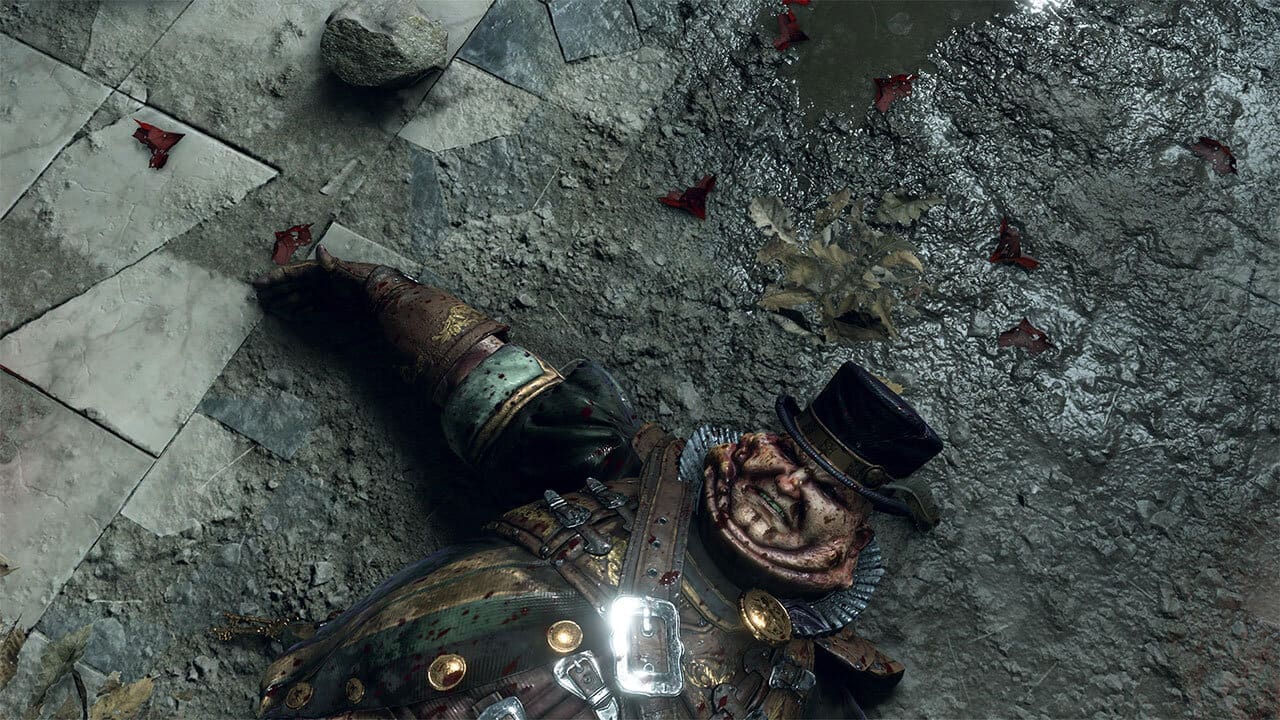
The first level tests your ability against simple enemies and asks you not to be afraid of death. As you reach a long bridge, a massive red dragon rains fire from above, seemingly making it impossible to cross. Players fresh to the franchise may wander tirelessly looking for a secret path, but you must time your sprint correctly and not be afraid of losing the souls you’ve collected if you meet the dragon’s breath. It’s a lesson you’ll take forward through the rest of the game: often it’s best to try something than be paralysed by the fear of losing souls. Levelling up is nice, buying health items is nice, but not being willing to try is the ultimate challenge you can present to yourself in Demon’s Souls.
After you defeat the first boss, several other areas open up. Back at the Nexus you can travel to four new regions via their Archstones. Stonefang Tunnel is a mining area where enemies wield pickaxes and lizards spit fire. Tower of Latria is a Cthulhu-ridden maze where you must collect keys and work through stacked prison levels for magic users. Shrine of Storms is home to death itself and manta-ray creatures whose projectiles hail down from above. Finally, the Valley of Defilement is a swamp where poison is often your worst enemy and plague-dealers and bog creatures block your path forward.
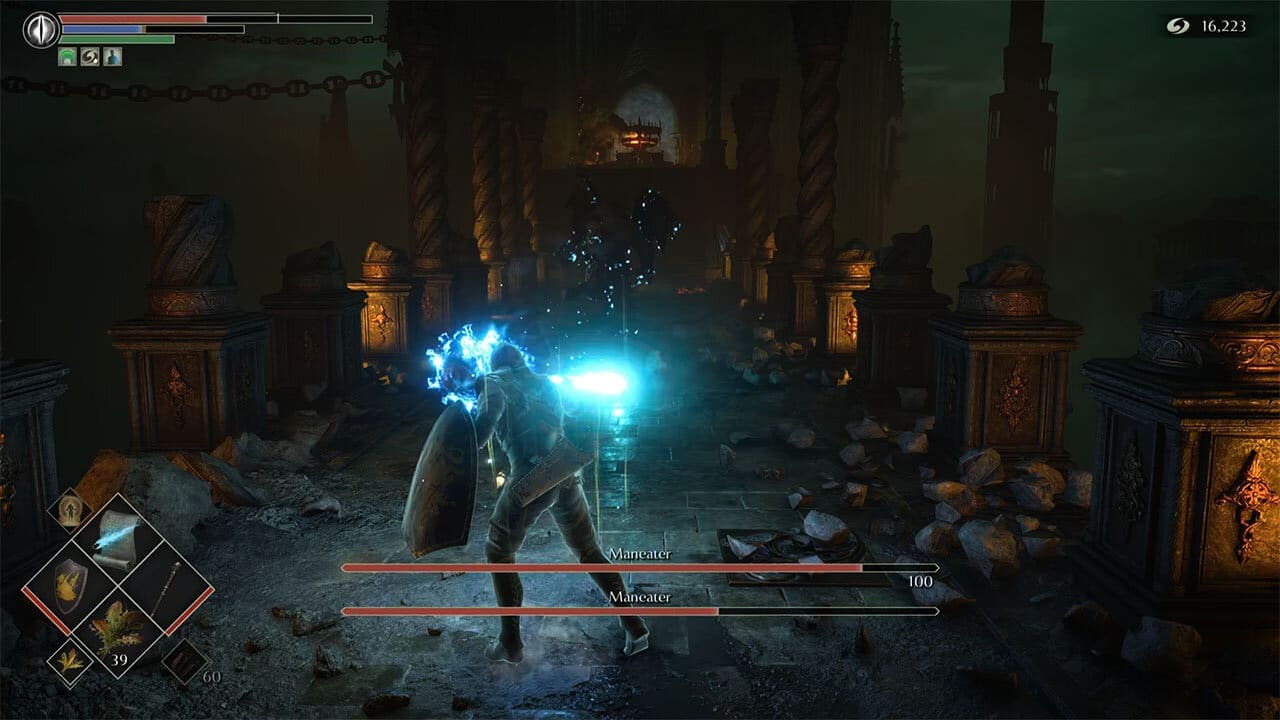
This freedom to explore any area you see fit took time to adjust to; the Souls games I’d played previously never had such options. Demon’s Souls itself doesn’t thoroughly explain that you have these options either. After I beat the first boss, I hurled myself at the next section of Boletarian Palace to no avail. Oddly, the game is designed so the last—and most challenging—region you’ll complete is the one you begin in: Boletarian Palace.
Unlike other Souls titles, there aren’t many shortcuts to unlock in the worlds. There’s only one Archstone at the start of each level; another appears when you defeat a boss. Other than Boletarian Palace, each region has three boss fights and three Archstones. In some ways, the level design here is more demanding than later entries. Sometimes the journey to a boss is more challenging than the fight itself. The second boss in Shrine of Storms, in particular, has a very tedious, dangerous path with no shortcut to unlock. The boss, however, is relatively easy as long as you exploit its weakness.

Even with minor gripes about tedious paths, the fact that Demon’s Souls’ level design still feels exciting—and not at all like a game that released over ten years ago—shows just how well it was done by FromSoftware in the first place.
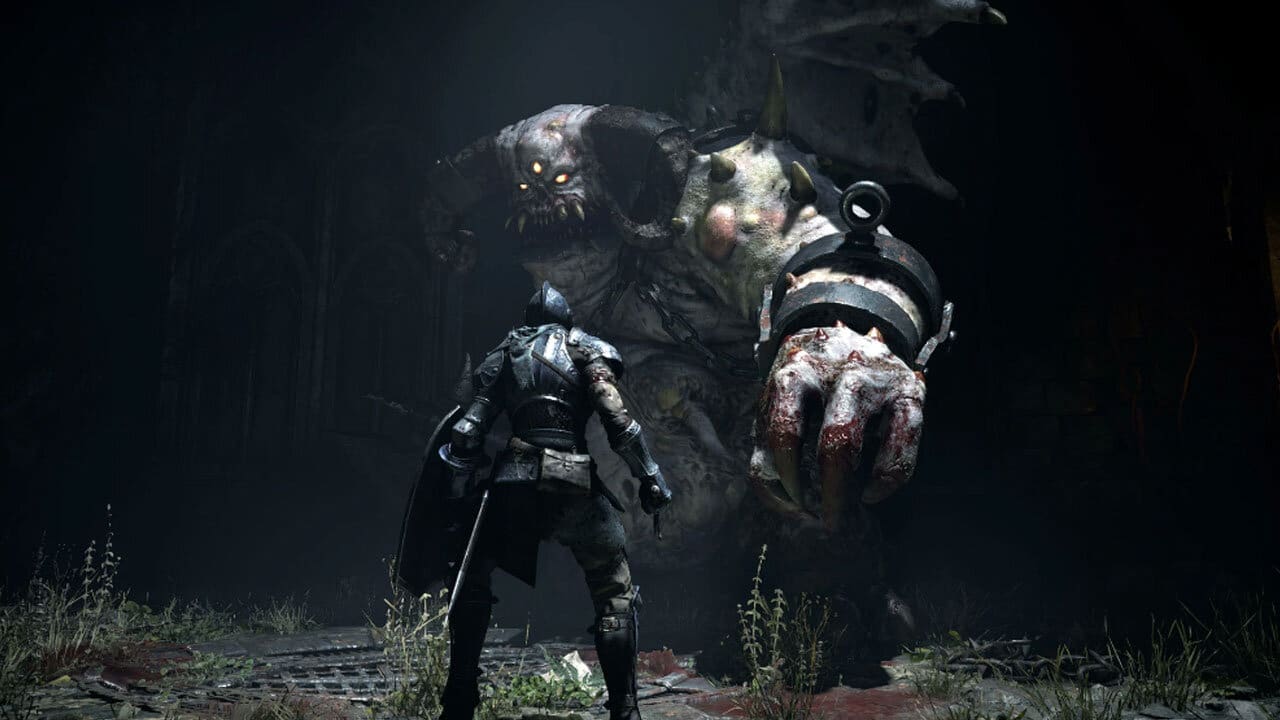
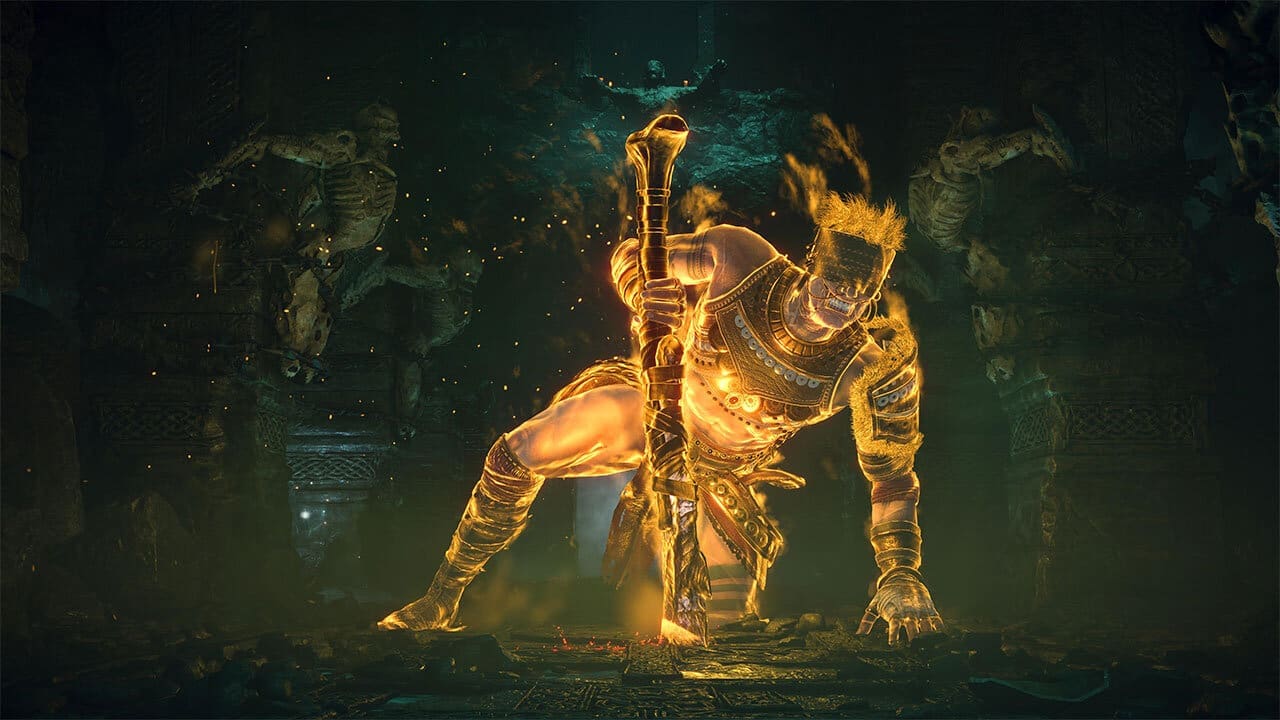
Of course, the Souls games are known for their boss fights. Often scary and always demanding, they’re the bread and butter of the franchise, leading to some of the most butt-clenching moments you can have in games. The fights in Demon’s Souls are oddly more puzzle-oriented than later entries. Although beasts like the Flamelurker test your patience and stamina management, other fights have more straightforward solutions. An Elder Dragon requires patience over raw power, and a Maiden simply gives up if you can defeat her noble Knight. My favourite duel came in the Tower of Latria—an almost fourth-wall-breaking finale that gave me quite a shock.
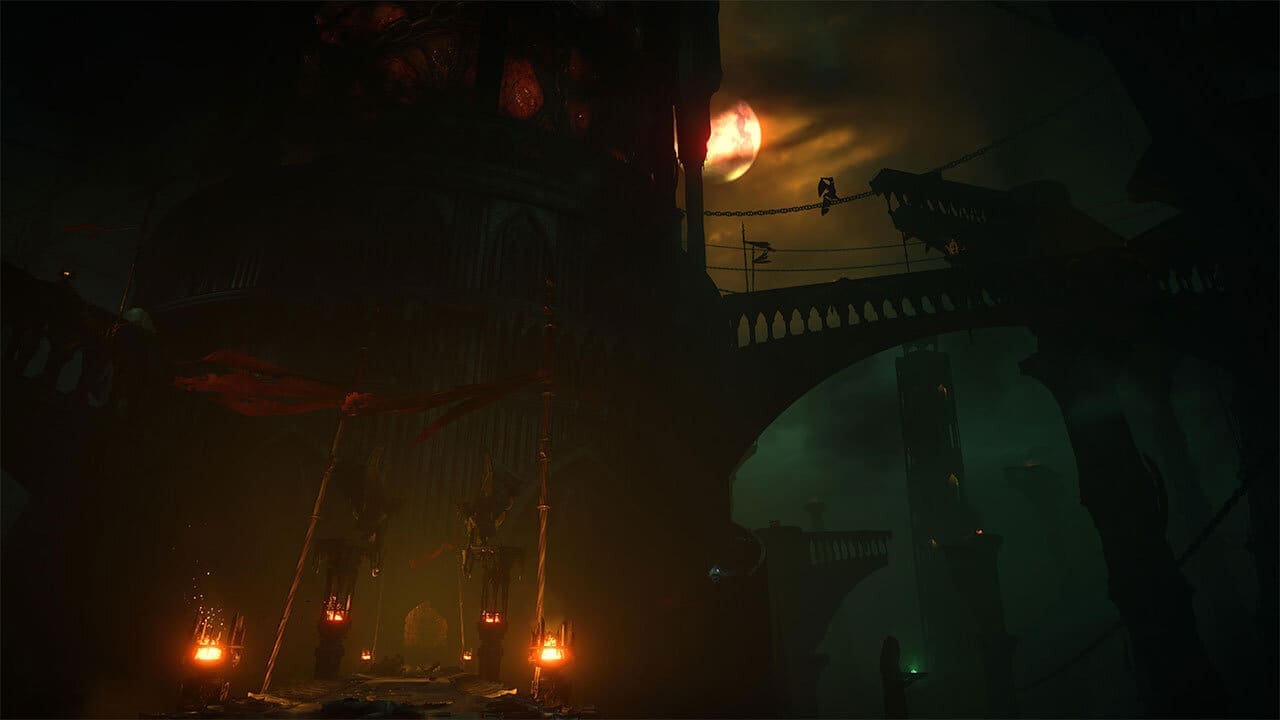
There are a handful of weak fights in Demon’s Souls. Several bosses see giant beasts with only two or three attack patterns, and this is where the game shows its age—especially if you’ve recently played Sekiro: Shadows Die Twice, Bloodborne or Dark Souls III, where FromSoftware have mastered enemy patterns. Those later games also often feature fights where a boss changes form one or two times as you whittle their health away. Demon’s Souls doesn’t have much of that. Even the last fight, which is quite challenging, doesn’t see dramatic changes in form or attacks as it continues.
The most glaring and archaic system is World Tendency. Behind the scenes, the game dictates whether each world leans towards light or darkness. Darker worlds make enemies stronger with increased item drops, while lighter tendencies decrease difficulty but also rewards. Bluepoint added a sub-menu that shows each world’s current leaning, but the game never really explains how it works. Unless you played the original or watched Let’s Plays (as I had), you’ll be at a loss for how to change a world’s tendency. More frustrating: pushing a world to pure black vastly increases difficulty and is easy to achieve—simply die repeatedly in human form. If you play in Soul form—which you enter upon death—you have a 50% HP reduction but won’t risk permanently increasing the difficulty by dying. There’s a reason this system never returned in future FromSoftware games. Purists may have picked up pitchforks if Bluepoint had removed it, but doing so would have significantly improved approachability for new players.
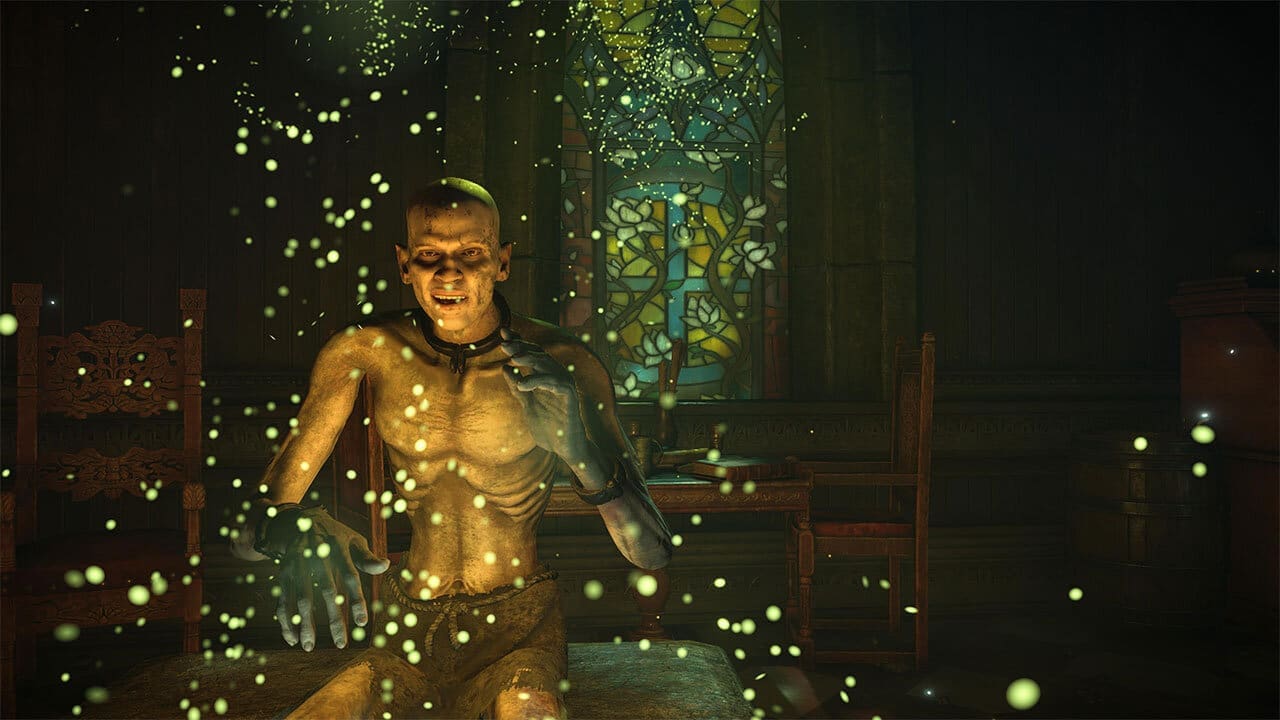
Demon’s Souls is a real showcase for the PS5’s power—an odd thing to say for a remake, but it’s true. Dingy, lifeless dungeons and hallways from the original now brim with beautiful gothic flavour. Individual bricks plaster walls; grass and plants sprout naturally from their sad state. PlayStation 5’s Tempest 3D Audio also adds depth and life to the world around you. Shrine of Storms was my favourite showcase: constant rain, fire, lightning and the end boss combined for one of my favourite pieces of game sound design this year.

The most impressive technical aspect is a sign of things to come from FromSoftware themselves. Load times after death are now a mere second thanks to the PS5’s SSD, and travelling between the Nexus and any world takes at most two or three seconds. The game also runs at a near rock-solid 60fps in Performance Mode (2K output upscaled to a stunning 4K image). I say “near” because just after travelling to a new area the frame-rate occasionally stutters for a second, but otherwise combat is smooth—this is how Souls games should play. There’s also a Cinematic Mode (native 4K/30fps): pretty, but hard to go back to after 60fps. Performance Mode is the default, and it’s how you should play; the graphical difference is almost negligible.
Demon’s Souls is easily one of the most significant games in modern gaming history. FromSoftware invented a genre that’s since been twisted and built upon—from Dark Souls to Nioh and Hollow Knight. Bluepoint Games’ remake keeps everything that made the original beloved while injecting a much-needed coat of paint. I applaud them for keeping the enemy AI the same—warts and all—but wish they’d been brave enough to remove World Tendency. As a PS5 launch game, it doesn’t get much better than having a massive action-RPG like Demon’s Souls. Umbasa.

(Demon’s Souls code provided for review)