
Explosion Network may receive a commission when you purchase something via a link on our site
Synopsis: Ascend the towering peaks of the Carja Sundom as Ryas, a disgraced former soldier, and unravel a new mystery surrounding the machines to redeem yourself and save your people. You’ll meet Aloy, other familiar faces, and new characters along the way.
Publisher: Sony Interactive Entertainment
Reviewed on: PlayStation VR2
Also available for: N/A
Cast: Mark Allan Stewart, David Cooley, Michelle Wong, Yaani King Mondschein, Shelby Young, James Alexander, Ashly Burch
Developer: Firesprite, Guerrilla Games
Game Director: Alex Barnes
Studio Creative Director: Stuart Tilley
Original Concept: Ilya Golitsyn, Alex Williams
Writers: Ben McCaw, Andrew S. Walsh
Sony has bet on a particular type of consumer for those buying its new headset. They’ll not only want to purchase Horizon Call of the Mountain as the key launch game, but they’ll also likely be big enough PlayStation fans to have played the previous Horizon games. That’s a wild assumption, but about an hour in I realised the game wasn’t attempting to explain the world to new players, and had to shrug it off. “I’m playing as a Shadow Carja.” I know they’re a bad group from Horizon Forbidden West, but it’ll be confusing for anyone else. As was the test when I let my brother try PS VR2 for the first time: “Why are there robots if it’s prehistoric?” “Is this the girl you play as in the other games?” The answers: A) I don’t have time to explain — play Horizon. B) Yes — Aloy makes a very short appearance near the start.
The first ten minutes of booting up Horizon Call of the Mountain are magical. No PS Move wands, a beautiful new world, and none of the old PSVR screen-door effect. Sitting on a boat, Ryas is being transported when the rowers try to dodge a Tallneck crossing the river as Watchers scout ahead. The Tallneck moment is a proper “wow” VR beat that sells the new generation. The smoothness and PS5 SSD also mean super-fast loads; future load screens are nearly non-existent.
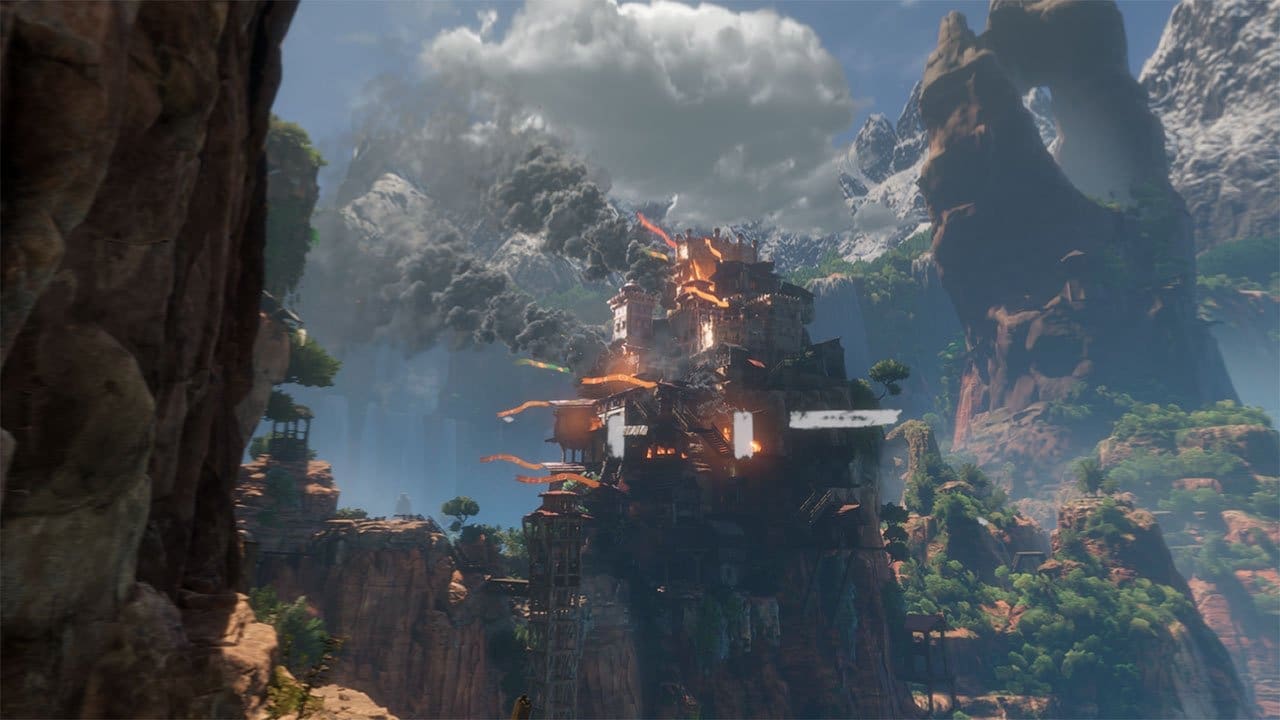
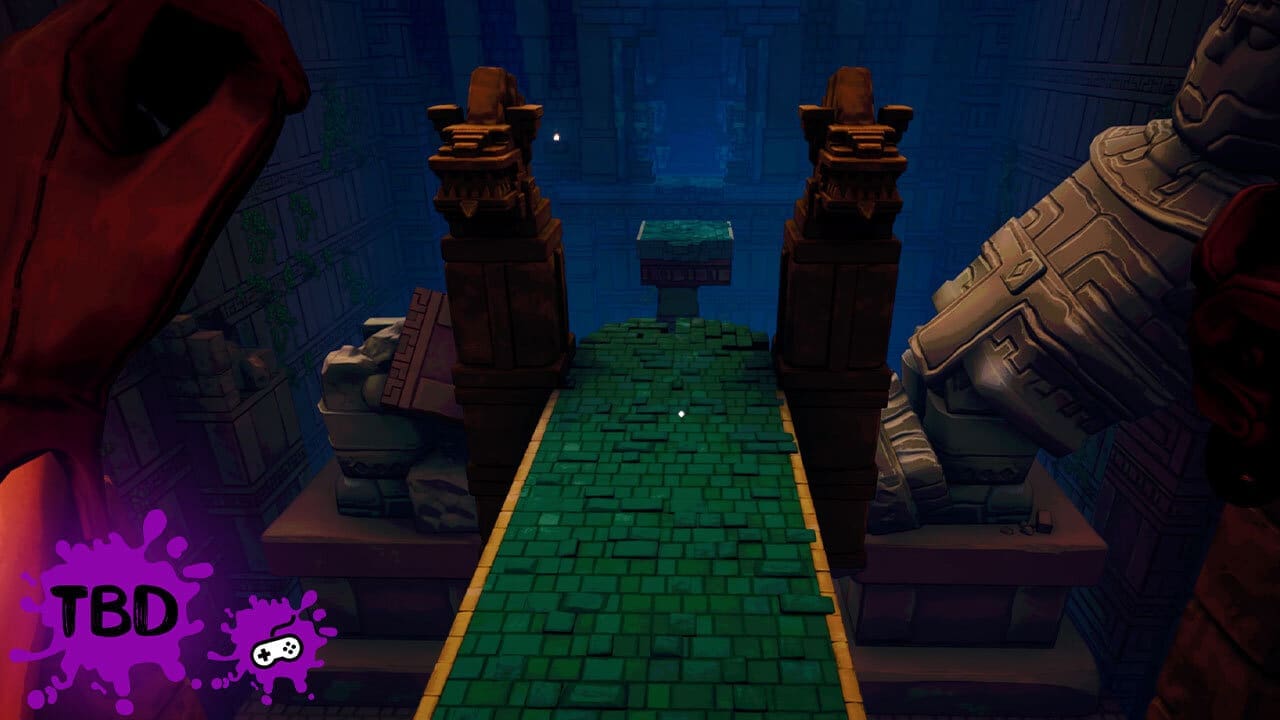
For as good as Call of the Mountain looks, it takes surprisingly little advantage of VR for storytelling or interaction. Shortly after the opening, Ryas is tasked with climbing a mountain to look for his brother — and for roughly 80% of the 8–10 hour game, you’ll be doing nothing but climbing. New tools arrive, but the goal is always “go up.” It didn’t bother me at first. If the game were shorter, it might not be an issue. But about four hours in I realised I’d spent most of my time staring at walls inches from my face — dirt, rock, concrete and other dull surfaces. Reaching the top usually rewards you with a gorgeous vista (if your stomach can handle the heights), but the journey isn’t worth the price of admission.
Comfort
There are plenty of comfort options with three presets and granular tweaks. You can play with stick locomotion, room-scale, standing, or seated. All work well — don’t stress if you can’t do room-scale. There’s one section best suited to it; the rest plays fine standing in a 1×1m space or seated.
I felt woozy a few times, likely just regaining my “VR legs.” With the robust options, there’s no need to be turned off by reports of nausea — unless you’re afraid of heights. In that case, you might need to steer clear of Horizon Call of the Mountain.
When you’re not climbing, there’s some off-the-path exploration to find collectibles and resources for crafting different arrow types. You’ll want those, because combat is surprisingly challenging — a good thing that preserves how tough these enemies are and how bad-ass Aloy feels in the mainline games.
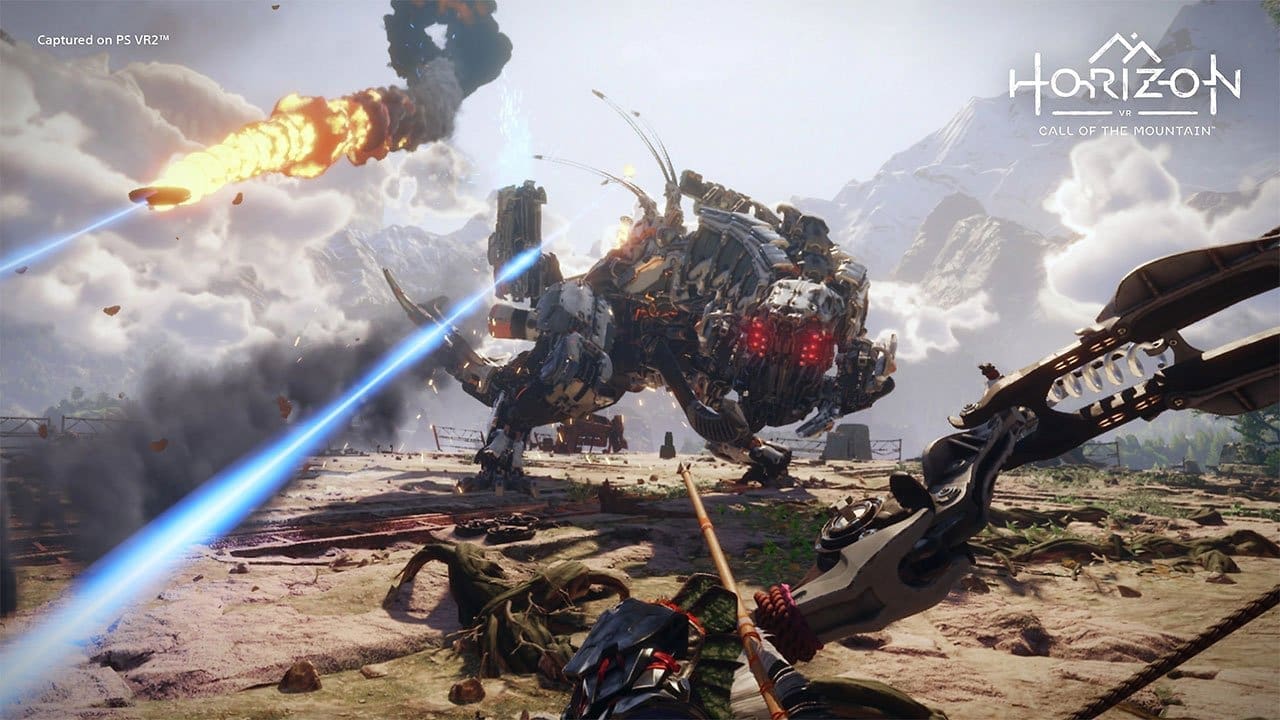
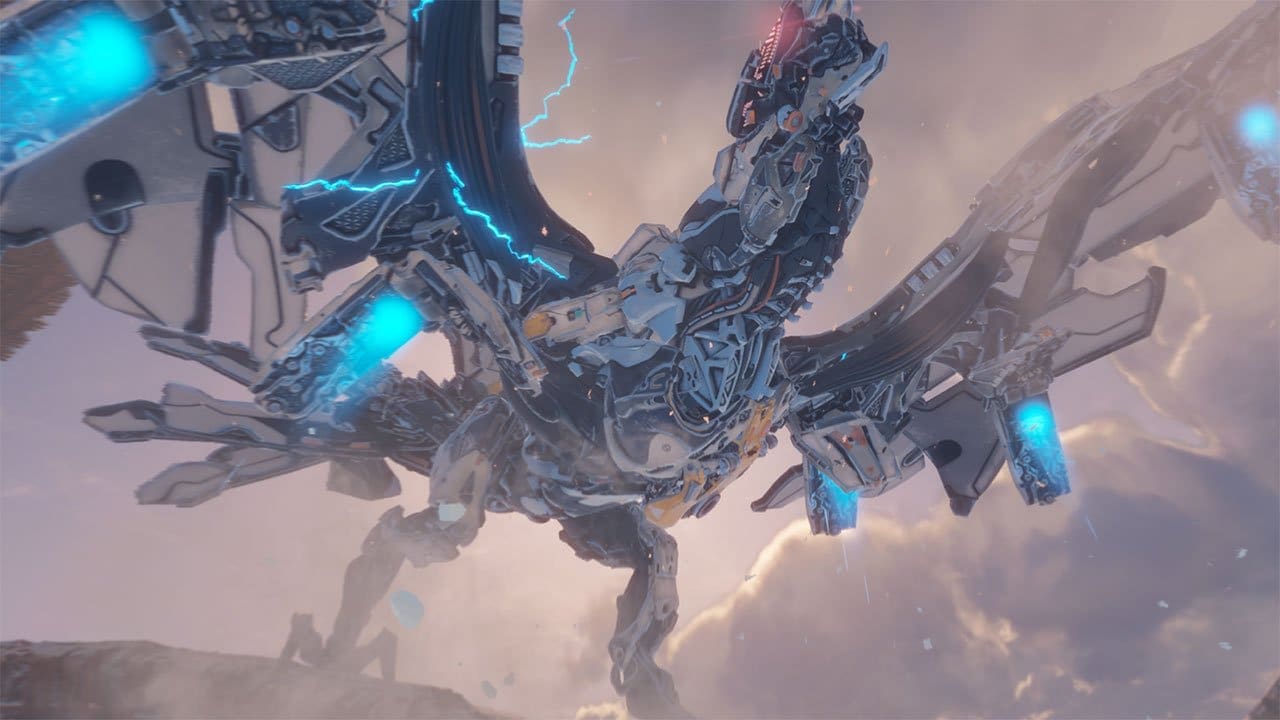
You’ll know a fight is coming when you enter a circular arena and a machine appears. Encounters range from Watchers to a Thunderjaw. As in the core games, you’ll target weak points and combine elemental arrows for advantages. Depending on your control scheme, you’ll flick the stick or quickly move your hands to dodge around the arena. There are usually a couple of spots for quick cover and a table or two with apples for health. I found it very amusing to grab an apple, sidestep, munch it, regain health, and keep dodging. The combat is engaging, and the bow feels great with the PS VR2 Sense controllers. When a Thunderjaw lands in front of you and you instinctively reach over your shoulder to nock an arrow, it feels bad-ass.
As a showcase title for PS VR2, Horizon Call of the Mountain isn’t a “must-buy.” PlayStation VR Worlds on the original PSVR was a better showcase for that hardware than Call of the Mountain is for PS VR2. If it were cheaper, shorter, or bundled with the headset (imagine that), I’d be softer on it — because it’s a perfectly okay VR game. I’m also confused by the lack of onboarding for non-Horizon fans. There’s an extended on-rails boat scene you can use to demo the headset to non-gamers, but as a push forward for the medium and a showcase for VR’s future, this is a very pretty game with the core of a last-generation VR experience.