Explosion Network may receive a commission when you purchase something via a link on our site
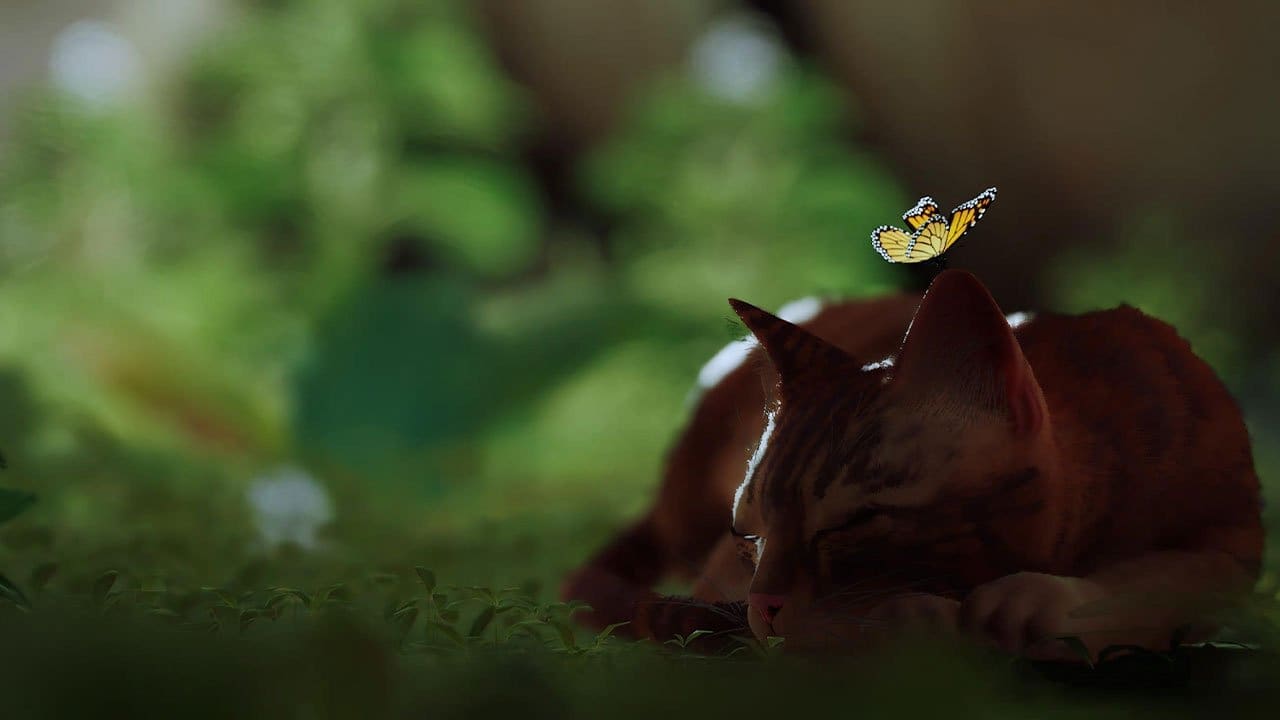
Synopsis: Lost, alone and separated from family, a stray cat must untangle an ancient mystery to escape a long-forgotten cybercity and find their way home.
Publisher: Annapurna Interactive
Reviewed on: PlayStation 5
Also available for: PlayStation 4, PC
Developer: Blue Twelve Studio
Created & Directed By: Koola & Viv
Game & Level Designers: Mathieu Audrain, Alexandre Brodu, Hugo Dunas-Wald
Producer: Swann Martin_Raget
Music & Sound Designer: Yann Van Der Cruyssen
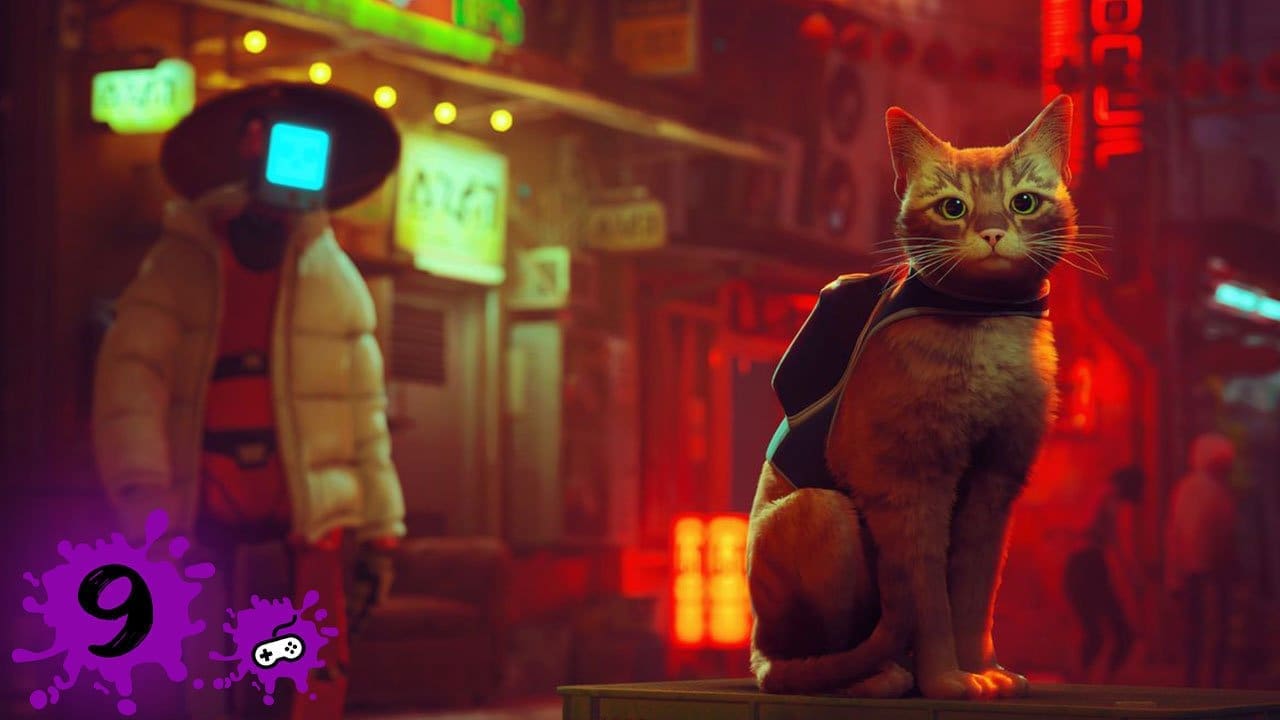
I love a wholesome origin story, and if you’ve been following the story behind Stray, it is just that. The successful GIFs of a potential cat game being shared on Twitter led to enough popularity for publisher Annapurna Interactive to fund and pick up what was known at the time as ‘HK_Project.‘ Now six years later, Stray is here. It’s exactly what I wanted from all those early gameplay moments shared on Twitter and the trailers that followed. Stray is a vibe, starring a cat that’ll go down in hiss-tory. I fell for the feline companion and the strange, wonderful world it tumbles into in a heartbeat.
About five minutes into the game, you’re told you can press the circle button to meow on cue. It was all I needed to connect to my new fur-end, who shortly after fell down a massive hole and found themselves trapped in a lost underground city full of robots, and scary alien-like critters. Meet a new robot, press circle to meow, see a creature in the instance, I’m meowing, but deep down, assuming I’m swearing in cat-talk. Meow, meow, meow = “piss off, you evil critter!”

I had a lot of fun playing Stray because as much as there is an exciting story here to link each area together, it’s exploring the world that is so polarising to the rather plain and non-alien cat you are playing in the game that’s most enjoyable. The cat looks… well, it looks like a cat, but the world you’re discovering is one with so much rich history hidden in every corner. Not only are you learning about what happened to humans, but you’re also discovering how the robots left behind now live and how their society works. And it all led me to wonder why they have created any hierarchy. There’s a depth to Stray’s narrative whiskers that you can either ignore like a cat brush by your leg or choose to interact with and learn more.
Yet, you can still terrorize it just like any cat would. There are plenty of couches and other would-be cat-pole objects you can scratch at or rugs to destroy, but making sure to jump upon any shelf you can just to knock off every bottle gave me enough inner evil-laughs. And then I’d press the meow button: “Oops, my bad!” The way I played Stray, the cat, has more than a bit of cattitude.
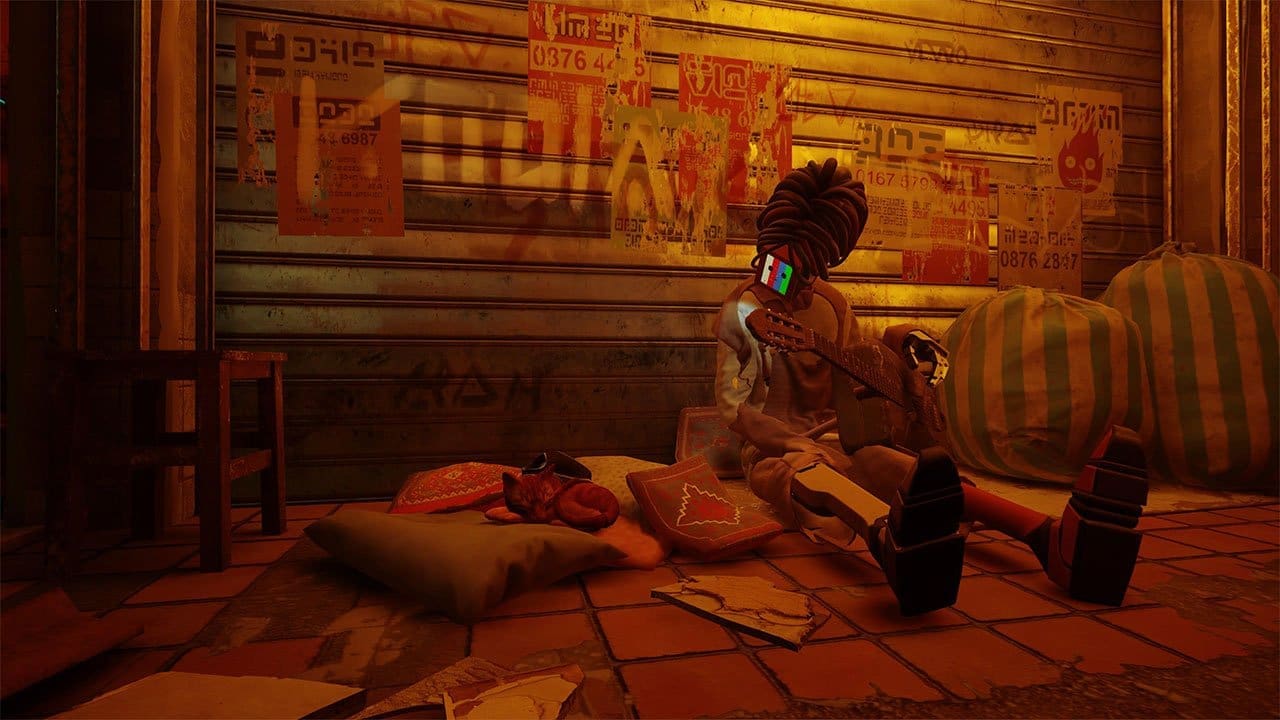
Fortunately, most of the characters/robots you meet in Stray are happy to talk to you and help you even if you just watched them, watch you, as you knocked their precious belongings off the shelf. Helping you communicate with these robots is a small robot of your own called B-12, who you meet earlier on your journey in the underground city. It’s a bit lost, too, trying to remember who its creator was and what has happened to the humans. A central plot point you’ll unravel as the game progresses, although it’s easy to miss the details if you rush through the game. And you might, as the game does have a trophy/achievement for speedrunning it in under 2 hours, but I strongly encourage no one to think about that on their first playthrough.
B-12 helps you communicate with the robots as you attempt to find a way to climb your way back to the surface of the planet. Some of the robots also see your appearance as a sign that the surface must now be safe, after being told it was too dangerous previously, and wish to journey with you to the top, even if it’s against the underground cities leaders’ wishes. There’s plenty of background politics happening in Stray.
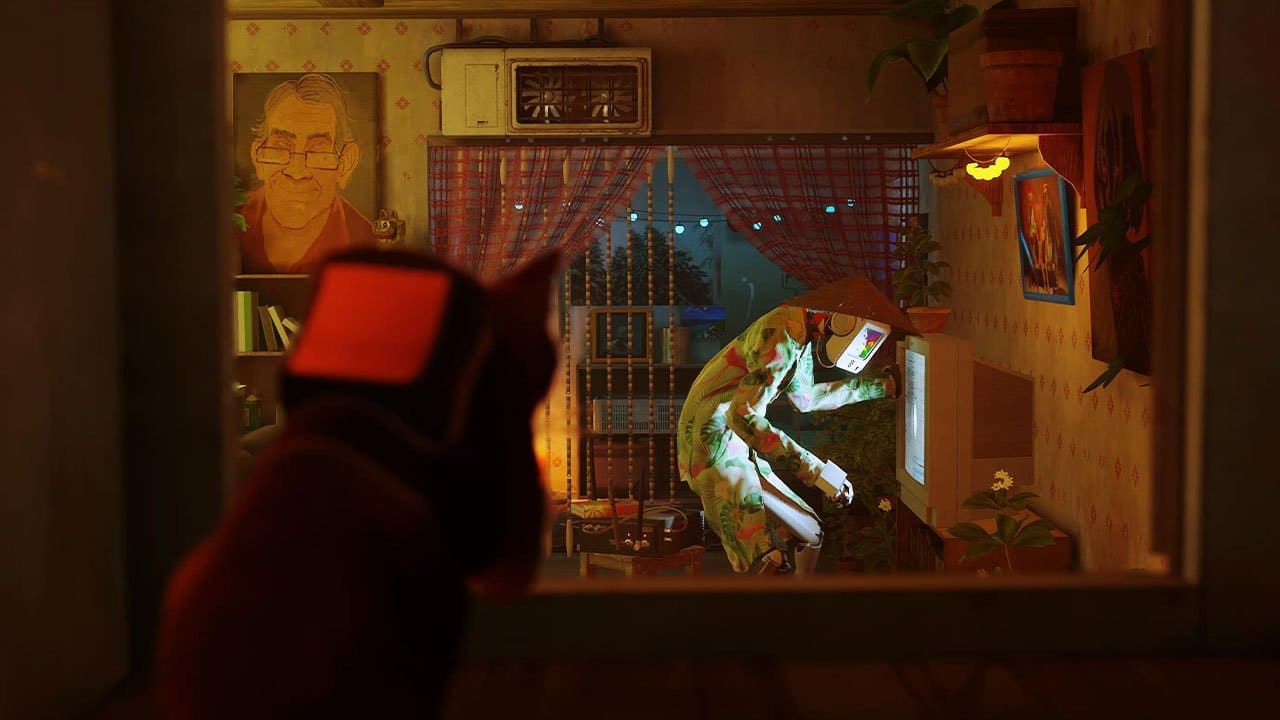
Aside from being an absolute menace to robots everywhere (or that’s just how I played this game), you’ll spend most of the time solving little adventure game-like puzzles. A character may have access to the Subway Tunnell you need to access to progress, but they need a key, and to get the key, you need to give an item to another character, and to get that item, you need to find something for someone else, and so forth. It’s basic stuff, but exploring as the cat in Stray is super-satisfying. There are a couple of action-heavier sequences to break up the pacing in which you run away from hordes of these tiny creatures that seem to feed on the flesh of any kind, but these are few and far between and never overstay their welcome.
Every area in Stray feels unique, and the game looks fantastic, with ray-traced reflections being a high point on shiny surfaces and plenty of puddles. There are a couple of places with cyberpunk-inspired aesthetics, with the neon signs making for some rather pretty scenes. I wished the game had a photo mode for me to play around with instead of having to be stuck with regular screenshots.
When Stray came to a close, I was feline sad. I’d planned to journey with this new cat friend fur-ever. I’m sorry; I had to try to fit a few puns in this review. If I didn’t, I’d feel claw-ful about it. But being fur-real, there’s as much depth to find here as you wish to invest; otherwise, you can make it the ‘Untitled Cat Game’ and wreak havoc on robots’ homes. I’d suggest doing a little bit of both, as I did, but you do you. If I could be a little bit purr-suasive for a moment, you should play Stray.