Synopsis:
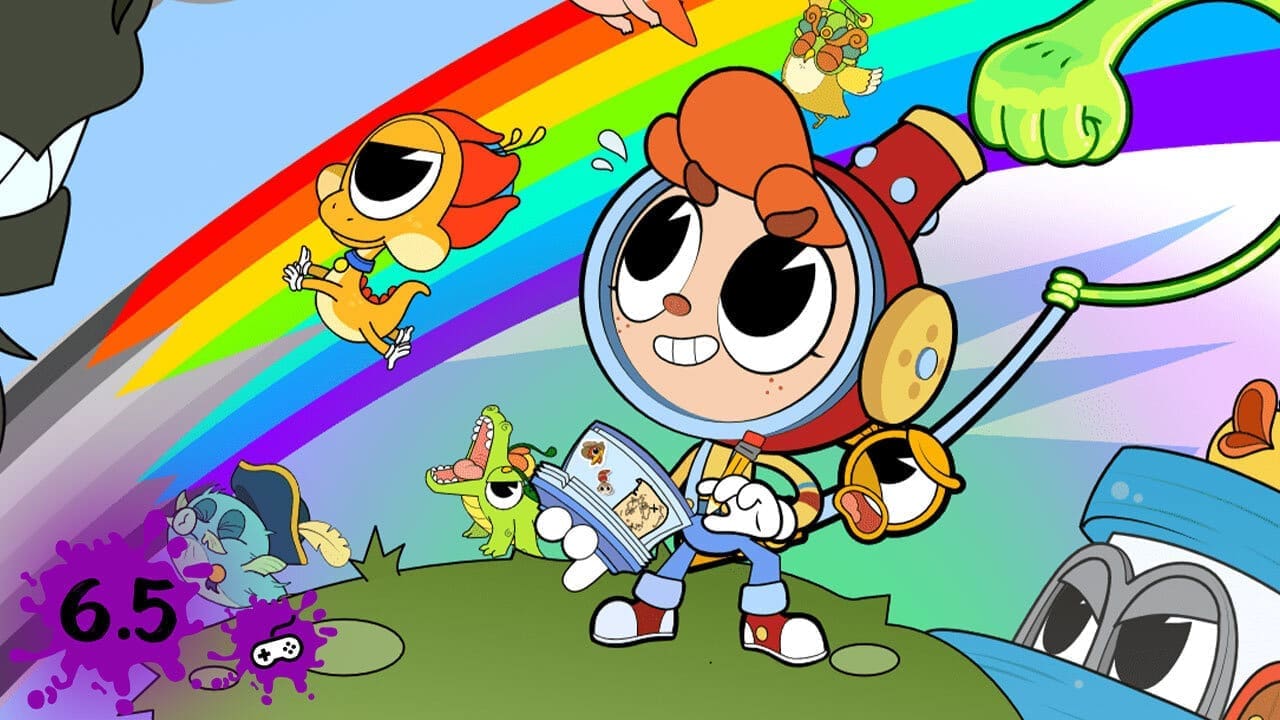
Rainbow Billy: The Curse of the Leviathan is a wholesome, non-violent 2.5D Adventure-Puzzle-Platformer with RPG elements, in which you must save whimsical creatures by bringing back color to the world you once knew!
Publisher: Skybound Games
Reviewed on: PS4 (PS5 Console)
Also available for: PC, Xbox One, Nintendo Switch
Cast: Jacynthe Asselin-Lefebvre, Samuel Bourassa, Elyse Canuel-Morissette, Kevin Chancey, Catherine Gaulin, Alexandre Jenkins, Virginie Lesiege, Alexis Lessard, Felix Mailhot, Caitlin Mclnerney-Brathwaite, Tara Miller
Developer: ManaVoid Entertainment
Creative Directors: Anthony Vaucheret-Rosabal, Alexis Lessard
Artistic Director: Anthony Vaucheret-Rosabal
Technical Director: Alexis Lessard
Writing Lead: John Henry Rumsby
Anytime a game comes around that’s trying to do something outside the norm, I’m going to be interested and Rainbow Billy: The Curse of the Leviathan is such a game. A 2.5D adventure game that rings of Paper Mario or even Undertale influences. It’s charming with a focus on — at times annoying — positive messages, and the “combat” isn’t about battling; instead, it’s about making friends. Although it may drag a little, it’s a wholesome adventure that the whole family can enjoy.
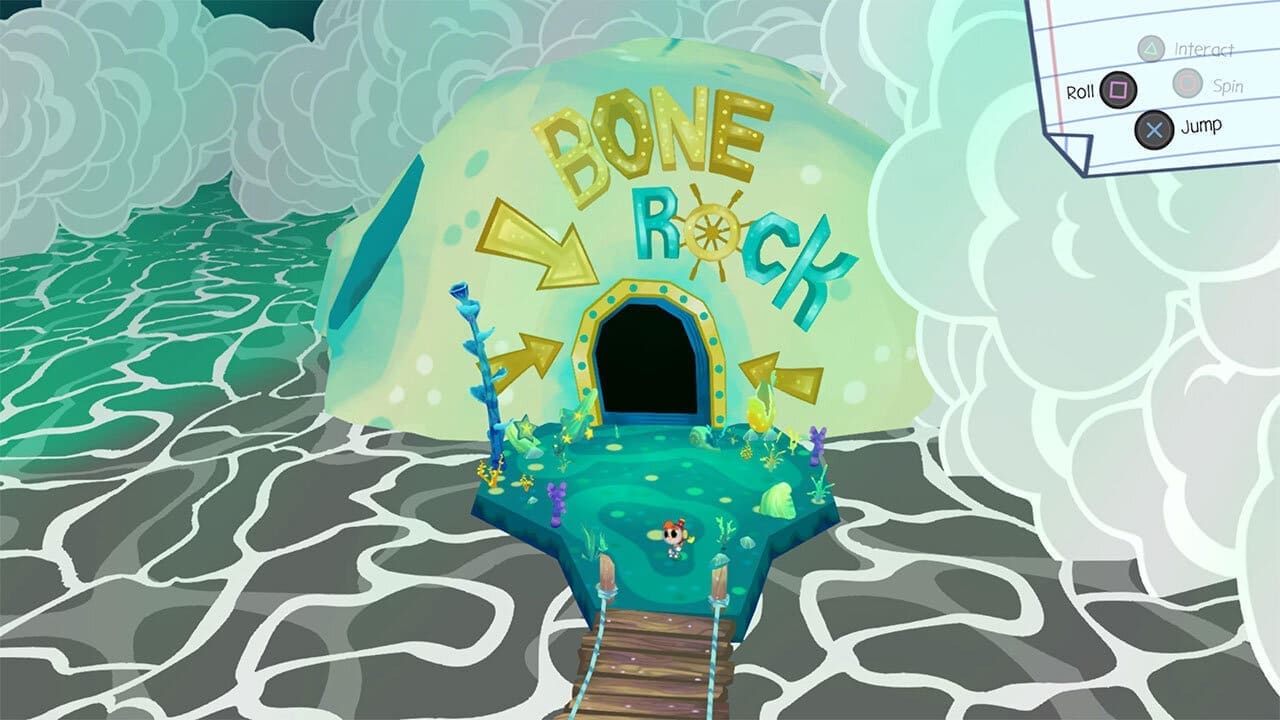
The story starts with Billy enjoying some fireworks at a festival which awakens a slumbering Leviathan. The maniacal beast chooses to use its powers to suck nearly all of the colour out of the world and place them in three orbs, which the Leviathan then gives to three other foul creatures to guard. With non-other than their wits, Billy travelling companion Rodrigo and means of transport, Friend-Ship, head off searching for these orbs and a way to save their world.
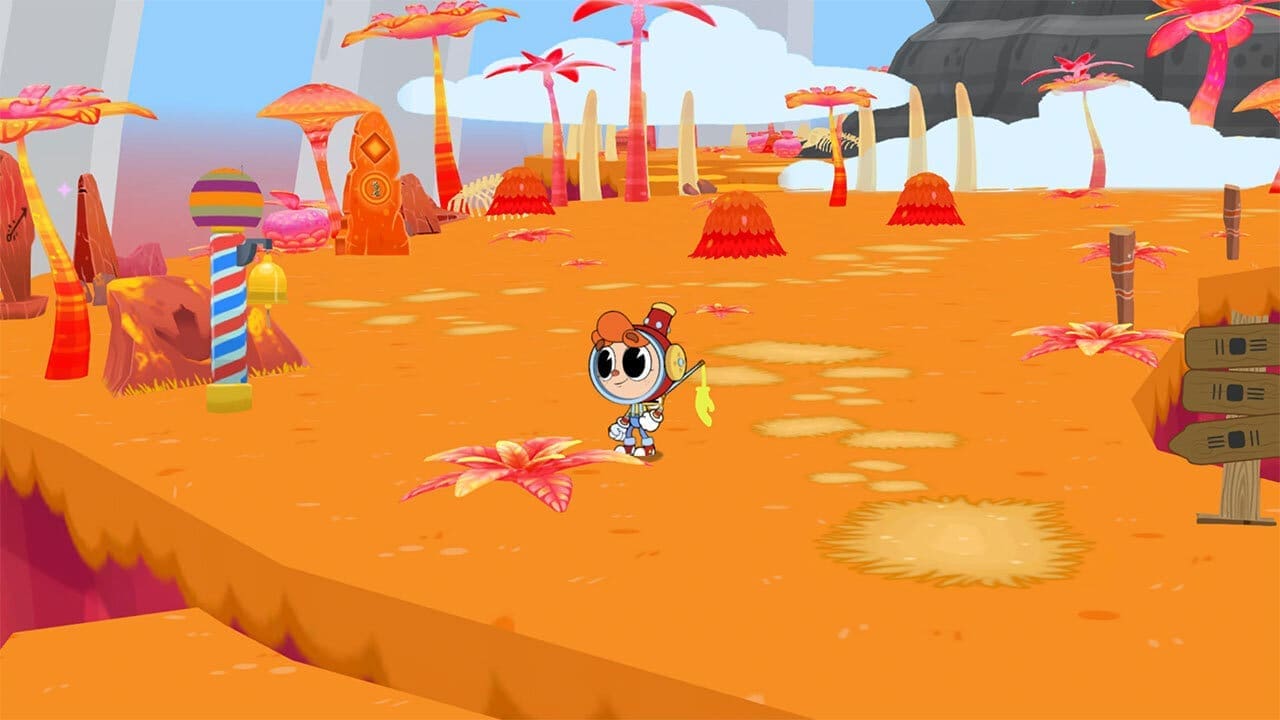
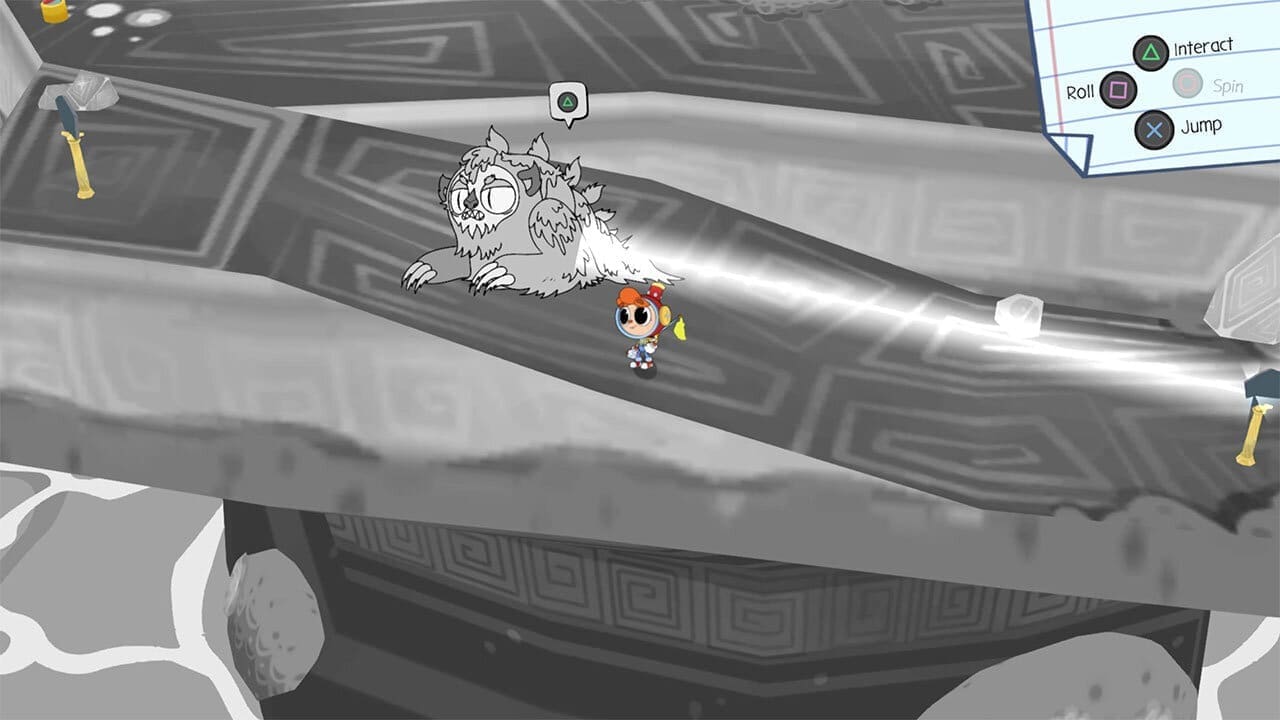
There are three areas of Rainbow Billy to work through and conquer before attempting to defeat the Leviathan. In the first area, you must work from small island to small island aboard the Friend-Ship, recharging fuel as you go to reach the main island. Meanwhile, there’s more time spent with feet on solid ground solving puzzles and performing light platforming segments in the second and final locations.
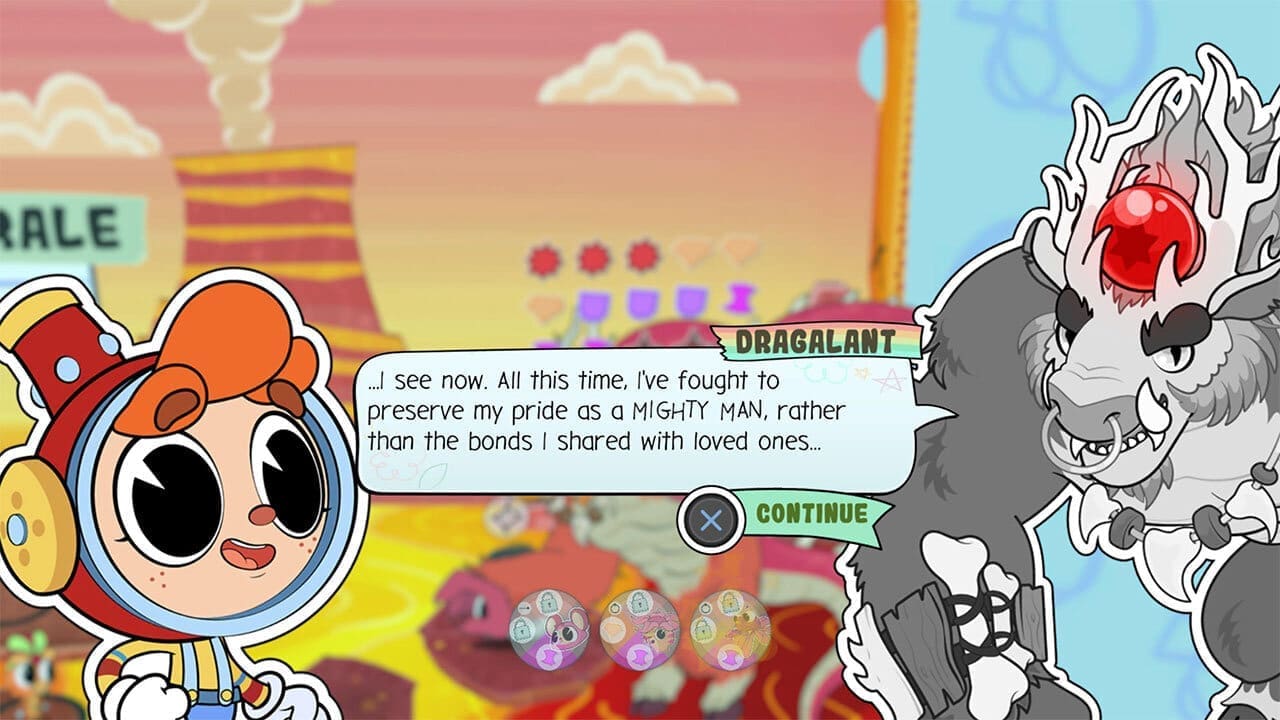
What you’ll spend most of your time in Rainbow Billy doing, however, is attempting to make friends with creatures who’ve had their colour sucked out of them in ‘confrontations.’ There are two stages. Although they’re not technically battles, you can think of them as kind of being turned based battles. Billy starts by listening to the creature they’re confronting talk, before being able to pick from one of three conversation choices. Pick the right one, and you’ll reveal a symbol above the creature’s head telling you what friend of yours, with the matching symbol, you need to send out to get through to the creature’s heart. At the beginning of the game, this is very simple as the creatures will only have two icons to reveal, allowing you to guesswork it if you click the wrong conversation choice. Despite starting easy, you’ll have to think over the order in which you send your friends out into the confrontation in the last half of the game.
After you select which friends you’re sending out onto the field, you’ll perform a mini-game to perform the “attack.” These are all very simple things like keeping a little Billy icon away from saws for ten seconds or inputting the right buttons as they come across the screen.
In the latter half of the game, you’ll have three rows of three you can send your friends out onto. The front row will trigger a passive ability if your friends have one; these can be anything from restoring your health to revealing one of your foes hidden icons. Sometimes the confrontations won’t just be one-on-either, and you’ll have to work through other creatures of items in from of the creature you’re confronting before you can talk to them.
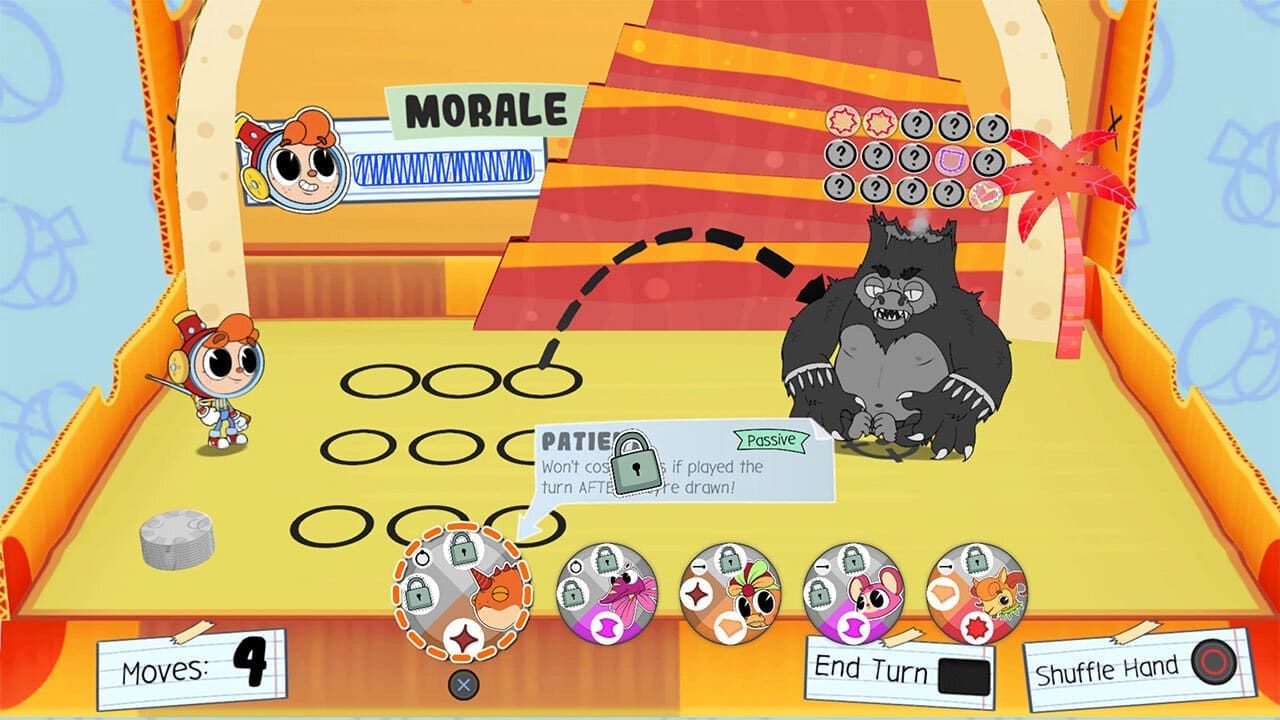
The confrontation system can get hectic, and I think it’s a great idea, although not quite reaching its full potential. Primarily I had issues with just had guessable the conversation choices at the beginning of each turn are. Several times I’d not be listening correctly, or skip entirely, the dialogue the creature said and still pick the right conversation choice. Often the other two options were outwardly hostile, victim-blaming or straight-up weird choices for things you say to a friend struggling with anything related to their mental health.
The game’s focus on saying something about mental health makes up for the, at times, sickening optimism and very literal rainbow cartoon vibes. You’ll have to talk to creatures struggling with thoughts of everyone hating them through to being conscious of their body type. None of it gets too deep, and probably for the better if you want to keep the potential family-friendly audience.
While exploring the world, you’ll find presents and fish that Billy can give to their friends aboard the Friend-Ship to level them from rank one to rank three. At rank two, you’ll unlock their passive ability, and at rank three, they’ll have access to two other symbols in confrontations. You can feed the fish to any of them, but the presents are based on their personality. You can also find little creatures called Thoughts hidden around the world, which Billy can trade in for upgrades aboard the Friend-Ship, which allow you do more actions in your turn during a confrontation. So there’s plenty of reason to explore, between finding option confrontations and new friends, to the Thoughts, presents and coins hidden in chests.
Thanks to a wonderfully bright art style Rainbow Billy is great to look at, and when you bring that colour back into areas of the world by confronting creatures, it truly feels wonderful. The character designs are all fantastic as well, and the small platter of cutscenes that play during key story moments felt like a Saturday morning cartoon.
Also, if you love weird and very specific songs created for games, you’ll get a kick out of Rainbow Billy’s final level.
I’d played the first 30-45 minutes of Rainbow Billy about a year ago for a preview, and I’d never have guessed then that the game would take close to 12 hours to finish. And at that length, it does begin to drag. Especially when you’re in the last area of the game and the creatures in the confrontations have about eight different symbols to match, and I’m now drawing seven friends from the stack of chips/deck a turn. I’ve levelled those all up, giving me about twenty-one symbols all in front of me to figure out which ones to send onto the field. It gets a little too crowded, which does become confusing and tedious.
I encountered a decent handful of bugs while playing Rainbow Billy, which did hamper my overall enjoyment. Several times the X button wouldn’t work in battle anymore, Billy got stuck in the environment, a character disappeared I needed to talk to, and in the last boss battle, the whole world apart from Billy vanished from my screen. These could be fixed with a simple reboot, but I had enough happened over my time with the game that made it a nuisance. They also delayed this review as I got annoyed at having to replay an area of the game.
“The rainbow in Rainbow Billy is earnt for more than just big smiles and silly jokes”
I’ve pointed out that the positivity can be a little obnoxious at times, but the rainbow in Rainbow Billy is earnt for more than just big smiles and silly jokes. Billy is a non-binary character, and although it’s not part of the story or even mentioned, it’s well worth mentioning as non-binary people are one of the least represented LGBTQ+ people in video games. Of course, LGBTQ+ representation in video games as a whole is very low.
If Rainbow Billy: The Curse of the Leviathan had been a tighter experience with a few fewer bugs, I think I’d have been singing its praise through until the end of the year. I still really like the game, but it feels like developer ManaVoid Entertainment missed the game’s full potential. Still, it’s an easy recommendation for anyone seeking something different, or at least a game you can happily play around or with the kids.
(Rainbow Billy: The Curse of The Leviathan code provided for review)