Ever since Rise of the Ronin debuted in a State of Play, there have been questions. This is from Team Ninja, so how hard is it? How much does the game embrace the soul-like design? Is it closer to Ghost of Tsushima? Nioh? Star Wars: Jedi? Elden Ring? Or somewhere between them all? I’ve found answers to most of my burning questions in the first few hours, but it’s only left me wondering about some new ones.
Rise of the Ronin is an action-adventure game that takes the soul-inspired nature of Team Ninja’s previous games, like Nioh and Wo Long: Fallen Dynasty and places a new, more accessible formula inside an open-world feudal Japan with historical backing. Honestly, as someone who finds it frustrating to see people do nothing but say game A looks like game B, I also can’t find a better way to describe Rise of the Ronin right now: it’s a little bit Nioh, a little Ghost of Tsushima, a little Assassins Creed and even a little bit Persona. It seems like Team Ninja is trying something new for them, with a historical setting and lack of supernatural elements, and playing around with ideas and feelings from some of their favourite games.

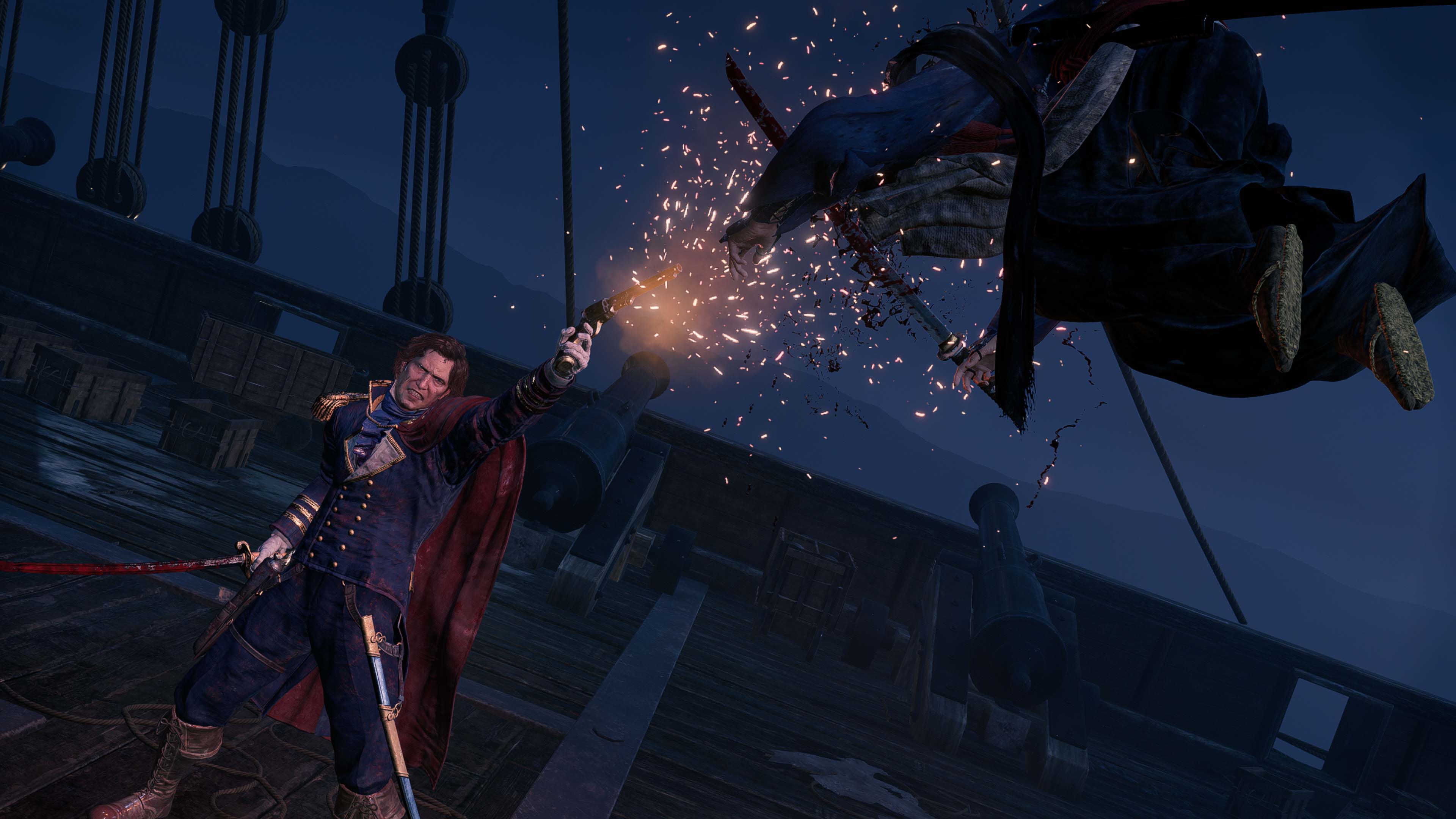
At the heart of everything in Rise of the Ronin is the combat system, which is easy to pick up but harder and harder to manage and master. In this game, there’s one basic attack, the ability to perform special attacks and a counter button, which is called ‘counterspark’. Every action you do wears down your ‘Ki’, which is basically your stamina and can leave you open for a massive combo from your opponent if depleted, and similarly, depleting your opponents will open them up. You can spam attacks on some weaker enemies and come out on top, but so far, Rise of the Ronin has shown it’s a game about control and methodical and slower-paced fights. You’ll more than likely die if you want to attack without thought and purpose behind each swing.

The difficulty discussion around souls games should be mute here, with Rise of the Ronin not only featuring three different difficulty scales but also including multiple ways to tackle fights and missions. In the final mission I could play in my preview time, you could walk right up to the boss, attempt to get a stealth attack in from the grass, or, as I found, glide over the top of him and drop upon his big head to get a critical hit in to begin the fight. Plus, you can always drop the difficulty up and down as you see fit, try different weapons, or farm smaller enemies to level up and learn new skills. If there was one thing I expected from this game, it was great combat, and so far, Rise of the Ronin is delivering plenty of options on how I want to fight with a feeling of success underpinning every single encounter.

What I couldn’t have expected is just how much the game invests in building character relationships and letting your choices shape the characters around you while playing within the confines of a historical setting. You’ll meet characters you can choose to team up with while in more linear designed missions, each ending with a boss fight. Also, within these, if you die, you’ll automatically swap to one of your companions, giving you a max of three characters to play as. But you can also form bonds and increase how much time you want to spend with these characters at a home base, of sorts, and even give these companions gifts. None of these companions will follow you around the open world; it’s only for the linear or story missions they’re involved in.

Interestingly, one of the companions I ended up with on my team was the boss fighting during my first linear mission with the first companion I met. At the end of this mission, I could have chosen to kill this person, but sparring them, I ran into them later, and they agreed to team up with me. This leaves me to ponder what other choices will be in the game and how they’ll play out across Rise of Ronin’s Japan. Having a big element of the games around player choice, a ripple of choices and building relationships out with your allies is something I’ve not seen in a soulslike before, but it’s just one thing, paired with the more accessible options, that could make this game a big success and an entry point for anyone who hadn’t found a way to try out the genre before, or didn’t care for the allure of the Star Wars Universe.
I spent too long messing around with the character creation options, which are very deep for those who like to customize everything. I’m proud to say I created the wrestler Maki Itoh as my player character.
A few hours with Rise of the Ronin feels like a drop in a huge pond. There’s a huge overworld map, and there’s plenty to be explored and found in Japan. I wasn’t left wowed, as this isn’t gaming looking to execute on a cinematic quality seen in something like Ghost of Tsushima, but when I put the controller down, it was only because it was the end of my preview period, not because I didn’t want to keep exploring. I am excited to keep playing, and you should look forward to checking out Rise of Ronin yourself when the game is released for PlayStation on March 22nd.
(Preview code provided to Explosion Network.
Read about our review and ethics policy here.)