
The Best Documentaries Screening At MIFF 2026
The Melbourne International Film Festival 2026 unveils documentary program

As always, the Melbourne International Film Festival will feature plenty of interesting and insightful documentaries in 2026 as part of its program, covering music, politics, identity, climate change, and more.
Its world premiere is Tina Arena: Unravel Me, which will look back at the Australian singer’s five-decade-long career through new and archival interviews. Rehearsals for a Revolution, the winner of the Best Documentary award at Cannes, examines decades of Iranian history through home movies and protest footage. And Landmarks is the first feature-length documentary from Lucrecia Martel, which investigates the murder of Indigenous leader Javier Chocobar.
Here are all the standout documentaries in MIFF 2026.
Tina Arena: Unravel Me
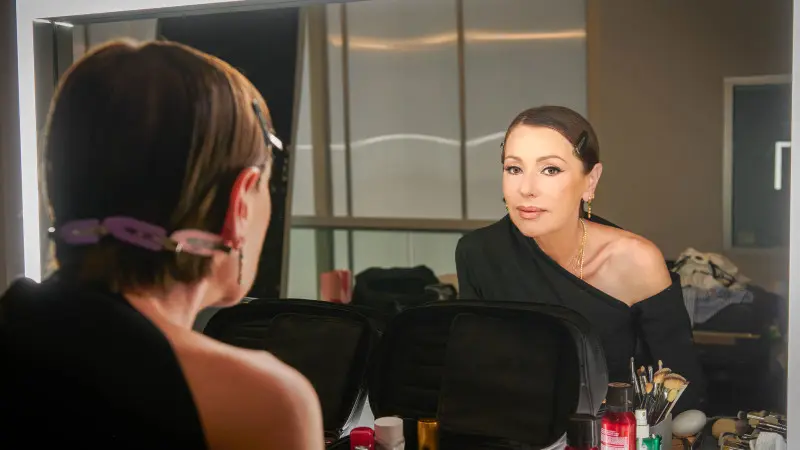
Tina Arena has been in the music business for 50 years; after 25 albums, she’s had enough eras to make other pop stars envious. Born in suburban Melbourne to Sicilian parents, Filippina Arena became Australia’s darling in 1976, aged eight, on Channel Ten’s prime-time variety show Young Talent Time. Her breakout 1990 pop single ‘I Need Your Body’ raunchily repudiated “Tiny Tina”, and she went on to score a soaring run of 90s hits … but self-doubt, misogyny and tall-poppy syndrome drove her to reinvent herself repeatedly in the UK and France: taking to the stage; seeking adventurous collaborations; and singing in Italian, French and Spanish.
Rehearsals for a Revolution
Living in exile in the UK, actor/director Pegah Ahangarani (I Am Trying to Remember, MIFF 2022) wants to make a film about Iranian history, as a way to understand how the country ended up where it is today. Fashioning home movies, archival imagery, news footage, animated sequences and sobering statistics into a singular cinematic essay, she chronicles conflict and rebellion across the decades, from 1979’s Islamic Revolution to the 2026 massacre of protesters and war with Israel and the United States. Ahangarani stages this history lesson in five chapters, each dedicated to a friend or family member she lost along the way, poignantly situating her film at the intersection of the personal and the political.
Landmarks
In October 2009 in northern Argentina, members of the Diaguita community of Los Chuschagasta attempted to resist eviction from their native land. In the confrontation that followed, 68-year-old resident Javier Chocobar was shot dead and two others were wounded – a crime that was captured on video, but only taken to court after a decade-long process of protest and agitation. Even now, justice for Chocobar’s people remains hard to come by.
Adam’s Apple
Adam Sieswerda always knew he was a boy, but the aspiring singer-songwriter feared his artistic prospects because he also knew his voice wouldn’t drop. At 15, with support from his parents, he received his first testosterone shot – and so began Adam’s journey to becoming his true self. As he embraces his growing identity as a fledgling young adult male, his mother, filmmaker Amy Jenkins, documents various milestones – psychologist appointments, university applications, a ‘boob funeral’ – with both curiosity and compassion.
Nuisance Bear
Welcome to the snowy Canadian outpost of Churchill, Manitoba, the self-proclaimed “Polar Bear Capital of the World”. Driven towards urban developments by changing climate and the increasing encroachment of ‘civilisation’ into wilderness, the iconic animals arrive as both dangerous predators and photo-op fodder for tourists. As the bears forage for food and scrap for survival, indifferent to the circus that surrounds them, locals debate whether to welcome them, drive them away peacefully or follow a more traditional mode of coexistence informed by Indigenous practices.
Vertigo
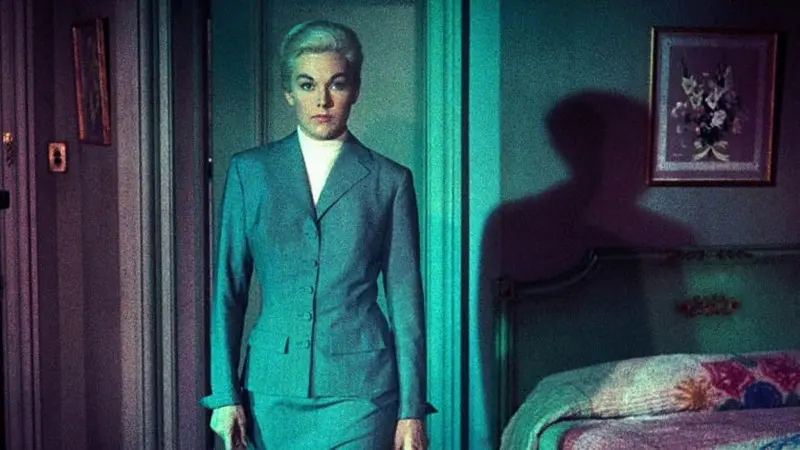
Former San Francisco detective John “Scottie” Ferguson (James Stewart) is hired by an old college acquaintance to trail his wife, Madeleine Elster (Kim Novak), claiming she might be possessed and suicidal. It’s not long before Scottie is deeply infatuated with his enigmatic mark, then shattered at her untimely death. In the grip of obsession, he meets a woman on the street, Judy Barton, whom he proceeds to make over in order to resurrect Madeleine as he remembers her – leading once again to tragedy.
Once Upon a Time in Harlem
In 1972, groundbreaking Black filmmaker William Greaves – maker of the reality-bending 1968 vérité masterpiece Symbiopsychotaxiplasm: Take One (MIFF 2023) – issued an invitation to the surviving figureheads of the cultural boom that emanated from Harlem in the 1920s and 30s: to come together once again. The likes of Broadway pioneers Noble Sissle and Eubie Blake, artist Aaron Douglas and activist Louise Thompson Patterson convened one summer evening at the stately home of Duke Ellington, where the drinks and reminiscences flowed, crystallised by time.
The Siege of Paradise
On the Italian Riviera lies Cinque Terre, whose centuries-old villages and postcard-perfect beaches attract around four million holiday-makers – including countless social media influencers – annually. It’s become one of the most photographed places in the world, but this fame also concerns the 4000 individuals who call it home. Some, like winemaker Bartalo and restaurateur Carmelo, have resigned themselves to this yearly influx that finances their region. Others, like fisherman Guido, lament its toll on tradition, while mediators like politician Fabrizia must weigh profitability against sustainability.
Closure
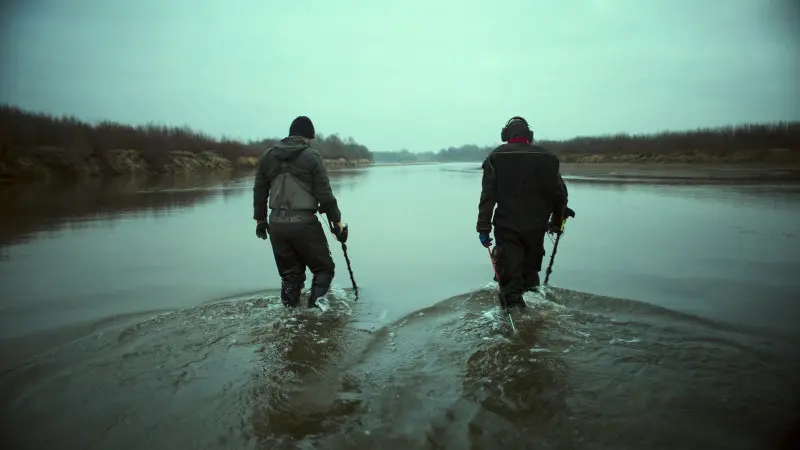
The last-known footage of 16-year-old Krzysztof Dymiński – “Chris” to his friends – was captured in the early hours of the morning in May 2023 on CCTV: he is seen standing on a bridge overlooking Warsaw’s Vistula River; the camera pans away and back, and Chris is gone. One year on, little hope remains that Chris is still alive, but his father Daniel pours his immense grief into the task of at least filling in the narrative blanks. He trawls his son’s social media profiles and the river itself for clues, increasingly consumed by his search.
Remake
Adrian McElwee was just 27 when he died, in 2016 – a victim of the opioid crisis, having also struggled with bipolar disorder. He’d figured prominently in his father’s previous film, 2011’s Photographic Memory, in which the filmmaker was prompted by his growing distance from Adrian to retrace the steps of a sojourn from his own youth. In the painful aftermath of Adrian’s death, McElwee turned to his archive, in search of what he and his camera might have missed. Offsetting this emotion-laden investigation is another, almost satirical plot line involving a proposed adaptation of the film that put the director on the map, Sherman’s March (MIFF 1986). Together, the two threads point towards an inability to exert control over one’s own progeny.
Better Go Mad in the Wild
In a farmstead deep in the Šumavan Mountains, situated near Czechia’s western borders with Austria and Germany, live identical twins František and Ondřej Klišík. Now in their sixties, the brothers exist in bucolic bliss: drinking, bickering, swimming in glacial lakes and wandering – sometimes in the nude – through nearby forests. On other occasions, they commune with the animals in their midst: their chickens and cows; their dog Joint; and their majestic bull Nandy, whose voiceover recounts the brothers’ storied pasts and current concerns.
Facing the Numbers
The numbers don’t lie: First Nations people are disproportionately more likely to be separated from their families, incarcerated as both youths and adults, and become victims of police brutality. But, as Facing the Numbers states on opening: “The statistics tell one story; we tell another.” Sharing the voices of members of the Stolen Generations, those who have lost family members to deaths in custody and survivors of violence in custody, this unique hybrid anthology – a mixture of memoir, music video, poetry, dance, journalism and activism – lends space to the personal stories behind experience of disadvantage and institutionalised violence.
Sentient
Dr Lisa Jones-Engel is a passionate primatologist who reflects, with a mix of sadness and horror, on her past work at the Laboratory for Experimental Medicine and Surgery in Primates. It was enough to turn her from animal tester to animal welfare advocate, as contemporary and archival footage – both personal and professional – relates. Through the perspectives of other frontline scientists discussing the fraught balance of human needs and animal rights, one compelling fact emerges: animal testing does psychological harm not just to its physical victims, but also to its human practitioners.
Time and Tide
When his father suffers a stroke, Melbourne-based filmmaker Vee Shi returns to his hometown, Longtian, Fuqing, in south-eastern China, a small rural community that he left behind when he was 13. As the family’s proud, stubborn patriarch struggles with his compromised health and need for care, his estranged wife and daughter – who, due to China’s one-child policy, was given up for adoption prior to the director’s birth – are suddenly entrusted with the duty, and burden, of looking after a man who has often treated them badly. These strained family dynamics evoke a bigger-picture portrait of changing Chinese society and social values, where the once-total dedication to family is falling away.
Everybody Digs Bill Evans
June 1961: the Bill Evans Trio have just live-recorded a New York residency that will spawn two celebrated jazz albums. Ten days later, a car crash kills bassist Scott LaFaro at just 25. Devastated, Evans can’t even touch a piano. He stays with his brother Harry, sister-in-law Pat and adoring niece Debby; shoots heroin with his girlfriend Ellaine; and journeys silently, scarily inward. Bill’s depressive black hole starts to claim Harry – a music conservatory teacher who envies his kid brother’s genius – and even shadows their working-class parents’ sunny Florida retirement.
We Are The Shaggs

Austin Wiggin’s mother had prophesied his daughters would become a famous band – so, in 1965, he decided to make it happen. He pulled Dot, Helen and Betty out of school; handed them instruments they couldn’t play; suggested they write songs without the first clue how; and named them The Shaggs. For years, they (occasionally accompanied by younger sister Rachel) endured weekly heckling at local gigs in Fremont, New Hampshire, before recording an album, 1969’s Philosophy of the World. When Austin died in 1975, the sisters could finally live regular lives … until the 90s, when they learned The Shaggs had become a cult band whose tastemaker fans included Frank Zappa, Patti Smith and Kurt Cobain. Their grandmother’s prediction had come true, in the most ironic way possible.
Summer Tour
Jerry and Annie are young and in love – with each other, and with the music of the Grateful Dead. Setting out on the road to catch every show on successor band Dead & Company’s farewell tour in 2023, they journey across America and deep into the heart of Deadhead fandom. Meeting fans young and old and participating in the marketplaces and gatherings that sprout around the shows, they discover a true community, alternative ways of living and what the music means to a wideranging cross-section of Deadheads.
Summer 2000: The X-Cetra Story

In the first summer of the new millennium, with girl pop dominating the charts, 11-year-old Ayden moved to Santa Rosa, California, and met her new best friends: Jessica, Janet and Janet’s nine-year-old sister Mary. In between millennial tween pursuits like devising dance routines and holding sleepover seances, the four girls started a band. Calling themselves X-Cetra, they recorded eight songs with the help of Janet and Mary’s musician mum, Robin. But the final album was a disappointment, sounding more like a creepy, haunted version of Pure Moods than the slick pop they’d imagined. When summer ended, so did X-Cetra.
Broken English
Plucked from obscurity by the manager of The Rolling Stones, Marianne Faithfull had her first hit in 1964 with ‘As Tears Go By’. She was 17. Hers would be a monumental career spanning six decades, punctuated by both high-profile love affairs and highly publicised struggles with drug abuse, anorexia and homelessness. But, for all its wealth of archival materials, Broken English is no conventional rock doc. Here, in a playful but sincere twist, the husky-voiced chanteuse is interviewed by a record keeper (George MacKay, Rose of Nevada, MIFF 2026) at the fictional Ministry of Not Forgetting – a bureaucratic institution overseen by none other than Tilda Swinton – while luminaries such as Courtney Love and Beth Orton chime in with their own reflections.
Tickets for MIFF 2026 are on sale now. Are you planning on attending? Which films are you looking forward to checking out? Let me know in the comment section below.
[Descriptions have been provided by MIFF]

Dylan Blight
[He/Him] Dylan Blight is the Founder and Editor-in-Chief of Explosion Network, an independent Australian publication covering video games, film, television and pop culture. Since founding Explosion Network in 2017, Dylan has written and produced reviews, news, interviews, features and podcasts across the entertainment industry, while overseeing the publication's editorial direction and content.
MORE FROM DYLAN BLIGHT →
Comments