Synopsis: It’s not what you say, it’s how you say it. We Should Talk is a short-form narrative game that will make you think carefully about the words you choose. Can your relationship survive the night?
Key moments in your life can play out in multiple ways depending on the words you choose to use. This is the central theme for We Should Talk, a game that’s all about the power of words and how you use them.
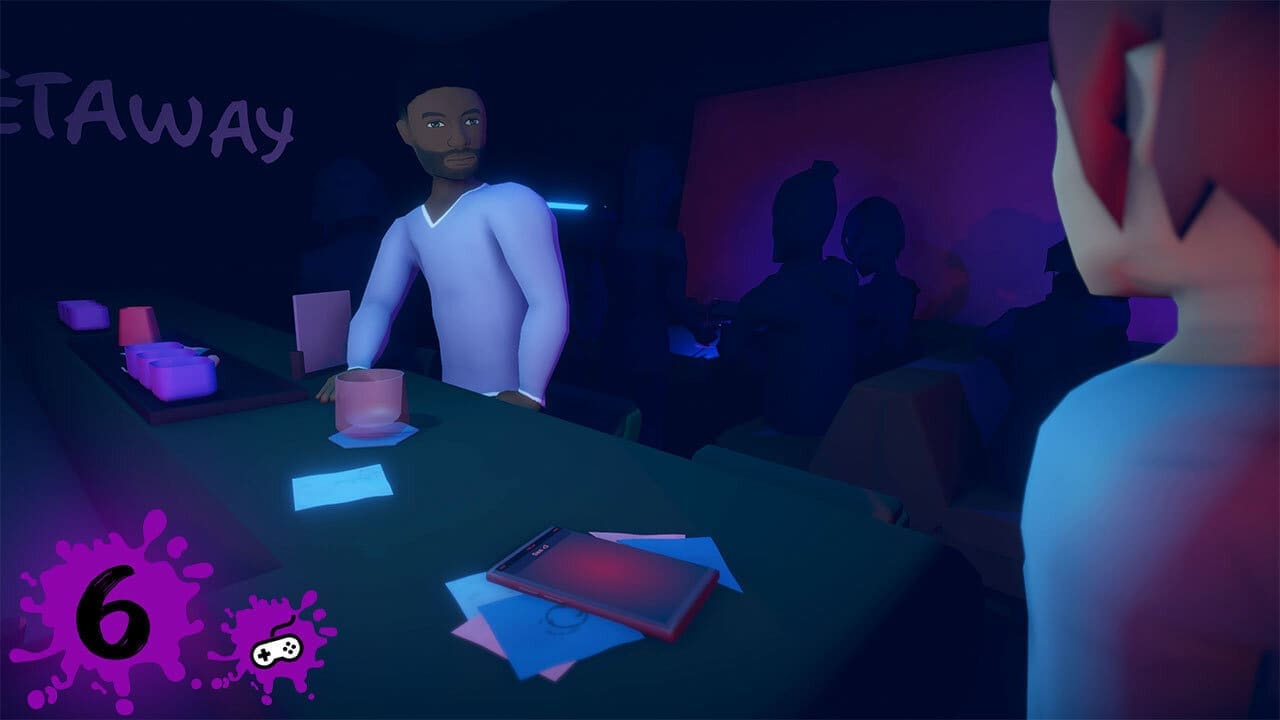
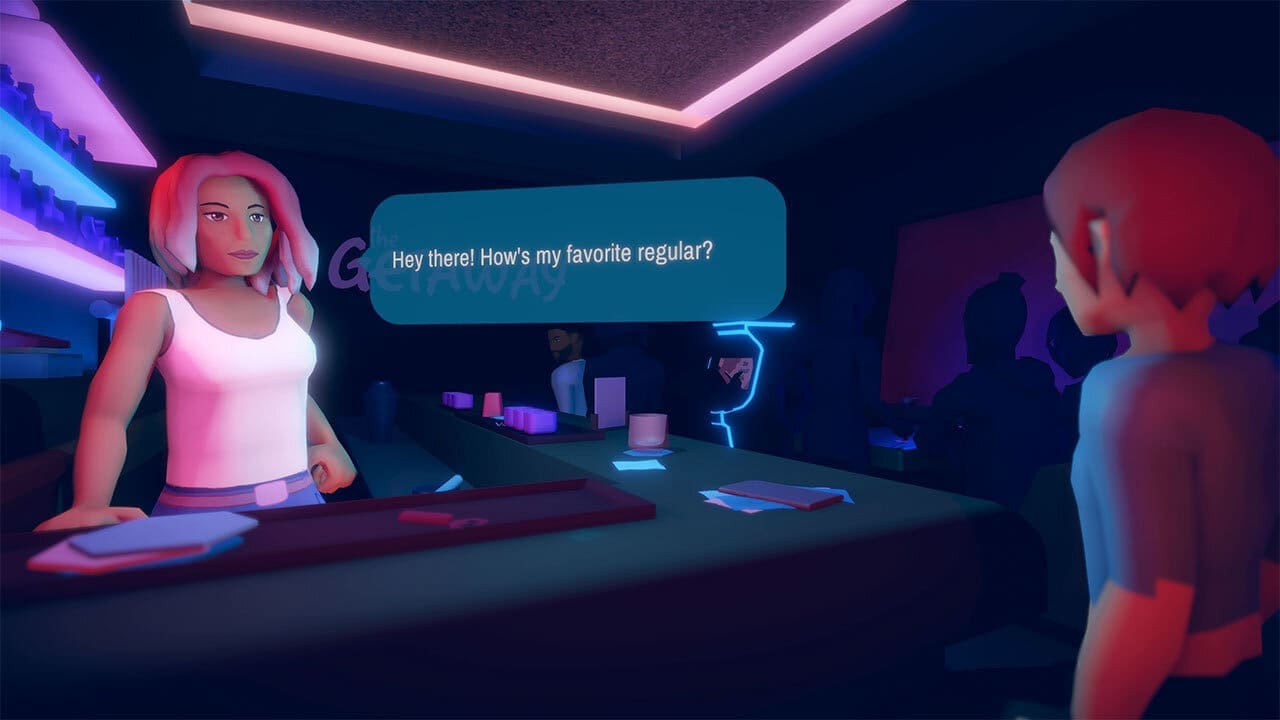
The game takes place entirely at a bar with your character having finished up work and headed straight there for the evening. The who, what, why is left ambiguous and you’re able to play with those elements through the conversations you’ll have in the game. Did you come straight to the bar simply because you love the atmosphere? Or is it because there’s some form of substance abuse at play here?

You’re greeted by the bartender as the game begins. They ask about your partner Sam — they’re usually seen with you but missing on this particular evening. Sam will message you soon after this and you have to break the news: you won’t be home for dinner, you’re at the bar.
With each response, you’re given the ability to change between one to three segments in a sentence. This allows you to totally change how different answers are given. For example, the opening piece of dialogue lets you pick a drink and you can select “whiskey” but then have the option of “and soda,” “on the rocks,” “straight-up” followed by “in five tiny shot glasses,” “in a fancy glass,” or “with a twist.” Each subtle change to what words you choose can make the dialogue for your character come across tonally different, but I did find it didn’t always make a big difference to the way the other characters responded to you.

How the evening plays out from this point forward is going to depend on how you respond to Sam and two others you’ll interact with. There isn’t a great deal of change in the way the evening plays out no matter the conversation choices you pick. You’ll talk to the bartender, you’ll start receiving messages from Sam, you’ll be hit on by a stranger, and an ex, Dante, will come over to say hello.
As the night continues Sam will begin to lean on you after a hard day at work, and even discuss their worries about what you’re doing at the bar all the time. Sam’s insecurities can be dealt with harshly or softly. Things can get quite uncomfortable and dark if you let them. I explored the idea that I was cheating on Sam, that I was an abusive drunk, and I didn’t like it. It made me want to stop playing and reading her responses.
In my first playthrough, I ended up telling Sam I needed to come home and talk to them as I was having some issues with our relationship, and I ended up with a rather hopeful ending with the two of them attending couples therapy and working on mending their relationship.
There’s a total of nine different endings to see. I haven’t seen them all, but that’s not all my fault. Twice I had the game freeze and not progress past a certain point of dialogue, and since there’s no way to save — and no auto-save — you’re left having to start all over again.
It takes about 20 minutes to complete a playthrough of We Should Talk and it’s well worth your time if you’re looking for something different. However, be warned of the bug I encountered which I hope is fixed at, or just after, release. The exploration of how words can change the way people receive you — or in this case, how an evening at the bar can go — is interesting, even if there’s not quite enough going on behind the scenes to make nine playthroughs feel necessary.

We Should Talk code provided for review.