
Starfield Review – You’ll be curious to explore the galaxy
<p class="">Unlike the Bethesda blueprint that appears at the game's foundation, there is no blueprint for how to play Starfield.</p>


[tabs slidertype=”top tabs”] [tabcontainer] [tabtext]Game Synopsis[/tabtext] [tabtext]Credits[/tabtext] [tabtext]Platform[/tabtext] [/tabcontainer] [tabcontent] [tab]In the year 2330, humanity has ventured beyond our solar system, settling new planets, and living as a spacefaring people. You will join Constellation – the last group of space explorers seeking rare artifacts throughout the galaxy – and navigate the vast expanse of space in Bethesda Game Studios’ biggest and most ambitious game.[/tab] [tab]
Cast: Sumalee Montano, Damien Haas, Barry Wiggins, Jake Green, Emily O’Brien, Aly Ward Azevedo, Dana Gourrier, Cissy Jones, Armin Shimerman, Elias Toufexis, Carlos Valdes, Keir Dullea, Nicky Endres, Phil Crowley
Developer: Bethesda Game Studios
Game Director: Todd Howard
Technical Director: Christopher Rodriguez
Art Director: Istvan Pely
Writing & Design Director: Emil Pagliarulo[/tab] [tab]
Publisher: Bethesda Softworks
Developer: Bethesda Softworks
Reviewed on: PC
Also available for: Xbox Series X|S[/tab] [/tabcontent] [/tabs]
“Space, the final frontier,” is an expression that can be applied to video games just as much as the logs of Captain Kirk. For as long as I can remember, game developers have promised adventures into space that would allow anyone to fulfil their dreams of travelling between planets and meeting their inhabitants in their very own spaceship. So far, very few have even come close. In 2016, I was promised this space odyssey in No Man’sMan’s Sky, which was barren and lifeless upon its initial release; before that, I can remember in 2013 being asked by friends to jump into crowdfunding Star Citizen, which promised unparalleled ambitions for adventures in space which turned out to be groundless still in 2023. With the release of Starfield in 2023, Bethesda has come as close to that final frontier despite some of the studio’s old habits shining through.
From the studio’s most recent releases of Skyrim and Fallout 4, it should be easy to understand what this game would be at its core. It is an RPG that places the player in the centre of its setting to do as they please, within reason, of course. You will not find the true freedom experienced with this year’s other big RPG, Baldurs Gate 3, of player choice and character interaction, but that should never have been an expectation when approaching Starfield. This Bethesda blueprint comes with many of the pros and cons of its predecessors, for better or worse, but the team has improved on so many aspects that had already made their games shine.
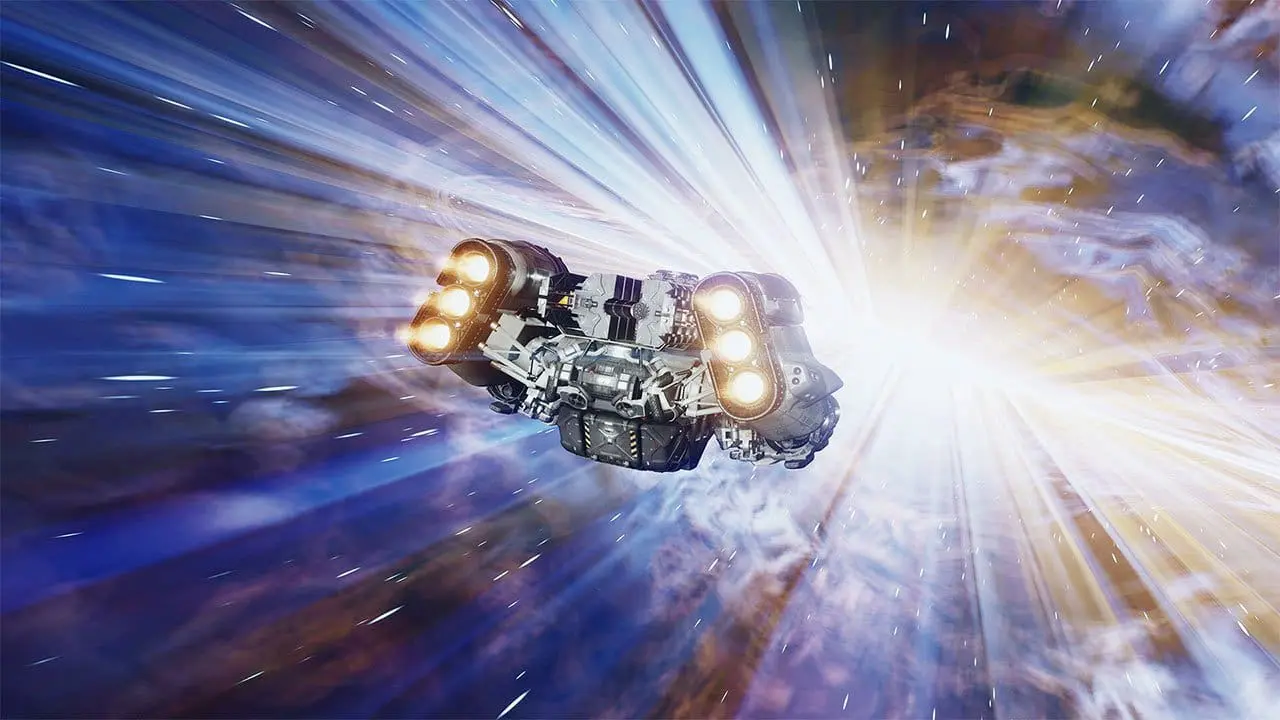
Starfield’s launch, in many ways, has been the smoothest launch in the company’s history. Yes, the trademark Bethesda jank and bugs appear, but far less frequently when compared to Fallout 4’s launch. On PC, I have faced very few bugs and crashes while hopping between planets while running on the game’s highest settings.
In many ways, the central story has been the weakest aspect of Bethesda games, with many players enjoying their time exploring side quests and adventures rather than pursuing the main story. From personal experience, I remember starting many saves of Oblivion and Skyrim where I would ditch the main story as soon as possible and spend 100s of hours without returning to it. Though I would not say the main story itself rises to the modern-day epics that we are used to, the quality has improved by leaps and bounds. My first playthrough of the game lasted for 30 hours, during which I only focused on the main story with a few side missions here or there. Throughout the 30 hours, plenty of intrigue and depth filled Starfield with life that would later improve every following playthrough. The idea of multi-playthroughs is truly at the core of Starfield’s story, with players given plenty of reason to dive into the next save each time they finished their last.

Multiple playthroughs is the idea is at the core of the game, for better or worse. The new skill trees for players are vast, with each individual skill able to be levelled five times each upon completing challenges for each skill. With this depth to each skill and the wide assortment of skills, it can make the levelling feel slow. I finished my first playthrough at level 27, which is over a level per gameplay hour, and this progress has not improved with the time I have spent with the New Game Plus. This, combined with the fact there is no way to respec your character through the game, means players will need to come into Starfield with an idea of who they want their character to be. On a positive note, this encourages roleplaying, with players finding out who their character is for each play through and levelling based on that idea as skills are kept between each playthrough. I did find myself regretting some choices or wishing I had placed earlier skill points into other skills, but it was never the end of the world.
This idea of picking who you want your character to be maybe my favourite part of Starfield, but also its game design. Starfield never forces the player into doing everything. Suppose you have no interest in building an outpost, customising your ship, or diving into the oceans of crafting options, then you never have to. Starfield is truly what you make of it. Focusing on its characters and stories will not hold you back or make you feel like you are playing incorrectly. The opposite can also be true. Do you just want to become an intergalactic space tycoon mining planets and earning credits without bothering about those pesky characters asking you to save them? You can do precisely that. No one will ever have the space Starfield experience as another. The galaxies are full of potential adventures to be had in whatever way you want.

As mentioned previously, the Bethesda blueprint does have its drawbacks. Players will find themselves spending far too much time on menus. Whether that is organising inventories for the 5th time in an hour because you are carrying too much stuff, figuring out how to jump to distance systems with a ship that has minimal fuel or trying to figure out which ammo you need from a vendor by swapping between your inventory and theirs. Starfield can feel clunky with this reliance on menus, and this clunkiness flows into the gameplay; basic gameplay features like sneaking and using jump packs are locked behind skills, and combat does not feel engaging even with the plethora of special powers that can be obtained, or the heavily customised guns found more profound in the game. It feels similar to Fallout 4’s combat from 2015 without the VATS system.
Characters also show signs of the Bethesda games of the past, and in this aspect, it is hard not to compare them to the dynamic cast of Baldurs Gate 3. I have had companions get angry with me mid-gun fight for killing people even though the space pirates had started the combat with me or occasions where I have stolen from a character, gotten caught and then gone back to talking as standard with the character moments later. It does make you want a more dynamic universe that reacts more to your characters’ actions. Yes, moments after finishing a main story or mission point, NPCs around you will start bringing up related matters, but that is the extent of the impact that it has had on the world. Companions are great to get to know, but I never found any character to mess with. Too many of them would scold me for my Han Solo-esc choices, which became frustrating compared to some of my favourite companies from Mass Effect or Persona 5.
Even with these flaws, though, it is the stories of Starfield where this game truly shines. There are endless side quests and missions that far exceed what could be completed in a single run-through. From becoming a space cop to straight-up piracy in open space, Starfield caters for a wide range of adventures. The most surprising aspect will be the 4 – 5 hours of gameplay that can be spent just completing the ongoing thread of missions from a typical job application. Stories in Starfield are filled with depth that makes each playthrough memorable. I have mentioned the idea of playthroughs at the core of Starfield throughout that, without any spoilers, bring each playthrough together and allow players to experience their space odyssey unlike any other.
Starfield is not for everyone, but it is a game that can be truly special individually when players try to make their adventure within it. Unlike the Bethesda blueprint that appears at the game’s foundation, there is no blueprint for how to play Starfield. The curiosity to explore and enjoy the game through multiple playthroughs is a unique pull for me. New Game+ has too often swayed me or seemed to fall off the wagon after my initial binge of the game. Starfield makes me excited to start a new game with each end I come to, the unique new beginning to each new game. Plus, it is truly something yet to be understood by much of the player base, and I am excited to see how they unfold in the coming months. Starfield may not be the game of the year, but it is the game the team at Microsoft and Bethesda needed, and it is the game many space lovers have been waiting for.
Score
Starfield is not for everyone, but it is a game that can be truly special individually when players try to make their adventure within it.



Comments