
The Odyssey Review
Debating what Nolan's best film is is a futile subject, but The Odyssey is definitely his most epic in nature


Every few minutes, you’re thrown something new and visually stunning to grab your eyes and ears in a way I doubt anything else in a cinema this year will
It was in Oppenheimer that Christopher Nolan first started to explore the men behind war, and in particular, the tools they use. By the end of that film, Oppenheimer and his bomb have wrought unrivalled devastation, and he is a man who has lost nearly everything to his ambition and is left to question what he’s done. The Odyssey plays on similar themes. Here, Odysseus doesn’t release a bomb, but his Trojan Horse plan brings about the fall of a city and its people, the end of a war, and a change in the era in a way he couldn’t have realised.
Nolan’s latest adapts Homer’s epic, a story many deem too dense to bring to the screen, though it has been attempted before. He makes noticeable changes that some may quickly love or hate as he attempts to make this story more accessible to modern audiences. The most noticeable of those is the modern English language and tone. There are other elements too, like the cast he’s assembled of all-stars, even for the smallest parts, almost as if to guarantee the box-office draw is beyond his audience of cinema lovers or those interested in Greek mythology.

Matt Damon stars as Odysseus, a man who spends years at war and masterminds the Trojan Horse into the impenetrable Troy. An element of this story is teased for some time but eventually revealed in both its realistically gross depiction of cramming a bunch of men into a wooden horse and the brutality and sinister, assassin-like tactics used to get into Troy. It’s after this war ends that Odysseus gets lost as he chooses to take something of a scenic route home and proceeds to anger the gods along the way.
The King of Ithaca, missing his son and wife, waits for eight long years, hoping to hear word of either Odysseus’ passing, which would make Telemachus (Tom Holland) the rightful heir, or that he’s alive somewhere and still making his journey home. At his homestead, countless suitors wait and ready themselves to win the hand of Penelope (Anne Hathaway) in marriage; if she finally accepts, Odysseus won’t be returning. Amongst those is a conniving and snivelling Antinous (Robert Pattinson) plotting his ascension to King.
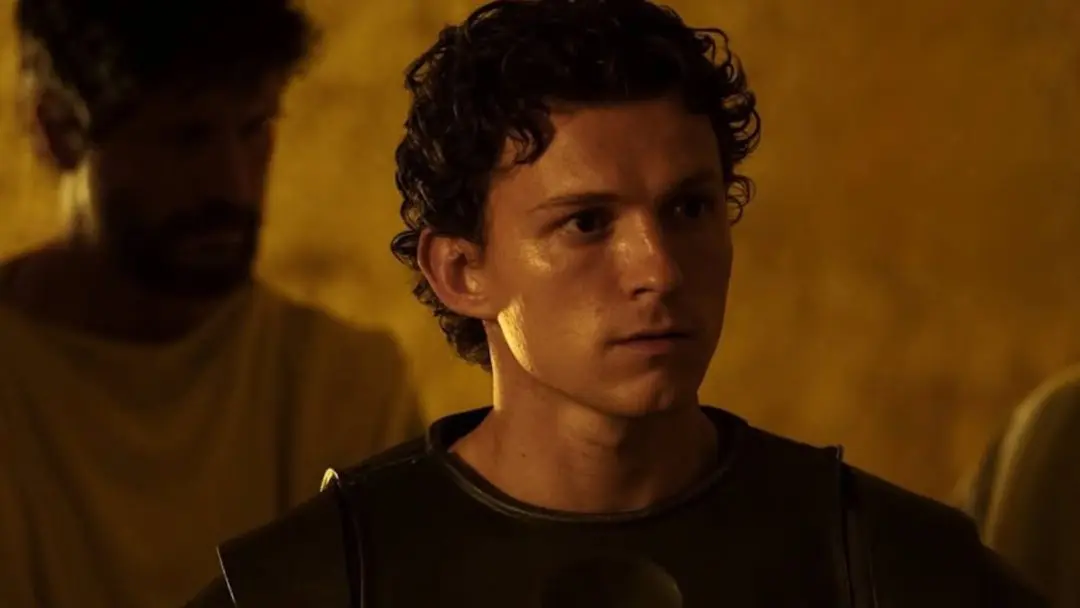
The journey home for Odysseus is plagued by tests and torment for him and his dwindling men as they come across everything from a cyclops trapping his troupe for food and a witch who sees these bloodthirsty warriors for what they are deep down. His journey forces Odysseus to face what he’s done not only at Troy but also the ripple effects of his actions across the late Bronze Age. In an age where people follow the rules of the gods, “Zeus rule” is mentioned ad infinitum, and amongst the war, it’s implied that the gods, their rules, and silent hand generally keep people playing under certain rules. What happens when you break them all?
Matt Damon is sort of perfect casting for Odysseus, as he both looks almost out of place in the film, which works perfectly for a narrative about a man thrown out of his world and lost amongst all manner of torture from the gods and creatures that abound. He’s very good, of course; Damon, bringing his effortless everyman to Odysseus, quickly makes you want to see him return to him. In his home, Holland is maybe a bit too childish, though, as he’s said, this was his last chance to play one. Hathaway is one of the few female characters in the film, and as the most prominent one, she’s left in a position of being either the prize for Odysseus’ return or the object for the many men eyeing her hand in marriage. She does deliver one very good monologue towards the end of the film about how, in a more just world, she could have sat on the throne as queen, but this is not that world.
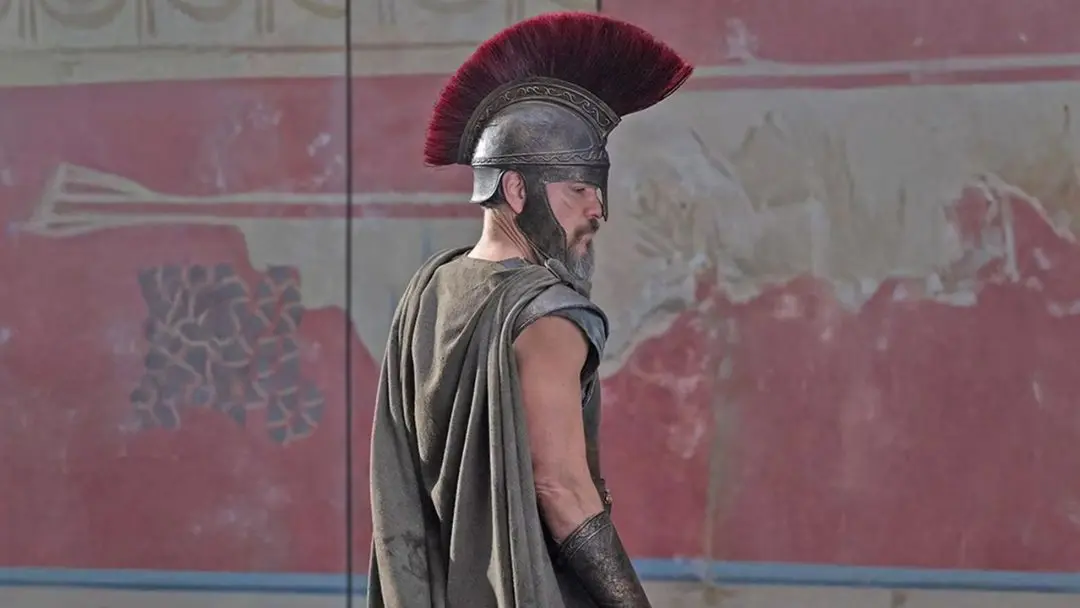
The standout among the supporting cast is John Leguizamo as Eumaeus, a loyal supporter of Odysseus and one of the very few still flying his flag in his home. It’s a very strong performance full of heart from Leguizamo, and one that could see him follow in Robert Downey Jrs footsteps, grabbing a supporting actor Oscar from a Nolan film.
There are so many other part-time players here, Charlize Theron, Elliot Page, Samantha Morton, Jon Benthal, Himesh Patel, Mia Goth, and Benny Safdie among them, all of them, from minutes to moments, bringing out their best under the direction of Nolan. Some further than others, I wished I’d got to spend more time with, however, even with the movie already sitting at three hours. Zendaya and Lupita Nyong’o both shine in their small parts, Nyong’o in particular doing more with her facial performance in one scene than others can with words.
The entire Odyssey was shot with IMAX cameras, and I watched it in 70mm. It’s a massive engulfing experience that is almost too much. I’ve seen IMAX film, but here’s something that’s, from start to finish, the largest format you can view a film in, making it nearly too much to handle. I couldn’t help but wondering if the scale at 100% takes away from some of its speciality — but if I rewatch in a normal cinema, or at home, I’m sure I’ll be disappointed in the format, having tasted it in the true desired vision from Nolan and cinematographer Hoyte van Hoytema, which paired with the bass heavy and epic in nature score from Ludwig Göransson is inpareled in cinematic experiences.
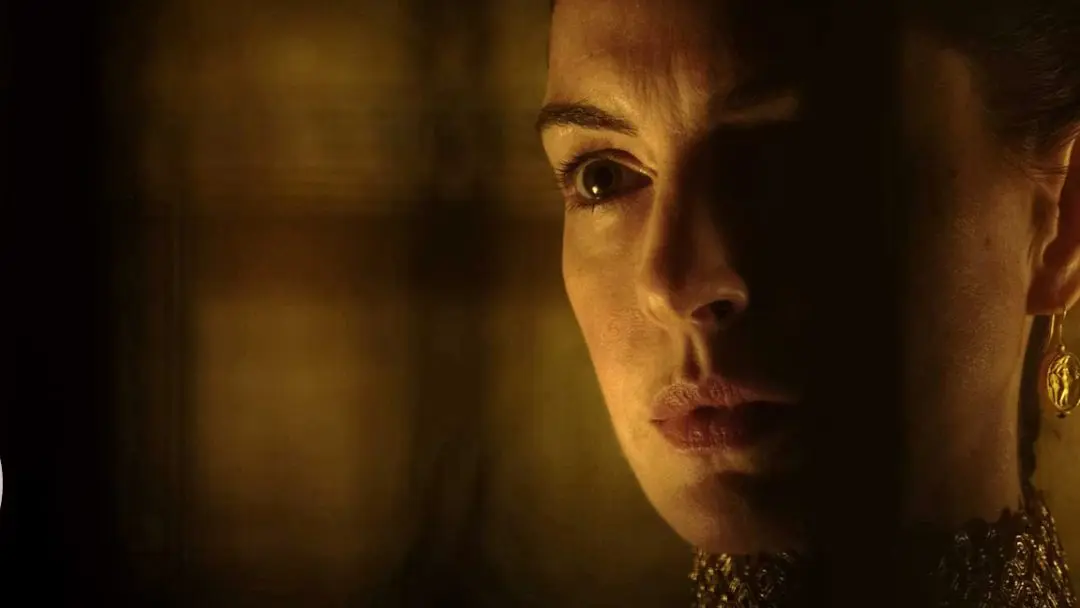
The magic here is in editing; however, with Academy Award-winning collaborator Jennifer Lame reuniting with Nolan and giving the same magical touch they gave Oppenheimer. As The Odyssey moves from scene to scene and character, and quite often floats back in time, the editing adds a gentle hand, guiding the audience through these movements that could be much more jarring and, I’m sure, are more cutthroat on the page.
Debating what Nolan’s best film is is a futile subject, but The Odyssey is definitely his most epic in nature, from a filmmaker who deals in scale like no other currently working. It might be missing that one big moment like the bomb rest in Oppenheimer, but it runs at a much more attention-grabbing pace. Every few minutes, you’re thrown something new and visually stunning to grab your eyes and ears in a way I doubt anything else in a cinema this year will. What the film lacks in true character development, it makes up for in sensational scale. And while working from the basis of Homer’s original story, Nolan subtly twists it into a diversion of his own, again examining a man obsessed with his mission to the point of unhealthy addiction and the ramifications of his success.
The Odyssey Review
Hollywood doesn't make epics like this anymore, but Nolan has stepped up to the plate, crafting his vision of a narrative that will serve as the basis for stories to come for eternity, while applying his own touches.

Dylan Blight
[He/Him] Dylan Blight is the Founder and Editor-in-Chief of Explosion Network, an independent Australian publication covering video games, film, television and pop culture. Since founding Explosion Network in 2017, Dylan has written and produced reviews, news, interviews, features and podcasts across the entertainment industry, while overseeing the publication's editorial direction and content.
MORE FROM DYLAN BLIGHT →


Comments